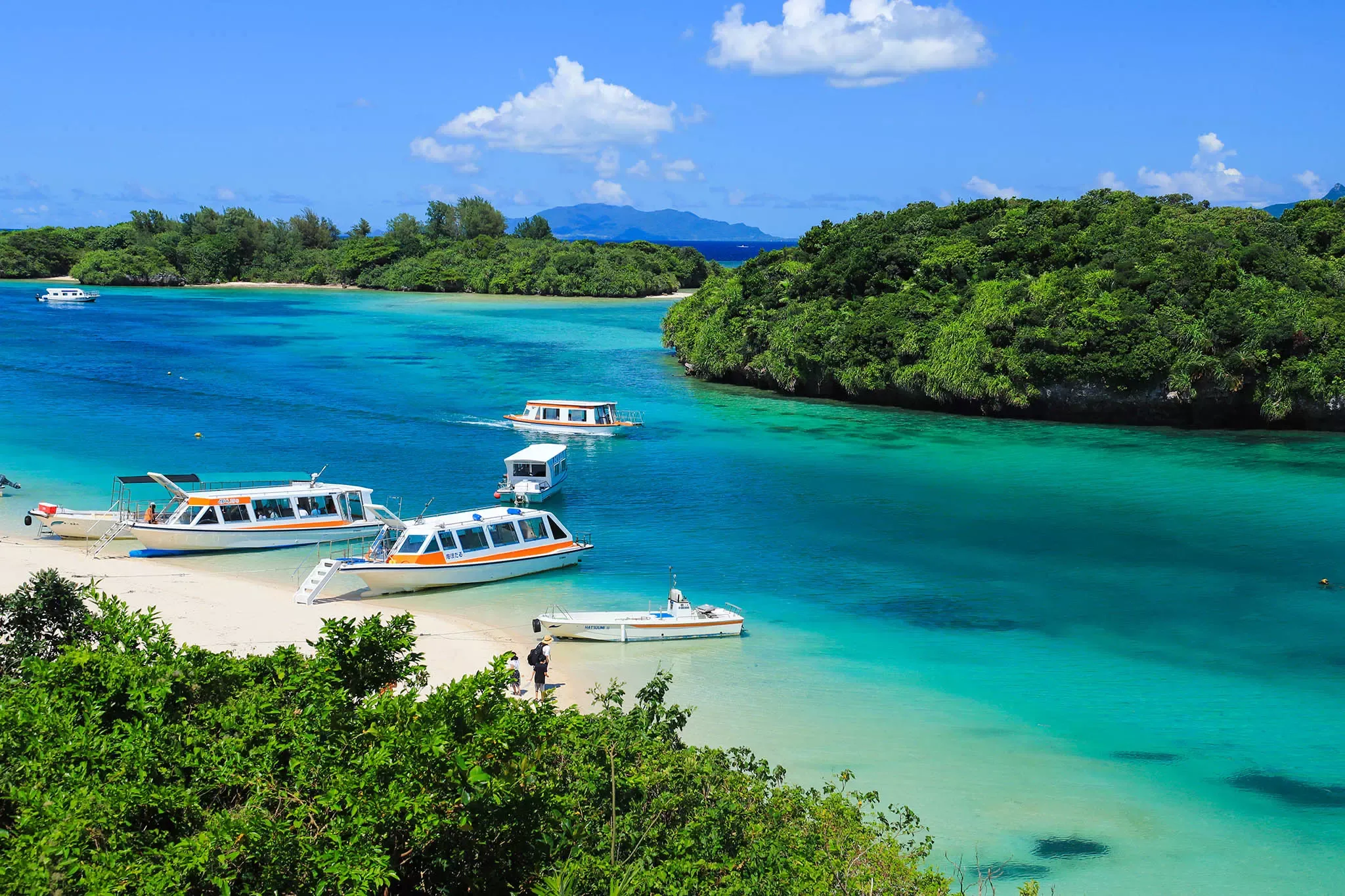
Almost everyone comes to Okinawa for the water, and honestly, we get it. The beaches earn their reputation. But the question we hear most often, usually around day three, with sand still in someone's shoes, is some version of: "Okay… what else is there to do in Okinawa besides the beach?" If you are looking for things to do in okinawa that go beyond sunbathing, you are in the right place; this okinawa travel guide will help you uncover the rich culture and heritage of the okinawa prefecture.
It's a fair question with a slightly wrong assumption buried inside it. "What else" treats the culture like a side dish. It isn't. For 450 years the main island and its surrounding islands in okinawa belonged to an independent country, the Ryūkyū Kingdom (also known as the ryukyu kingdom), with its own language, religion, architecture, food, and art. The beautiful beaches are the postcard, but the history of this former ryukyu kingdom is the reason this destination feels unlike anywhere else in Japan.
The short version
- The islands were part of the independent ryukyu kingdom from 1429 until Japan annexed the region in 1879, forming what is now okinawa prefecture.
- The unique culture here is genuinely distinct from mainland japan, a centuries-old blend of cultural influences from japan and china, as well as Korea and Southeast Asia.
- Okinawa's indigenous faith centres on utaki, sacred natural sites and cultural sites, not Buddhist temples.
- Nine historic locations share a single unesco world heritage site listing, protecting the stone ruins and sacred grounds rather than the reconstructed wooden buildings.
- Shuri castle, the heart of the ryukyu kingdom, has its rebuilt main hall exterior already visible, and its restored interior is planned to open to the public on 23 November 2026, worth confirming before your travel to okinawa.
- Okinawa is the birthplace of karate.
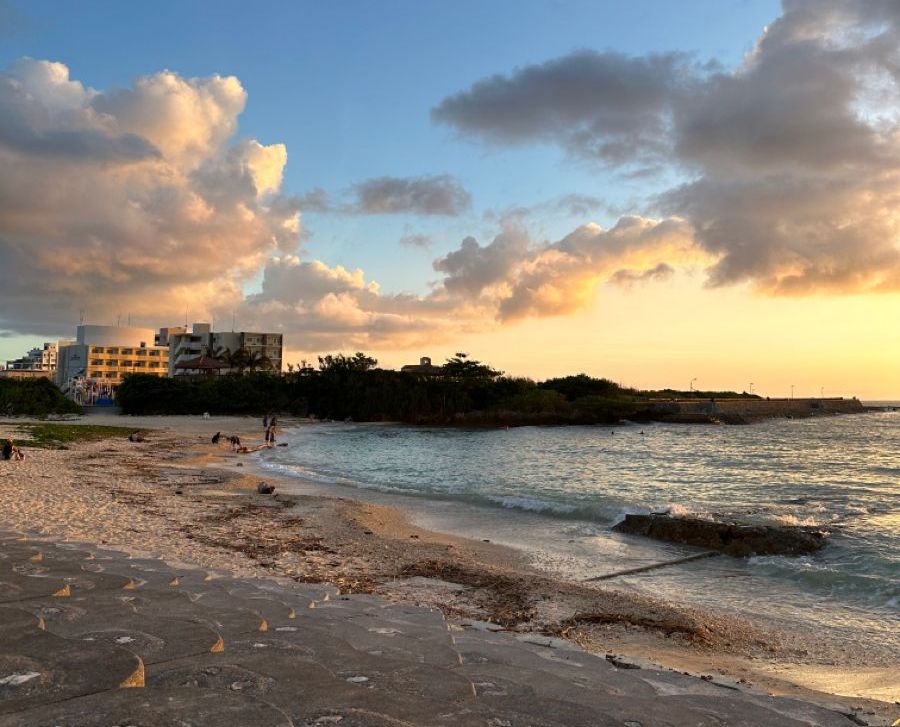
Okinawa Was Its Own Kingdom: Why the Culture Feels Different
Start here, because everything else makes more sense once you do. To truly appreciate okinawa attractions, you have to understand this independent ryukyu kingdom history.
In 1429 a chieftain named Shō Hashi united three rival territories on okinawa island and founded the kingdom, with its capital at Shuri. For the next four and a half centuries, this was an independent seafaring state, and a remarkably outward-facing one. Ryūkyū ships traded across the region, and the okinawa main island became a crossroads where the cultures of japan and china met and mixed.
You can still taste and see that mix everywhere. The pork-heavy cooking, the red-tiled roofs, the court music, the textiles, none of it is quite standard japanese food, quite Chinese, or quite anything else. It's distinctively okinawan.
The independence ended in stages. In 1609 the Satsuma domain from southern Japan invaded and turned the kingdom into a vassal, though it kept its throne and its dual relationship with China for another 270 years. Then in 1879 the Meiji government formally abolished the kingdom, exiled the last king to Tokyo, and created okinawa prefecture. The sovereign state was gone on paper, but okinawa’s unique culture and history never left, making a visit okinawa journey a highly unique experience compared to other experiences in japan.
The Castles of the Ryūkyū: Gusuku
Forget everything you picture when you hear "Japanese castle." No soaring white keep, no moat, no Himeji silhouette. Ryūkyūan castles are called gusuku, and they're a different animal, sprawling fortresses defined by beautifully curved limestone walls that ripple across hilltops like something half-grown from the rock.
They were also more than fortresses. Many gusuku held sacred spaces inside their walls, so they were political, military, and spiritual centres all at once. Wandering one at golden hour, with the wall curving away toward the sea, is one of the quietest, strangest okinawa things you can experience.
Five gusuku, plus four related sites, share one unesco world heritage site listing inscribed in 2000: Gusuku Sites and Related Properties of the Kingdom of Ryukyu. Here's the part most guides skip, what UNESCO actually protects is the stone ruins, foundations, and sacred grounds, not the rebuilt wooden halls that sit on top of some of them. That distinction matters a lot at shuri castle, as you'll see.
The four ruined castles are worth a day trip drive. Nakijin in the far north has the most dramatic walls, especially when the cherry blossoms come early in late January. Katsuren and Nakagusuku on the main island give you sweeping coastal views for almost no crowd. Zakimi in Yomitan is compact, free, and open around the clock. The other listed sites, the royal mausoleum Tamaudun, the garden villa Shikinaen, the Sonohyan-utaki Stone Gate, and the sacred grove Sēfa-utaki, round out the picture of how the kingdom lived, prayed, and buried its kings.
Shuri Castle Today
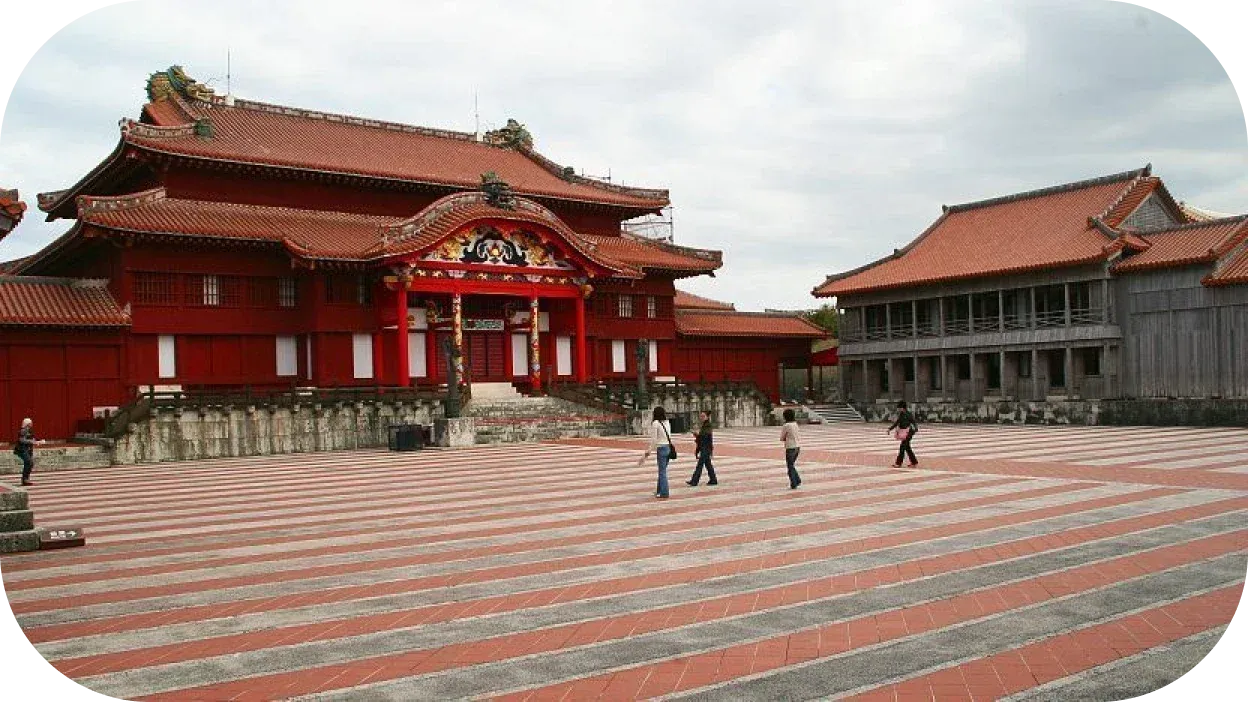
Shuri castle was the beating heart of all of it, royal palace, seat of government, and ceremonial centre for around 450 years. It has also had spectacularly bad luck with fire, burning down more than once, most devastatingly in the 1945 battle of okinawa and again in an electrical fire in October 2019 that destroyed the main hall.
Here's the good news for anyone planning an okinawa trip in 2026: the castle is very much open, and it's arguably a more interesting visit right now than it was before. Most of the grounds, the gates, the great curving walls, the lookout over Naha, never closed. The rebuilt exterior of the vermilion Seiden main hall is already back in view, reconstructed using traditional Ryūkyū techniques like hand-applied lacquer and hand-made red tiles. The restored interior is planned to reopen to the public on 23 November 2026, though with a date this specific and this popular, it's worth double-checking before you go. Adult admission to the paid area is around ¥400 as of 2026.
There's far more to say about Shuri than fits here, its history, what to see zone by zone, and the latest on the rebuild all live in our full guide to this premier cultural attraction.
Sacred Ground: Utaki and the Ryūkyū Spiritual World
Here's a small correction that changes how you see the whole island: Okinawa is not really a temple destination. If you come looking for a Kyoto-style circuit of Buddhist temples, you'll be puzzled.
The islands' indigenous faith runs on something older and more elemental, deeply woven into okinawan culture. Its holy places are utaki, sacred groves, a hidden cave in okinawa, natural springs, and rock formations, usually tucked into nature rather than built up in stone. And its clergy were traditionally women: a class of priestesses called noro who officiated community rituals, presided over by a supreme high priestess, the kikoe-ōgimi, who was the spiritual counterpart to the king himself. Worldly power sat with the men; sacred power sat with the women. That system formally ended with the kingdom in 1879, but the sites, and the reverence for them, endure.
Once you know to look for utaki, you start seeing them everywhere, a wrapped stone at the edge of a village, an incense burner in a quiet grove where someone still comes to pray.
.webp)
Visiting Sēfa-utaki Respectfully
The most sacred site of the entire kingdom is Sēfa-utaki, on the southeast coast near Nanjo. This is where the high priestess was inaugurated, and where worshippers once faced the holy island of Kudaka across the water. The signature image is the Sangui, two towering slabs of rock leaning together to form a natural triangular passage.
It is beautiful, and it is still an active place of worship, so a few things matter. Keep your voice down. Don't touch the rock formations or the incense burners. Dress modestly, and wear shoes you can grip with, because the stone paths are uneven and slick. Start at the information centre in Nanjo, where you buy your ticket and can watch a short orientation video before walking over.
A couple of practical, time-sensitive notes. Admission has been around ¥300 for adults, but it's set to roughly double from 1 October 2026, so budget for that and confirm the current rate. The site also closes for a few days twice a year for rituals, on dates that shift with the lunar calendar, and parts of it have had access restrictions for preservation work, all worth checking before you make the drive.
Living Traditions You Can Watch and Do
Ruins are wonderful, but Ryūkyūan culture isn't only something behind glass or up on a hill. One of the fun things about visiting is seeing how these traditions thrive today.
Eisā and the Performing Arts
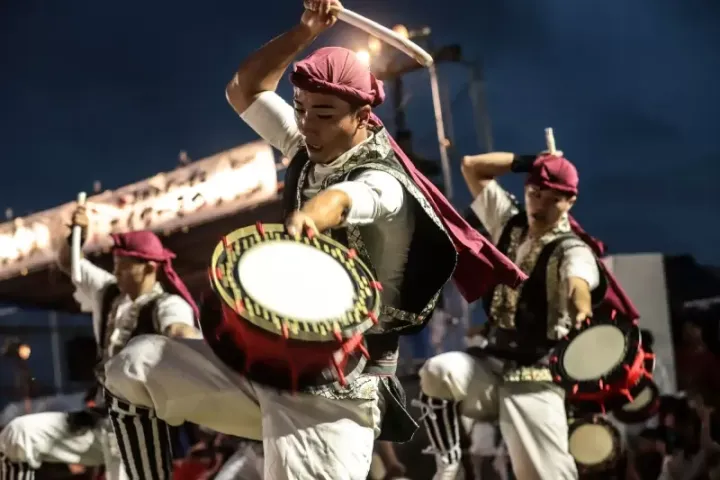
If you're here in August, follow the drums. Eisā is Okinawa's exuberant drum-and-dance tradition, performed by young people during Obon to welcome and honour their ancestors' spirits. That's the heart of it, it's ancestor veneration, not the "warding off evil" story you'll sometimes read online. Big taiko drums, spinning dancers, a driving rhythm you feel in your chest.
You'll catch neighbourhood processions all over the islands in midsummer, and two showpiece events worth planning around: the enormous all-island eisā festival in okinawa city, the genre's spiritual home, in late summer, and the 10,000 Eisā Dancers Parade that fills Naha's main street, kokusai-dori, on the first Sunday of August. Outside festival season, cultural parks like okinawa world stage performances year-round.
Karate, Born Here
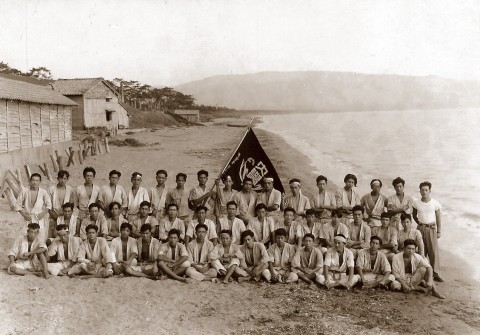
This one surprises people: karate was born in Okinawa. It grew out of an indigenous fighting art called ti, literally "hand", blended over centuries with Chinese martial arts that arrived through trade. The old town styles of Shuri, Naha, and Tomari evolved into the schools still practised today, and it was an okinawan master, Gichin Funakoshi, who carried karate to mainland japan in 1922, from where it spread to the world.
You can do more than read about it. On our northern trips we can arrange a guided tour session at a working dojo with a local master, one of our recent guests described his teacher as a real-life Mr Miyagi, and it stuck. Standing in a genuine dojo, learning where the art actually comes from, lands very differently than a basic demonstration.
Crafts as Living Culture
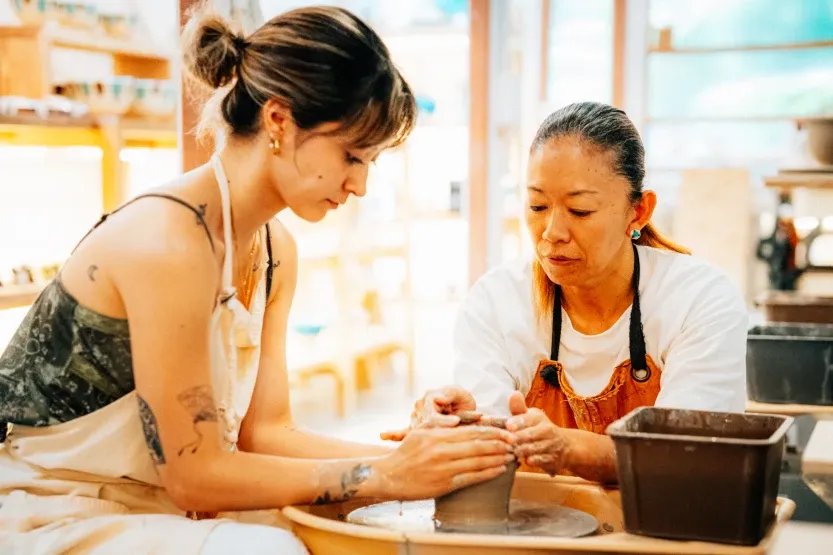
Okinawan craft is best experienced by watching it made, not just bought.
Bingata is the islands' luminous stencil-dyed textile, historically reserved for Ryūkyūan royalty, bold corals, yellows, and indigos in patterns you won't see anywhere else. Yachimun, the local word for pottery, has its own quarter in Naha: the roughly 340-year-old Tsuboya pottery lane, all narrow stone streets and kiln shops, plus a larger potters' village at Yachimun no Sato in Yomitan. If you want a unique souvenir, this area is unmatched. You can also head south to see ryukyu village recreations or try blowing ryūkyū glass yourself from recycled bottles at the glass village in Itoman.
The Harder Layers: War Memory and Modern Okinawa
A cultural travel guide that skipped this would be dishonest. Okinawa carries some of the heaviest history in Japan, and facing it is part of understanding the place.
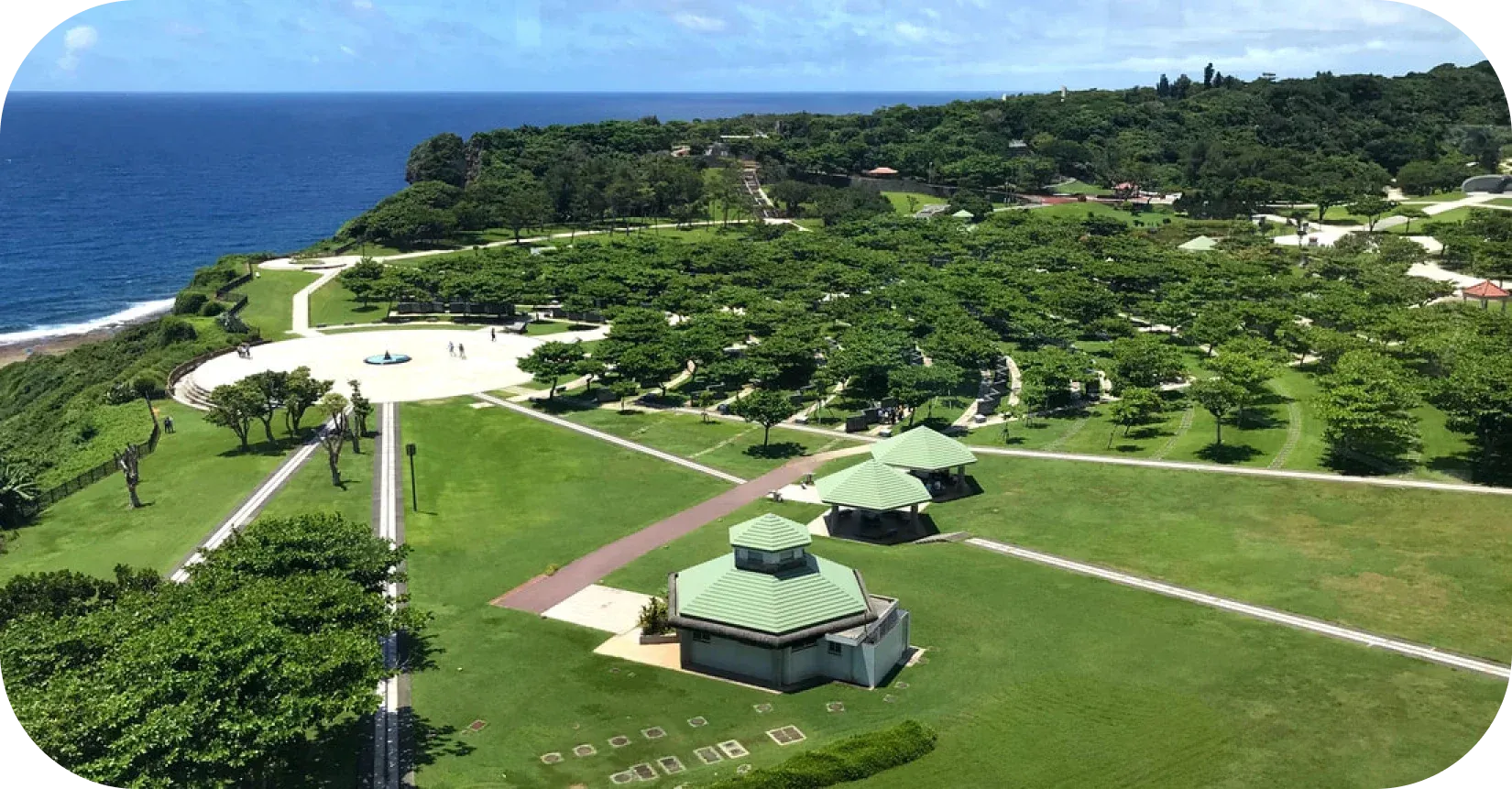
The battle of okinawa, from April to June 1945, was among the bloodiest of the Second World War, and its civilian toll was catastrophic, a huge share of the island's population died. In the south, near Itoman, the Peace Memorial Park sits on the cliffs where the fighting ended. At its centre is the Cornerstone of Peace, which inscribes the names of everyone who died in the battle, Okinawan, mainland Japanese, American, British, Korean, Taiwanese, without regard to nationality or which side they were on. It's a quietly radical way to remember a war. The adjoining museum tells the story largely from the civilians' perspective, and nearby the Himeyuri memorial honours a group of schoolgirls mobilised as battlefield nurses, most of whom did not survive. 23 June is observed across Okinawa as a day of mourning.
There's a living dimension to this too. Okinawa hosts a very large share, roughly 70%, of all U.S. military facilities in Japan, on a small island, and the presence has been a source of tension and protest for decades, visible even near commercial hubs like the american village in Chatan. Opinions here are strong and genuinely divided, and the debate is politically live. As visitors, the kind thing is to approach it with curiosity rather than a ready-made verdict, listen more than you conclude.
Culture Through the Palate and the Village
You can eat your way into Ryūkyūan culture as easily as you can walk into it.
Okinawan food is its own cuisine, heavy on pork, tropical vegetables, and a philosophy of balance, shaped by all those centuries of trade. The signature dish, goya champuru, is a stir-fry of bitter melon, tofu, egg, and pork, and the word champuru means "mix," which is really a description of the whole culture. You should also try local favorites like okinawa soba (thick wheat noodles in a savory broth) and snacks made from purple sweet potato. Our evening food walk through Naha's backstreets makes four stops for exactly this kind of thing, champuru, tebichi, mozuku, sea grapes, with the stories behind each dish along the way.
And in the northern village of Base in Ōgimi you'll bump into Okinawa's famous longevity reputation. It's a lovely story, though a genuinely contested one among researchers, and the village itself has grown weary of tourist traffic, so we'd steer you toward the broader culture of the rural north rather than a longevity pilgrimage.
How to Build Culture Into an Okinawa Trip
A few practical notes to make it all work when finalizing your travel experiences and itinerary.
Base yourself in Naha to start. It's the only city with rail, the Yui Rail monorail, and you can easily access attractions in okinawa from naha airport. Shuri Castle, Tamaudun, Shikinaen, the Tsuboya pottery lane, and the Prefectural Museum are all within easy reach without a car.
Rent a car for everything else. Outside Naha, buses are slow and sparse, and the cultural sites are spread out. You'll need an International Driving Permit, and remember Okinawa drives on the left. If you want to see the famous okinawa churaumi aquarium (often referred to simply as the churaumi aquarium) inside the ocean expo park to view the whale sharks, driving north is your best bet.
Think in clusters. The Naha-Shuri area is one full day of history on foot. The south, Peace Memorial Park, Sēfa-utaki, Okinawa World, is a natural loop about 45 minutes from the city. The centre pairs gusuku ruins with the Yomitan pottery village. The north combines Nakijin Castle with the wild Yanbaru forest.
Consider island hopping. If you want to experience the best islands in okinawa, look beyond the main island of okinawa. Take boat tours out to the nearby kerama islands to snorkel among pristine coral reefs and spot a sea turtle. For a longer stay in okinawa, catch a flight to the southern yaeyama islands, like ishigaki island to see the stunning kabira bay, or head to miyako island. In the islands of ishigaki and iriomote islands, you can even look for manta rays while diving. Wherever you choose to stay in okinawa, our 7-day okinawa main island itinerary threads culture, coast, and food together seamlessly.
Time it for the festivals if you can. August brings eisā across the islands; late autumn brings the Shuri castle festivities around Culture Day; November is pottery-market season. Just keep a flexible backup day between roughly June and October, when typhoons can rearrange plans at short notice.
.webp)
FAQ
What is there to do in Okinawa besides the beach?
Plenty. Okinawa was the independent Ryukyu Kingdom for 450 years, and its cultural sites include Shuri Castle and several other UNESCO-listed gusuku (castles), the sacred grove of Sēfa-utaki, pottery and textile villages, eisā drum-dance festivals, karate dojos, and significant Second World War memorial sites.
Does Okinawa have temples?
Not in the way mainland Japan does. Okinawa's indigenous religion centres on utaki — sacred natural sites — rather than Buddhist temples, and was historically led by female priestesses called noro. There are some Shinto shrines and Buddhist temples on the islands, but they are not the main spiritual tradition.
What was the Ryukyu Kingdom?
The Ryukyu Kingdom was an independent island state that ruled Okinawa and surrounding islands from 1429 to 1879. It was a maritime trading power whose culture blended Chinese, Japanese, Korean, and Southeast Asian influences, and it was annexed by Japan in 1879 to become Okinawa Prefecture.
Can you visit Shuri Castle right now?
Yes. Shuri Castle Park is open, including its gates, walls, and viewpoints, and the rebuilt exterior of the main hall is visible. The restored interior is planned to open to the public on 23 November 2026. Visitors should confirm the current status and admission fee before travelling.
What is Sēfa-utaki and can tourists visit?
Sēfa-utaki is the most sacred site of the former Ryukyu Kingdom, located near Nanjo in southern Okinawa. Tourists can visit for a small admission fee, but it remains an active place of worship, so quiet, modest dress and respectful behaviour are expected. It closes on certain ritual days each year.
What is Eisā?
Eisā is a traditional Okinawan drum-and-dance performing art. It is performed during the Obon season to honour and welcome ancestral spirits, and features large drums, dynamic dancing, and group processions.
Is Okinawa culturally different from mainland Japan?
Yes. Because Okinawa was the independent Ryukyu Kingdom for centuries, it developed its own language, religion, architecture, cuisine, music, and crafts, all distinct from mainland Japanese culture.
How many days do you need to see Okinawa's cultural sites?
Two to three days covers the highlights on and around the main island, one day for Naha and Shuri, one for the southern sites including Sēfa-utaki and the war memorials, and one for central or northern gusuku and craft villages.
Come for the Beaches, Leave Knowing the Kingdom
Here's what we tell people at the end of a long day in the hills or the backstreets: the beach options are the reason you booked the flight, and the kingdom is the reason you'll want to come back.
Okinawa rewards the traveller who looks past the shoreline, at a wall of ancient limestone, a grove where someone is still praying, a drumbeat rolling down a summer street, a bowl of champuru that tastes like five cultures at once. None of it is a side dish. It's the main course, and it's been here all along.
Come for the water. Stay for the Ryūkyū.
Evertrail Tours · July 14, 2026