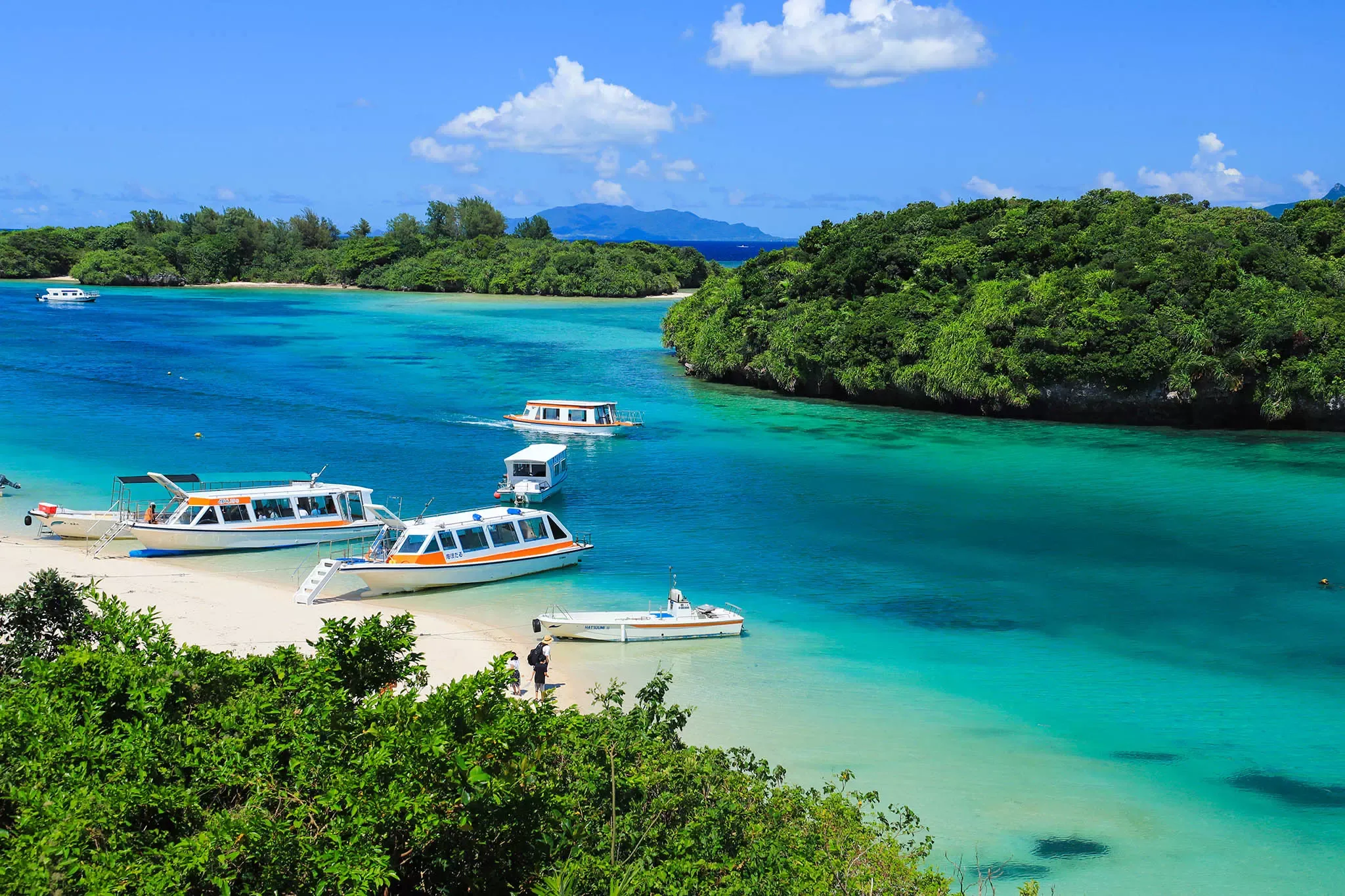
You slip below the surface and the noise of the world goes quiet. The water is warm, almost too warm, and for a moment the visibility is everything the photos promised: electric blue, impossibly clear, colorful fish darting through shafts of light. Then you look down at the coral reef, and something is wrong.
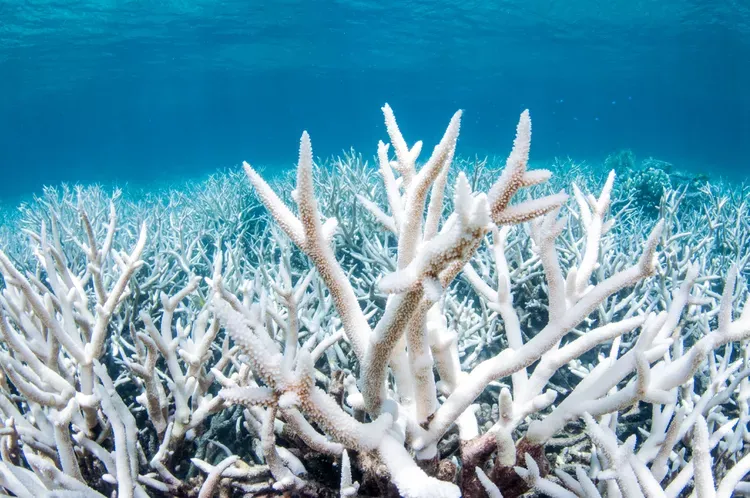
The coral is white. Not the creamy, off-white of living coral in shadow. White like bone. White like something that used to be alive. Coral bleaching, scientists call it. Here, floating above it, it just looks like loss.
That image is becoming more common in Okinawa. Beneath the postcard, beneath the turquoise Instagram shots and the Blue Cave tour bookings and the "world-class snorkeling" headlines, one of the planet's most biodiverse marine ecosystems is under serious stress. Not theoretical, future-tense stress. Right now, documented, measurable decline.
This isn't a reason to cancel your trip. It is a reason to understand what you're looking at when you go, and what you can do to help save it.
Why Okinawa's Coral Reef Matters More Than You Think
The reefs of the Ryukyu Archipelago are not just pretty. They are structurally significant in a way that most travelers never learn from a brochure.
More than 200 of the world's roughly 800 coral species exist in the waters around Okinawa's islands, a density that rivals the coral triangle of Southeast Asia. The Ryukyu chain holds approximately 80% of the country's reef-building corals. Sekisei Lagoon, stretching between Iriomote and Ishigaki in the Yaeyama group, is the largest coral lagoon in Japan and one of the largest in Asia. These aren't footnotes. They are the foundational numbers for understanding what's at stake.
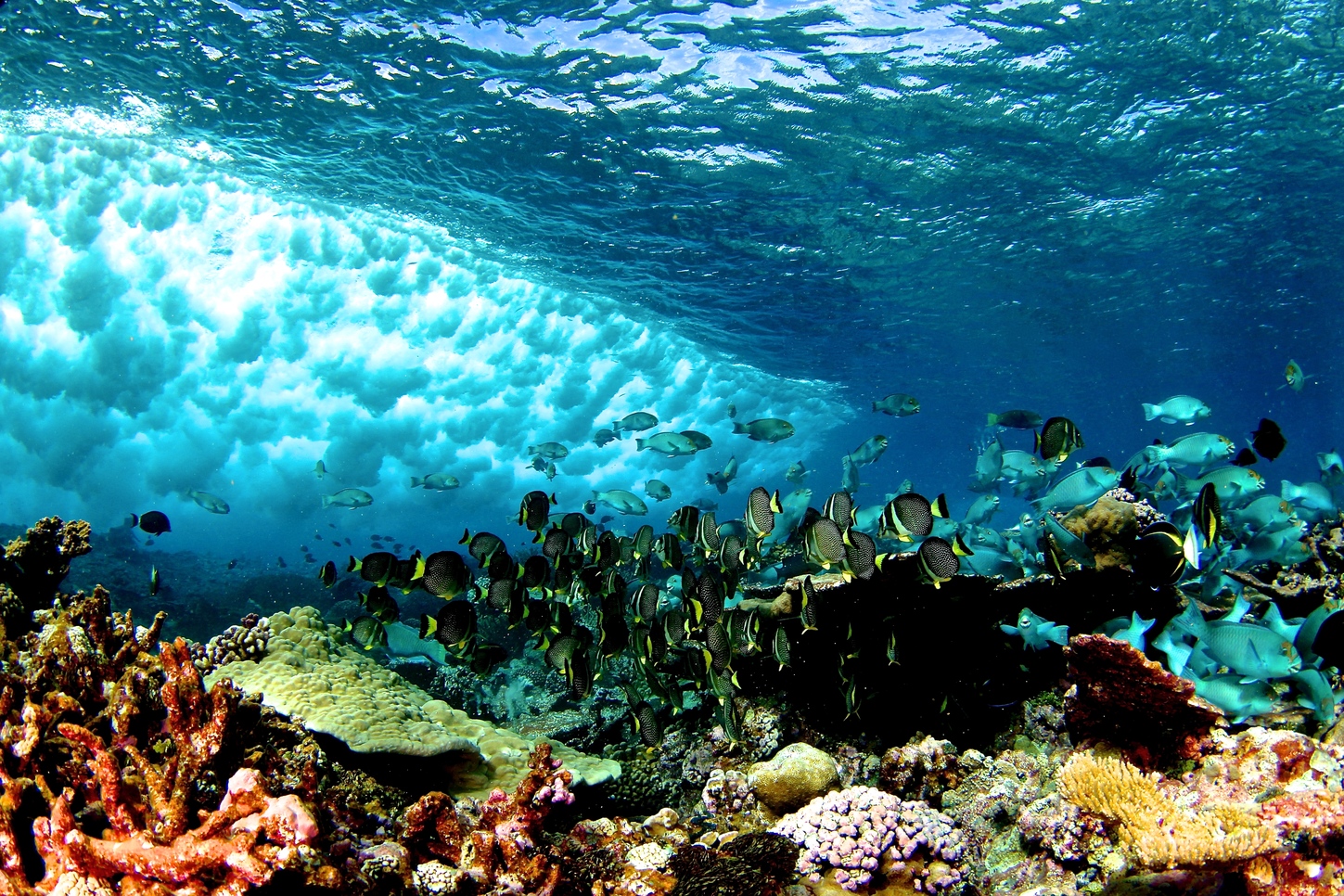
A healthy coral reef is more than scenery. Ecologists describe reefs as the rainforests of the sea: hubs of biodiversity that shelter an estimated 25% of all marine life despite covering less than 1% of the ocean floor. Coral reefs around the world also supply compounds used in medicine, treatments for cancer, arthritis, and bacterial infection have been derived from reef organisms. In Okinawa, the ecology of these reefs has shaped everything from local fishing traditions to the structure of the coastline itself.
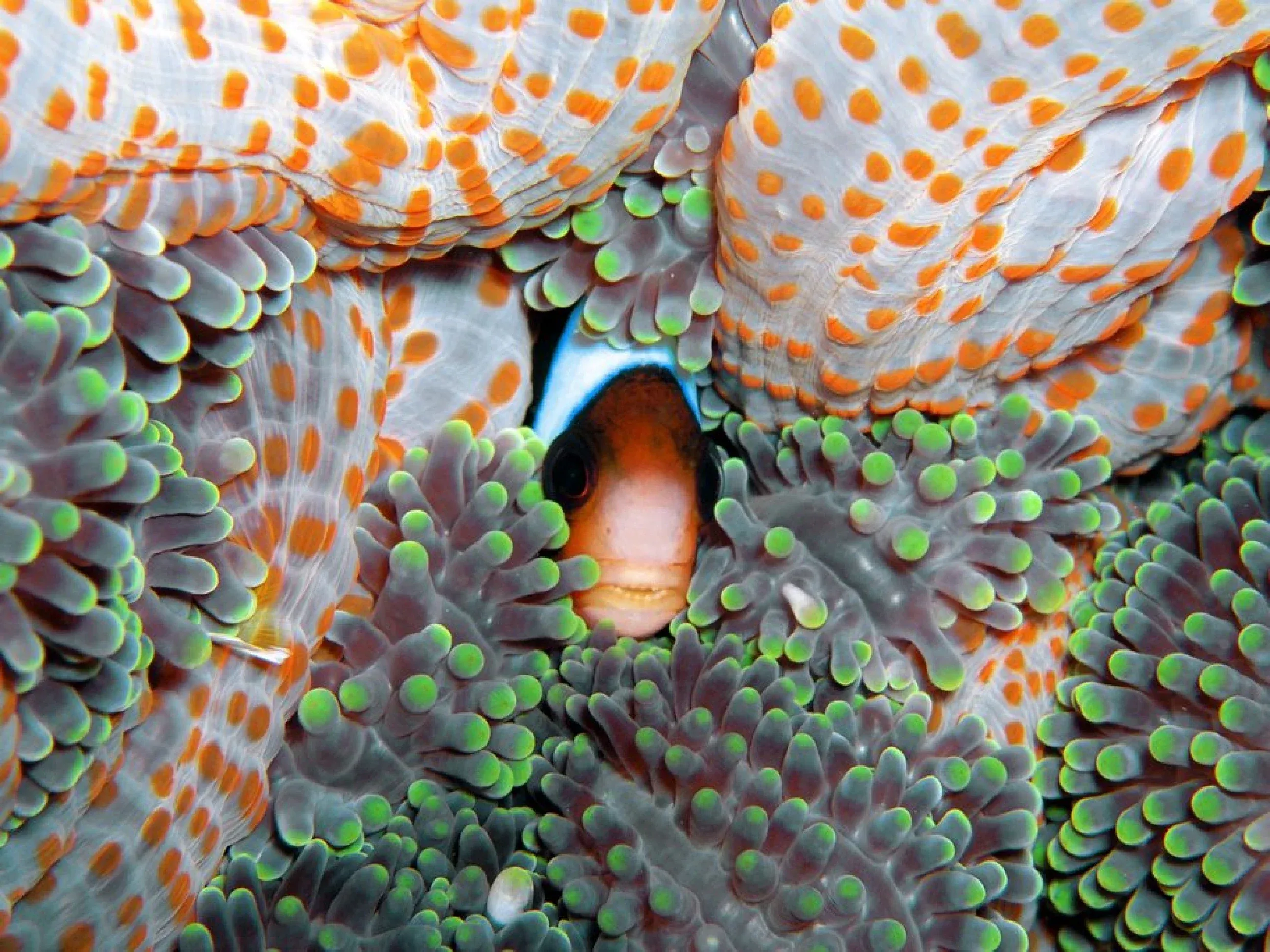
The precious coral reefs of the Ryukyus are infrastructure. They buffer coastlines from typhoon swell. They sustain fisheries that local communities have depended on for centuries. They provide food and shelter for hawksbill turtles, which feed on reef sponges and help prevent coral overgrowth. The interconnections run deep: reef fish depend on coral for cover and food; turtles depend on the lagoons framed by reef for nesting; the communities living on these islands depend on all of it.
When Sekisei Lagoon lost roughly 70% of its coral to bleaching, a documented collapse that unfolded in 2016, it wasn't a statistical abstraction. It was the destruction of something irreplaceable, built over thousands of years, gone in a single overheated summer.
What Is Happening to Okinawa's Coral Reefs Right Now
The short version: 2024 was devastating.
Sea surface temperatures around Okinawa regularly topped 30–31°C through the summer, pushing reef heat stress, measured in degree heating weeks, the standard unit scientists use to track accumulated thermal damage, into the highest alert levels across the region. Monitoring sites on Iriomote and western Okinawa recorded peak August temperatures around 30.9–31.3°C, with heat stress accumulating to 13–15 degree heating weeks. By any scientific measure, that is a bleaching emergency.
The results were visible on the reef. In Onna Village on the main island, shallow planted corals were nearly wiped out. Even deeper sites, three to ten meters down, saw coral cover collapse by 40 to 60% compared to the prior year. Divers and snorkelers who explore by scuba diving these same sites today observe a landscape transformed. In the Yaeyama islands, a survey of Sekisei Lagoon in late 2024 found bleaching had driven live coral cover from 17.4% down to 13.7%, erasing much of what had painstakingly recovered since the last major event.
What made 2024 particularly cruel was the weather. In a normal summer, typhoon swell passes through and cools the water. In 2024, unusually calm seas allowed warmer temperatures to build without relief, wave after week. The ocean held its heat, and the coral paid for it.
The 2023–2025 global bleaching event, of which this crisis is a part, is the fourth such event on record and the most widespread in documented history, with more than 80% of the world's reefs experiencing severe heat stress. Okinawa is not an isolated case. But Okinawa, with its extraordinary biodiversity and its history of documented decline, has more to lose than most.
A Longer Story: How We Got Here
To understand 2024, you need to understand that the reef was already compromised.
The modern decline of Okinawa's coral began after 1972, when the islands were returned to Japanese administration and rapid coastal development followed. Reclamation projects, resort construction, land clearing, all of it sent sediment and red soil into bays and lagoons. That red soil is a specific and persistent problem. Iron-rich and fine-grained, it coats coral in turbid water, blocking the sunlight that coral depends on to feed through its symbiotic algae. Agriculture on the main island and across the Yaeyamas contributes significantly: heavy rains wash iron-rich sediment from fields into coastal bays. Studies have found that even decades after the prefecture passed a red-soil ordinance in 1995, roughly 40% of the coastline still experiences damaging runoff events.
Then came the bleaching events. In 1998, after sea surface temperatures ran 1–2°C above average for nearly a month, the dominant reef-building corals, particularly the branching and tabular Acropora species that give these reefs their three-dimensional architecture, suffered catastrophic damage. Sesoko Island lost 73% of its coral cover between 1997 and 1999, and the event devastated nearshore reefs across the main island. By 2009, those reefs that had measured around 24% live cover in 1995 had dropped to just 7.5%.
2016 delivered another blow to Sekisei Lagoon. Surveys in 2016-2017 found roughly a third of Okinawa Island's corals bleached, with about 5% dying outright.
And yet: the reef recovered. That recovery is important to name, because it is easy to read a litany of disasters and conclude that the situation is hopeless. It isn't. Hard coral cover on Okinawa Island rebounded from roughly 14% in 2017 to 28.5% by 2023, nearly doubling in six years. Bleaching incidence during the 2022 event was measurably lower than during 2017, suggesting either partial acclimatization to global warming or favorable local conditions that year.
The survival of coral here is not guaranteed. The reef is resilient, when it gets the chance to be. The problem is that the intervals between severe thermal events are shrinking, and the devastation of 2024 has undone much of that hard-won recovery.
What Is Killing Okinawa's Coral: The Full Picture
Bleaching gets the headlines, but the coral reef ecosystem is being squeezed from multiple directions simultaneously.
Rising sea temperatures are the dominant threat. When water warms beyond a coral's tolerance threshold, the coral expels its zooxanthellae, the symbiotic algae living in its tissue that provide both color and up to 90% of its energy through photosynthesis. The coral turns white. If temperatures normalize quickly, recovery is possible. If the heat persists, the coral starves and dies. Ocean acidification, the other face of climate change, compounds this by weakening the calcium carbonate skeletons that corals build over decades.
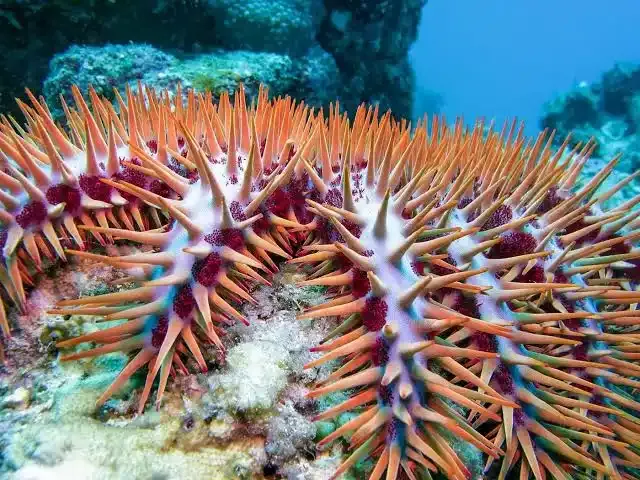
Crown-of-thorns starfish are a chronic secondary threat. These large, spiny predators eat coral tissue directly and have triggered periodic mass outbreaks on Okinawa's reefs. Conservation programs note that sustained population explosions threaten to consume coral faster than it can regenerate. Volunteers with Team Tyura Sango routinely cull them from restoration sites as part of their coral care work.
Red soil runoff continues despite regulation. Construction and agricultural land clearing send iron-rich sediment into coastal waters, reducing light penetration and smothering coral polyps. Turbid reefs are also less resilient to heat, corals already stressed by poor water quality bleach faster and recover more slowly. The threat to both land and marine environments from runoff is one that researchers and prefectural authorities have struggled to contain for decades.
Coastal development has done much to devastate reef habitat through land reclamation. A proposed LNG power plant at Urasoe City on the main island triggered environmental ministry concern in 2026, with officials warning that warm discharge water could induce local bleaching in adjacent reef communities.
Tourism adds its own weight, which is worth examining honestly and at length.
What Tourists Actually Do to the Reef
This section is not an accusation. Most people who snorkel Okinawa love what they see and have no idea they're causing harm. That's exactly why it's worth being direct about.
Physical contact is the most immediately damaging thing a snorkeler or diver can do. Coral tissue is covered by a thin mucus layer that protects it from bacteria and infection. A single touch removes that layer. A fin kick that grazes a branching Acropora can break it. Many divers and snorkelers don't realize how their movements spread harm, thousands of visitors doing this daily, across the most popular sites, adds up to measurable structural impact quite apart from climate change.
Chemical sunscreen is a quieter problem, but a real one. Conventional sunscreens contain UV filters, most commonly oxybenzone, octinoxate, and octocrylene, that accumulate in coral tissue. These chemicals can induce bleaching, damage coral DNA, and disrupt reproduction at concentrations far below what a single swimmer would introduce. The cumulative effect of millions of snorkelers at busy reef sites, all wearing conventional sunscreen, is a documented concern recognized by NOAA and other reef monitoring bodies.
The scale is hard to grasp. Globally, scientists estimate that thousands of tons of sunscreen wash off swimmers and into reef environments every year. Japan currently has no regulations restricting these chemicals, unlike Hawaii, Palau, and several other reef-adjacent jurisdictions that have banned oxybenzone and octinoxate outright. In Okinawa, travelers must take individual responsibility, because no law currently requires it. Every diver and snorkeler who chooses mineral sunscreen is making a small but real choice to protect the reef.
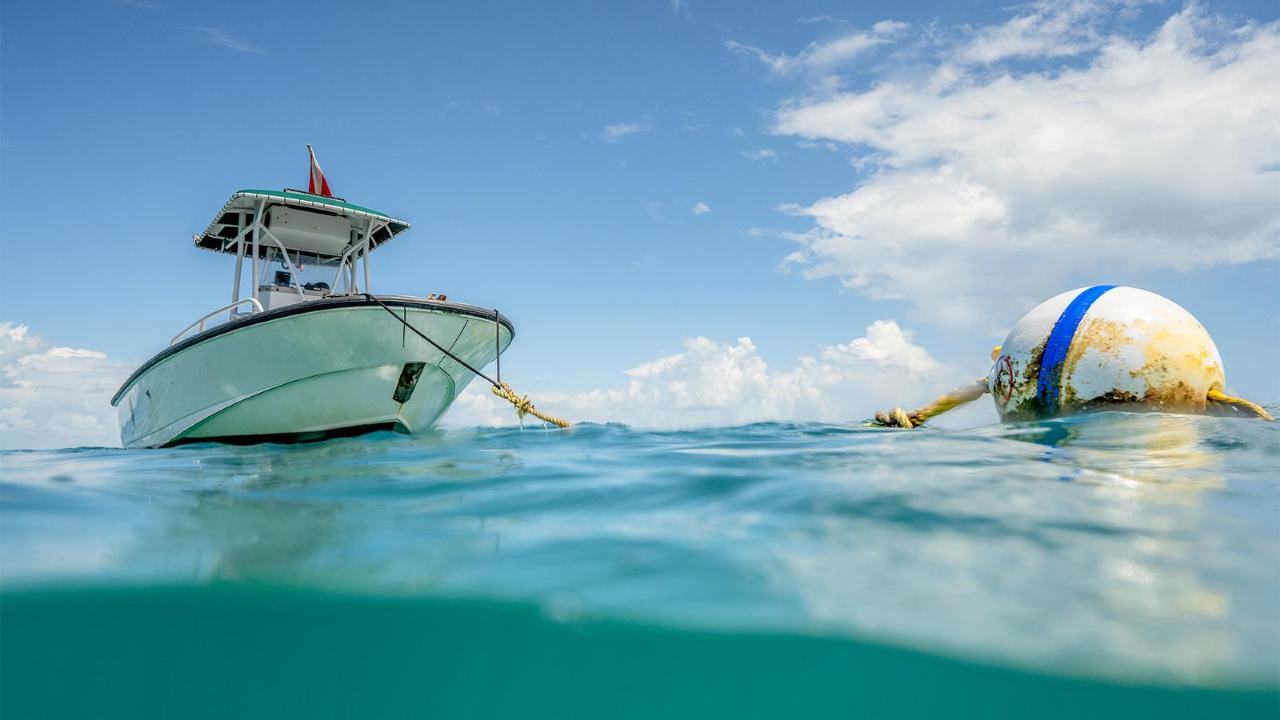
Unregulated boat operations cause harm through anchor damage. A single anchor drop onto a coral reef can destroy decades of growth. Responsible operators use permanent mooring buoys instead; not all do.
Unmanaged snorkel crowds at the most popular sites, the Blue Cave at Cape Maeda being the obvious example, concentrate physical impact in a small area. The underwater reef near high-traffic entry points takes disproportionate damage relative to the visitor numbers spread across the broader archipelago.
None of this means travelers should stay home. It means travelers should make different choices than they might otherwise, and that those choices genuinely matter.
Signs of Recovery and the People Making It Happen
Alongside the data on decline, there is something else worth recording: the remarkable tenacity of local conservation communities.
Onna Village, a resort town on the main island's northwest coast, has been actively cultivating and replanting coral since 1999. By 2003 it was returning cultivated corals to the sea. The village declared itself a "Coral Village" in 2018, and its dive operators are now the first in Japan to operate under the UN's Green Fins eco-certification standard, meaning every licensed diving shop in Onna is required to follow reef-safe guidelines covering guest briefings, no-contact policies, and waste disposal. The promotion of responsible diving in Onna has become a model that other Okinawan coastal communities are beginning to follow.
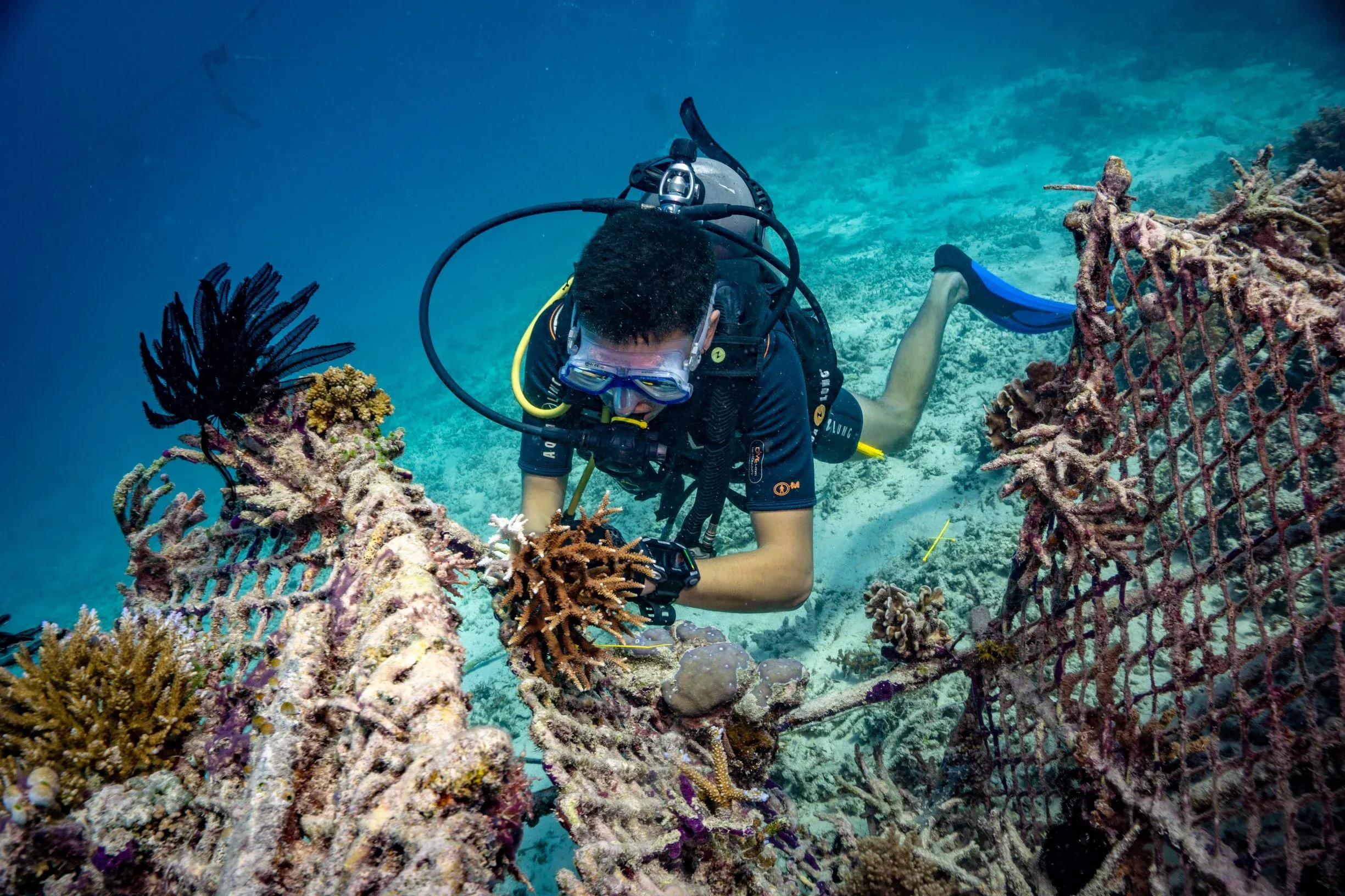
Team Tyura Sango, founded in 2004 as a cooperative partnership of local businesses, local fishermen, and government agencies, has placed approximately 19,500 coral seedlings in Onna's reefs. By 2020, the Onna coral cultivation program had outplanted around 30,000 coral fragments back to natural reef sites. Volunteers, more than 1,200 of them over the program's history, plant coral by hand after fragments have been grown at onshore nurseries and tank facilities. Regular cleanups remove crown-of-thorns starfish from nursery frames. The work is unglamorous and repetitive and it matters. It is okinawa coral reef conservation in the most literal sense: hands in the sea, week after week, trying to revive what was lost.
The Okinawa Institute of Science and Technology has entered reef restoration at scale. Beginning in 2023, OIST launched a coral transplanting program informed by genomics, selecting heat-resilient genetic variants of coral for each specific site, monitoring results with environmental DNA analysis. Researchers at OIST, including scientists affiliated with the University of the Ryukyus, are working to understand which coral colonies are best equipped to survive in warmer seas, and to cultivate those strains for outplanting. The goal is not just to restore what exists today, but to build reefs that can survive for generations to come.
In the Yaeyama islands, the Support Council for Sexual Reproduction and Coral Rehabilitation is trying something different: collecting spawning corals' eggs and sperm to rear juvenile corals in captivity before outplanting them. It's the first program of its kind in Japan, targeting the depleted reefs of Sekisei Lagoon. The aim is to regenerate the genetic diversity that mass bleaching events strip away, to educate divers and raise juvenile corals capable of facing a hotter ocean.
Reef Check Okinawa runs an EcoDiver training program, turning interested divers into certified reef health monitors who contribute standardized survey data to the global reef monitoring network. Every researcher who enters that database adds to the body of evidence that shapes prefectural and national conservation policy.
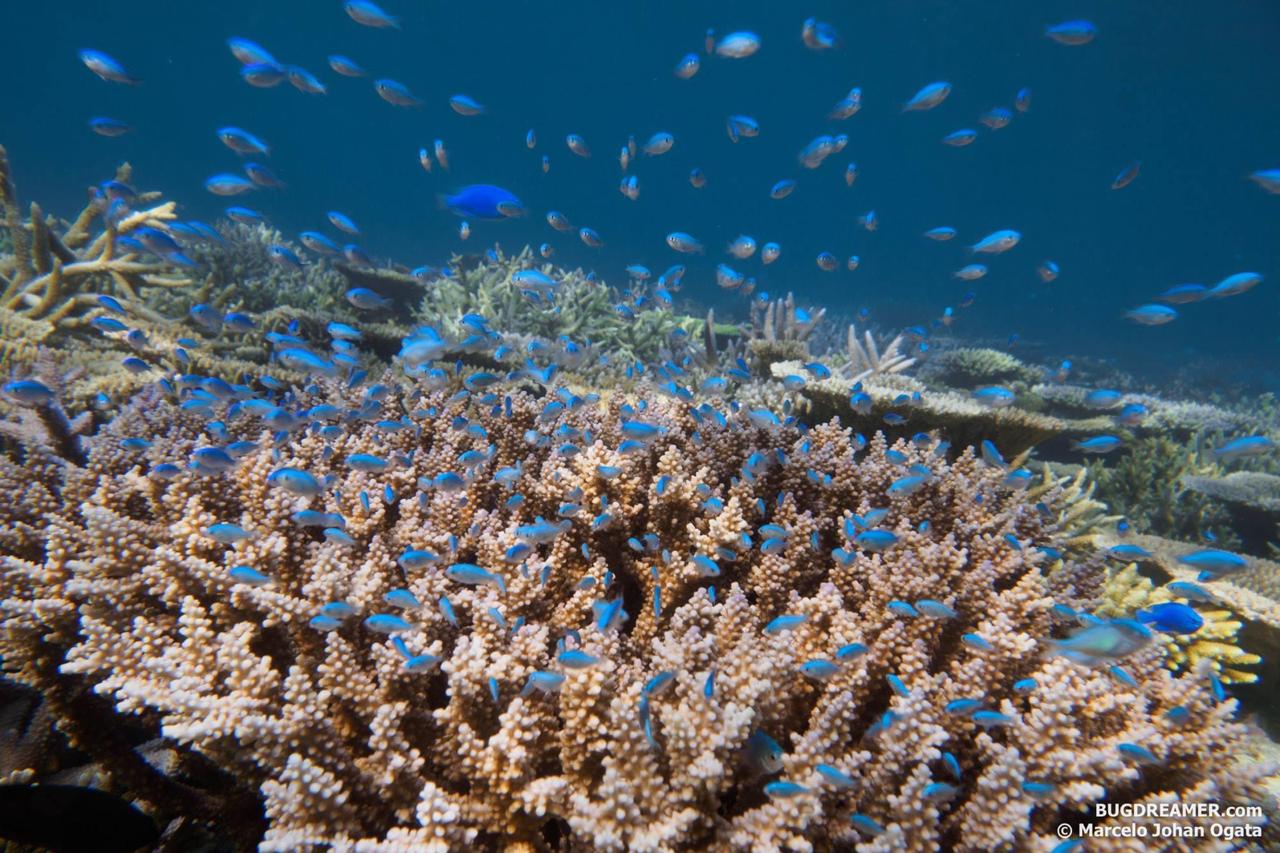
Not all coral species are cooperating equally with recovery. The branching Acropora corals that give healthy reefs their three-dimensional complexity, the housing block structure that shelters hundreds of fish species, are the most vulnerable and the slowest to return. More heat-tolerant massive corals like Porites and Goniastrea tend to survive bleaching events better, meaning the reef that returns after a major bleach is structurally simpler than the one that existed before. Scientists warn that without Acropora recovery, these reefs risk becoming permanently "underdeveloped", alive, but impoverished.
Recovery is possible. It is also not inevitable. The difference, in part, is what happens on the surface.
What Travelers Can Actually Do
The honest version of this section is not a list of feel-good gestures. These are choices that, in aggregate, have measurable effects on one of the most important coral reef systems in the northern Pacific.
Before you go
Choose your sunscreen carefully. Look for mineral sunscreen with only zinc oxide or titanium dioxide as active ingredients. Avoid products listing oxybenzone, octinoxate, or octocrylene. Reef-safe mineral sunscreen is available in Japan, but selection in resort areas can be limited, buy it before you travel. Alternatively, wearing a full UPF rashguard in the water reduces sunscreen need significantly, which is how most experienced local divers approach the problem. For a photographer or anyone planning extended time in the water, rash guards are the cleanest solution.
Vet your tour operator. This is the highest-leverage single decision a visiting snorkeler or diver makes. Look for operators who use permanent mooring buoys (not anchors), give thorough pre-water briefings on reef etiquette, and operate under or display affiliation with Green Fins or Reef Check certification. In Onna Village, this is now required by local ordinance. Elsewhere, it requires a quick question before you book.
Evertrail Tours operates with explicit reef-safety protocols, including pre-water briefings and guided approaches designed to keep groups clear of fragile reef structures, a practical baseline to look for when comparing operators.
Think about timing. August and September represent peak thermal stress season on Okinawa's reefs. Visiting outside this window means you're more likely to see coral in better condition and you're reducing visitor pressure during the reef's most vulnerable period. The snorkeling is also often better: visibility tends to be cleaner in spring and early summer, and some sites see less crowd pressure.
While you're there
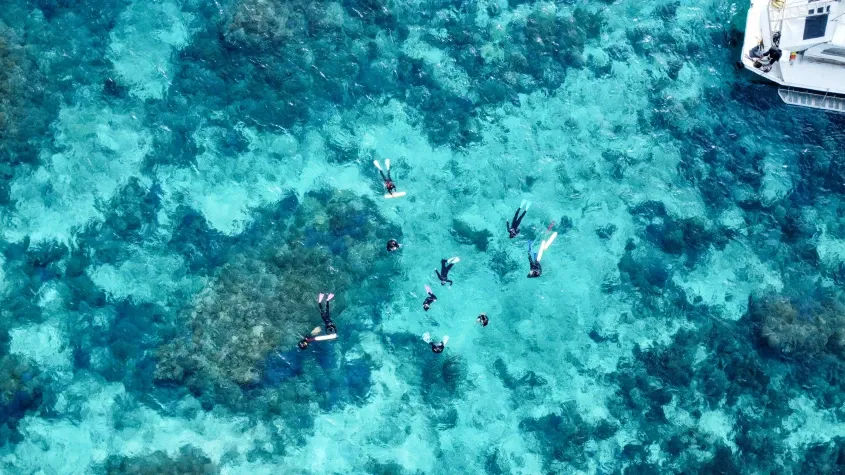
The basic reef rules, taken seriously. Don't touch coral, not for a photo, not to steady yourself, not even briefly. Maintain buoyancy so your fins don't sweep the reef. Don't feed or chase fish. Don't stand on reef substrate, however tempting when you're tired. Don't collect shells or take anything. In sites like Shiraho on Ishigaki, where locals operate guided tours under explicit protective rules for a famous blue-coral colony, stay within the guided group and follow instructions.
Plant coral. This is real, and it's available to visitors. In Onna Village, several dive operators run coral planting experiences in partnership with Team Tyura Sango. You enter the water, receive instruction from a guide, and transplant a cultivated coral fragment by hand into an underwater nursery frame. It's not theater, these corals, if they survive, join a reef that is genuinely trying to recover. Non-divers can sometimes participate at onshore nurseries. Contact Onna dive shops directly or check the Team Tyura Sango website for current programs.
Monitor the reef. Reef Check Okinawa offers EcoDiver certification for anyone who wants to go further. The training teaches standardized coral health survey methods and certifies you to contribute data to the global monitoring network. It's a dive certification with scientific value attached.
After you go
Where you spend money matters. Leave reviews that specifically call out operators who enforce reef etiquette and invest in conservation. This creates market signals that reward responsible practice. Write the review that future travelers will read when choosing between operators.
Support directly. Team Tyura Sango, SCC Okinawa, Reef Check Okinawa, and the OIST Coral Project all accept financial contributions. Donating after a trip costs less than most dive equipment purchases and funds work with a documented record of impact.
Frequently Asked Questions
Is it still worth snorkeling in Okinawa if the coral is bleached? Yes. Reef health varies enormously by location, depth, and season. Many sites, particularly in the Kerama Islands, around Miyako, and at protected sections of the Yaeyamas, remain vibrant and structurally complex. The goal of this article isn't to talk you out of going; it's to help you go with clear eyes, choose well, and have a richer experience because of it.
What percentage of Okinawa's coral has been lost? This is more complicated than a single number. Sekisei Lagoon, the largest coral lagoon in Japan, lost approximately 70% of its coral in the 2016 bleaching event and has continued to struggle. Okinawa Island's main reefs show a different pattern: hard coral cover reached roughly 28.5% by 2023 after recovering from a low of about 14% in 2017, though 2024's bleaching event has since caused significant setbacks. The reef's condition varies by island, site, depth, and recent weather history.
What sunscreen is safe to use when snorkeling in Okinawa? Mineral sunscreens containing only zinc oxide or titanium dioxide as their UV filters. Check the active ingredients list. Avoid oxybenzone, octinoxate, and octocrylene. A long-sleeve rashguard reduces the amount of sunscreen you need in the water, which is the cleanest solution for reef-sensitive sites.
Can I plant coral in Okinawa? Yes. Onna Village on the main island offers visitor coral planting experiences through dive operators working with Team Tyura Sango. You don't need advanced diving certification for all programs, some are accessible to snorkelers or involve onshore nursery work. Contact local dive operators in Onna or check the Team Tyura Sango website for current availability.
Is bleached coral dead? Not necessarily. Bleaching is the coral's stress response, it has expelled its zooxanthellae but the coral animal is still alive. If water temperatures return to normal within a few weeks, coral can reabsorb its algae and recover. If heat stress persists, the coral starves and dies. The difference between a bleaching event and a mass mortality event depends largely on how quickly and completely temperatures recover.
When is the worst time to visit Okinawa for reef health? August and September are peak thermal stress months. This doesn't mean the snorkeling is necessarily bad, but it is when bleaching occurs and when shallow reef sites are under the most strain. If your schedule is flexible, April through June offers strong visibility and lower reef stress.
Does touching coral actually make a difference? Yes. The mucus membrane that coats coral tissue is its primary protection against bacterial infection. A single touch removes it. At a busy site with hundreds of visitors, the cumulative effect is significant. This is one of the few impacts that requires no science to fix, just awareness.
Is reef-safe sunscreen regulated in Japan? No. Japan has no domestic labeling regulations governing reef-safe claims, unlike Hawaii and several other jurisdictions that have banned specific harmful UV filters by law. In Japan, the responsibility is entirely the traveler's: read the ingredient list, and choose accordingly.
What organizations are working to restore Okinawa's reefs? Team Tyura Sango (Onna Village), OIST's Coral Project, Reef Check Okinawa, the Support Council for Sexual Reproduction and Coral Rehabilitation (SCC Okinawa), and the Onna Village coral cultivation program are the primary active groups. WWF Japan also supports coral reef conservation work on Ishigaki. If you want to help save the reef directly, any of these groups accepts contributions or volunteer participation.
How does climate change specifically affect Okinawa's coral? Through three mechanisms operating simultaneously: rising sea surface temperatures trigger bleaching events with increasing frequency and severity; ocean acidification from dissolved CO₂ weakens the calcium carbonate skeletons that corals build over decades; and more intense typhoon seasons cause direct physical destruction. All three are accelerating. Prefectural monitoring data and the 2023–2025 global bleaching event, the fourth such event in recorded history and the most extensive, confirm that Okinawa's coral reef crisis is both local and planetary in scale.
The Postcard and the Real Thing
The water is still beautiful. That part of the postcard is true.
What the postcard doesn't show is the white coral twenty meters from where the tour boat anchors. It doesn't show the researchers in the water at dawn, counting live coral versus dead. It doesn't show the volunteers in Onna, placing coral fragments by hand onto metal frames, checking on them week after week, watching to see what survives the next summer.
Understanding the reef's condition doesn't make Okinawa's water less extraordinary. If anything, it makes it more. You're not just snorkeling over scenery. You're swimming above one of the most ecologically significant reef systems in Asia, one that has survived multiple catastrophes, that is actively being fought for by local communities, and whose future is genuinely uncertain.
The travelers who visit with that awareness are different from the ones who don't. They choose better operators. They ask the right questions before booking. They wear the right sunscreen, keep their fins off the reef, and plant a coral before they fly home.
Those are small things. In a coral crisis driven primarily by forces no single traveler controls, small things are not nothing. They are, in fact, the only part of the problem that belongs to you, and it turns out that part is worth taking seriously.
Evertrail Tours · May 28, 2026