There's a photograph you've probably seen a hundred times, a smiling Okinawan elder, well past ninety, tending a garden in the morning light. The caption almost writes itself: the world's longest-lived people and their miraculous diet. Purple sweet potatoes. Bitter melon. Ancient wisdom. Add to cart.
It's a compelling story. It's also, in important ways, incomplete.
The Okinawan diet that gets sold to the rest of the world is largely a snapshot of one specific year, 1949, when the islands were still devastated from World War II, livestock had been decimated, and people were eating whatever kept them alive, which happened to be sweet potato. That fact doesn't erase the genuine nutritional wisdom embedded in the traditional Okinawan diet, but it does complicate the picture considerably.
The full story is more interesting anyway. It involves nose-to-tail pork cookery and fermented tofu that smells like strong cheese. It involves a Confucian eating philosophy that predates every wellness trend by three centuries, and a radical shift in diet and lifestyle driven by SPAM and American military bases that transformed one of the world's healthiest populations into one of Japan's most obese.
Here's what people in Okinawa actually eat, and why it matters.
The Foundation: What Okinawans Actually Eat Every Day
Before the war, before the wellness books, before the Blue Zone designation, people on the island of Okinawa ate what grew. The Ryukyu Islands sit in the subtropical Pacific, battered by typhoons and largely unsuitable for the paddy rice that defines mainland Japanese eating. So they grew something else.
Purple Sweet Potato: The Real Staple
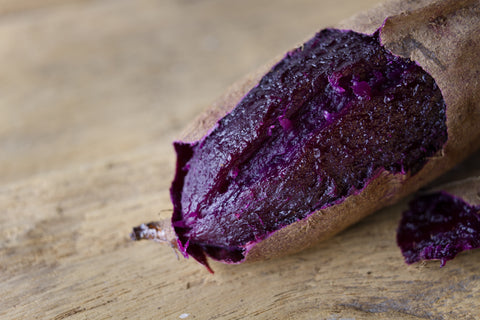
The beni-imo, the vivid purple sweet potato, is perhaps the most honest symbol of Okinawan food culture, precisely because it arrived by chance. Brought from China around 1605 (itself originally from the Americas via Spanish and Portuguese trade), the sweet potato thrived in Okinawa's soil and climate in a way that rice never quite managed. By the mid-nineteenth century, records show it made up over 90% of Okinawans' food intake by weight.
Even by 1949, sweet potato still supplied roughly 69% of daily calories, far and away the dominant food in the diet. It is high in fibre, high in vitamins C and B6, high in potassium, and rich in carotenoids and anthocyanins (the purple colour comes from the same antioxidant-rich family as blueberries). Low-calorie and genuinely nutrient-dense, it is remarkably filling relative to its calorie count. The beni-imo tart has become Okinawa's most famous souvenir, but the vegetable itself was survival food for generations.
Tofu and Soy: The Protein Backbone
Okinawan tofu is not the silken, delicate variety you find in mainland Japan. Shima-dofu, island tofu, is dense, firm, and protein-rich, pressed hard enough to hold its shape in a wok. It was traditionally sold by tofu vendors walking neighbourhood streets at dawn, and it remains a daily staple rather than a dietary supplement.
The Okinawa diet is comprised of a striking range of soy foods, shima-dofu in stir-fries, miso in soup, soy sauce as a seasoning, and tofuyo, the extraordinary fermented tofu described below. These plant-based foods collectively delivered about six times more soy-derived flavonoids to traditional Okinawans than a typical American diet, a striking figure that researchers connect to lower rates of hormone-dependent cancers.
Goya and the Bitter Greens
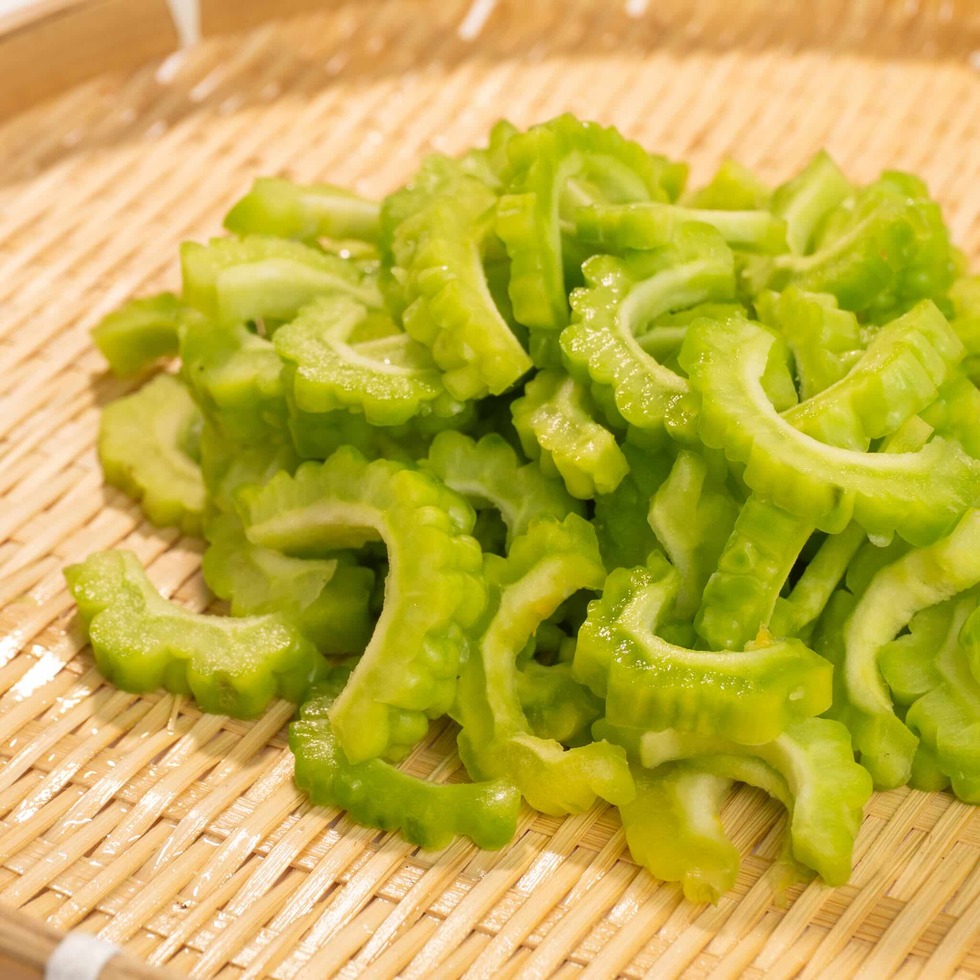
Goya bitter melon is the vegetable that divides opinion more cleanly than any other Okinawan ingredient. It looks like a warty cucumber, tastes of concentrated green bitterness, and appears in refrigerators across the island with the casual inevitability of lettuce anywhere else.
Okinawans eat more bitter melon per capita than anywhere else in Japan, and they grow up with its flavour in a way that makes the Western instinct to soften or disguise it seem beside the point. The bitterness is the point. Goya is high in vitamin C, antioxidants, and anti-inflammatory compounds that preliminary research has linked to blood sugar regulation and reduced risk of chronic disease, though as with many traditional foods, the longevity associations are complicated by the fact that goya-eaters also do a hundred other things differently.
Other fiber-rich vegetables and herbs play supporting roles in the Okinawan kitchen. Mugwort (fuchiba) appears in soups and rice cakes. Herbs and spices like turmeric, used in a local tea called ucchin, add further antioxidant properties to daily eating.
Sea Vegetables: Kombu, Mozuku, and Umibudo
Walk through Makishi Public Market in Naha and you'll find more varieties of edible seaweed than in most seafood sections. Sea vegetables are woven into everyday Okinawan cooking in ways that go far beyond the occasional sheet of nori.
Kombu is the most surprising. The thick, dark kelp doesn't actually grow in Okinawa's warm subtropical waters — it comes from Hokkaido — but it arrived via the ancient Ryukyu-China trade route and embedded itself so completely in the local kitchen that Okinawans now consume more of it per person than any other region in Japan. Rather than using it only for dashi stock (as on the mainland), Okinawan cooks stir-fry it in long strips with pork, a dish called kubuirichi that is pure Ryukyu.
Mozuku, a fine, stringy brown seaweed, is served simply in rice vinegar as mozuku-su, one of those dishes that seems too plain until you eat it on a warm afternoon and understand exactly why it exists. Okinawa is the largest producer of mozuku in Japan, supplying the overwhelming majority of national output, almost all of it farmed in the shallow waters around the main island. Then there is umibudo, the "sea grapes", tiny green spheres on slender stems that pop like caviar against the tongue and are eaten raw with ponzu. Locals pile them on their rice as casually as a garnish.
Pork: The Flavour Foundation
Here is where the Okinawan diet most confuses outsiders. The same prefecture celebrated for centenarians and longevity is also, genuinely and enthusiastically, one of the most pork-obsessed places in Japan.
The Okinawan relationship with pork is traditionally one of full use: ears, trotters, stomach, belly, face. There is a saying, "Okinawans eat every part of the pig except the squeal." The prized indigenous breed is the Agu, a black pig descended from pigs brought from China in the fifteenth century, lean-fleshed and intensely flavoured.
But the key to understanding pork's role in the traditional diet is portion and technique. For most of Okinawan history, meat contributed under 1% of total calories, it was a flavouring agent, a festival food, a way to enrich a broth or add depth to a vegetable dish. The Okinawa diet limits red meat, poultry, and dairy to minimal quantities, and the diet includes only small amounts of fish and seafood relative to the broader category of meat and seafood consumption in other Japanese regions. The long-simmered preparations like rafute render out most of the saturated fat over hours of cooking. Pork was precious precisely because it was scarce, and that scarcity enforced a restraint that modern nutritional science would likely endorse.
How Okinawans Eat: The Philosophy Behind the Food
Understanding the Okinawan diet means understanding something beyond individual ingredients, it means understanding hara hachi bu.
Hara Hachi Bu: The 80% Rule
Hara hachi bu translates, roughly, to "eat until eighty percent full." Okinawan elders traditionally say it before meals, a brief Confucian-derived reminder that lands somewhere between prayer and intention. Its roots trace to the Japanese health philosopher Kaibara Ekken, who articulated similar principles in his 1713 treatise on healthy living, drawing on Chinese Confucian thought about moderation.
The neuroscience behind it is straightforward: there is a roughly twenty-minute lag between eating and the brain registering fullness. Stop at 80% and satiety signals catch up. Continue to complete fullness and you've already overshot. In practice, researchers who studied elder Okinawans found their daily caloric intake hovering around 1,800 to 1,900 kilocalories, well below Western averages and broadly consistent with the mild, sustained caloric restriction that is the best-established longevity-extending intervention in animal studies. This traditional dietary restraint is one reason researchers argue the Okinawa diet could support a longer, healthier lifespan than many Western diets typically allow.
One Japanese study found that men who consistently practised hara hachi bu consumed around 500 fewer calories per day than those who rarely or never did, and ate significantly more vegetables daily. Whether that self-regulatory discipline explains Okinawan longevity or simply accompanies other longevity-promoting behaviours is a genuinely hard question, but the practice is real and measurable, and it helps explain how generations of Okinawans were able to live long, healthy lives on relatively modest caloric intake.
Caloric Density and Portion Logic
Traditional Okinawan cooking is, almost incidentally, a masterclass in low caloric density. The Okinawa diet is built around what nutritionists would call the healthiest foods: sweet potato, sea vegetables, leafy greens, and tofu, all low in calories and fat, high-fiber, and genuinely nutrient-dense foods. Plenty of vegetables, plant foods, legumes, and small amounts of whole grains fill most of the plate. Nuts and seeds appear occasionally. These food groups collectively support overall health in ways that align closely with modern dietary science. Pork appears in flavour-level quantities rather than protein-portion quantities. The result is a diet that is nutritionally rich, fibre-dense, and glycemically moderate — without anyone having designed it to be.
Moai: The Social Fabric of Eating
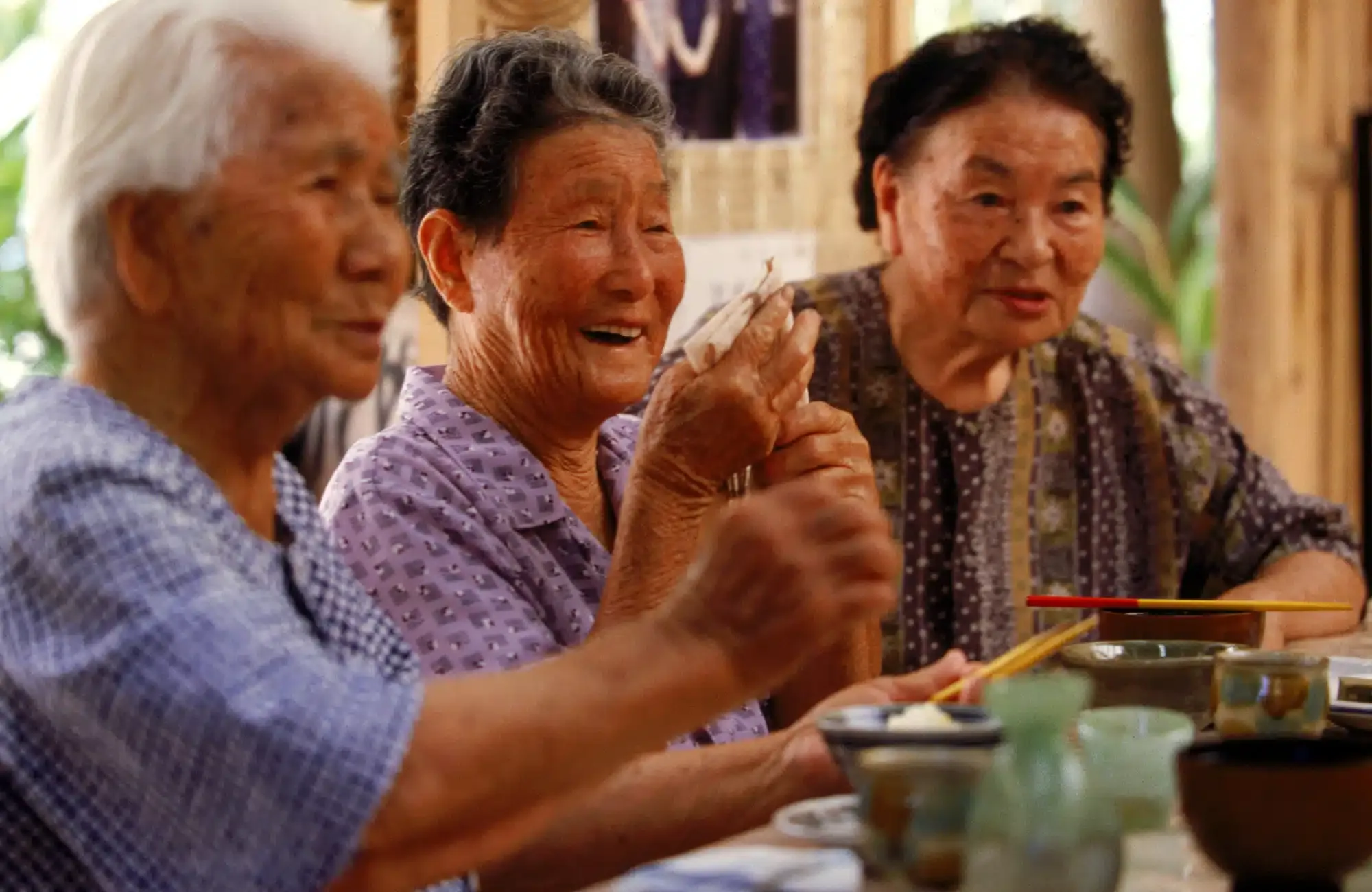
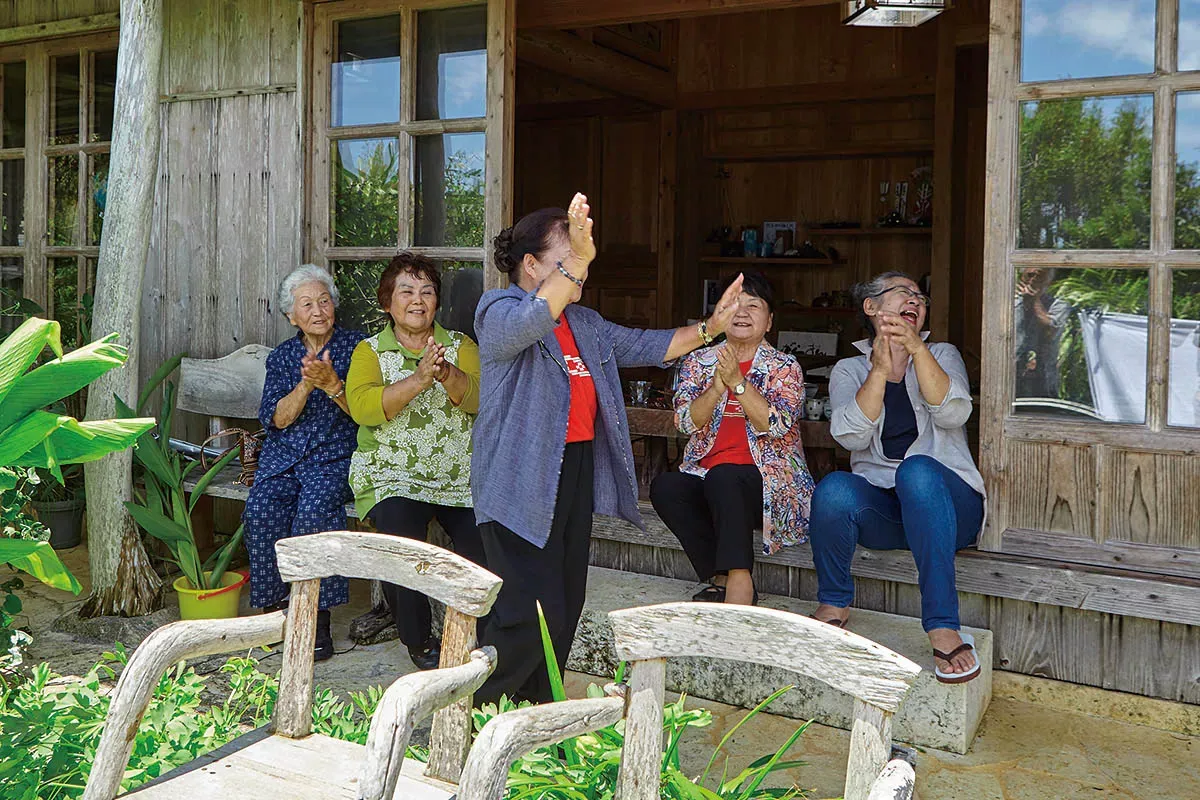
Longevity researchers increasingly emphasise that the Okinawa diet cannot be fully understood apart from the social context in which it's eaten. Moai, the Okinawan word for the lifelong mutual-support groups that most Okinawans belong to, shape daily life including mealtimes. The Okinawan way of eating is rarely solitary. It is communal, unhurried, embedded in networks of obligation and care. These social and lifestyle factors are as much a part of Okinawan culture as the food itself, and they shape dietary habits in ways that no meal plan can replicate.
Whether this social dimension of mindful eating has measurable effects on wellbeing and longevity is one of the more genuinely interesting questions in longevity science. It likely does. But it also means that extracting the "Okinawa diet" as a set of ingredients and replicating it elsewhere without any of the social, physical, and philosophical context is a much more uncertain bet than the wellness industry suggests.
Iconic Okinawan Dishes: Beyond the Health Food Clichés
If you eat in Okinawa, really eat, in the shokudo neighbourhood diners and the market food halls and the family restaurants, this is what lands on the table.
Goya Champuru: The Everyday Classic
Champuru means "something mixed" in Okinawan dialect, and the word itself is a clue, it shares roots with the Malay and Indonesian "campur," a fingerprint of Ryukyu's centuries of Southeast Asian trade. Goya champuru is the essential version: bitter melon stir-fried with firm shima-dofu, egg, and pork belly (or, in the thoroughly modern version, SPAM). The goya is halved, seeded, sliced thin, and often salted briefly to temper the most aggressive edge of its bitterness before hitting the wok. Good champuru balances bitter, savoury, and faintly sweet in the same mouthful. Bad champuru is just bitter.
Every family has a version. Some add a pinch of kokuto, Okinawa's distinctive dark cane sugar. Some use bonito flakes to finish. The dish appears on practically every menu in the prefecture, from roadside shokudo to hotel restaurants.
Rafute: The Slow-Braised Belly
Rafute is Okinawa's most celebrated pork dish, and one of the most misunderstood when viewed through a longevity lens. Skin-on pork belly, braised for hours in a liquid of soy sauce, awamori, dashi, and brown sugar until it collapses at the touch of chopsticks. The fat renders down to near-translucency. The skin becomes yielding rather than chewy. The result is intensely savoury, faintly sweet, and deeply satisfying in small quantities.
Its lineage is Chinese, a direct cousin of dongpo rou, the red-cooked pork belly of Hangzhou, introduced during the era of tributary exchanges between the Ryukyu Kingdom and the Chinese imperial court. Unlike the mainland Japanese kakuni, the skin is left on throughout cooking, which is considered essential to the dish's texture.
A small plate of rafute as part of a larger meal is a very different thing from a Western-portioned main course. That distinction matters.
Okinawa Soba: The Noodle That Isn't
Okinawa soba confounds first-time visitors immediately: despite the name, it contains no buckwheat. The noodles are thick, round wheat noodles, closer in spirit to udon, served in a broth built from pork bone and bonito dashi, sometimes with kombu. Locally, Okinawans call it "suba."
The standard bowl arrives topped with braised pork belly, kamaboko fish cake, green onion, and pickled red ginger. Order soki soba and you get stewed spare ribs instead of belly, the bone-in version is considered the more flavourful choice. On the southern outskirts of Naha, entire streets are lined with soba restaurants, each claiming a slight distinction in broth clarity or noodle thickness.
Okinawa soba has protected regional product status in Japan, it must be made with wheat flour and contain at least 30% Okinawan ingredients to carry the name.
Tofuyo: The Okinawan Cheese
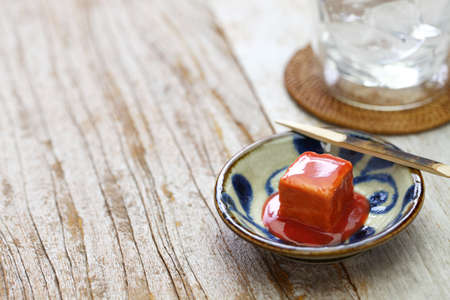
If you described tofuyo without naming it, you would describe cheese. Firm shima-dofu, dried and then fermented for months in red koji mould, rice koji, and awamori, producing a pungent, creamy, red-tinged cube about the size of a die. It is eaten in tiny quantities, a sliver at a time with a toothpick, alongside a small glass of awamori, and its flavour is deep, savoury, and complex in a way that stuns most first encounters.
Tofuyo descended from Chinese fermented bean curd, introduced during the Ryukyu Kingdom period around the eighteenth century, but was remade with local awamori rather than brine, giving it a distinctly Okinawan character. Research has identified compounds in tofuyo with potential blood-pressure-lowering activity, though its primary cultural function remains as a refined accompaniment to the islands' native spirit.
Awamori: The Spirit of the Islands
Awamori is not sake. Distilled rather than brewed, made from Thai long-grain rice with black koji mould rather than the white or yellow koji of mainland spirits, it is Okinawa's indigenous alcohol, introduced from Thailand (then Siam) during the Ryukyu Kingdom era and refined over five centuries. Its alcohol content is typically higher than sake, its flavour drier and more complex, and older expressions aged in clay pots for decades are treasured accordingly.
It appears throughout Okinawan dining: as a cooking liquid in rafute, as a fermenting medium for tofuyo, and as the standard table drink across the island, often diluted with water and served over ice.
The Okinawan Diet and Longevity: What the Research Actually Says
The Okinawa Centenarian Study, begun in 1975 by Dr Makoto Suzuki and considered the world's longest continuously running centenarian study, has examined more than a thousand people who reached the age of one hundred on the island. At its peak, Okinawa had roughly forty or more centenarians per 100,000 people, compared to about fifteen nationally in Japan and around ten to fifteen in most developed countries.
The Blue Zone Designation
The "Blue Zone" concept, regions of the world with documented concentrations of people living exceptionally long lives, placed Okinawa alongside Sardinia, Loma Linda in California, Nicoya in Costa Rica, and Ikaria in Greece. The researchers identified several overlapping factors in each zone: diet, caloric restriction, physical activity, a sense of purpose (in Okinawa's case, the concept of ikigai, "reason for being"), and strong social bonds.
What the longevity literature is careful to note, even if the popular versions of these stories are not, is that diet is one strand among several. Elder Okinawans who lived to a hundred were also people who moved their bodies throughout their lives (gardening, walking, the physical labour of rising from and sitting on tatami floors), who belonged to moai support groups that provided decades of social connection, and who maintained a sense of purposeful engagement into extreme old age. Their healthy lifestyle encompassed far more than food choices alone.
The health benefits of the traditional Okinawa diet are nonetheless real, reduced cardiovascular disease risk, lower rates of certain cancers, and a longevity advantage over most other populations. Researchers have identified some of the highest concentrations of centenarians in the world in Okinawa, and the Okinawa diet may offer meaningful lessons about how food and longevity intersect. No single food — not sweet potato, not goya, not kombu, can bear the weight of explaining all of this. The research, at its most honest, points to a pattern and a way of living, not a shopping list.
The Critiques and Controversies
The Blue Zone story has attracted serious scrutiny. Demographic researcher Saul Newman has argued that apparent longevity concentrations correlate with regions that have poor historical record-keeping and high poverty, pointing out that Okinawa's birth and death records were largely destroyed during the 1945 battle and reconstructed under American occupation by administrators unfamiliar with Japanese documentation. Under these conditions, he argues, errors and inconsistencies in age recording could inflate centenarian counts.
His arguments remain contested, demographers who directly validated Okinawan birth records against the koseki family registry have published responses defending the data's integrity. But the debate is real, the uncertainty genuine, and honest writing about Okinawan longevity should acknowledge it rather than present the headline numbers as settled fact.
What is not contested is what has happened to Okinawa's longevity rankings since.
How the Okinawan Diet Has Changed And What Remains
The diet that the wellness world romanticises is disappearing, and the consequences are documented and striking.
The Post-War American Influence
After the devastation of 1945, American military forces occupied Okinawa and brought their food with them. SPAM entered the local diet first through military rations and surplus, then through genuine affection, Okinawan cooks adapted it into champuru, rice dishes, and breakfast plates with eggs and rice (pōku tamago onigiri remains a convenience-store staple today). Taco rice, seasoned ground beef, cheese, lettuce, and tomato served over white rice, was invented near the US bases in the 1980s and is now considered a local comfort food with its own regional pride.
American-style school lunches, bread, and processed foods entered daily life through the 1950s and 1960s, accelerating after Okinawa's reversion to Japan in 1972 opened the floodgates of national food distribution. Sweet potato, which had dominated caloric intake in 1949, had already declined to about 3% of intake by the 1960s, a collapse that happened as soon as other options became freely available, which is its own kind of evidence about how much the earlier dominance reflected scarcity rather than preference.
The Numbers Today
The results of this dietary transition are measurable and uncomfortable reading. Okinawa now has the highest obesity rates in Japan, over 40% of men in the prefecture are classified as obese, against a national male average around 31%. Alcohol-related liver disease is among Japan's worst in Okinawa. Premature mortality in the working-age 20–64 cohort has surged.
Male life expectancy ranking has fallen from first in Japan in 1985 to 26th by 2000 (the so-called "26 shock" that alarmed public health officials), to 36th by 2015, to 43rd of 47 prefectures by 2020. Women fell from first, a ranking they held seven times between 1975 and 2005, to 16th by 2020, the first time since records began in 1965 that Okinawan women dropped out of the top ten nationally.
The critical detail: this collapse in rankings is being driven by working-age mortality, not by the elderly. Okinawans who are 75 and older, the generation that maintained traditional eating patterns on the Okinawa diet, still rank among the longest-lived in Japan. The contrast between Okinawa and Japan's national averages for this age group remains striking. It is their children and grandchildren who are dying younger. The natural experiment could not be clearer.
What the Older Generation Still Eats
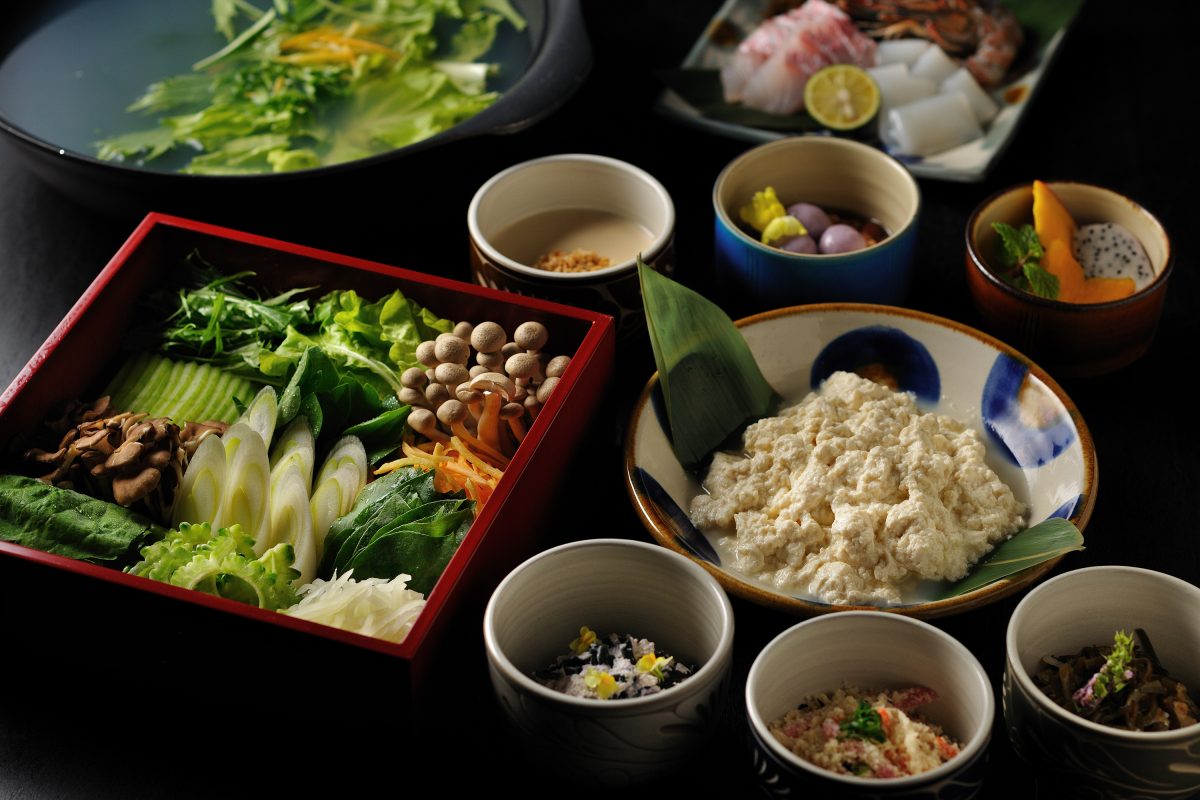
In Ogimi village in northern Okinawa's Yanbaru region, a small community that issued its own "Greatest Longevity in Japan" declaration in 1993, the older residents still eat closer to the traditional pattern. Survey data from the village shows residents consuming green and yellow vegetables about three times the Japanese average, legumes and soy products at roughly one and a half times the national average. A restaurant there called Emi no Mise has served longevity-meal sets for decades: the Okinawa diet served here is modest in calories, and the menu includes tofu-heavy, vegetable-forward plates with token fish and modest portions of pork, a living demonstration of what this diet might look like when maintained through conscious choice rather than necessity. Shikuwasa citrus, squeezed over almost everything, is a key part of the diet in this region.
Nuchigusui, the Okinawan concept that food is medicine, still echoes in the way older islanders talk about what they eat. Not as philosophy, exactly, but as the background assumption beneath every meal: that what you put in your body is a kind of daily choice about who you intend to be.

Experiencing the Okinawan Diet as a Visitor
Eating well in Okinawa as a visitor requires only one thing: a willingness to step away from the main tourist belt and into the places where people actually eat.
Makishi Public Market, Naha
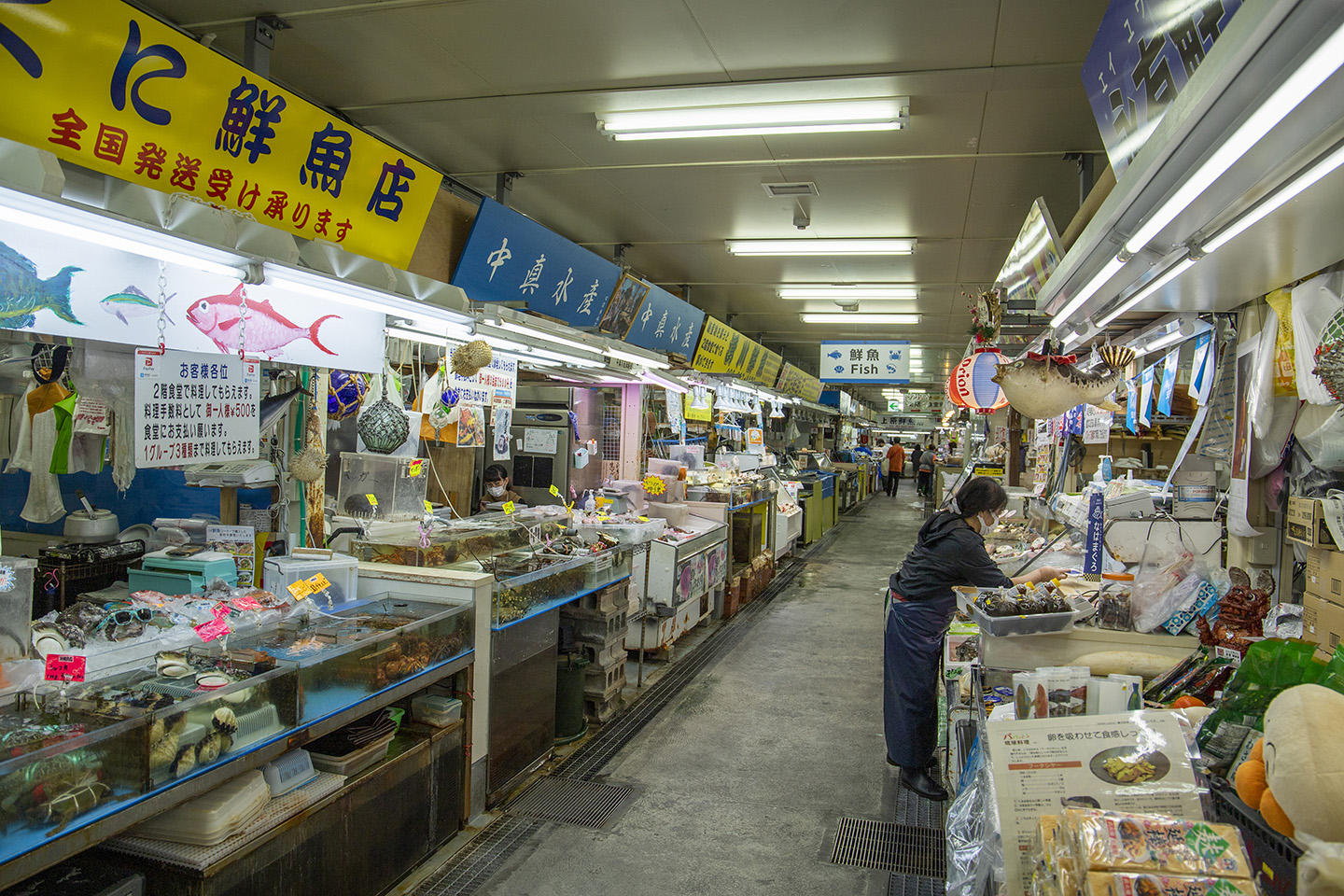
Naha's First Makishi Public Market is Okinawa's kitchen, a title it has held since it emerged from a post-war black market in 1950. After a thorough renovation, it reopened on its original site in Naha's Makishi district in 2023, the ground floor's 75-odd stalls selling pig face, trotters, stomach, and belly alongside reef fish, island vegetables, sea grapes, and tropical fruit. The second-floor restaurants run the famous mochiage system: choose your ingredients downstairs, pay a small preparation fee upstairs, and have them cooked to order by the stall's affiliated kitchen. It is one of those rare market arrangements that rewards both the curious and the hungry.
Shokudo and Local Restaurants
The shokudo, neighbourhood diner, unpretentious and reliably good, is the format through which most Okinawans interact with their own cuisine on ordinary days. Set meals (teishoku) arrive with champuru, a bowl of soki soba or miso soup, rice, pickles, and sometimes a small plate of rafute or goya. Awamori and Orion beer appear from lunchtime without judgment.
The best Okinawa soba is always, according to whoever you ask, at somewhere specific and personal, a particular shop in a particular neighbourhood that has been doing it the same way for thirty years. The search for it is part of the pleasure.
Food Towns and Day Trips
For visitors staying on the main island and interested in the food-longevity connection specifically, the drive north to Ogimi village is worthwhile. The village is perhaps an hour and a half from Naha, deep into the Yanbaru forest, and it wears its longevity reputation gently rather than performatively. Stop at Emi no Mise for a traditional meal. Buy shikuwasa, the small, intensely aromatic citrus native to northern Okinawa, sour and floral, in every form available.
Food-focused tours offer something market-wandering alone cannot: context. A local guide who can explain why the pork belly at a particular stall is prepared the way it is, or what the sea vegetable names actually mean, or how the same dish appears differently in a fishing village than it does in Naha. Evertrail Tours runs Okinawa food and culture experiences that move through these layers, market, kitchen, table, with the kind of access that takes years to build independently.
Frequently Asked Questions About the Okinawan Diet
What do Okinawans eat every day? The daily Okinawan diet centres on purple sweet potato, tofu, miso soup, sea vegetables, and green vegetables like goya (bitter melon). Pork appears regularly but in small quantities, typically as a flavouring agent rather than a main protein. Rice is present but historically far less dominant than in mainland Japan.
Is the Okinawan diet plant-based? The traditional Okinawa diet was approximately 85 to 90% plant-based by caloric intake, with plant-based foods, soy products, sweet potato, and vegetables, as the core. Animal protein, primarily pork and fish, was present but modest, contributing under 10% of calories in historical records.
What is hara hachi bu? Hara hachi bu is a Confucian-derived practice followed in Okinawa that translates to "eat until 80% full." It functions as a cultural caloric restriction mechanism, stopping before the brain has registered complete fullness, and is cited by researchers as one reason for the low average daily caloric intake among traditional Okinawan elders, typically around 1,800 to 1,900 kilocalories.
How does the Okinawan diet differ from the Japanese diet? Okinawans historically ate far less rice and more sweet potato than mainland Japan, significantly more pork, more bitter vegetables like goya, and distinct regional dishes including goya champuru and Okinawa soba. The islands also carry strong Chinese and Southeast Asian culinary influences, reflecting centuries of Ryukyu Kingdom trade, giving the cuisine a character quite different from mainstream Japanese food.
Has the Okinawan diet changed in modern times? Yes, dramatically. Post-World War II American military presence introduced SPAM, fast food, processed meats, and refined carbohydrates. American-style school lunches accelerated childhood dietary change. Today, younger Okinawans have the highest obesity rates in Japan and male life expectancy has fallen from first to 43rd of 47 prefectures. The generation that maintained the traditional diet still lives exceptionally long; the generation that abandoned it does not.
What are the most famous Okinawan foods? Goya champuru (bitter melon stir-fry with tofu and pork), Okinawa soba (thick wheat noodles in pork-bone broth), rafute (slow-braised skin-on pork belly), tofuyo (fermented tofu aged in awamori), and beni-imo (purple sweet potato) dishes are considered the most iconic foods of Okinawan cuisine.
Can you lose weight on the Okinawan diet? The traditional Okinawa diet is calorie-light, high in fibre, and naturally portion-controlled through the hara hachi bu principle, all factors associated with healthy weight management. Adopted as a framework for healthy eating, it shows potential for supporting weight management, but it is a cultural eating pattern shaped by centuries of geography, scarcity, and philosophy, not a prescriptive weight-loss programme. Replicating it fully outside its original context is a more complicated proposition than most wellness books suggest.
Where can I try authentic Okinawan food? The most direct window into authentic Okinawan eating is Naha's Makishi Public Market, neighbourhood shokudo restaurants, and, for the longevity connection specifically, restaurants in Ogimi village in northern Okinawa. Food-focused cultural tours with local guides offer guided access to dishes, producers, and culinary context that most visitors miss when exploring independently.
What Gets Lost in Translation
Here is the thing that most Western writing about the Okinawan diet gets wrong: it treats food as the answer.
Diet is one element in a pattern that also includes daily physical movement, caloric restraint not because of ideology but because that was what was available, a sense of purpose that didn't retire at 65, and decades of tight social bonds through moai networks. Remove any of these and you have a different system.
What did give Okinawa its remarkable health outcomes was a diet and lifestyle that happened to include a nutritionally excellent Okinawa diet, low in caloric density, nutrient-dense, rich in fibre and antioxidants, built on plant-forward eating with soy and pork as flavour rather than foundation. That way of living is genuinely threatened, not by ignorance, but by the same forces of economic development and food globalisation that have reshaped eating everywhere.
The centenarians are still there. Their grandchildren eat differently. The experiment is ongoing, and the results so far are not encouraging.
What Okinawa offers the interested traveller isn't a blueprint to copy but something rarer: a living example of what a food culture looks like when it has evolved over centuries in dialogue with a particular landscape, climate, and set of values. You can taste it at a market stall, order it in a shokudo, find traces of it in an Ogimi garden.
That is worth something, even if it doesn't fit on a supplement label.
Evertrail Tours · May 30, 2026