Key takeaways
- Okinawa isn't one island. It's a prefecture of roughly 160 islands scattered across the East China Sea, and only about 49 of them are inhabited.
- The islands fall into four groups: Okinawa Main Island, the Kerama Islands, the Miyako Islands, and the Yaeyama Islands — each with its own personality and its own way of getting there.
- Kerama is close enough for a day trip by ferry from Naha. Miyako and Yaeyama are hundreds of kilometers away and need a domestic flight.
- Kerama is famous for snorkeling and diving in famously clear "Kerama Blue" water. Miyako is famous for beaches. Yaeyama is famous for jungle, mangroves, and wildlife you won't see anywhere else in Japan.
- Typhoon season (roughly July through October) can disrupt ferries with little warning, so build a buffer day into any island-hopping plan.
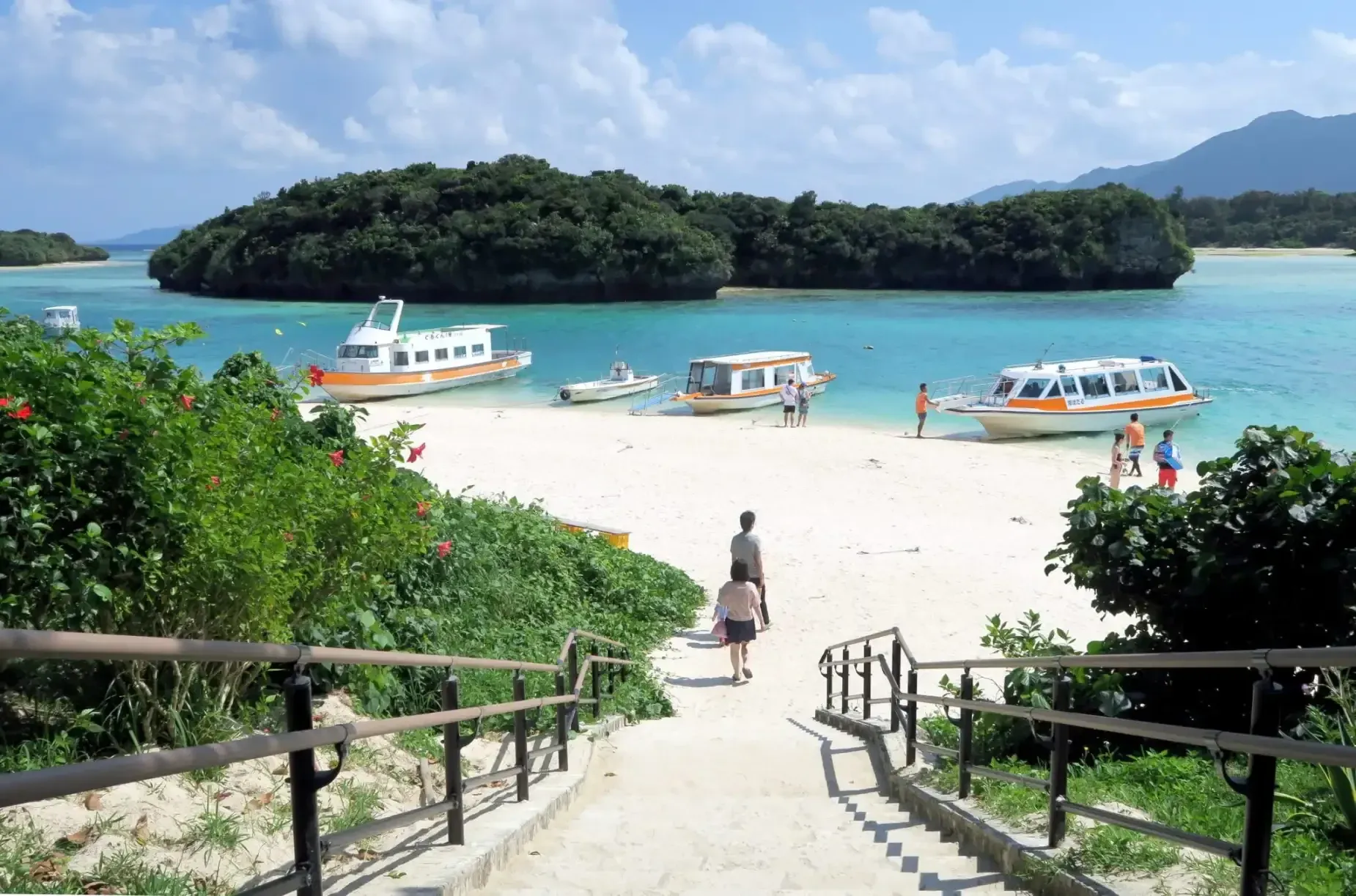
When most people plan a trip to Okinawa, what they actually mean is Naha and the main island — Shuri Castle, Kokusai-dori, maybe a resort up on the Onna coast. That's a perfectly good trip, and a fine start to any Japan travel plans. But it's also only a fraction of what Okinawa Prefecture actually is.
Okinawa is one of Japan's most unusual prefectures — not a single island, but an Okinawan archipelago that stretches about 1,000 kilometers from end to end, made up of roughly 160 islands, of which around 49 have people living on them. It's genuinely a group of islands rather than one single destination, which is exactly why it's worth taking the time to explore Okinawa beyond Naha. Some of those islands you can reach by bridge without even thinking about it. Others are a short ferry ride from Naha. And a few are far enough away that they feel like an entirely different trip stacked on top of your Okinawa trip.
This guide walks through the island groups worth knowing about — some of the best things to do in Okinawa outside the capital — what each one is actually good for, and how to figure out which ones fit into the time you've got on your trip to Okinawa. There's no shortage of attractions in Okinawa once you get past Naha, and this list covers the ones worth building a real detour around.
Okinawa Isn't Just One Island
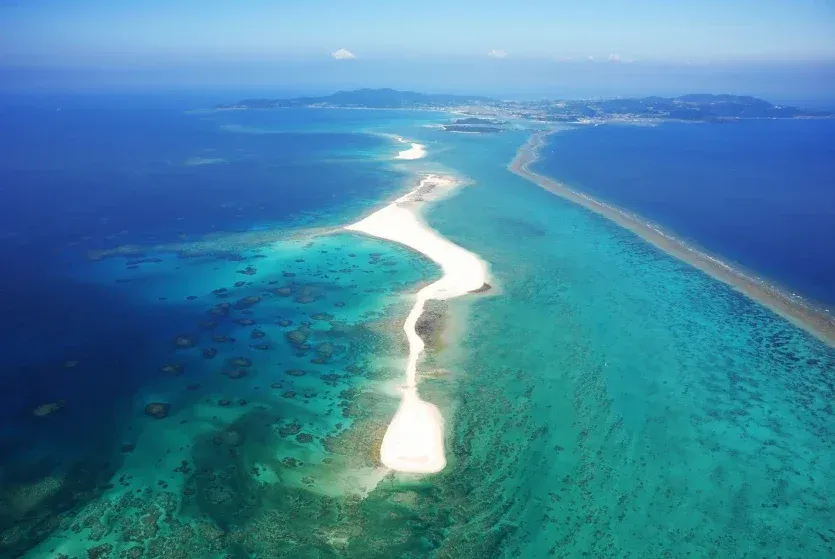
Okinawa Japan sits farther south than any other prefecture, which is part of why its geography works so differently from the rest of the country. Here's the mental model that makes everything else click into place: think of the islands of Okinawa less as a single destination and more as a region made up of island clusters, each a meaningful distance from the next. Historically, these islands were connected less by roads than by the maritime trade routes of the Ryūkyū Kingdom, and that scattered geography hasn't really changed.
Okinawa Main Island (Okinawa Hontō) is the anchor. It's where Naha City is, where Naha Airport is, and where roughly 90% of the prefecture's population lives. If you fly into Okinawa, this is where you land.
From there, the other clusters radiate outward. The Kerama Islands sit about 30 to 40 kilometers offshore, close enough to visit by ferry as a day trip. The Miyako Islands are around 300 kilometers southwest, and the Yaeyama Islands, anchored by Ishigaki, are another 100 kilometers or so beyond that, making them Japan's southernmost and westernmost inhabited islands.
That distance matters more than almost anything else when you're planning. Some of these islands you can add to an existing itinerary with a half-day detour. Others need their own flight, their own place to stay in Okinawa, and their own few days, worth remembering if you're still learning how to travel Japan overall.
How to Choose Which Islands to Visit
Before falling in love with a specific island, it's worth running through a quick gut check:
How many days do you actually have? If you're working with under a week to visit Okinawa, you'll likely be choosing between the main island and one nearby cluster — realistically Kerama — rather than adding a flight to Miyako or Yaeyama on top.
What are you actually going for? Beaches and easy relaxing point toward Miyako. Snorkeling and diving on a tight schedule point toward Kerama. Jungle, wildlife, and a more remote feel point toward Yaeyama.
How much travel logistics are you willing to take on? Getting around Okinawa's outer islands always comes down to a ferry or a flight, so it's worth being honest about which you're up for. A ferry to Kerama is a fairly low-effort add-on. A flight to Miyako or Ishigaki is a genuine second leg of your trip, with its own check-in and baggage logistics.
Are you traveling during typhoon season? Roughly July through October, ferries in particular can cancel with little notice. It doesn't mean skip the outer islands — it means build in a buffer day, especially before an international flight home. This is also the main variable behind any "best time to visit Okinawa" question — outside of typhoon season, scheduling around these islands gets a lot easier.
Kerama Islands
If you want ocean and pristine beaches without giving up a big chunk of your trip, Kerama is the answer.
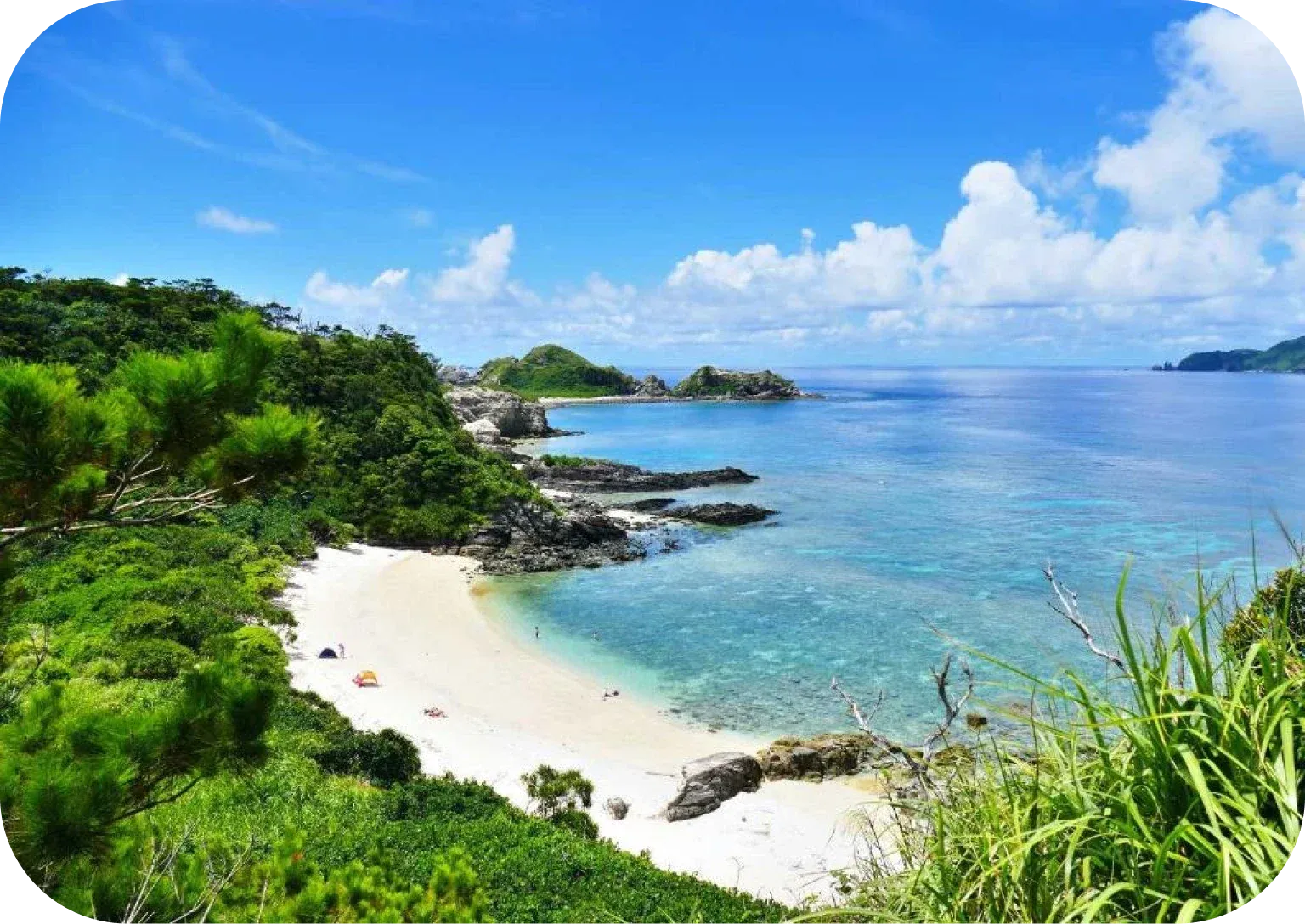
The Kerama Islands, mainly Zamami, Tokashiki, and Aka, sit just offshore from Naha and have no airport of their own, so the only way in is by ferry from Naha's Tomari Port. That's actually part of what makes them so appealing: a high-speed ferry gets you there in well under an hour, which means you can leave Naha in the morning, spend most of the day in the water, and be back for dinner.
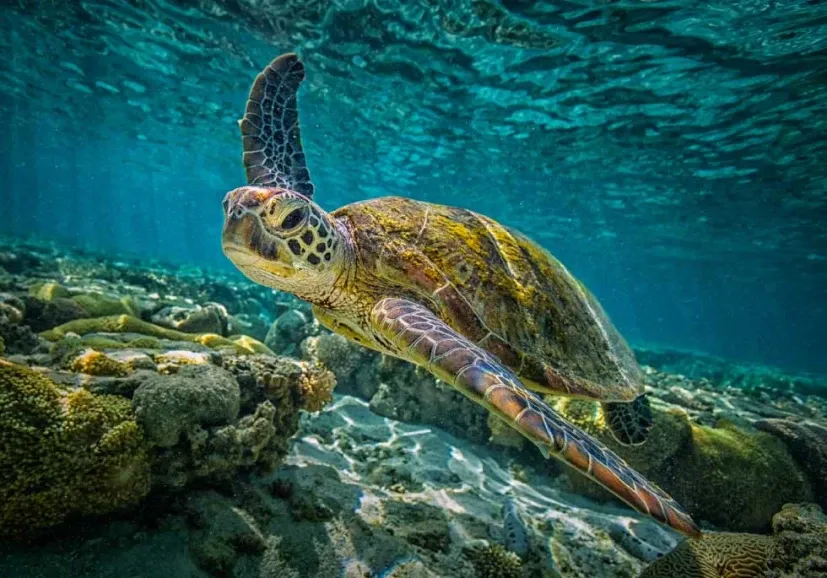
The water here has its own nickname, "Kerama Blue", and it's not just marketing. The clarity is genuinely striking, and the whole cluster is protected as a national park, with a small environmental fee charged to visitors that goes toward reef conservation. The coral reefs around Tokashiki Island are known for frequent sea turtle sightings, and the crystal-clear waters make it easy to spot them from the surface without needing dive gear. Snorkeling and diving are the main attraction here overall, and if you're visiting in winter, keep an eye out, the channels around these islands are a breeding and calving ground for humpback whales from around January through March.
Because Kerama is so close and doesn't require flying, it's the easiest outer-island cluster to fit into almost any Okinawa itinerary, even a relatively short one. If you'd rather not sort out ferry timings and gear yourself, this is also the kind of day trip that fits naturally into a guided multi-day journey — Evertrail's Island Hopping tours build Kerama and other nearby islands into a broader route through Okinawa, so you're not the one juggling ferry schedules.
Miyako Islands
Miyako is the beach cluster, home to some of Okinawa's best beaches. If that's the whole reason you're coming to Okinawa, Miyako is where you'll probably end up happiest.
Getting there means a flight from Naha, about 45 to 50 minutes to Miyako Airport, which puts it firmly in "worth a multi-night stay" territory rather than a day trip. Once you're there, though, the logistics get easy again. Miyako Island connects to its outlying islands, Irabu, Kurima, and Ikema, by toll-free bridges, including the Irabu Bridge, one of the longest toll-free bridges in Japan. You can drive between all of them without ever needing a boat.
The islands themselves are flat, low coral formations rather than volcanic peaks, and because there are no rivers running off into the sea, the water stays remarkably clear year-round, locals call it "Miyako Blue," and it's genuinely a different shade than what you'll see around the main island. Yonaha Maehama, with its long stretch of white sand and pristine water, is one of the most photographed beaches in Okinawa and arguably the top attraction on the island. So is Toriike Pond on Irabu, a pair of dramatic limestone sinkholes connected to the open ocean, which draws experienced divers.
Miyako rewards a slower pace, if you rent a car, driving the coast road between islands with panoramic views the whole way is half the experience.
Yaeyama Islands
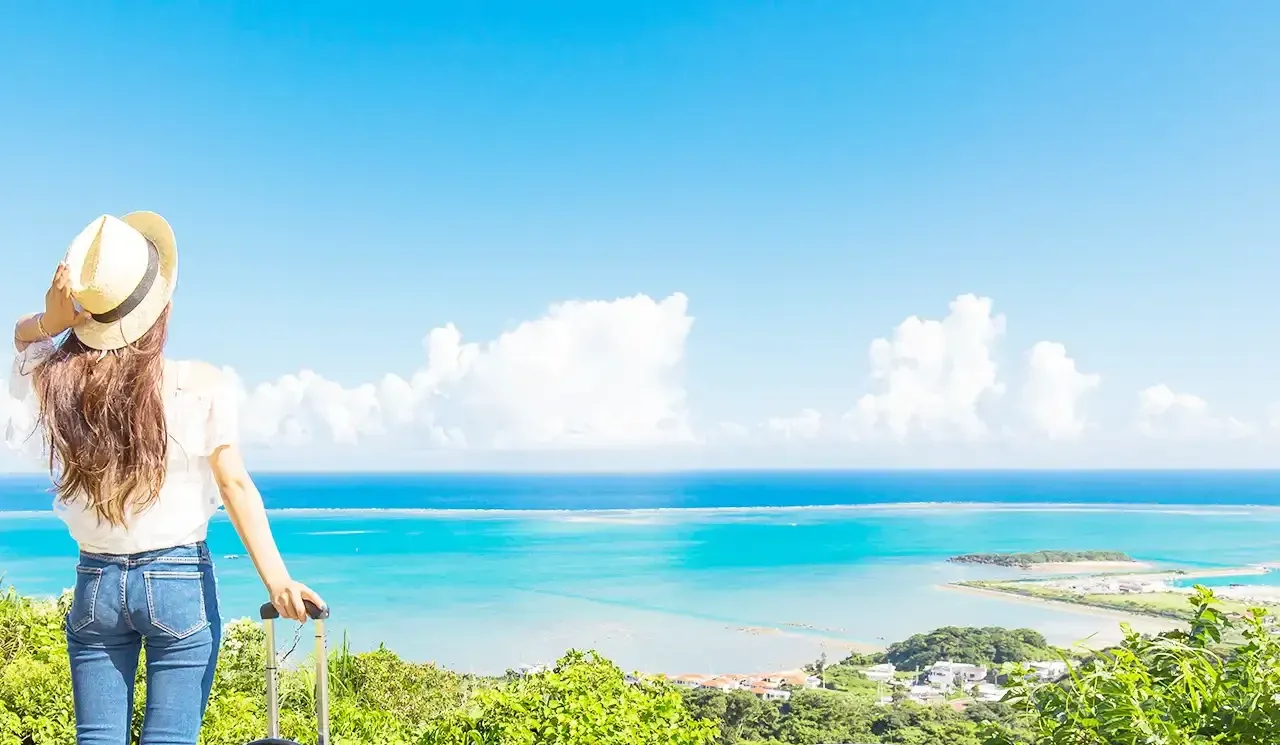
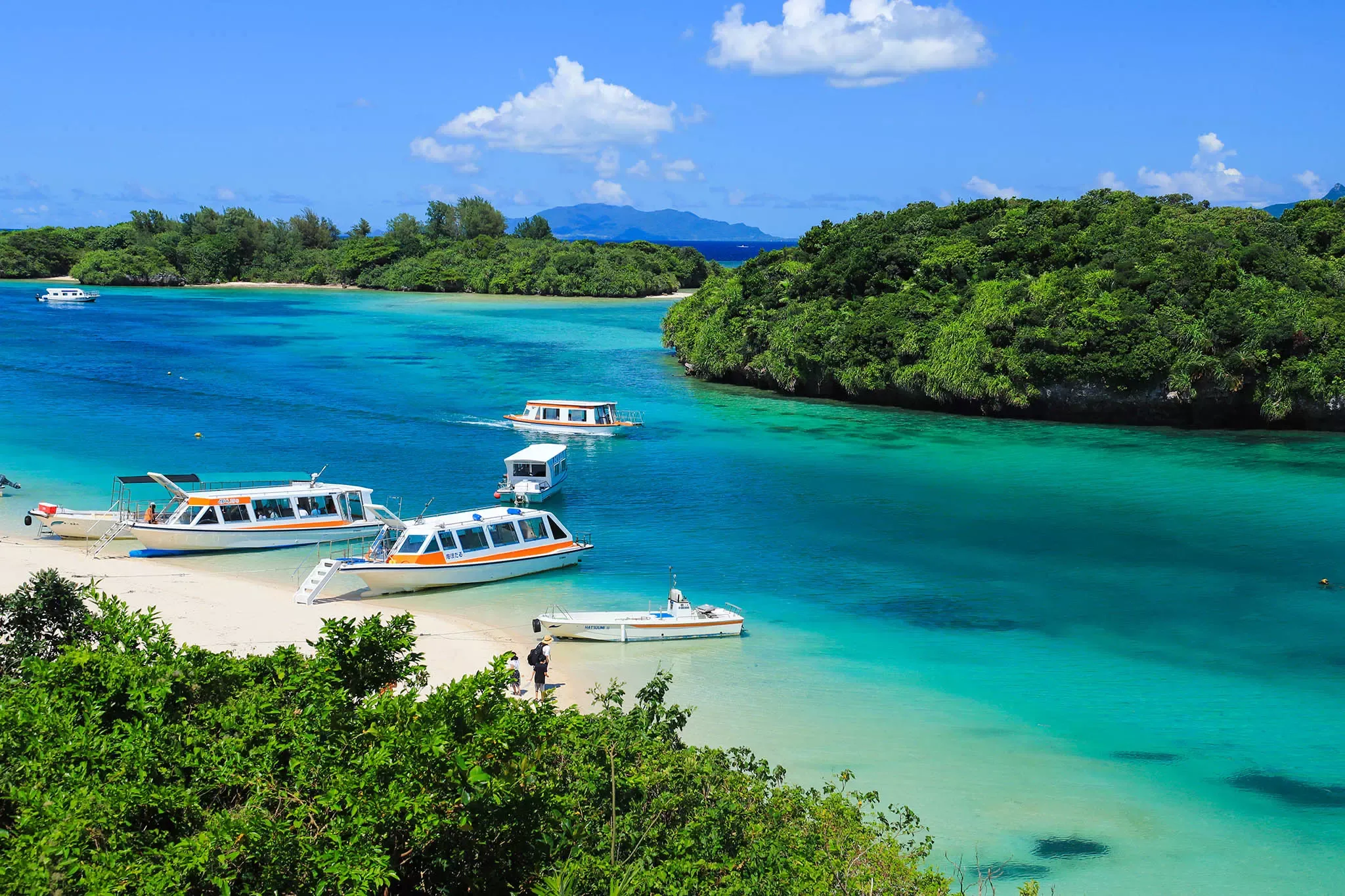
If Miyako is about beaches, Yaeyama is about everything else: jungle, mangroves, wildlife, and a noticeably more remote feel than the rest of the prefecture — genuinely Japan off the beaten path.
The Yaeyama Islands sit at the far southwestern edge of Japan, farther from mainland Japan than Naha is roughly an hour's flight from Naha to Ishigaki, which functions as the hub for the whole cluster. From Ishigaki, fast ferries fan out to the smaller islands, Taketomi in around 10 to 15 minutes, Iriomote in roughly 35 to 45 minutes, which makes Ishigaki a genuinely practical base for island-hopping day trips once you're already there, even though getting to Yaeyama in the first place isn't a day-trip proposition from Naha.
Iriomote Island is the standout for nature. It's the second-largest island in the prefecture, and around 90% of it is dense subtropical forest and mangrove, enough that most of it was inscribed as a UNESCO World Natural Heritage Site alongside Yanbaru on the main island. Hidden waterfalls sit deep in the interior, reachable mainly by kayak or a guided hike. It's also the only place on Earth you'll find the Iriomote wildcat, a critically endangered subspecies unique to Okinawa and found nowhere else. Kayaking the Hinai or Mare rivers through the mangroves is the classic way to experience it.
Taketomi is the opposite mood entirely: a small, traditional Okinawan village of red-tile roofed houses, where the main attraction is riding a water buffalo cart down the sandy lanes. It's an easy half-day add-on from Ishigaki.
Because reaching Yaeyama takes real commitment, a flight plus, ideally, a few nights, it tends to suit travelers with a week or more in Okinawa, or those making Yaeyama itself the main event rather than a side trip.
Kōri and Northern Okinawa's Bridge Islands
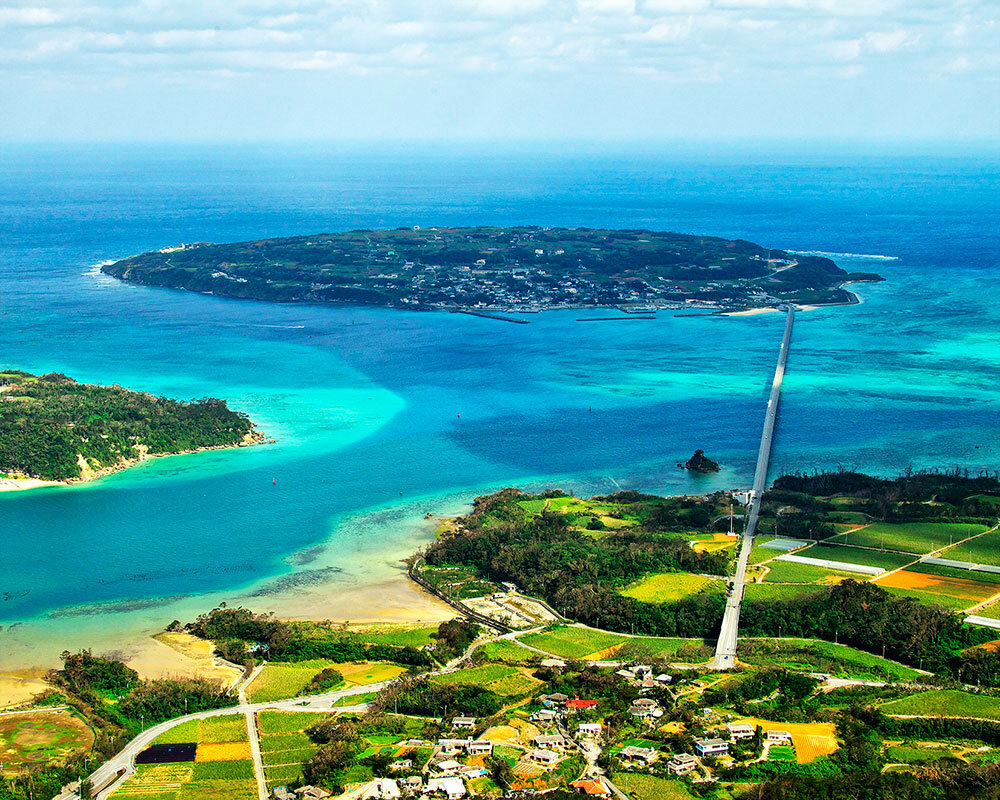
Not every worthwhile island requires a boat at all. Kōri and Sesoko, up near the Motobu Peninsula on the northern end of the main island, are connected by road bridges — the Kōri Bridge and the Sesoko Bridge respectively, so you can drive straight there in a rental car along some of the prettiest coastline on the main island, with no ferry planning whatsoever. For most travelers, a rental car is simply the easiest way to get around this part of Okinawa.
These make an easy pairing with a day up north, especially alongside the Churaumi Aquarium or a stop in Yanbaru. If you have extra time, it's also easy to visit Minna Island, a small sandbar-like beach island nearby, as a further day trip. We've covered this stretch of the island in more depth in our guide to Nago, Motobu, and Kōri, since there's more to it than can fit here.
Planning Around Inter-Island Travel
A few practical notes worth keeping in mind once you've picked your islands, especially if this is your first time planning to travel to Okinawa.
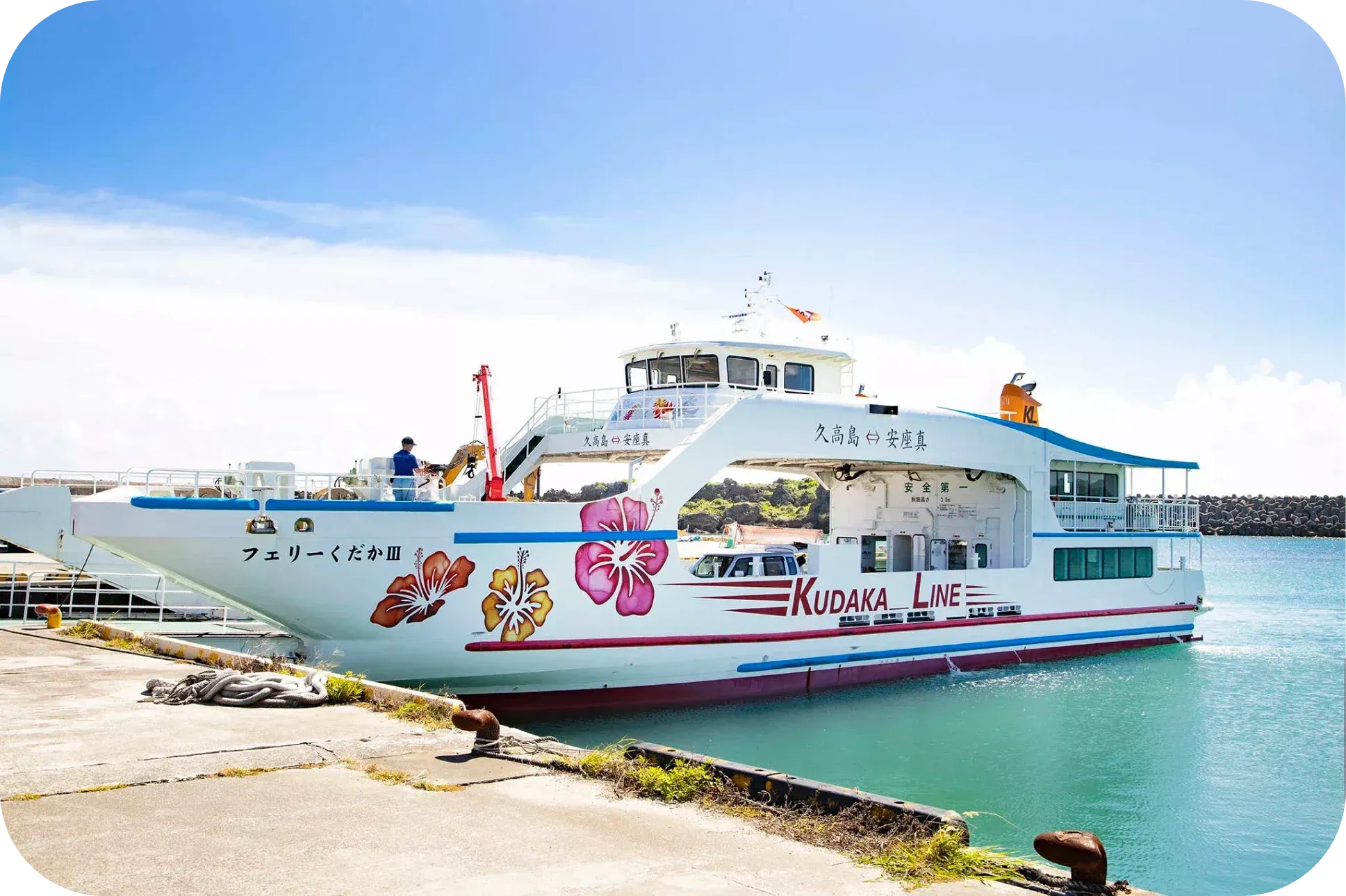
Ferries to Kerama and the Yaeyama satellite islands are genuinely weather-dependent. High-speed ferries in particular will cancel well before conditions get rough enough to bother a larger car ferry, and typhoon season, roughly July through October, is when this happens most. It's worth reading our typhoon season guide before locking in any ferry-dependent day, and building at least one buffer day into your schedule if an outer-island trip sits right before a flight home.
Flights to Miyako and Ishigaki, by contrast, are reliable in the way any domestic flight is, the main planning consideration is just making sure you've allowed enough time for check-in and baggage rather than treating it like a quick hop.
Putting It Together: Sample Combinations
There's no single right way to combine these islands, it comes down to how much time you have on this leg of your Japan trip.
A week in Okinawa fits comfortably around the main island plus a Kerama day trip, without ever needing a domestic flight. Our 7-day itinerary is built around exactly that pacing.
Ten days or more opens the door to adding Miyako or Yaeyama as a genuine second leg of the trip, flying out, spending several nights, and flying back, rather than squeezing it in. If untangling flights, ferries, and where to stay on each leg sounds like more logistics than you want to handle yourself, Evertrail's multi-day Island Hopping tours, running anywhere from two to seven days out of Naha, are built to cover exactly that kind of route without you having to plan the connections.
Either way, the main island should usually come first or last, since it's your entry and exit point regardless of what else you add. These tropical islands offer a side of Okinawa most first-time visitors never see. Combining even two of the groups covers more places to visit in Okinawa than most people fit into a single trip to Japan, and honestly, it's some of the best Okinawa has to offer beyond the capital.
FAQ
How many islands does Okinawa have?
Okinawa Prefecture is made up of roughly 160 islands, of which about 49 are currently inhabited.
What's the difference between Okinawa Main Island and the outer islands?
Okinawa Main Island is the prefecture's hub, it has the main airport, the capital city of Naha, and most of the population. The outer island groups (Kerama, Miyako, Yaeyama) are separate clusters, some reachable by ferry and some requiring a domestic flight.
Can you visit Ishigaki or Miyako as a day trip from Naha?
No. Both require a domestic flight of around 45 to 65 minutes each way, plus airport logistics, which makes a same-day round trip impractical. They're best treated as a multi-night stay.
Which Okinawa island is best for beaches?
Miyako Island is generally considered the top pick for Okinawan beaches, with Yonaha Maehama among the most well-known Okinawa attractions in the prefecture.
Which Okinawa island is best for snorkeling or diving?
The Kerama Islands are the most convenient choice, thanks to their proximity to Naha and the clarity of their water. Iriomote and the wider Yaeyama chain also offer strong diving, particularly for those seeking a more remote experience.
Do you need a flight or ferry to reach Okinawa's outer islands?
It depends on the cluster. Kerama is ferry-only from Naha's Tomari Port. Kōri and Sesoko are connected by road bridge. Miyako and Yaeyama each require a domestic flight from Naha.
How many days do you need to see more than one island group?
A week is generally enough for the main island plus a Kerama day trip. Adding Miyako or Yaeyama as well realistically needs ten days or more, since each requires its own multi-night stay. For a day-by-day breakdown of that first week, see our full Okinawa travel guide.
Evertrail Tours · July 4, 2026