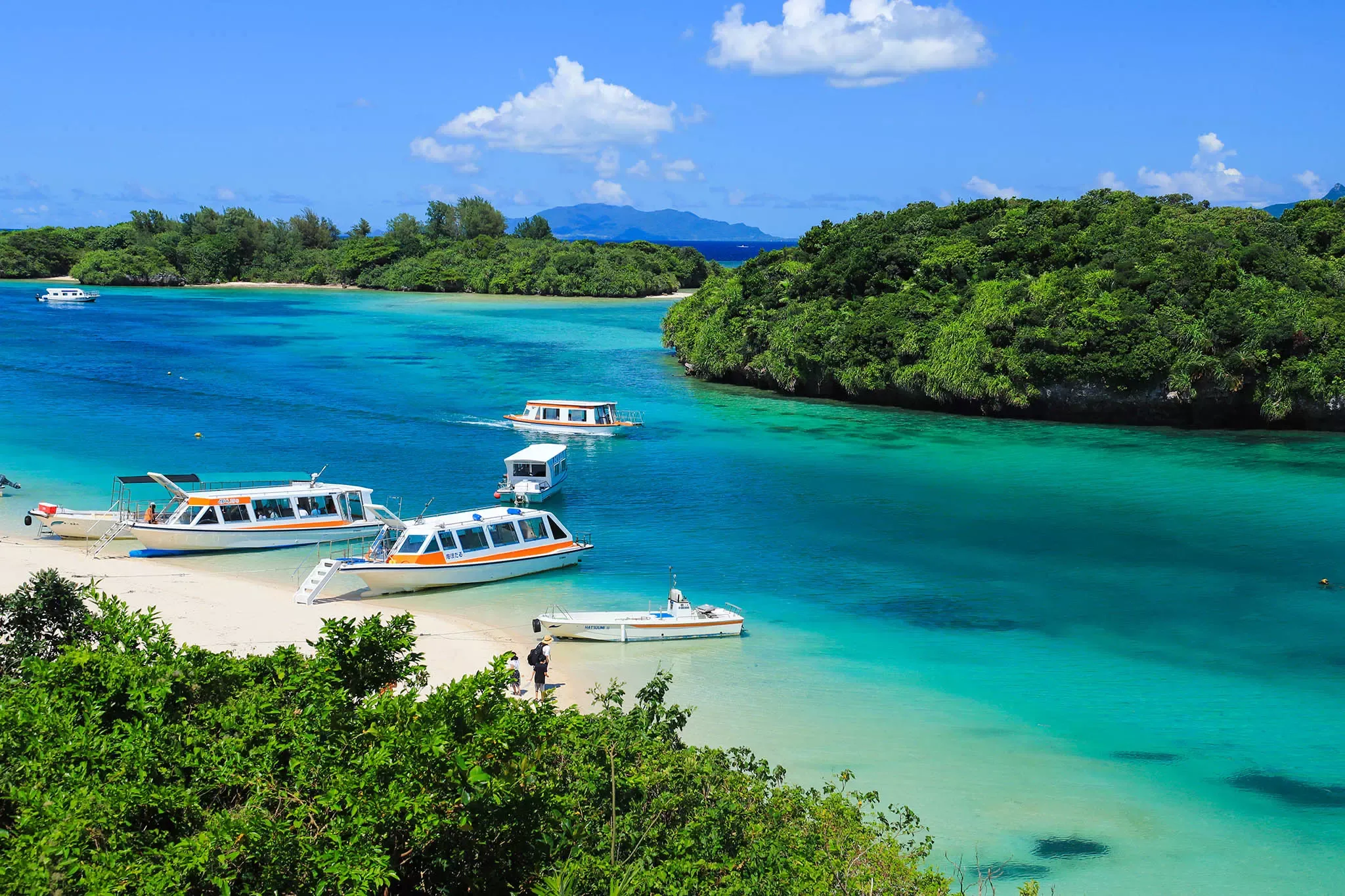
The first thing to know about summer festivals in Okinawa is that they don't follow the calendar on your phone. They follow the moon.
While the rest of Japan winds down its summer matsuri by late August, Okinawa is only getting started, because the island's festival season is built around Obon, the days when ancestral spirits are believed to return home, and Okinawa still counts Obon by the old lunar calendar. That single fact reshapes everything. The dates move every year. The biggest celebrations land in early September. And the drumming you hear rolling down a Naha side street on a humid August night is, at its root, a prayer.
I've lived and guided here long enough to have stood in most of these crowds. This is the season I tell friends to come for, not the beaches, which are here all year, but the festivals, when the island turns its private rituals slightly outward and lets you in. What follows is a local's travel guide to the full season, the kind of run-through I'd give someone planning a first trip: what each festival is, when it happens in 2026, what it costs, and how to actually get there.
One quick note on scope. I'm treating "summer" generously, from the early fireworks in April through the great Eisā festivals of September, because that's how the events actually cluster. Okinawa's festival summer is a season of its own, its own corner of the Japanese summer, and it doesn't start or stop where the mainland's does.
Why Okinawa's festival summer is different
Across Japan, the Bon festival is when many Japanese return home to commemorate one's ancestors. Mainland Japan observes Obon in mid-August. Okinawa observes kyūbon, Obon by the lunar calendar, which usually falls about a month later, around the 13th to 15th days of the seventh lunar month. In practice, that pushes the heart of the season into late summer and early autumn.
This matters for planning. There's no fixed "festival week" you can circle a year in advance. The dates shift with the moon, and organisers tend to confirm them only a few months out. If a festival is the reason for your trip, build in some flexibility and check the current year's dates before you book flights.
It also matters for understanding what you're watching. These aren't shows staged for tourists. They're community rites, the living history and culture that Okinawans keep for themselves and happen to leave open to the public, and the difference is something you feel.
Eisā: the heartbeat of the season
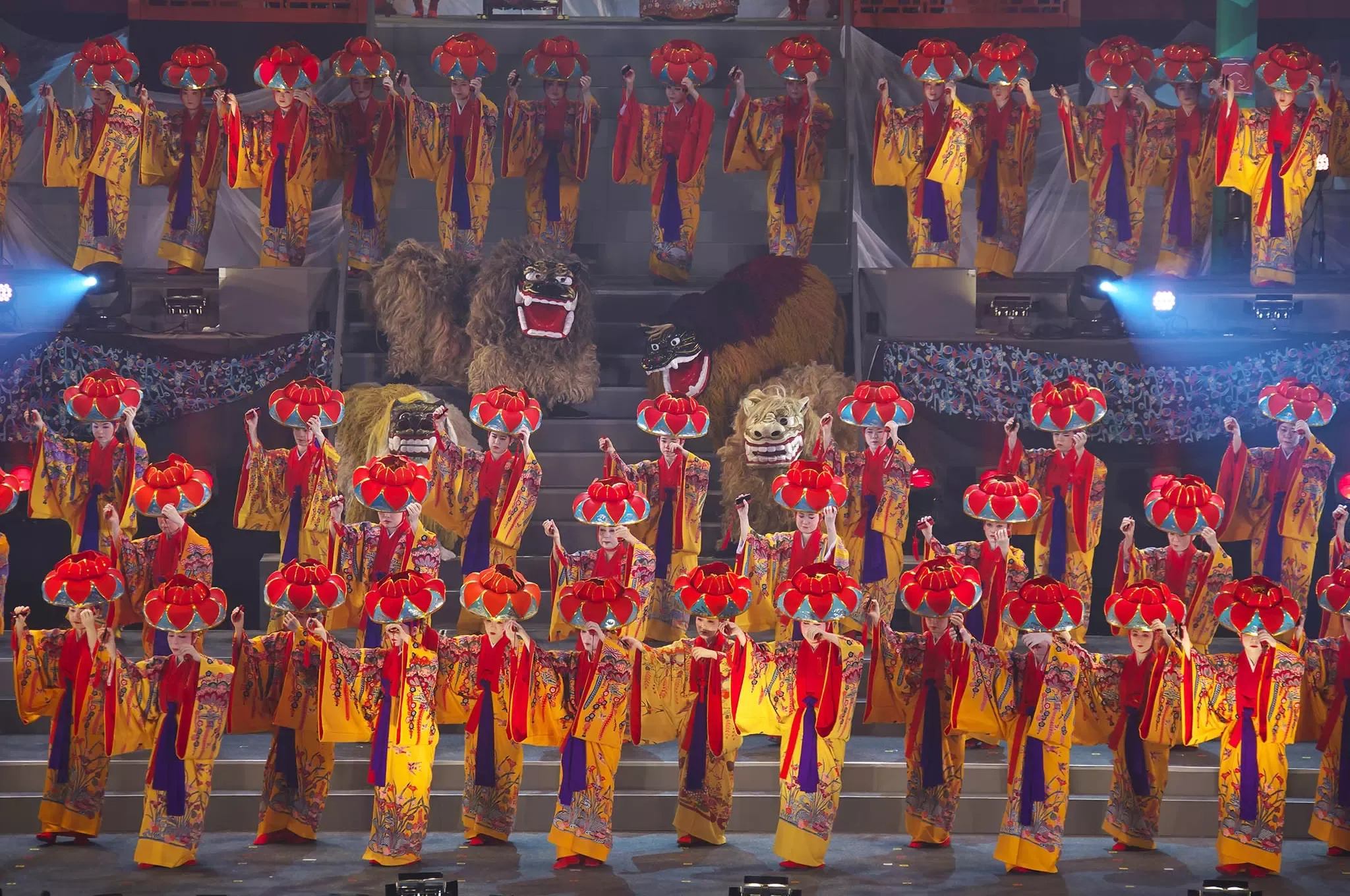
Of all the things to do in Okinawa in summer, if you see just one, make it Eisā.
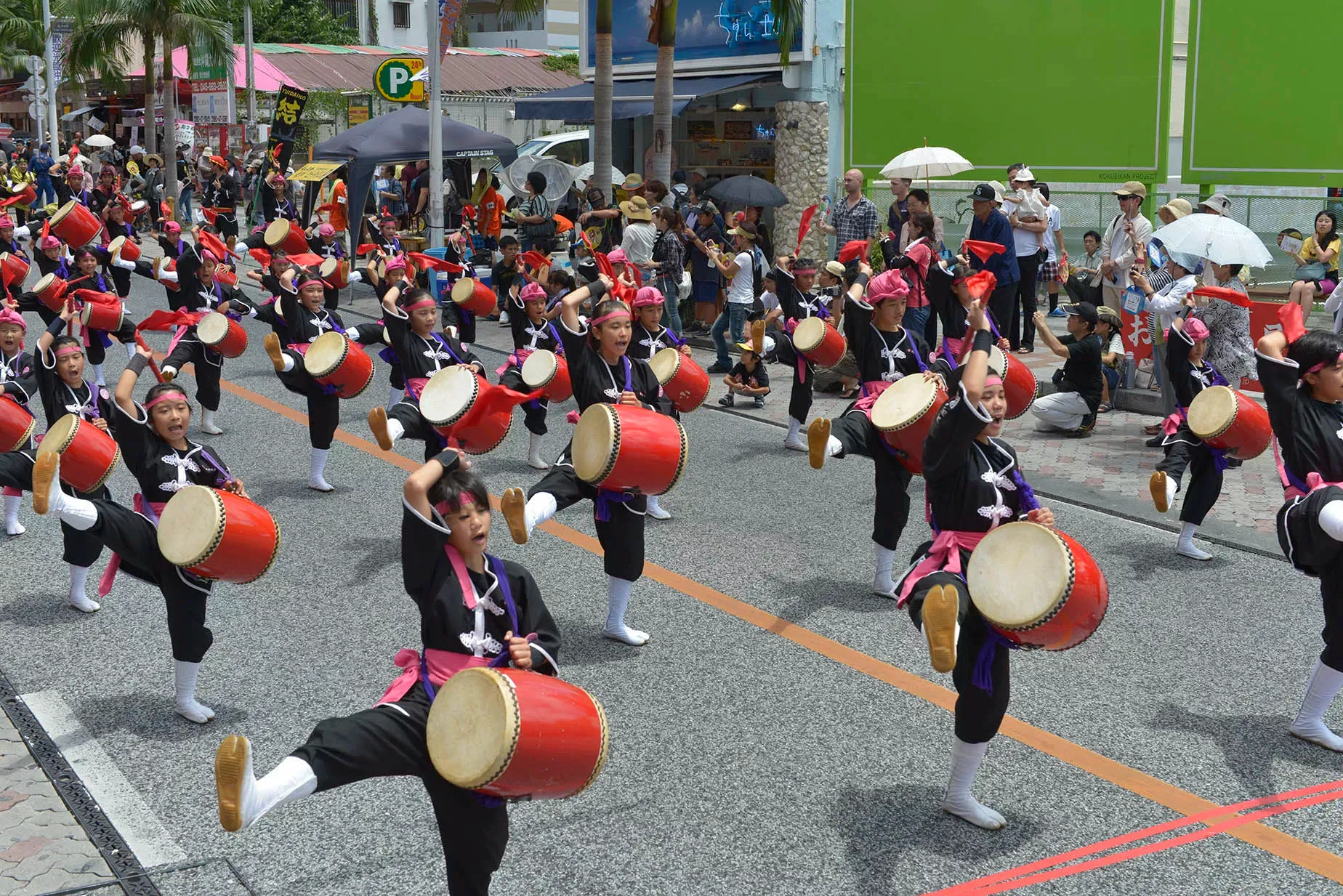
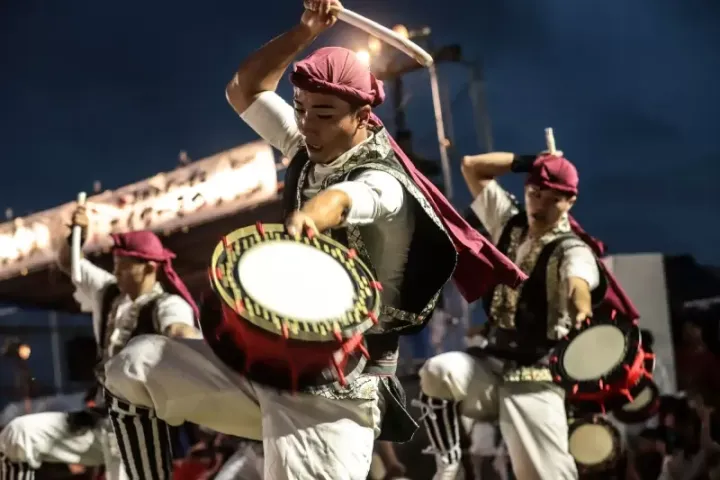
Eisā is a traditional dance, drummed and performed during Obon to welcome ancestral spirits home and, when the holiday ends, to send them off again. Its roots reach back to the Ryukyu Kingdom: it grew out of the old village bon dances, and for most of its history it was deeply local, each settlement, each aza, had its own youth group that would walk around the community, dancing to Buddhist chants for its own ancestors.
That older, sacred style is still alive. But today you'll also see sōsaku, "creative", Eisā: independent teams formed since the 1980s who dance to modern songs, recruit members from anywhere, and, breaking with tradition, often put women on the drums. Watching the two styles side by side is half the pleasure. One is rooted and ceremonial; the other is electric and a little rebellious.
The sound comes from the drums. Big ō-daiko and medium shimedaiko lay down a thunderous, full-body beat, while singers called jikata lead the chant over the three-string sanshin. Dancers move in bright happi coats and headbands, and weaving among them are the chondarā, clown figures in painted faces whose job is to fire up the crowd and keep the dancers in line.
Then there's the ending. Most Eisā events close with kachāshī, a loose, joyful free-dance where the line between performer and spectator dissolves. Hands go up, wrists turn, everyone moves. The first time it happens to you, you stop being an audience and become part of the thing. That's the moment people remember.
Okinawa Zentō Eisā Matsuri: the island's biggest festival
The crown of the season is the Okinawa Zentō Eisā Matsuri — the All-Island Eisā Festival — held in Okinawa City on the first weekend after the old Obon.
In 2026 it runs Friday to Sunday, September 4–6, its 71st edition, drawing something like 300,000 people across three days of dance and music, there is no bigger Eisā event in Japan. General admission is free; paid reserved seats are available if you want a guaranteed spot close to the action.
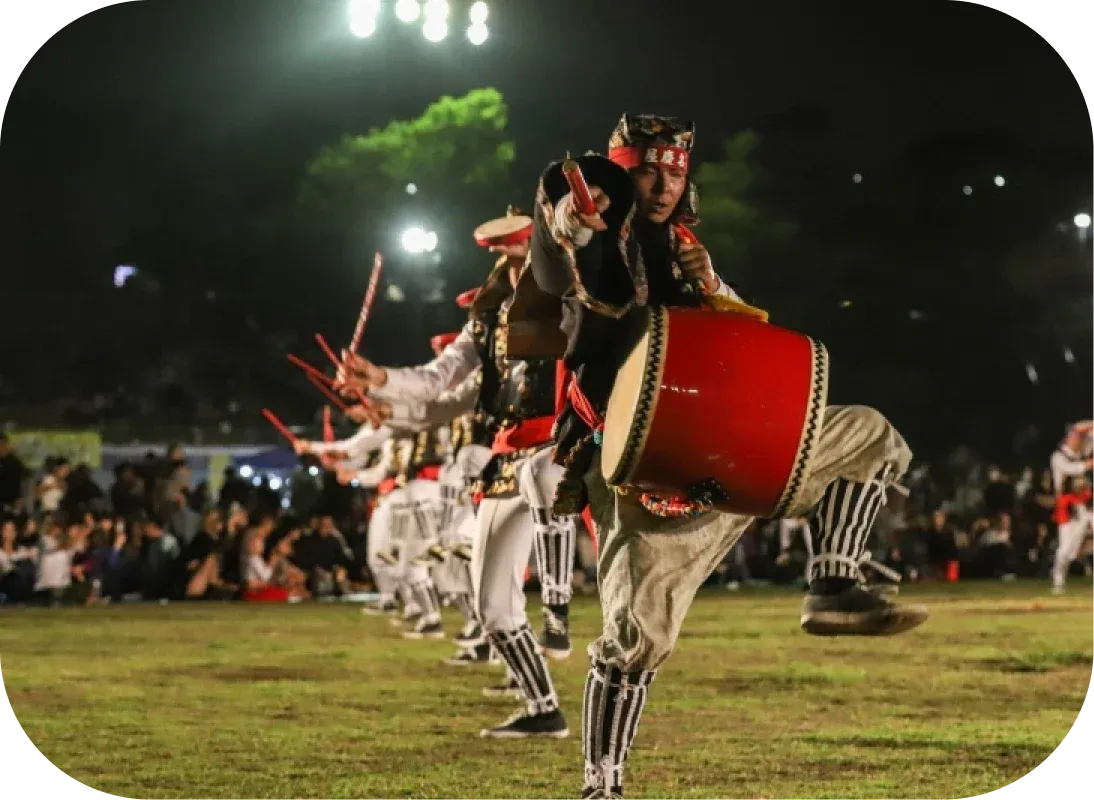
Each day has its own character. Friday night belongs to the Michijunē, a road parade that rolls down Route 330 at the Goya intersection, it begins around 10 p.m., late and electric. Saturday is the Okinawa City Youth Festival at the Koza Sports Park stadium. Sunday is the main festival: the all-island competition, where youth associations selected from Okinawa's towns and villages, from Naha in the south to Nago in the north, bring their best traditional and creative routines. These Eisā performances run late, and every night ends the same way, a kachāshī and fireworks.
Getting there means public transportation or a car. The nearest bus stop is Sonda, about a ten-minute walk, and there's ample on-site parking; from Naha Airport it's roughly an hour by bus. Whatever you do, book a room early, accommodation near Okinawa City vanishes for this weekend.
.webp)
The 10,000 Eisā Dancers' Parade: Naha's street party
If Okinawa City's festival is the season's grand final, the 10,000 Eisā Dancers' Parade is its most accessible night, and the easiest one to fold into a Naha trip.
Held on the first Sunday of August, August 2 in 2026, this big Eisā parade takes over Kokusai-dōri (Kokusai Street), Naha's main international street, running from Saion Square in the east to Palette Kumoji in the west. Thousands of dancers, from polished professional troupes to first-timers, fill the 1.5-kilometre route with stamping arms and rolling drums. It's free to watch, and if you want to do more than watch, a small fee lets you join the Niwaka group and dance it yourself, in costume.
Best of all, you don't need a car. Kokusai-dōri sits right on the Yui Rail monorail line and is served by city buses, so you can step off the train and straight into the crowd.
Fireworks over the sea
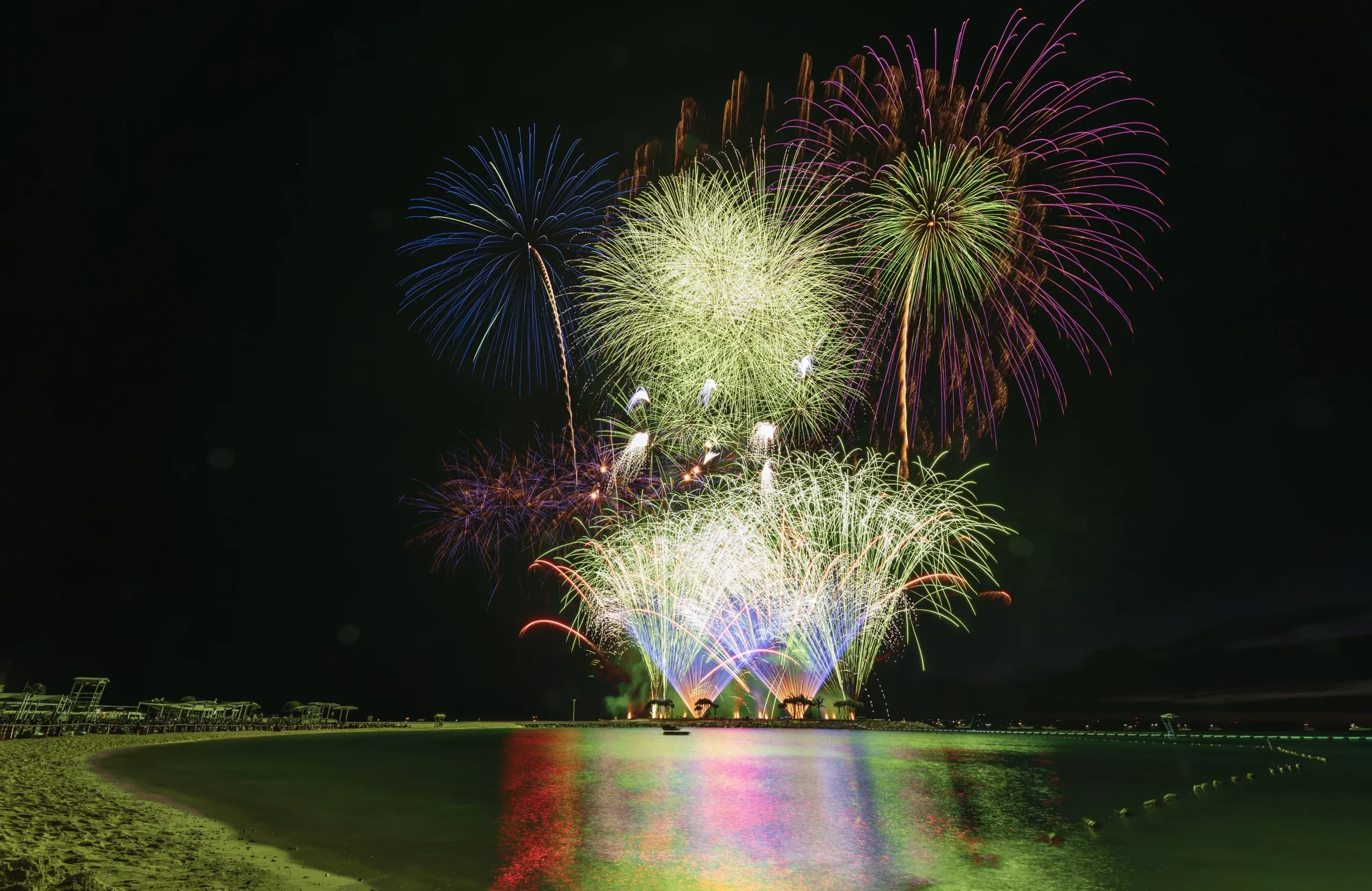
Okinawa does fireworks, hanabi, differently. Forget riverbanks and city parks. Here the shells burst over the East China Sea, their reflections doubling the show on the water.
The season opens early. The Ryūkyū Kaiensai is billed as Japan's earliest summer fireworks festival, though I'll be straight with you — it's actually held in spring. In 2026 it lights up Ginowan Tropical Beach on Saturday, April 11, with around 10,000 shells choreographed to Okinawan music. It's fully ticketed, with reserved stands and open zones, and it sells out well in advance, so buy early if you're building plans around it. Think of it less as a summer event and more as the starting gun for the whole season.
Then come the true shows of the summer months. The Ocean Expo Park Summer Festival in Motobu caps its evening with roughly 10,000 fireworks over Emerald Beach at 8 p.m. on Saturday, July 4, 2026, all seating is paid, with park buses and on-site parking to get you there. Later, the Okinawa Kanasa Fireworks returns to Ginowan Tropical Beach on Saturday, September 19, 2026, sending late-summer skies up in colour. Both are ticketed, both are enormous, and both set their shells to music with effects over the sea.
Orion Beer Fest and what to eat
Festival food is an integral part of any summer matsuri, and Okinawa's stalls are a feast in their own right.
Walk the grounds and you'll find rafute (melt-in-the-mouth braised pork belly), goya champuru (the island's signature bitter-melon stir-fry), steaming bowls of Okinawa soba, and bags of warm sātā andāgī, the Okinawan doughnut that's crisp outside and cakey within. There's sea-grape umibudō and mozuku seaweed, and at the dragon-boat festivals, locals hand out crepe-like sweets called popo and chinpin. Washing it all down: ice-cold Orion beer and, for the brave, a glass of awamori.
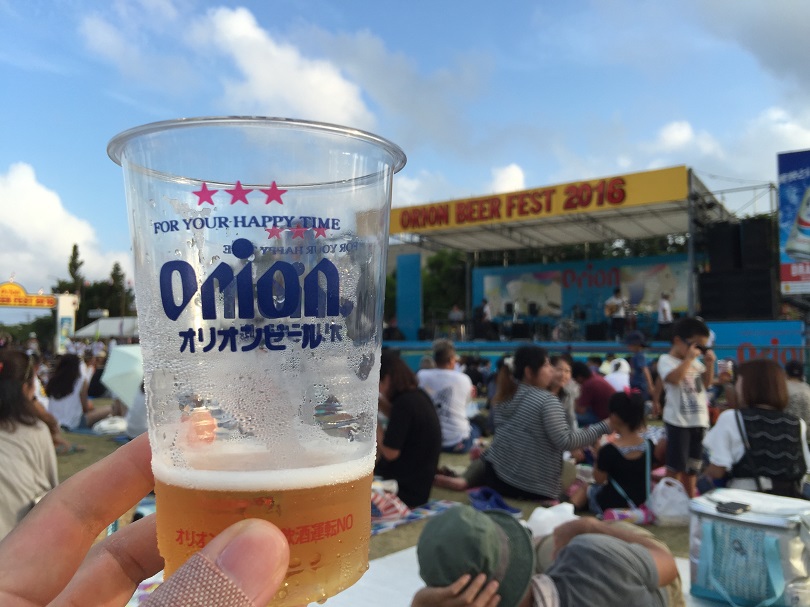
There's even a festival built around the beer. The Orion Beer Festival in Koza runs September 5–6, 2026 on the sub-ground right beside the Zentō Eisā Matsuri, so you can drift from the drumming to a cold draft and live music shows without ever leaving Koza Sports Park.
If you'd rather taste the real backstreet version of this food away from the festival crush, that's what our evening Naha food walk at Evertrail Tours (evertrailtours.jp) is built for — four hidden local stops serving the same Okinawan staples, goya champuru and tebichi and umibudō among them, with the stories behind each dish, in a small group. It's the calmer, year-round cousin of festival eating, and it sits a short walk from the same Kokusai-dōri the August parade runs down.
Tug-of-war: the giant rope
Some of Okinawa's oldest summer rituals involve a rope, an enormous one.
The Yonabaru Great Tug-of-War, one of the island's three largest tug-of-war events, takes place on August 15–16, 2026 in Yonabaru Town, just south of Naha. The east and west halves of the town haul on a rice-straw rope some 90 metres long and weighing five tons, in a festival held to pray for a good harvest, tracing back to the late 1500s. Expect a parade carrying the great rope, traditional music and Eisā, and fireworks on the final night. It's free to watch from the streets and the hillside.
One note to save you confusion: Okinawa's most famous tug-of-war, the Naha Great Tug-of-War with its record-breaking 40-ton rope, is a mid-October event. It's spectacular, but it's autumn, not summer, so I've left it off this list.
.webp)
Dragon-boat races
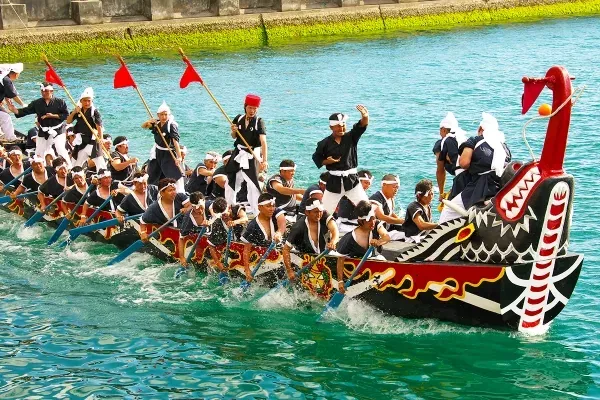
Before the Eisā season peaks, early summer belongs to the hārī, dragon-boat races rooted in centuries-old sea rituals.
The biggest is the Naha Hārī, the highlight of the Golden Week public holiday, held over May 3–5, 2026 at Naha New Port, on the southern side of the island. More than 100,000 people turn out for colourful sabani-boat races with over a hundred teams and nightly fireworks, in a tradition reaching back some 600 years. It's free, and it's a ten-minute walk from Asahibashi Station on the monorail.
Down the coast, the Itoman Hārei, held on June 18, 2026 at Itoman Fishing Port — is one of the island's largest, drawing more than 30,000 spectators. Here the racing is serious: fishing crews compete in long heats, including the gruelling Agai Subu finale, praying for a good catch and safe seas. Expect ceremonies and folk entertainment alongside the races, and admission is free.
Planning your festival trip
A few hard-won pointers before you go.
Most of the big festivals around the island are free, the two great Eisā events included. Your real costs are reserved fireworks seats, the occasional paid grandstand, and parking, which around Koza and Kokusai-dōri can be a genuine headache. Where you can, take the monorail and buses instead.
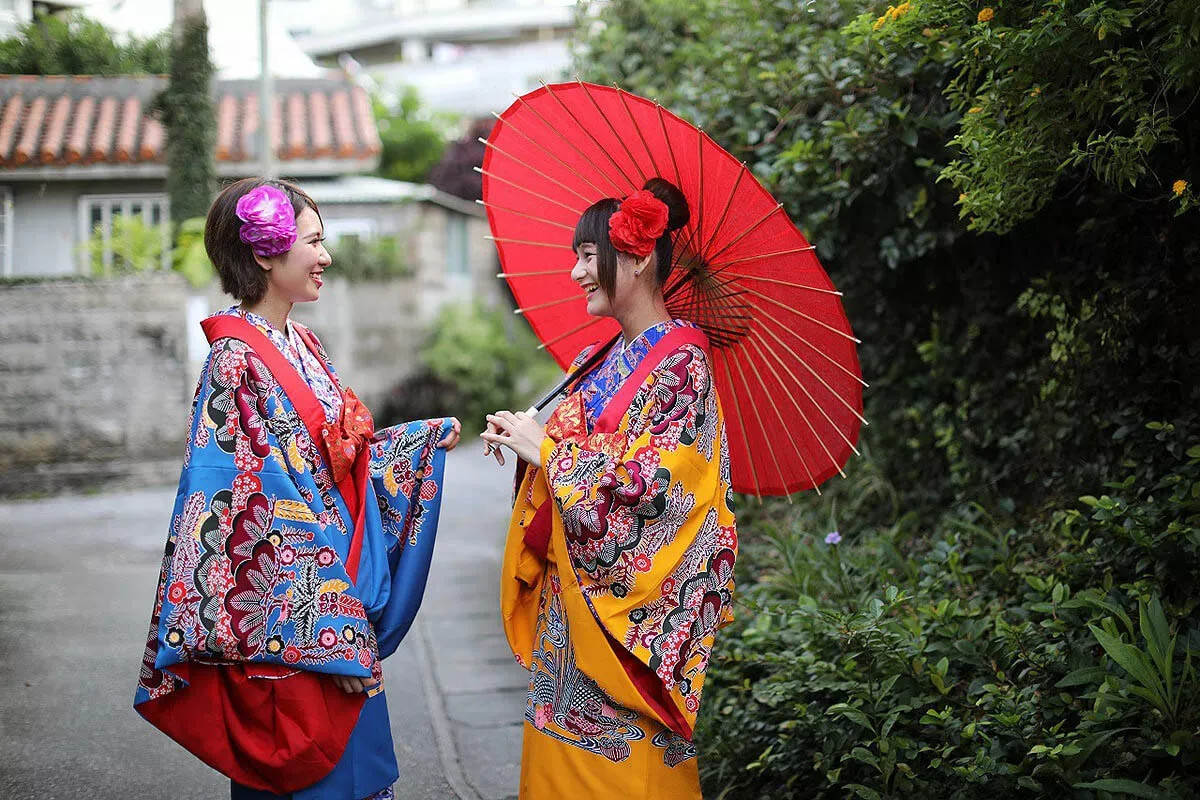
Dress for it. A light yukata is welcome and fun, but more importantly, dress for heat, July and August are hot and humid, even if sea breezes usually keep things under about 35°C. Carry water.
Watch the weather. Late summer is also typhoon season across Okinawa Prefecture, which sees some of Japan's highest typhoon frequency. Storms peak in August and linger into autumn, and they can disrupt or reschedule events, Yonabaru in mid-August and the September festivals are all exposed. Keep a flexible day or two in your itinerary and follow each festival's official channels for updates.
And the golden rule, one more time: because the season runs on the lunar calendar, the dates move every year. Confirm the current year's schedule with organisers before you commit to flights or hotels.
One honest word on tours, since people ask: we don't run a festival package at Evertrail — the festivals are free, public, and best experienced on your own two feet. What a local guide is genuinely useful for is everything around them, timing your visit to the lunar dates, handling the parking and transport, and giving you the cultural context that turns a noisy crowd into something you understand. For many people who come to Okinawa, that context is one of the best ways to make sense of the Eisā groups performing throughout the island each summer. If that's the help you're after, a small-group cultural day with us can be built around whichever festival you're here for.
Frequently asked questions
What are the main summer festivals in Okinawa?
The biggest are the Okinawa Zentō Eisā Matsuri (the All-Island Eisā Festival) in Okinawa City and the 10,000 Eisā Dancers' Parade in Naha, both centred on Eisā drum dancing. The season also includes major beach fireworks shows such as the Ryūkyū Kaiensai, the Orion Beer Fest, tug-of-war festivals, and early-summer dragon-boat races — celebrations held across the island from spring through to early autumn.
When is the Okinawa Eisā festival in 2026?
The Okinawa Zentō Eisā Matsuri runs September 4–6, 2026, in Okinawa City. The exact dates change every year because the festival follows the lunar-calendar Obon, landing on the first weekend after the old Obon holiday.
What is Eisā?
Eisā is a traditional Okinawan drum dance performed during Obon to welcome and send off ancestral spirits. Dancers move to large ō-daiko and shimedaiko drums and the three-string sanshin, and most performances end with kachāshī, a free-form dance that the audience joins.
Are summer festivals in Okinawa free to attend?
Most are free, including both major Eisā festivals and the dragon-boat races. The main paid exceptions are the beach fireworks shows, such as the Ryūkyū Kaiensai and the Ocean Expo and Kanasa events, which are fully ticketed, plus optional reserved seats and parking.
Where can I see Eisā in Naha?
The easiest place is Kokusai-dōri during the 10,000 Eisā Dancers' Parade, held the first Sunday of August. It's free, central, and a short walk from the Yui Rail monorail, which makes it the most accessible Eisā event for first-time visitors.
When is the best time to visit Okinawa for festivals?
Early August through mid-September is the peak, when the Obon-season Eisā festivals and the Orion Beer Fest cluster together. Just note that this overlaps with the hottest weather and the height of typhoon season.
What food should I try at Okinawan festivals?
Look for rafute (braised pork belly), goya champuru, Okinawa soba, and sātā andāgī (Okinawan doughnuts), washed down with Orion beer. Dragon-boat festivals also hand out local sweets like popo and chinpin.
A season worth planning around
Okinawa's beaches will wait for you. Its festivals won't.
For a few weeks each year, from the spring fireworks over Ginowan to the all-island drums of September, Okinawa Island sets aside its everyday self for these summer celebrations, and in every town, from around Naha to the far north, people do something older and stranger and more joyful: honouring their dead by dancing, hauling giant ropes for the harvest, racing boats for the sea. You don't have to understand all of it to be moved by it. You just have to show up, follow the drums, and when the kachāshī starts, put your hands in the air.
Check this year's dates, pack for the heat, keep an eye on the sky, and come see the island at its loudest and most alive.
Evertrail Tours · June 24, 2026