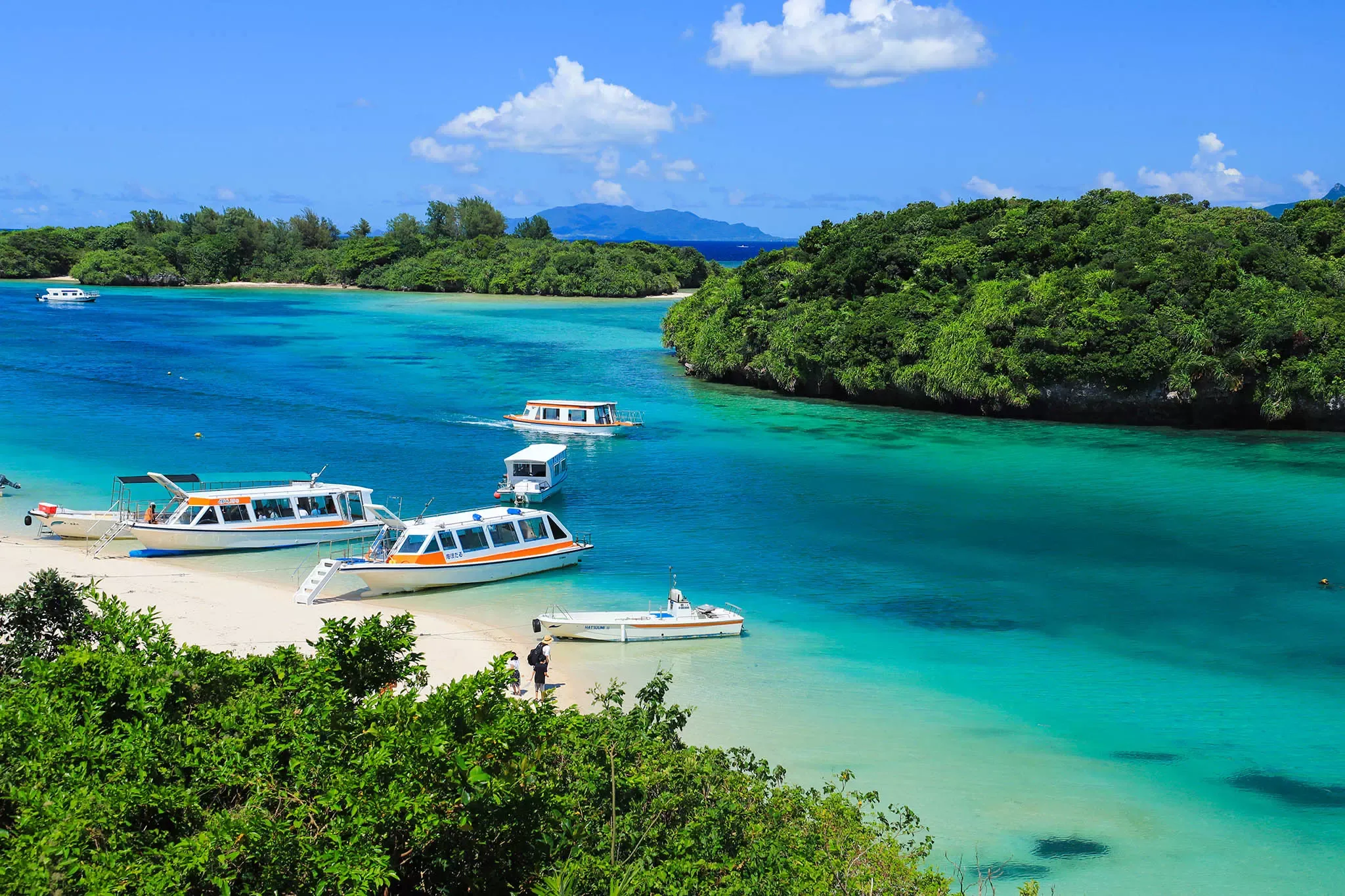
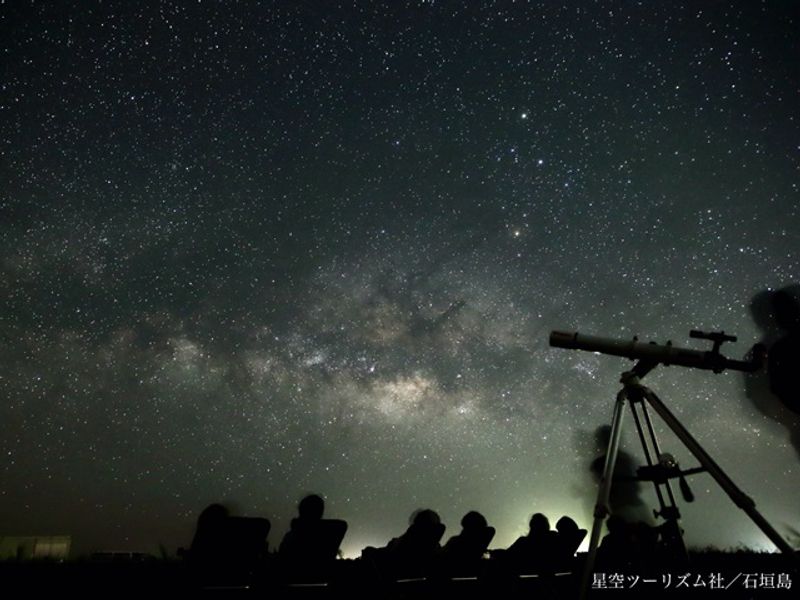
There is a moment, somewhere on a dark beach in the Yaeyama Islands, when your eyes finally adjust and you realize the starry sky above you looks nothing like the sky you know from home. The Milky Way isn't a faint smudge. It's a river. Scorpius hangs directly overhead like a jewel. And if you know where to look, a small cross of four stars is quietly rising above the southern horizon, visible from here and almost nowhere else in Japan.
Okinawa is Japan's greatest stargazing destination. That's not a travel cliché, it's a certified fact. The Iriomote-Ishigaki National Park in the Yaeyama Islands holds Japan's first International Dark Sky Park designation, one of only a handful in all of Asia. The skies here are dark enough that trained astronomers can see 84 of the 88 officially recognized constellations with the naked eye.
But Okinawa's stargazing story is bigger than one park. It stretches from the jungles of Iriomote to the coral-ringed beaches of Miyakojima to the dramatic limestone capes of the main island's north. If you're willing to drive a dark road, pick the right night, and gaze upward, Okinawa will show you one of the most spectacular starry skies on earth.
This guide covers everything, where to go, when to go, how to plan, and what to know before you arrive.
Why Okinawa Has Japan's Best Night Skies
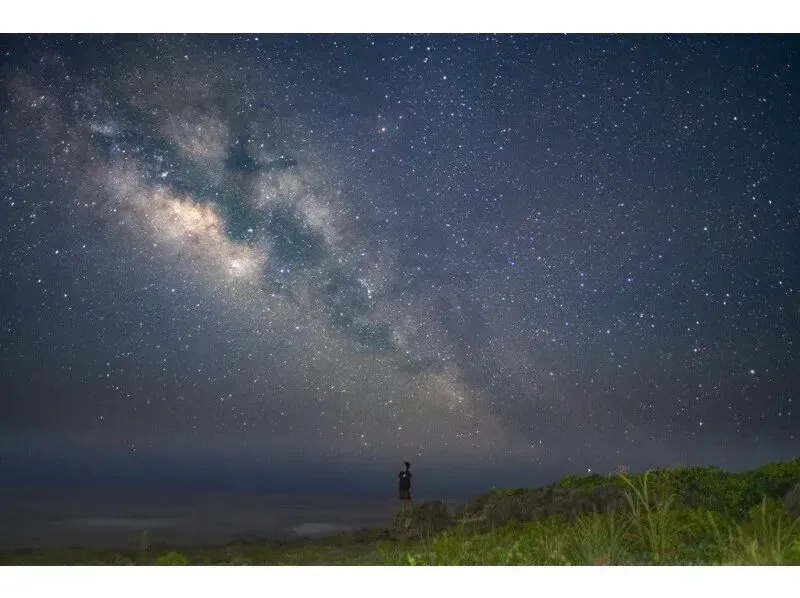
Most of Japan glows. From above, the country's cities form an almost unbroken band of orange light running from Tokyo down through Osaka, Hiroshima, and Fukuoka. Even in rural areas, the sky background is rarely truly dark. From Tokyo, on a good night, you might see a few hundred stars. From Okinawa's remote islands, you can see thousands, and on the best clear nights, you can even see the Milky Way stretching in full color overhead.
There are three reasons the starry skies here are extraordinary.
First, distance from mainland light pollution. Ishigaki Island sits 2,000 kilometers southwest of Tokyo, closer to Taipei than to the Japanese capital. There's nothing to the south but open Pacific Ocean, which means the southern horizon is genuinely dark and free from artificial light.
Second, latitude. At roughly 24 degrees north, Okinawa's islands sit far enough south that constellations invisible from mainland Japan rise above the horizon here. The Southern Cross, Alpha Centauri, the full reach of Centaurus, these are the stars and constellations that Japanese people travel to Okinawa specifically to see.
Third, civic commitment. In 2018, Iriomote-Ishigaki National Park became Japan's first site to earn an International Dark Sky Park designation from DarkSky International (formerly the International Dark-Sky Association). That designation wasn't automatic. The local governments of Ishigaki City and Taketomi Town had to agree to retrofit hundreds of street lights with downward-facing, dark-sky-compliant fixtures. In a region with 54,000 permanent residents, that was a meaningful and deliberate choice.
The result is one of the rarest things in modern Asia: a place where it's genuinely, officially, dark at night.
Understanding the Dark Sky Certification
A bit of context matters here, because the certification story is more nuanced than most travel articles admit.
When Iriomote-Ishigaki National Park was designated in March 2018, it received Provisional International Dark Sky Park status, not full status. The reason was practical: Ishigaki City, which sits within the park's boundaries, is a working city with a commercial harbor, an airport, and a downtown that generates real light pollution. Full certification required the municipal governments to complete an extensive outdoor lighting retrofit program.
That retrofit work has been ongoing. Of Taketomi Town's 638 managed street lights, over 90% had been replaced with dark-sky-compliant fixtures by April 2023. COVID delays pushed the original 2023 completion deadline to December 2025. As of early 2026, the upgrade to full (non-provisional) certification has not yet been publicly confirmed, so the precise status to look for if you're planning a trip is an announcement from DarkSky International in the coming months.
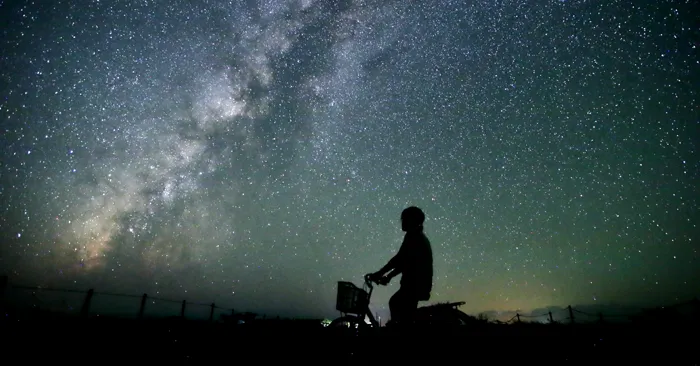
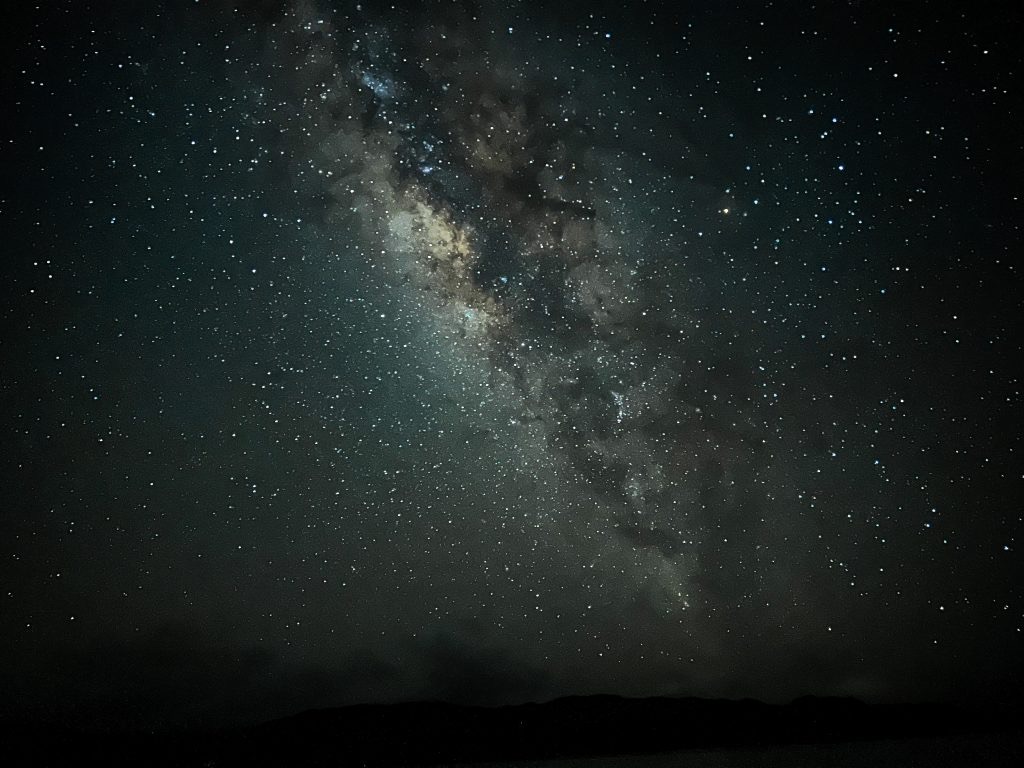
None of this changes what your eyes will see. The skies over Iriomote Island and the outer Yaeyama islands, Hateruma, Kuroshima, Kohama, are genuinely Bortle Class 1 to 2. That means naked-eye limiting magnitudes of around 6.6 to 7.1. That means stars so dense they cast faint shadows.
Tier 1: The Yaeyama Islands, Japan's Darkest Starry Skies
Ishigaki Island
Ishigaki Island is the gateway to the Yaeyama Islands and the natural base for any serious stargazing trip. It has the only commercial airport in the region, the widest range of accommodation, and a thriving guided stargazing tour industry built entirely around the night sky.
The island's best stargazing spots are all in its northern part, away from the city. The Hirakubo Lighthouse (Hirakubozaki), at the northernmost tip of the island, is the classic choice. The road there, about 40 kilometers from city center, passes through sugarcane fields and gradually loses every street light. The lighthouse itself sits on a grassy headland with ocean on three sides and an almost unobstructed 360-degree sky view. There's a small free parking lot, but no restrooms, so plan accordingly.
The Starry Sky Farm (Hoshizora Farm) near Nobaremisaki is a popular spot accessible only through guided tours, which is actually a point in its favor, it's managed specifically for stargazing, with no competing light sources and guides who can help you find what you're looking for. Most tours run two to three hours and cost between ¥3,800 and ¥6,500 per person, with hotel pickup included.
On Ishigaki Island, you can also see the Southern Cross, but the window is narrow. The four stars of Crux are visible roughly between December to June, lying only about 9 degrees above the southern horizon at their highest. For a practical, useful view (the kind where you can actually make out the shape), aim for April through early June, around 9 to 11 PM local time. Choose a date close to the new moon and point yourself toward the south.
Getting there: Direct flights to New Ishigaki Airport (ISG) from Tokyo, Osaka, and Naha. Car rental is strongly recommended for reaching dark-sky spots.
Iriomote Island
Iriomote is the wildest island in Japan. About 90% of its land is covered by subtropical rainforest, there are no traffic lights, the roads run only along the coast, and the interior is so untouched that the Iriomote cat (a critically endangered wild feline discovered only in 1965) still roams freely through the jungle.
At night, Iriomote Island gets genuinely dark. Some of the best sky-quality measurements recorded in the entire Iriomote-Ishigaki National Park come from this remote island. The forest blocks any residual light from Ishigaki City, and the near-total absence of artificial illumination means your eyes adapt within minutes.
The area around the Urauchi River mouth, Okinawa's longest river, cutting through the island's northern interior — is an excellent land-based stargazing spot. There's a small observation deck, parking, and basic facilities near Urauchibashi. The Sonai Forest area on the western coast is another standout, also known for Yaeyama firefly viewing in spring.
For a genuinely unforgettable stargazing experience, consider a stargazing kayak night tour on the mangrove river. Operators like PUMEHANA Adventures paddle guests silently down the river in complete darkness, with the forest canopy opening up above and billions of stars reflected below. Frogs and insects fill the air with sound, fireflies drift between the mangroves, and there is genuinely nothing else quite like it.
Hoshino Resorts' Iriomote Hotel also offers a "Stargazing Mystery Tour" for guests, a vehicle transfer to an undisclosed 360-degree observation point, hosted by a certified guide.
Getting there: Ferry from Ishigaki (Uehara Port or Ohara Port), roughly 35 to 50 minutes depending on which port. A rental car or scooter is essential for getting around the island.
Taketomi Island
Taketomi is everything Iriomote is not, flat, tiny, and gentle. It's a 6-square-kilometer island of white sand, coral walls, and traditional Ryukyuan red-tiled houses that look almost exactly as they did a century ago. A short ferry from Ishigaki, it's usually visited as a day trip, but if you stay overnight, you'll find one of the most photogenic stargazing spots in Okinawa.
The combination of traditional Yaeyama village architecture, star-sand footpaths, heavy stone walls, sleeping water buffalo — with a Bortle 2 sky overhead is something no amount of post-processing can replicate. The entire island goes quiet after the day-trippers leave, making it perfect for stargazing under a beautiful starry sky.
Getting there: High-speed ferry from Ishigaki (離島ターミナル), about 15 minutes.
Tier 2: Miyakojima, The Underrated Stargazing Island
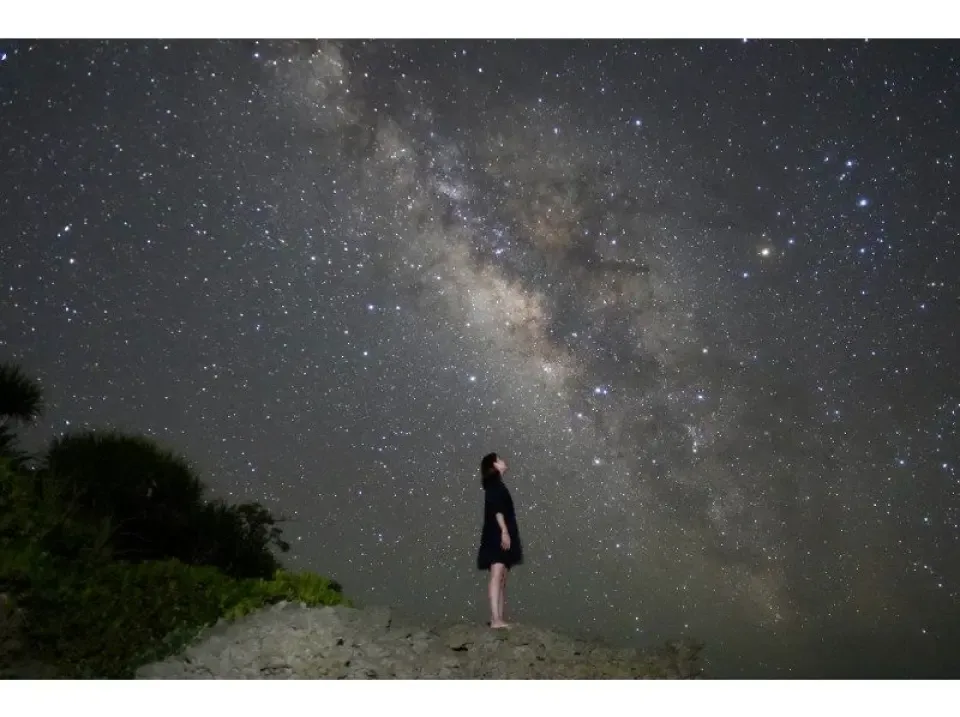
Miyakojima doesn't have a Dark Sky Park certification. What it does have is flat terrain (the highest point on the island is just 115 meters), no heavy industry, clean air, some of the clearest water in Japan, and starry skies that local guides describe as rivaling Ishigaki's.
The island is also structurally better for independent stargazing than Iriomote, you can reach great observation spots easily by rental car, accessible by car without a guided tour, and you're far less likely to share the beach with anyone else at 2 AM.
The best spots on Miyakojima are its beaches and capes:
Sunayama Beach is about 20 minutes from the airport and famous for a natural rock arch that frames the sky beautifully. Arrive after sunset, climb the sand dune, and let the arch become your foreground. Some light glow from Hirara Port to the east, but the western and southern horizons are clean.
Yonaha Maehama Beach on the southwest coast is 7 kilometers of uninterrupted white sand. It has a virtually unobstructed view to the south, the exact direction you need for Southern Cross viewing, and is isolated enough at night to feel genuinely dark. Free parking and restrooms.
Higashi-Hennazaki Cape on the eastern tip is a long, narrow spit with a lighthouse and panoramic ocean views in all directions. Because it projects into the ocean with no land around it, the horizon is 360 degrees of water and sky, a wonderful spot for stargazing and photography.
Irabu Ohashi Bridge : 3.54 kilometers long and the longest toll-free bridge in Japan, makes for a dramatic foreground and can be photographed from the Irabu Island side. On a clear night, the bridge lights reflect in the flat water below while the Milky Way arcs overhead.
The Southern Cross is visible from Miyakojima on the same schedule as Ishigaki Island, late December through June, and because the island is flatter and less forested, the southern horizon is marginally easier to access.
Getting there: Miyako Airport (MMY) has direct flights from Tokyo, Osaka, and Naha. Car rental at the airport is strongly recommended.
Tier 3: Okinawa Main Island, For Day-Trippers and First-Timers
The main island of Okinawa is not the place to come for world-class dark skies. The southern half is heavily developed, and even the popular resort areas around Onna Village have enough hotel and resort lighting to wash out the fainter stars.
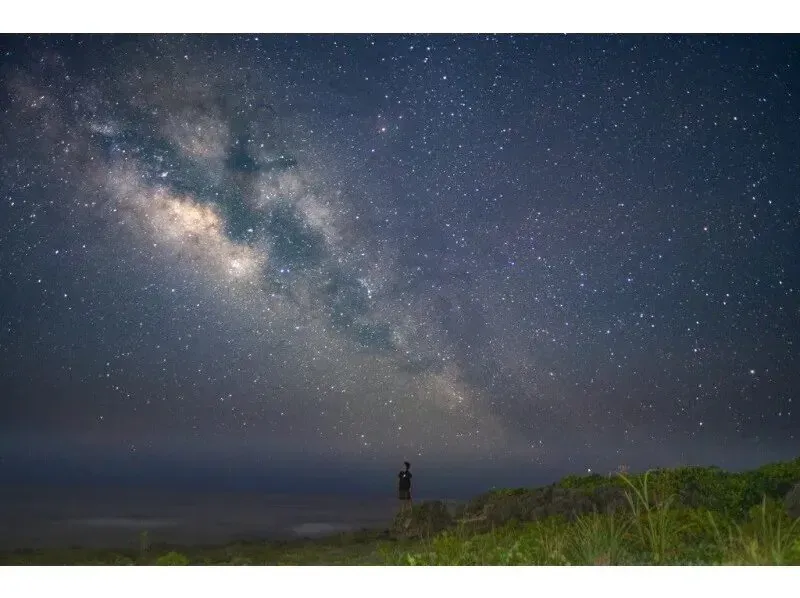
But the northern part of Okinawa's main island, the Yanbaru region, is a different story. It's a UNESCO World Natural Heritage Site, mostly covered by subtropical forest, and on a clear night it offers views that would be considered exceptional almost anywhere else in Japan. This part of Okinawa's main island is among the best places where you can observe a clear starry sky without leaving the prefecture.
The key is driving far enough north and finding the right spots.
Kayauchi Banta is the single best stargazing spot on the main island. It's a dramatic 80-meter limestone cliff with an unobstructed western ocean view, zero street lights, and skies dark enough that you can see the Milky Way clearly on good nights. The access road is narrow and completely unlit, drive slowly, watch for wildlife, and arrive by daylight to scout the parking area. There are no restrooms on-site, so plan ahead.
Kunigami Village Forest Park is the family-friendly alternative in northern Okinawa. It has a large paved parking lot, full restroom facilities (including showers), and a campground lawn with a wide view of the sky. During camping season the park is especially lively, with visitors setting up to enjoy the starry sky together. Less dramatic than Kayauchi Banta, but accessible with children.
Cape Hedo (Hedomisaki), the northernmost point of Okinawa, is worth the drive on its own merits, standing at the tip of the island where the East China Sea meets the Pacific is a special feeling. Stargazing from the main platform is decent, though a visitor information center nearby adds some ambient light. The parking area has about 70 spaces, a restroom block (locked overnight), and clear views to the north.
Cape Manzamo in Onna Village is the classic Okinawa postcard shot, an elephant-shaped limestone promontory jutting into turquoise water. It's too close to resort lighting for serious stargazing, but it makes an atmospheric tourist spot for casual visitors staying in the area. Note that the cliff observation deck has a ¥100 entrance fee during daytime hours.
Kouri Island and its bridge in the north are worth mentioning for their convenience. The Kouri Bridge, 1.96 kilometers long — has a free 40-space observation point at the southern end, with restrooms and decent sky views. Kouri Island itself is a popular spot among visitors who want to enjoy stargazing without a long drive to the far north. Not the darkest spot on this list, but accessible and beautiful.
A practical note on main island stargazing: All of these spots are 1.5 to 2.5 hours' drive from Naha Airport. The roads north of Nago have few or no street lights. Bring a red-light headlamp (which preserves your night vision), insect repellent (subtropical insects are serious business), and snacks. And check the moon phase before you go, a full moon will wash out the Milky Way regardless of where you are.
The Ishigaki Island Astronomical Observatory
If you're visiting Ishigaki, a trip to the island's astronomical observatory is worth building into your itinerary.
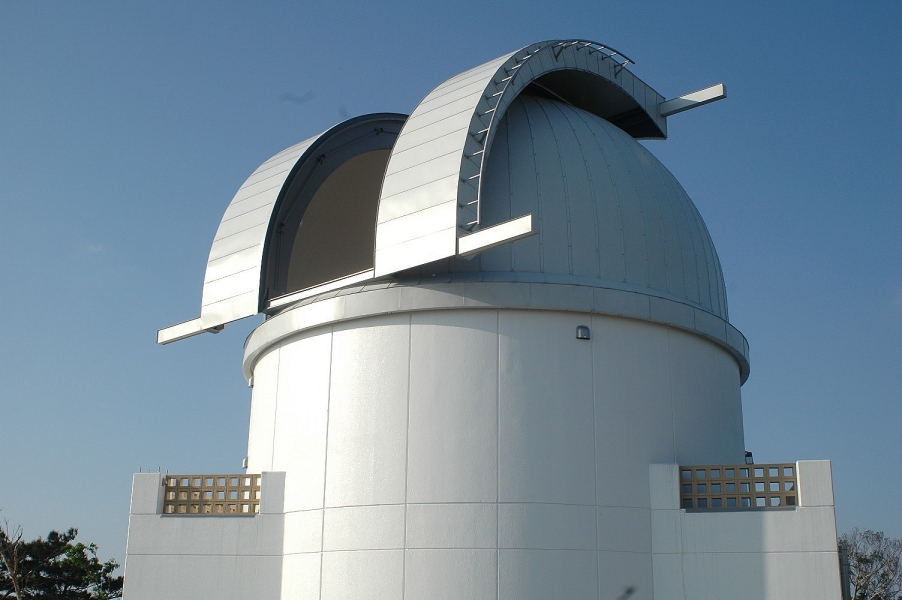
The Ishigakijima Astronomical Observatory (石垣島天文台) sits on Mt. Maesedake at 197 meters above sea level — high enough to sit above the worst of the coastal humidity. It's operated jointly by the National Astronomical Observatory of Japan (NAOJ), Ishigaki City, and local astronomy NPO Yaeyama Hoshi-no-kai. As one of Japan's southernmost astronomical observation facilities, it offers a genuinely unique perspective on the night sky.
The observatory's centerpiece is the Murikabushi Telescope, a 105-centimeter optical and infrared reflector, the largest telescope in the Kyushu-Okinawa region. "Murikabushi" means "Pleiades" in the Yaeyama dialect of Okinawan. As of early 2026, the Murikabushi is temporarily out of service due to a technical fault; public stargazing parties are being conducted with a rooftop 40-centimeter telescope in the interim. Check the observatory's official site (murikabushi.jp) before your visit for the latest status.
Public opening hours are Wednesday through Sunday and public holidays, 10 AM to 5 PM, with a last admission at 3 PM. The facility is closed Mondays, Tuesdays, and the second Thursday of each month for maintenance.
Public stargazing sessions are held on Saturdays, Sundays, and public holidays only, one session per night, from 8 PM (8:15 PM in June and July). Capacity is 30 people. The session costs ¥500 per adult and ¥300 per student. Reservations are by phone only (0980-88-0013) and open on the first of the month prior to your visit. Have your hotel concierge call for you if your Japanese isn't strong enough.
Important: Many travel blogs still list the observatory as free. That information is outdated. Admission fees have applied since fiscal year 2022. The 4D2U Space Theater is also currently suspended due to equipment issues.
The observatory is about a 15-minute drive from Ishigaki city center. The nearest accommodation options, ANA InterContinental Ishigaki Resort, Art Hotel Ishigakijima, Fusaki Beach Resort, are all within 5 to 10 kilometers.
The Southern Island Star Festival
Every August, Ishigaki hosts one of Japan's most atmospheric stargazing events, the Southern Island Star Festival (南の島の星まつり).
The festival has been running since 2002, when an unexpected crowd of 3,000 people showed up to stargaze in a local park and organizers realized there was genuine public hunger for this kind of event. It's now a nine-day celebration timed around the traditional lunar Tanabata, co-organized by Ishigaki City, the NAOJ observatory, VERA Ishigaki Station, and the Ministry of the Environment.
The 2025 edition ran from August 23 to 31. Key highlights included:
A free outdoor concert and island-wide light-down on the opening night at Painuhama Green Park, with the popular Okinawan band Begin performing as the island darkened collectively at 8:30 PM for naked-eye stargazing. (Advance digital tickets via Peatix were required for this, limited to 2,000 attendees.)
A free public lecture featuring National Astronomical Observatory researchers speaking on comets and dark sky conservation.
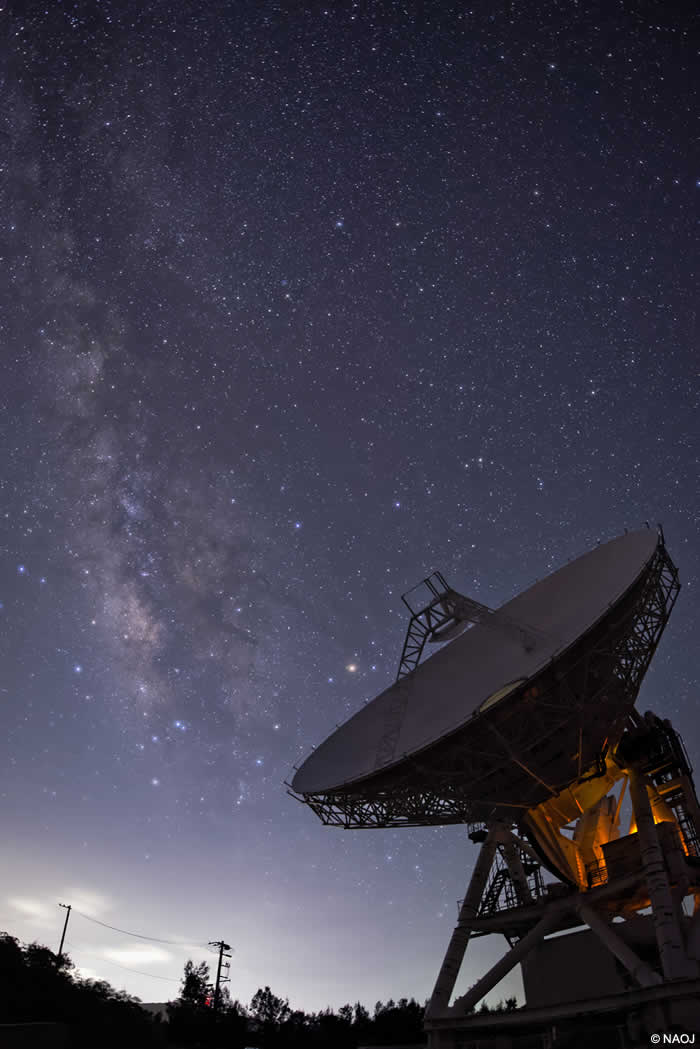
A free VERA Ishigaki Open House, where visitors could tour Japan's southernmost VLBI radio observatory and stand next to a working 20-meter radio telescope.
Paid telescope viewing sessions at the observatory on six evenings throughout the festival (¥500/¥300), with phone reservations required.
The 2026 dates were not yet announced as of the time of writing. Check Ishigaki City's official tourism website (city.ishigaki.okinawa.jp) or Visit Okinawa Japan for updates. The festival typically falls in the last ten days of August.
Best Time to Go Stargazing in Okinawa
The single most important variable is the moon phase. On a full moon night, even the darkest starry skies in Okinawa will be washed out. Before you book anything, pull up a moon phase calendar and plan your travel around a new moon window. Everything else — island choice, weather, season, is secondary to this.
With that said, here's how the seasons break down:
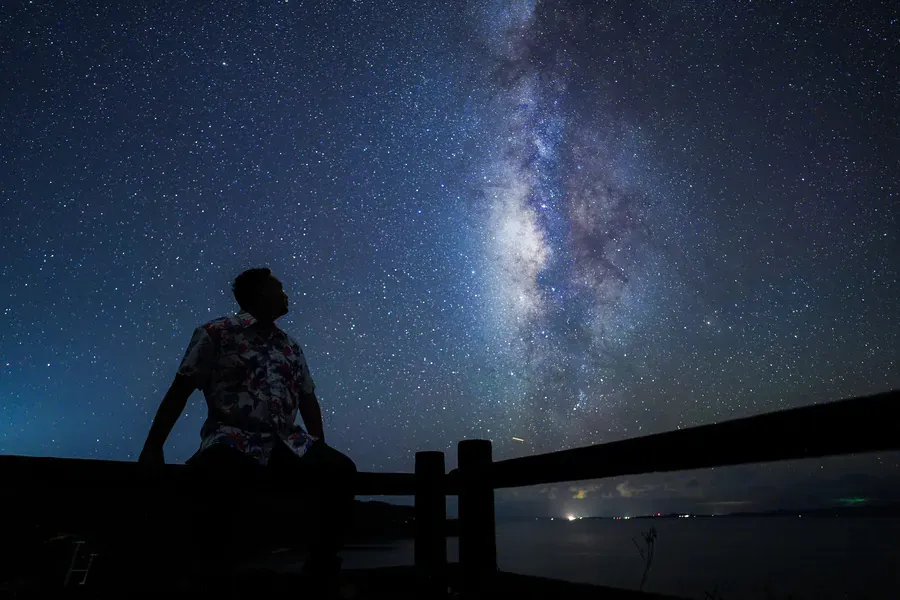
April to early June is the sweet spot for most visitors. The rainy season hasn't fully settled in yet (Yaeyama's tsuyu typically runs May to mid-June, ending earlier than on the main island). The Southern Cross is at its highest and most accessible, reaching about 9 to 11 degrees above the southern horizon between 9 PM and midnight. The Scorpius-Sagittarius Milky Way core is beginning to rise. The weather is warm but not yet oppressive, and this is the best time to see a beautiful starry sky that includes the Southern Cross.
July delivers the most spectacular Milky Way overhead, the core of the galaxy arcs directly above Ishigaki and Iriomote in a way that makes even experienced stargazers stop talking. It's also statistically Ishigaki's sunniest month. The downside is heat and humidity, and typhoon season is beginning to build.
August through early October carries significant typhoon risk. This doesn't mean the skies are always bad, the 24 to 48 hours immediately after a typhoon passes often produce the most transparent, extraordinary skies of the year. But it does mean your trip can be disrupted by ferry and flight cancellations.
October through February sees the Milky Way core set and the winter sky take over, Orion, Canis Major, Taurus, Gemini, and other bright constellations. The Southern Cross returns to the pre-dawn sky from late January. These months tend to be cloudier, especially December through February, but they're also less humid, cooler, and quieter.
In general: plan for April-June if you want Southern Cross plus Milky Way plus reliable weather. Plan for July if maximum Milky Way drama is your priority and you're comfortable with heat.
Stargazing and Photography Tips for Okinawa
Okinawa offers something that most dark-sky destinations don't: extraordinary foregrounds. You don't have to choose between great skies and interesting landscapes, you can have both in the same frame. Whether you're capturing a starry sky photo from Taketomi's village lanes or shooting long exposures from Miyakojima's coast, the combination of beautiful scenery and a star-filled sky is hard to beat.
Beaches with distinctive foregrounds are your best starting point. Sunayama Beach's rock arch on Miyakojima is tailor-made for astrophotography. The traditional Ryukyuan stone walls and red-tiled rooftops of Taketomi Village, if you stay overnight, make for a uniquely Japanese night-sky backdrop. Hoshizuna-no-hama (Star Sand Beach) on Iriomote, with its namesake star-shaped grains of sand, practically writes its own caption.
Bridges like Irabu Ohashi and Kouri Ohashi work well for long exposures that balance the warm glow of bridge lighting against a cold Milky Way overhead. The VERA 20-meter radio antenna on Ishigaki can be photographed from a public road and makes a striking, unexpected foreground.
Camera settings to start with (for a full-frame mirrorless or DSLR): a wide lens at 14–24mm, f/2.8, ISO 3200–6400, 15 to 20 seconds using the 500 rule, white balance around 3800–4200K. The humidity is high year-round in Okinawa (often 75–85%), which means your lens will dew up faster than you expect. Bring lens warmers or hand warmers and secure them gently around the lens barrel.
If you plan to fly a drone for astrophotography inside Iriomote-Ishigaki National Park, you need a written permit from the Ministry of the Environment's Naha Nature Conservation Office. Drone flight is prohibited without authorization in national park areas and can result in significant fines.
For app planning tools, PhotoPills is excellent for predicting exactly where the Milky Way core will rise over a specific foreground at a specific time. Stellarium will show you where the Southern Cross will be at any hour on any date from any GPS location.
How to Plan Your Okinawa Stargazing Trip
Step 1: Pick your moon dates. Find the new moon dates closest to your available travel window and plan to arrive two to three days before through two to three days after new moon. The sky degrades quickly once the moon rises before midnight.
Step 2: Choose your island tier. If world-class dark skies and a dedicated stargazing trip are the goal, fly to Ishigaki (ISG) and add a night on Iriomote Island or one of the outer islands. If you want convenience and good-but-not-certified skies, fly to Miyako Airport (MMY). If you're based on the main island, drive north toward Yambaru.
Step 3: Book your tours in advance. Guided tours on Ishigaki, especially the PiPi stargazing and jungle tour, Hoshizora Tourism's Shooting Star Hill, and the Iriomote kayak tours, fill up quickly on prime dates. Book at minimum two to four weeks ahead via Activity Japan, KKday, Klook, or the operator's own site. Tours on Okinawa's remote islands in particular book out fast during peak stargazing season.
Step 4: Reserve the Ishigaki Observatory session by phone on the first of the month before your visit. Ask your hotel concierge to call on your behalf if needed.
Step 5: Check the weather 72 hours out. For real-time sky transparency and cloud cover, use Meteoblue or Clear Outside rather than generic weather apps. Both show cloud layers, atmospheric transparency, and seeing conditions in detail.
What to bring: A red-light headlamp (mandatory, white light kills your night vision for 20+ minutes), strong insect repellent, a light layer for after midnight (ocean breezes can be cool even in summer), a ground mat or reclining chair for extended sessions, and fully charged batteries (cold doesn't drain batteries here, but humidity can cause unexpected electronic issues).
Guided vs. self-guided: On the main island and Miyakojima, self-guided is entirely manageable with a rental car and this guide. On Iriomote, guided stargazing is strongly recommended, the roads are unlit, unmarked in places, and genuinely disorienting after dark. On Ishigaki, guided stargazing tours add real value through their exclusive-access observation spots, constellation narration, and photography assistance.
Practical FAQ
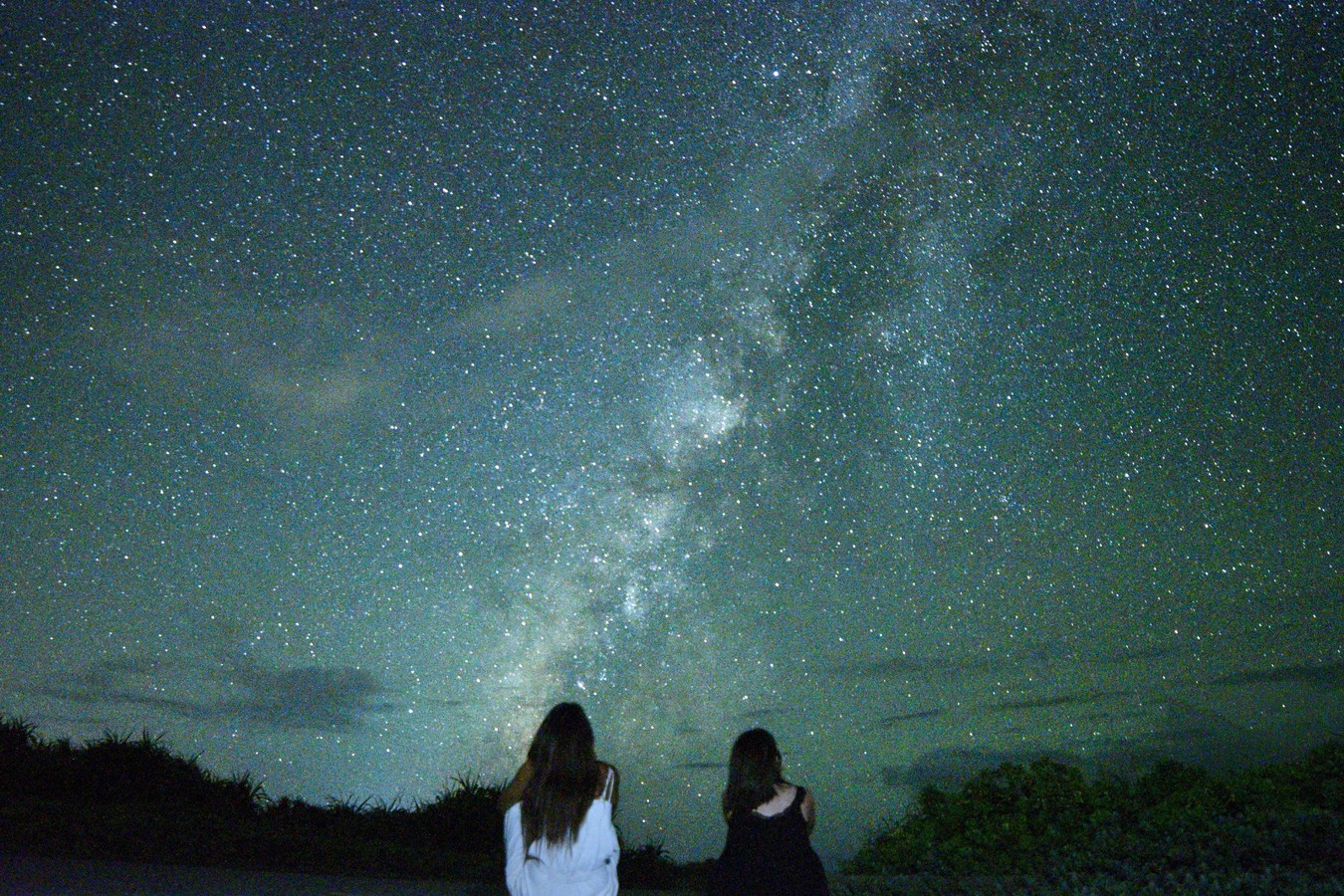
Can you see the Milky Way in Okinawa? Yes, the Milky Way is visible year-round from Okinawa's remote islands on clear, moonless nights. From the best stargazing spots on Ishigaki and Iriomote, it's not a faint suggestion but a broad, dense band of stars with visible color gradients in its core. You can even see the Milky Way clearly from northern Okinawa main island on the darkest nights.
Can you see the Southern Cross from Okinawa? Yes, but the window is specific. From Ishigaki and Miyakojima, all four stars of Crux are visible between approximately December to June. For the most practical, useful view, where the cross is identifiable above the horizon, aim for April through early June, around 9 PM to midnight.
What is the best island for stargazing in Okinawa? Ishigaki Island is the gold standard for a dedicated stargazing trip, it has certified dark skies, the Yaeyama Astronomical Observatory, the widest range of guided tours, and the infrastructure to support a multi-day stay. Iriomote Island offers darker, wilder skies but requires more planning. Miyakojima is the best underrated alternative, with beaches perfect for stargazing and a star-filled sky that rivals the Yaeyama islands.
Do I need a guided tour? Not on the main island or Miyakojima, where rental car access is straightforward. On Iriomote, a guided tour is strongly recommended. On Ishigaki, tours aren't mandatory but add genuine value through access to exclusive private observation spots and the chance to observe celestial bodies, stars, planets, and constellations, with expert narration.
Is the Ishigaki Observatory free? No, admission has been charged since fiscal year 2022. Public stargazing sessions cost ¥500 per adult and ¥300 per student. Many travel sites still state the observatory is free; that information is outdated.
What is the best time of year for stargazing in Okinawa? April through early June is the most reliable window, good weather, the Southern Cross visible, and the Milky Way core rising. July delivers the most dramatic Milky Way views. Always plan around the new moon phase.
Are there photography restrictions in Iriomote-Ishigaki National Park? Drone photography requires a written permit from the Ministry of the Environment. Commercial photography also requires authorization. Tripods and personal cameras are generally fine at public observation spots and road-access points.
Where can I find recommended stargazing spots near Naha? The closest recommended stargazing spots to Naha Airport are in the northern part of Okinawa's main island. Kayauchi Banta and Kunigami Village Forest Park are the top picks, both around 1.5 to 2.5 hours from Naha Airport by car. Yoron Island, just off the northern tip of Okinawa prefecture and reachable by ferry, is another option for those seeking a more remote island experience.
All admission prices and operational details were accurate as of early 2026. Verify current status of the Ishigakijima Astronomical Observatory telescope and theater before visiting, as both were temporarily out of service due to equipment issues. The Dark Sky Park provisional certification deadline of December 2025 may have resulted in a status update, check DarkSky International (darksky.org) for the latest designation news.
Evertrail Tours · May 26, 2026