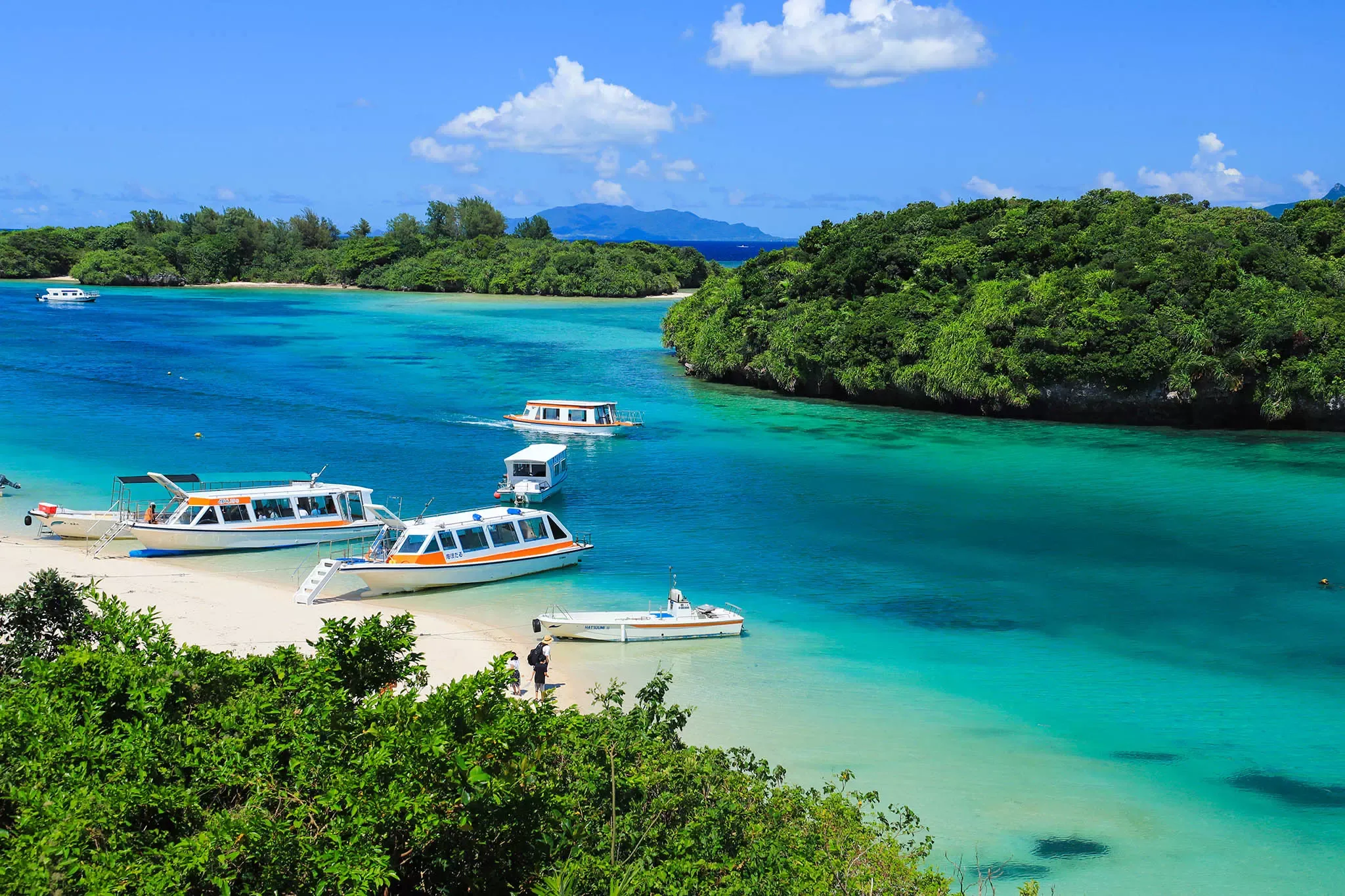
When people picture Japan, they picture neon-lit Tokyo crossings, snow-capped Mount Fuji, or quiet Kyoto temples in the rain. What almost nobody pictures is turquoise water, coral reefs, and a beach you could mistake for the Caribbean, all still technically Japan.
I live on that beach. My name's David, and along with my guiding partner Aya, I run small-group tours across Okinawa, Japan's southernmost prefecture. Every week we meet travelers who've spent years planning a trip to Japan and had absolutely no idea this tropical paradise existed. If you're just starting to think about travel to Okinawa, or looking for things to do in Okinawa beyond the usual guidebook stops, consider this your Okinawa travel guide, written from the inside.
Key takeaways
- Okinawa is Japan's only fully subtropical prefecture, sitting further south than most of Taiwan, closer to Taipei than to Tokyo.
- It's made up of over a hundred islands, most fringed with coral reef, warm water, and quiet, uncrowded beaches.
- The culture here isn't mainland Japanese culture with a tan. Okinawa was its own kingdom for 450 years, with its own language, food, and traditions.
- Okinawa's reputation for longevity is real research, but it's more complicated, and more interesting, than the "secret to eternal life" headlines suggest.
- You can fly directly into Naha Airport from major Japanese cities and several Asian hubs, and no special visa is needed beyond standard entry to Japan.
Where Okinawa actually is (and why most travelers miss it)
Here's the thing that surprises almost every visitor I take out: Okinawa sits at roughly the same latitude as Miami and Hong Kong. It's about 1,600 kilometers southwest of Tokyo — genuinely closer to Taipei than to Japan's own capital. As the southernmost prefecture in the country, Okinawa Prefecture forms a long archipelago of more than 160 islands scattered across the East China Sea, most of them barely known outside Japan.
Most first-time visitors to Japan build their itinerary around the Tokyo-Osaka-Kyoto corridor, glance at a map, and never notice this long chain of islands trailing off the bottom of Japan. It's easy to miss something that's rarely mentioned in the "essential Japan" conversation. But once you know it's there, it's hard to unsee, a stretch of genuinely tropical islands sitting inside one of the world's most visited countries, mostly overlooked by the people visiting it.
What makes it a tropical paradise
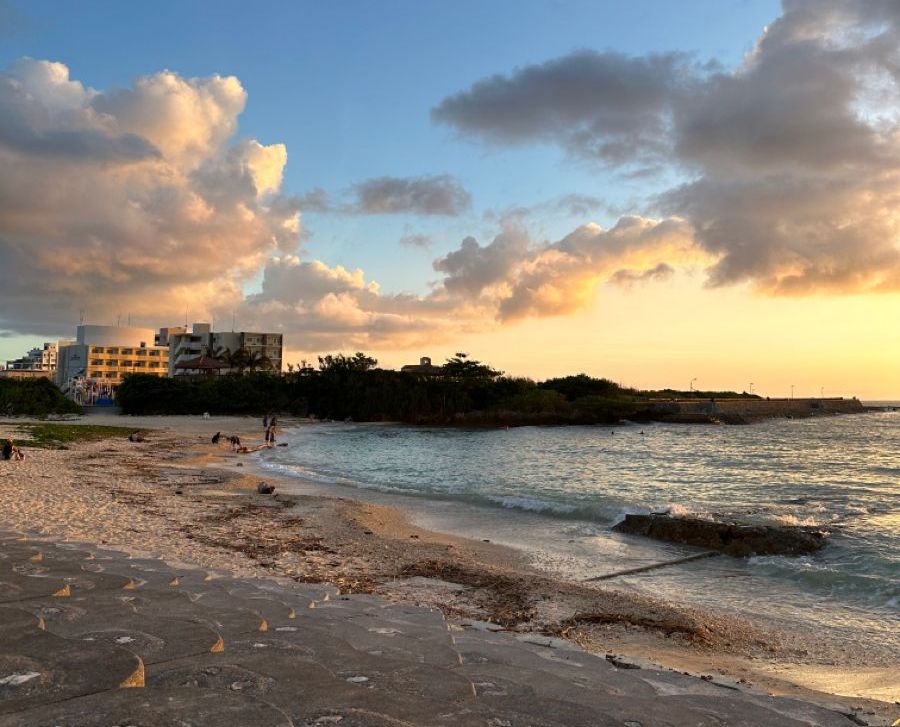
Okinawa's climate isn't "warm for Japan." It's a genuine subtropical climate, on par with plenty of tropical destinations people fly across the world to reach. Average temperatures stay above 17°C even in the depths of winter, and by summer they're sitting comfortably in the high 20s. Rain is part of the deal, Okinawa gets a genuinely wet season, but the trade-off is clear waters you can see your feet through from a standing paddleboard.
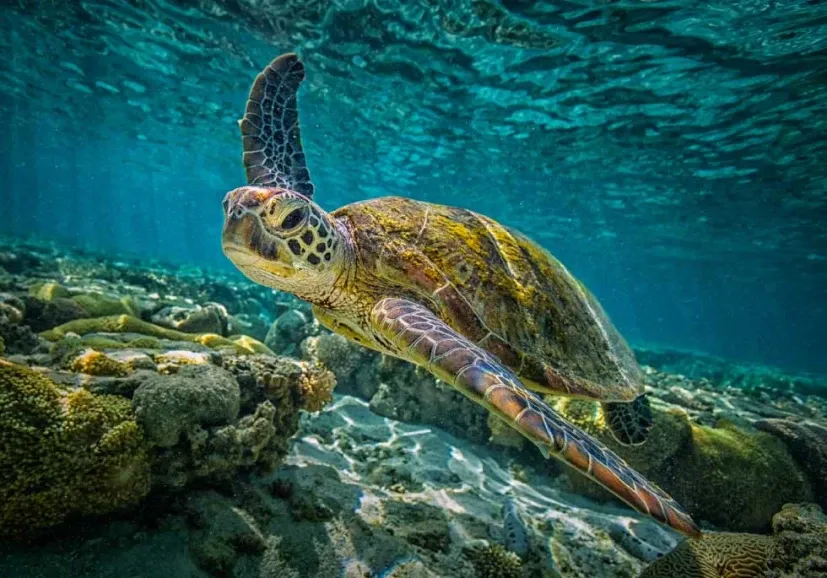
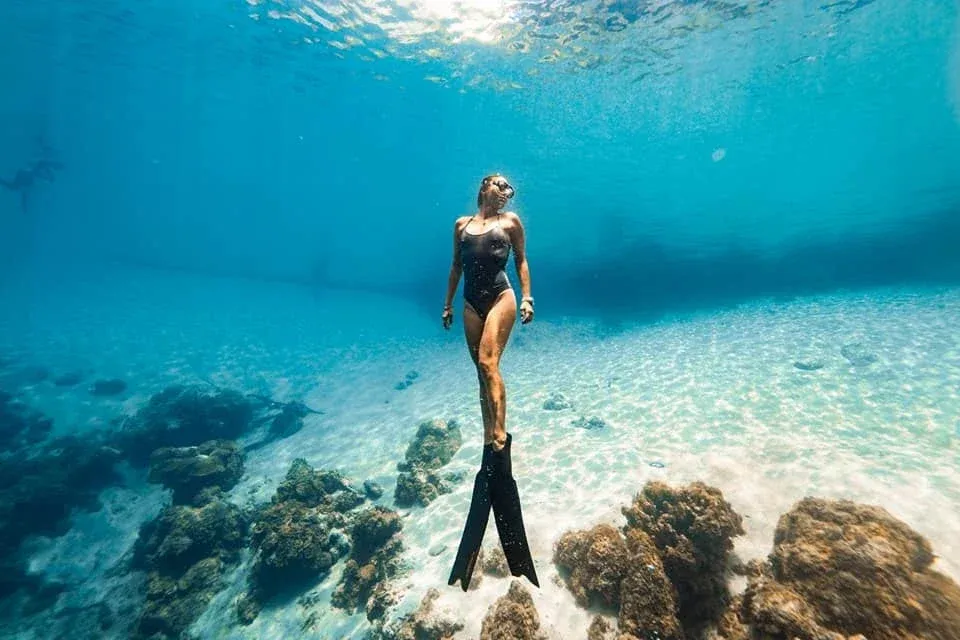
The main island alone has some of the best beaches you could work through in a single trip, but the real magic happens once you get out onto the smaller islands. Vibrant coral reefs ring most of the coastline, and diving or snorkeling here regularly gets compared to Southeast Asia, without the multi-flight journey to get there. Any diver or snorkeler comes here for the marine life: reef fish in every color, sea turtles gliding along the shallows, sometimes a single turtle drifting motionless just below the surface, and, further out toward the Kerama Islands, manta rays that draw dive boats from across the region.
If you want a taste of that marine life without getting in the water, the Okinawa Churaumi Aquarium is worth the detour, its whale shark exhibit is one of the largest of its kind anywhere. But honestly, the natural beauty here is better experienced in the ocean itself than through glass.
I never get tired of the moment when someone realizes this is still Japan. It happens on almost every tour, somewhere along a scenic stretch of coastline. Someone's standing in ankle-deep, glass-clear water looking out at a reef, and they just say, quietly, "wait, this is Japan?"
A culture that isn't "Japan" as you picture it
This is the part I find myself explaining most often, and it's the part that makes Okinawa genuinely different, not just a nicer beach with the same culture as everywhere else in Japan.
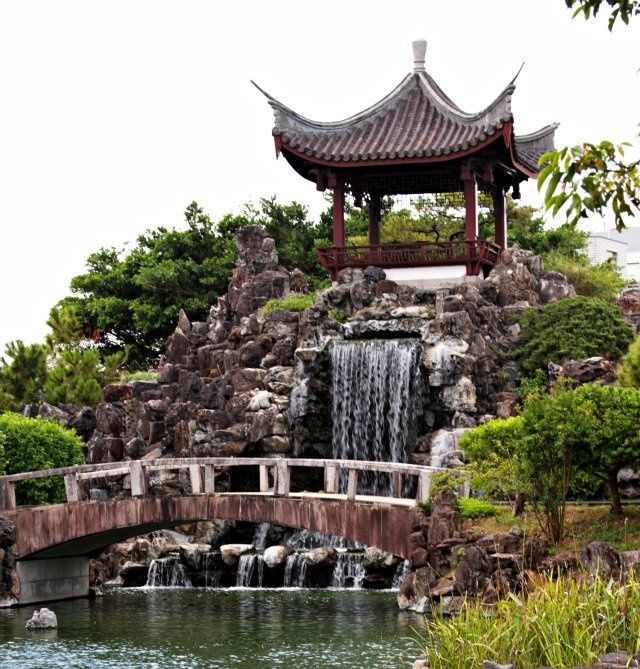
For roughly 450 years, Okinawa wasn't Japan at all. It was the independent Ryūkyū Kingdom, unified in 1429 by King Shō Hashi, with Shuri as the seat of the Ryūkyū royal court until the kingdom's annexation by Japan in the late 1800s. That history didn't just fade quietly into the background, it shaped a language, a cuisine, a set of customs, and an entire artistic tradition that still feels distinct from anything on the mainland.
You can still see the former Ryūkyū Kingdom's fingerprints all over Naha city today. Shuri Castle, the former royal palace of the Ryūkyūan kings, sits on a hill above the city and remains one of the island's most visited cultural heritage sites, alongside several other gusuku castle ruins recognized as UNESCO World Heritage Sites across the region. Look closely at older Okinawan homes and you'll spot red-tiled roofs topped with shisa, the guardian lion-dog figures found on doorsteps and gates across the islands, said to ward off evil spirits. It's a small detail, but it captures Okinawan culture, and this unique culture's endurance, better than almost anything else. For a curated taste of it all in a single afternoon, Ryukyu Village recreates a traditional Okinawan settlement complete with craft demonstrations and Eisā performances.
The islands' more recent history is heavier. The Battle of Okinawa in 1945 was one of the most devastating campaigns of the Pacific War, and the Peace Memorial Park in the south of the main island remains one of the most moving stops on the island for understanding what Okinawans endured. The decades of U.S. military presence that followed have also left their own mark on local culture and cuisine, layered on top of everything that came before.
You'll hear the older, former Ryūkyū culture in the music, built around the three-stringed sanshin. You'll see it in Eisā, the drumming and dance performed at festivals across the islands. And if you spend any time here, you'll notice locals refer to themselves as Uchinānchu, Ryukyuan, Okinawan, before they reach for "Japanese." It's not a rejection of Japan. It's just an honest reflection of a cultural heritage of Okinawa that's still very much alive, and an island culture built from a genuinely unique history.
More islands than you'd think
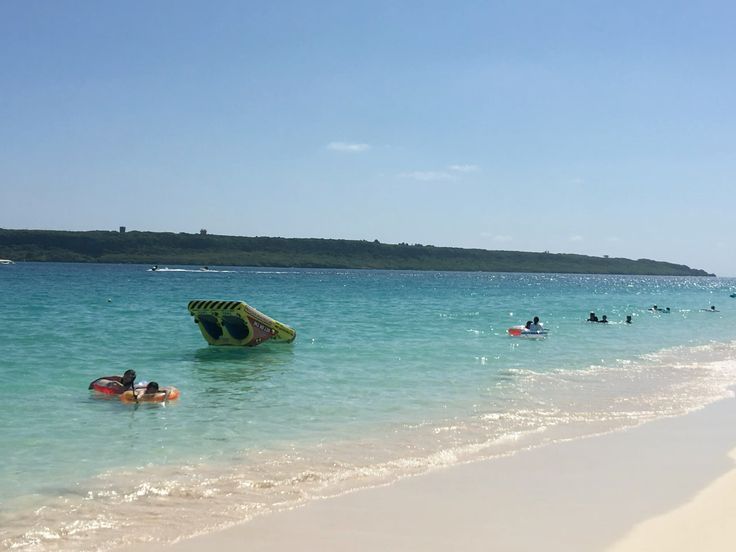
Most people picture "Okinawa" as one island. In reality, the prefecture is made up of well over a hundred islands, each with its own personality. There's Okinawa's main island, the largest island in the chain, home to Naha and most of the population. Just off its northern coast, a bridge leads across to Kōri Island (Kouri Island), a small islet ringed with some of the clearest water anywhere along this stretch of coastline.
Head further out and you'll find the Miyako Islands, known for some of the clearest water in the country, and the Yaeyama Islands further south still, closer to Taiwan than to mainland Japan, where places like Ishigaki Island serve as the gateway and Iriomote Island is covered in dense jungle and mangrove rather than beach umbrellas. Iriomote's rivers wind through a mangrove ecosystem thick enough that kayaking through it feels closer to Southeast Asia than Japan, and its surrounding reefs add yet another patch of coral to an island chain that never seems to run out of it. Nearby Taketomi Island, tiny and car-free, is worth a slow afternoon just wandering its sand-covered lanes.
Closer to Naha, the Kerama Islands are close enough for a day trip and clear enough that whale-watching boats and snorkel tours run out of the same small ports. Every one of these islands has a completely different feel, and honestly, choosing between them is one of the more enjoyable problems a first-time visitor gets to have.
Food you can't get anywhere else in Japan
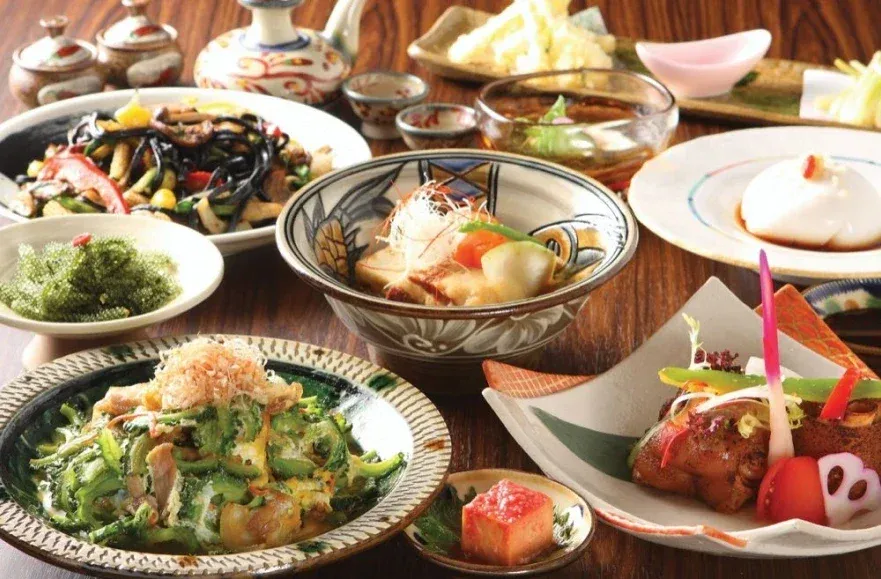
Okinawan food is its own category, not a regional variation on sushi and ramen. The traditional Okinawan diet leans heavily on bitter melon, pork prepared in ways you won't find on the mainland, purple sweet potato, and seaweed varieties that barely show up elsewhere in Japan.
One dish worth seeking out on its own is Okinawa soba, despite the name, it's made with wheat noodles rather than the buckwheat flour used in standard Japanese soba, served in a rich pork-and-bonito broth that tastes nothing like what "soba" usually means in Japan. You'll also find taco rice on nearly every menu here, a genuinely Okinawan fusion of American and local flavors born near the U.S. bases here, ground taco-seasoned meat, lettuce, cheese, and salsa piled straight onto a bowl of rice.
Then there's awamori, the island's own distilled spirit, distinct from mainland sake or shōchū and aged in a way that's uniquely local. If you only eat one meal at a market stall in Naha and one dinner at an izakaya while you're here, you'll already taste the unique flavors of Okinawan cuisine better than most guidebooks can describe.
The practical basics
You can reach Naha Airport directly from most major Japanese cities, Tokyo, Osaka, Nagoya, and Fukuoka all have regular direct flights, typically somewhere between one and a half and three hours in the air. There's also a solid network of international connections into the region, largely from other parts of East and Southeast Asia. Booking early tends to keep an Okinawa trip affordable even during peak season.
There's no bullet train option here, Okinawa is islands, so flying (or a very long ferry) is really the only way in. Once you've landed, a rental car opens up Okinawa main island easily, while the outer islands are typically reached by short domestic flights or ferry.
As for the ideal time to visit, that really depends on what you're after, and it's worth its own deep dive rather than a paragraph here. The short version, drawn loosely from Okinawa Prefectural tourism data: expect a genuinely wet season around early summer, a hot and humid peak in July and August, and a noticeably calmer, cooler stretch through autumn and winter that a lot of repeat visitors quietly consider the best time to visit Okinawa. If you're weighing up the best times to visit Okinawa against a tighter schedule, autumn is usually the easiest compromise between weather and crowds.

Why it's stayed under the radar
People often ask me how Okinawa compares to Hawaii or Bali, since it clearly borrows a bit of both, tropical water and reef life like Hawaii, a distinct local culture layered over the landscape like Bali. Compared to Hawaii, Okinawa offers noticeably lower prices for a similar tropical trip, alongside calmer, less crowded beaches, though Hawaii still wins on dramatic volcanic scenery. Against Bali, it loses on nightlife and rock-bottom prices, but wins on water clarity, quiet beaches, and how easy everything is to navigate.
Part of why it's stayed quiet, I think, is simply that it doesn't fit the mental picture people already have of Japan. It's not competing for a place on the "top of Japan" list, it's sitting entirely outside the list most travelers are working from. Once you get past the obvious postcard shots and the well-worn Okinawa attractions, the island is full of hidden gems, quiet coves, backroad noodle shops, and small islands most guidebooks skip entirely.
You'll also see Okinawa mentioned for another reason: it's one of the world's so-called "Blue Zones," regions studied for unusually long-lived populations. That research is real and it goes back decades. But it's worth knowing this reputation has gotten more complicated over the past several years, Okinawa's longevity rankings within Japan have actually dropped noticeably among the postwar generations, and some of the original "Blue Zone" data has faced genuine scientific pushback in recent years. The honest story isn't "the secret to living forever." It's a place where an older generation lived a genuinely different, slower, community-centered life, and where that story is still being studied, debated, and understood.
Who this trip is actually for
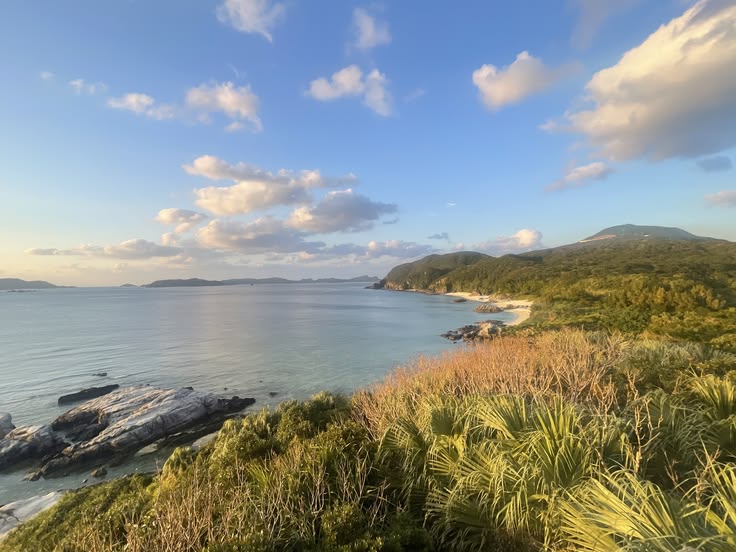
If you want a version of Japan that involves swimming as much as sightseeing, and you don't mind that almost nobody back home will immediately know where you went, this is for you.
It's also, selfishly, why Aya and I do what we do. Most of our own tours run in the north of the main island, in the Yanbaru rainforest, our Jungle River Trek follows a jungle stream all the way down to the reef, which is about as good a summary of "tropical Japan" as I can give you in one sentence. For anyone who wants to go further, our multi-day Island Hopping tours push out into exactly the smaller islands I mentioned above, moving between beaches, boats, and quiet fishing villages most short-trip visitors never reach.
Either way, this is a part of Japan built for slowing down, not checking boxes.
FAQ
Is Okinawa tropical?
Okinawa has a subtropical climate, warm year-round, with a wet season and a hot, humid summer. It sits at a lower latitude than the rest of Japan, close to the tropics, and its beaches, reefs, and water temperatures genuinely feel tropical for most of the year.
Is Okinawa part of Japan?
Yes. Okinawa is a prefecture of Japan today, though it was an independent kingdom, the Ryūkyū Kingdom, until the late 1800s. That separate history is part of why its culture still feels distinct from the rest of the country.
How do you get to Okinawa?
By air. Naha Airport has direct flights from most major Japanese cities, along with connections from several international hubs in East and Southeast Asia. There is no train or bullet train access, since Okinawa is an island chain.
What's the best time of year to visit Okinawa?
It depends on what you want from the trip. Broadly, early summer brings a rainy season, midsummer is hot and humid, and autumn through winter is calmer, cooler, and less crowded.
How many days do you need in Okinawa?
A short trip can work with three to four days on the main island. A week or more lets you add one of the outer islands, which is where a lot of the best water and quietest beaches are found.
Is Okinawa expensive compared to mainland Japan?
Okinawa is generally comparable to or slightly less expensive than mainland Japan for food and accommodation, and it's considerably cheaper than a similar tropical trip to Hawaii.
How does Okinawa compare to Hawaii or Bali?
Okinawa shares tropical water and reef life with Hawaii, generally at a lower cost, though it lacks Hawaii's volcanic drama. Compared to Bali, Okinawa has clearer water and quieter beaches, but less nightlife and higher prices.
Evertrail Tours · July 9, 2026