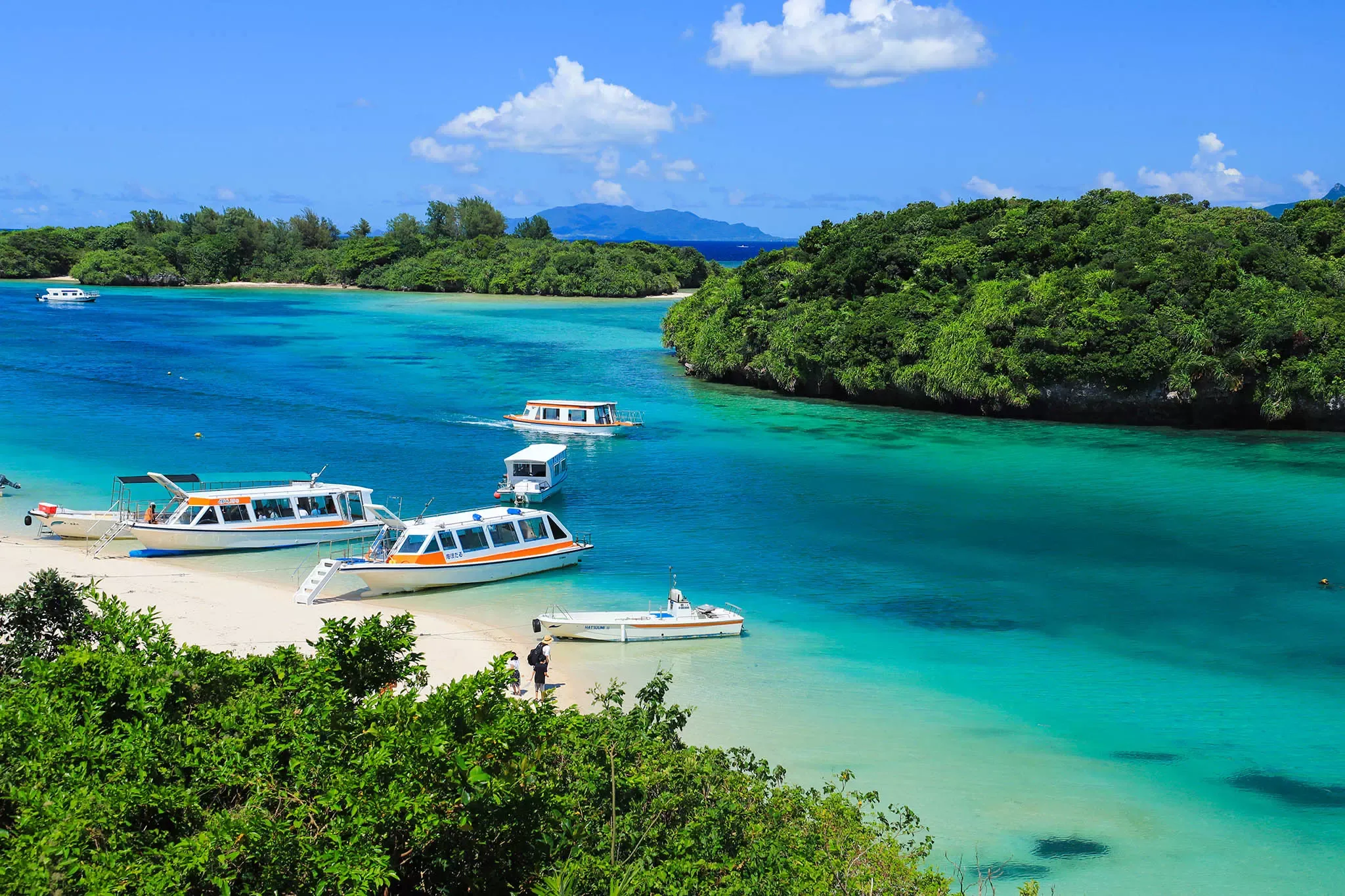
There's a particular sound that rain makes on Okinawa's red-tile roofs, heavier than it looks like it should be, almost percussive, like the island itself is being played as an instrument. The first time I heard it, I was standing under the awning of a small shop on Kokusai Dori, watching the street empty out in under a minute. Tourists scattered for cover. Umbrellas flipped inside out. And then, just as fast as it arrived, the cloud moved on, and the pavement was steaming again under a hot, white sun.
That's the rhythm of Okinawa's rainy season, locally called tsuyu, and if you're visiting between May and June, you're going to meet it at some point. The Japan Meteorological Agency's long-term data puts Naha's average rainy season at around 43 days, typically starting near May 10 and wrapping up by late June, though it can shift, in 2026, for instance, it arrived a little early, on May 4. During this stretch, Naha sees more than 200mm of rain in both May and June, with 15 to 18 rainy days each month and humidity that regularly climbs past 80%.
But here's the thing nobody tells you before you book your flights: rain in Okinawa isn't the disappointment it sounds like. It rarely settles in for the day. What you actually get is short, intense bursts, the kind of squall that turns the sky charcoal for twenty minutes and then clears into blinding sun, humidity hanging in the air like a held breath. Because the storms move so fast across this narrow island, your afternoon isn't ruined. It's just rearranged.
And that rearranging is an invitation. A rainy day in Okinawa is permission to slow down, to find a window seat, order something warm, and watch the island do its thing from somewhere dry. Some of my favorite hours here haven't been on a beach at all. They've been in cafés, waiting out a squall with a book or a notebook, watching steam rise off a cup while the world outside goes soft and grey for a while.
This guide is built around six of those places, two in Naha, two in Chatan, and two tucked into the forested hills of Yanbaru in the north. Each one is a little different in mood, but all of them share one thing: they're worth visiting because of the rain, not despite it.
Plan it right, and a rainy holiday in Okinawa Prefecture can feel just as memorable as a sunny one, sometimes more, since smaller crowds and a hot drink in hand make it easy to enjoy this corner of Japan from somewhere dry. Wherever your forecast points, treat rain as a cue to slow down, not to cancel.
Naha: Contrasting Urban Sanctuaries in the Capital
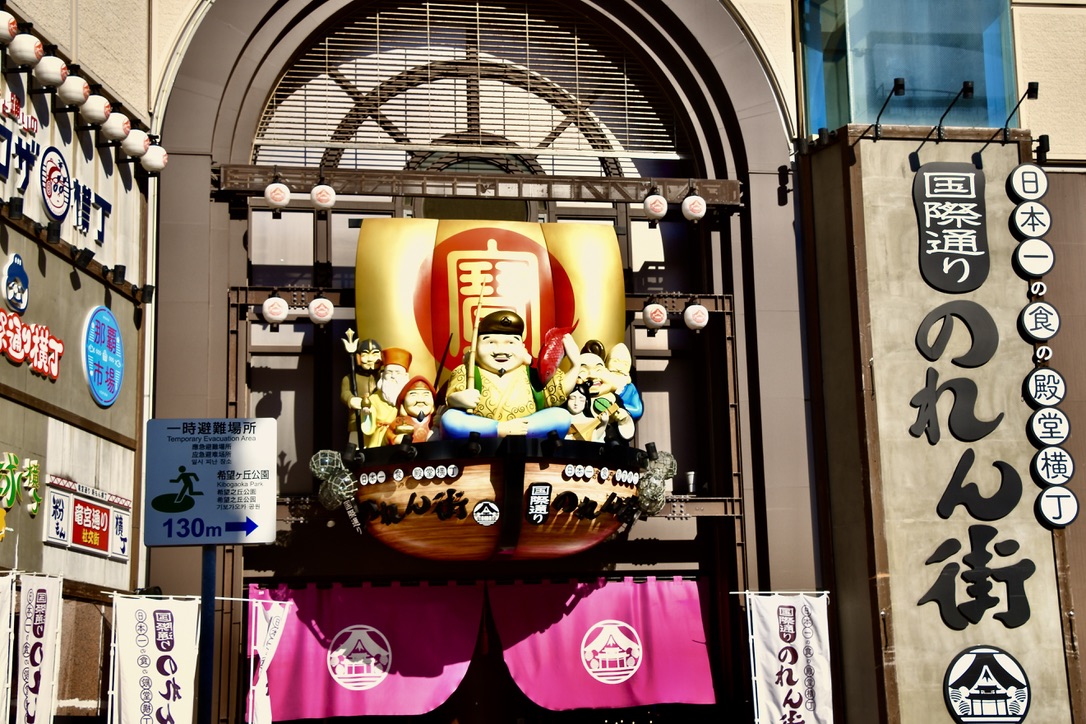
Naha is Okinawa's capital, and it has the energy to match, busy pedestrian streets, packed markets, and the constant hum of Kokusai Dori, the main shopping avenue that runs through the heart of the city. On a clear day, that energy is part of the fun. On a rainy day, those same crowded sidewalks can turn chaotic fast, with everyone diving for the same awnings at once. The trick is knowing where to go before the rain starts, not after.
HUU'S COFFEE: The Multi-Story Remote-Work Refuge
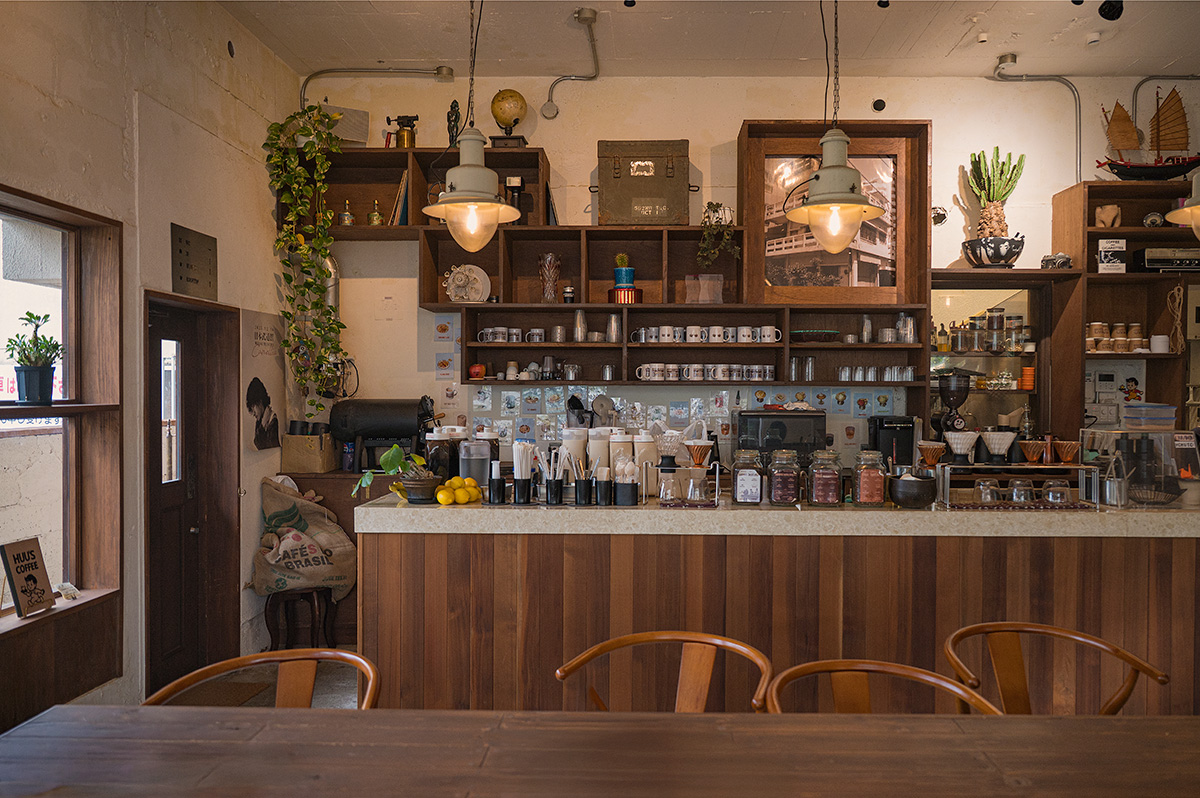
If you've ever wished a coffee shop had just a little more room, more floors, more outlets, more space to spread out and not feel like you're in everyone's way, HUU'S COFFEE is that wish, granted.
Tucked just off Kokusai Dori in Naha's Makishi neighborhood, about a 266-meter walk from Makishi Station on the Yui Rail monorail (look for the landmark "Kingu Tsuki Soba" shop nearby), HUU'S COFFEE spans three full floors. The second floor is built around long communal tables, clearly designed with laptops and notebooks in mind. The third floor opens onto a covered terrace with plenty of power outlets, which means even when it's raining, you can sit outside under cover, without getting wet, and watch the city get rinsed off from above. It's become something of a tourist favorite for exactly this reason.
It's open every day, 9:00 AM to 5:00 PM, with last orders at 5:00. The menu leans toward specialty coffee, healthy lunch options, and pastries, and you can expect to spend around 999 yen on average, solid value for the amount of space and time you get to use it.
A heads-up: this place is popular. Reviews from early 2026 mention it filling up by 10:00 AM, especially with international travelers who've clearly figured out the same thing, it's one of the best rainy-day bases in the city. There's no dedicated parking on-site, so if you're driving, plan on one of the nearby public coin-operated lots.
What makes it work as a rain refuge isn't just the size, it's the quiet. The whole space is non-smoking and feels airy rather than cramped, even when busy. On a day when the sky outside is doing something dramatic, having three floors to spread across means you're never stuck shoulder-to-shoulder with a stranger, steaming raincoat and all.
Uchinachaya Bukubuku: Slow Heritage and Foam Tea Meditation
If HUU'S COFFEE is about getting things done, Uchinachaya Bukubuku is about doing absolutely nothing, on purpose, and beautifully.
This café sits in the middle of the Tsuboya pottery district, about an 8-minute walk from Makishi Station and an easy detour off Kokusai Dori. The neighborhood itself is part of the experience: narrow lanes, stone walls, kilns that have been firing Okinawan ceramics for generations. On a rainy day, the wet stone and red-tile roofs of Tsuboya take on a deeper color, and watching that through the café's windows is its own kind of entertainment.
Inside, it's a traditional space with about 30 seats, spaced generously, attached to a small gallery selling the very pottery your tea and sweets are served in. It's open daily, 10:00 AM to 7:00 PM, with last orders at 6:30.
The centerpiece of the menu is bukubuku-cha, a traditional Ryukyu foam tea, whisked into a tall, billowing head of bubbles and served alongside a selection of local Okinawan sweets, for 1,000 yen. There's also Uchina zenzai, a shaved-ice dessert made with sweet kidney beans and a signature ginger-infused brown sugar syrup, for 650 yen, plus passionfruit shaved ice for something brighter. Most people end up spending somewhere between 1,000 and 2,000 yen total.
What I love about this place on a rainy afternoon is that it gives you something to do with your hands. Whisking the foam for bukubuku-cha takes a few minutes of focused, repetitive motion, it's almost meditative, and it's hard to feel restless or stir-crazy about being stuck inside when you're absorbed in making your own tea. Add the sound of rain on the old roof tiles outside, and the ginger-brown-sugar syrup on your zenzai, and you've got one of the more memorable ways to spend a wet hour in the capital.
There's no dedicated parking, but there are a couple of paid coin-parking lots within the Tsuboya pottery street area if you're driving.
Chatan: Coastal Community Lounges and Grand Roasteries
Head north along the coast and you'll hit Chatan, home to Sunabe Seawall, American Village, and a noticeably more laid-back, beach-town energy than Naha. It's a place built around the ocean, which is great until the ocean decides to send some weather your way. When that happens, Chatan has two very different but equally solid answers.
AIEN Coffee & Hostel: The Cozy Social Sanctuary
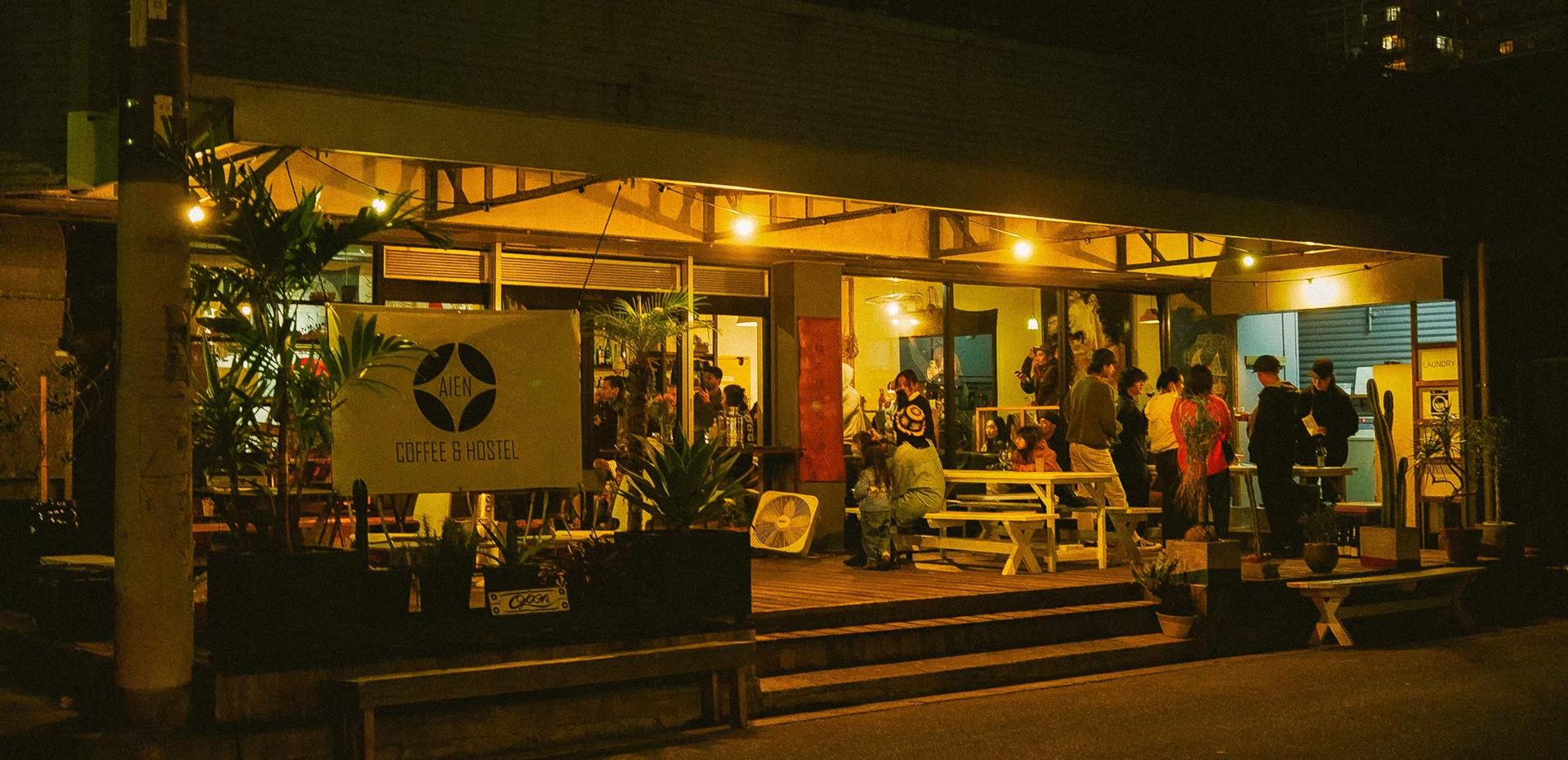
AIEN Coffee & Hostel feels less like a café you visit and more like a living room you've been invited into, which, on a grey, rainy day, is exactly what you want.
It's located in Sunabe, just a two-minute walk from the Miyagi Coast seawall and about 1.5 kilometers from American Village. The ground floor operates as a communal lounge for hostel guests and walk-in visitors alike, comfortable sofas, a big TV, and a games room with a pool table and darts. Power outlets are scattered generously through both the indoor and outdoor seating areas, and while the main space is non-smoking, there's a designated smoking area on the terrace.
AIEN is open long hours, 7:00 AM to 11:00 PM daily, which means it shifts personalities throughout the day: breakfast café in the morning (service runs 7:00 to 11:00 AM), casual lounge through the afternoon, and a low-key bar by evening.
The food here deserves a mention on its own. AIEN has built a genuinely strong vegan menu, avocado toast, an orange quinoa salad, vegetable tacos, vegan burritos, and rosemary-seasoned fries that come up again and again in reviews. Breakfast plates run from 600 to 850 yen, and overall spending tends to land between 1,000 and 2,000 yen. The coffee itself comes from local boutique roasters, so you're getting an Okinawa-specific flavor even in your morning cup.
On a rainy day, this is the kind of place where being "stuck inside" stops feeling like a problem, and it's a popular spot with regulars for that reason too. If the rain settles in for a while, there's a pool table right there. If you'd rather just sink into a sofa with a coffee and watch the rain streak down the windows facing the seawall, that works too — an easy way to enjoy a slow morning regardless of weather. Parking is free on-site for each customer, with a public coin lot (around 500 yen for 12 hours) just two minutes away if it's full.
I'd decided to base myself in Chatan for a few days after one too many solo, plan-everything-yourself days in Naha left me a little frazzled, and mornings at AIEN, vegan breakfast in hand, became one of the small rituals that made the rest of the trip easier. If you're the type who likes having a local point of contact for the things outside your control — weather very much included — joining a small-group day out, like Evertrail's Culture & Coast tour, takes some of that planning weight off entirely.
ZHYVAGO COFFEE ROASTERY: The Grand Industrial Flagship
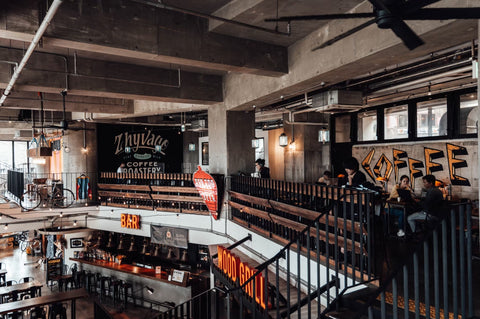
If AIEN is a living room, ZHYVAGO COFFEE ROASTERY is a warehouse that someone turned into the nicest coffee shop you've ever seen, and on a rainy day, that scale becomes the whole point.
Located on the ground floor of the Lequ Okinawa Chatan Spa & Resort Premier Building in the heart of American Village, right next to the Hilton hotel, ZHYVAGO is open daily from 7:00 AM to 10:00 PM, year-round. The space spans two floors and roughly 150 seats, a huge step up from the original, much smaller Zhyvago Coffee Works location, which has just 14 stools. This flagship instead goes for an industrial-chic look: concrete walls, steel pillars, warm wood accents and, critically for a rainy day, towering, double-height glass windows.
The second floor is where you want to be when the weather turns. It's set up with deep leather chairs and quiet reading nooks, and those huge windows give you a front-row seat to watch storm clouds roll in over the East China Sea. There's something almost cinematic about sitting up there with a coffee, completely dry, while the sky outside puts on a show.
The coffee is roasted in-house, and the food menu runs from house-made donuts and cookies to pastries and cakes, the standout being a Beni Imo (Okinawan purple sweet potato) cheesecake that shows up constantly in reviews. The signature "Caramel Mud Shake" (800 yen) is also a favorite. Most people spend between 1,000 and 2,000 yen.
Parking is easy, there's free shared parking throughout American Village, with overflow space at the Hilton offering two free hours. And because ZHYVAGO sits in the same building as the Lequ Okinawa Chatan Spa & Resort, you've got a built-in backup plan if the rain really won't quit: a soak in the hot springs, followed by coffee and cake afterward. Hard to beat that combination on a wet afternoon.
Yanbaru: Isolated Wilderness Sanctuaries
Yanbaru is a different Okinawa entirely, dense subtropical forest, steep mountain roads, and a national park that feels a world away from the beaches and resort towns to the south. It's also where rain feels the most atmospheric, if you're somewhere that can handle it. The catch is that not every café up here is a safe bet for a rainy day — roads can get slick, some places keep irregular hours, and a long drive to a closed door is its own kind of disappointment. These two, though, are reliable, well-reviewed, and worth the trip regardless of weather.
BookCafe Okinawa Rail: Minimalist Off-Grid Intellect
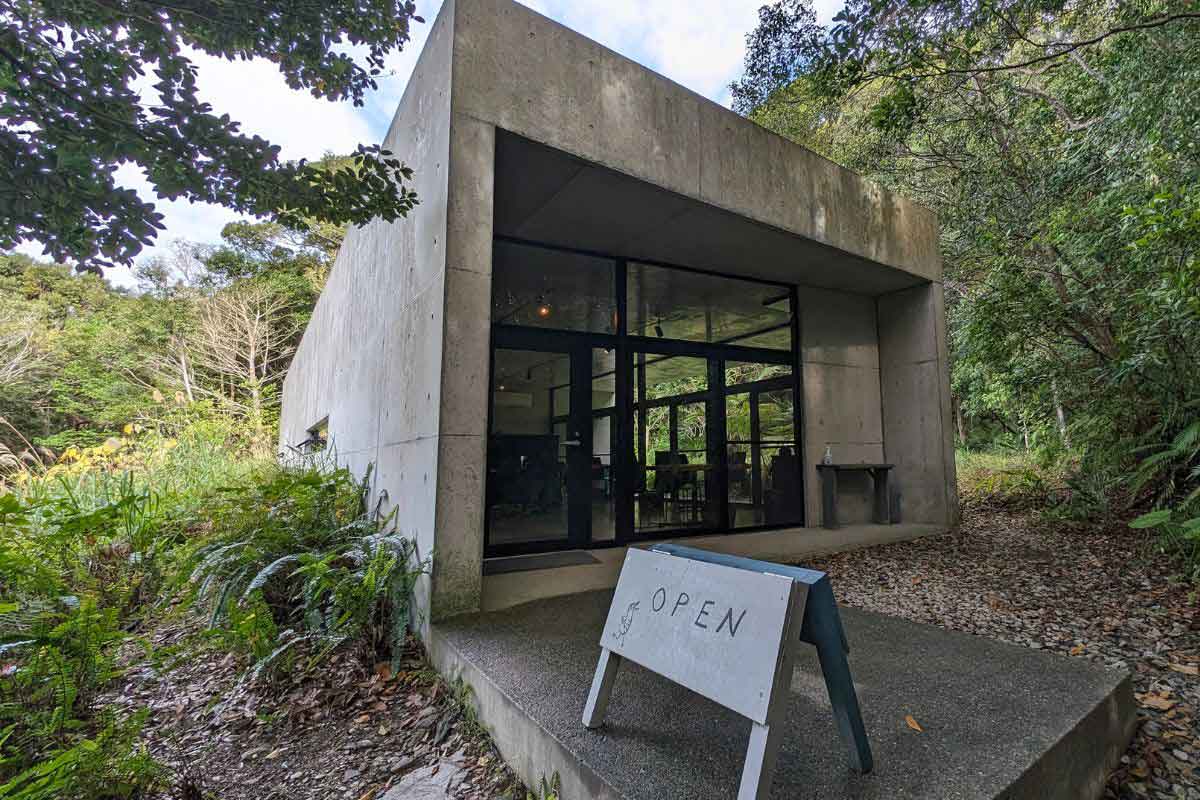
Deep in the interior of Yanbaru National Park, accessed via paved roads off Route 58 near Okuma Beach, sits a building that looks like it wandered in from somewhere else entirely — a striking, minimalist concrete structure with clear echoes of Tadao Ando's architecture, set against a backdrop of unbroken forest canopy.
This is BookCafe Okinawa Rail, and it might be my favorite rainy-day destination on this entire list.
Inside, deep sofas are arranged around a working stone fireplace, with floor-to-ceiling bookshelves stocked in both English and Japanese lining the walls, ready to provide a little inspiration on a slow afternoon. It's open Wednesday, Thursday, Saturday, and Sunday from 10:30 AM to 7:00 PM, and Friday from 1:00 to 7:00 PM — closed Mondays and Tuesdays, so plan accordingly. The whole space is non-smoking, with no private rooms, and the vibe is less "café" and more "the world's best reading room."
The menu is small and focused: excellent hand-drip coffee, a cheesecake that reviewers consistently single out, and a tart made with fresh local lemons. Expect to spend 1,000 to 2,000 yen — slightly above the urban average, which makes sense once you learn the place runs entirely off-grid, powered by solar energy and using filtered mountain spring water on-site. Note that it's cash-only.
On a rainy day, this place transforms. The concrete-and-glass design means you can watch — and hear — rain hitting the forest canopy and running down the windows while you sit by the fire, completely warm and dry. It's the kind of spot where two hours disappears with a book and a coffee and you don't notice until the light starts changing outside. Private parking is available on-site, though reviews suggest downloading offline maps before you go, since cell service can drop out on the mountain roads.
Yachimun Cafe Shisa-en: Red Tiles and Mountain Verandas
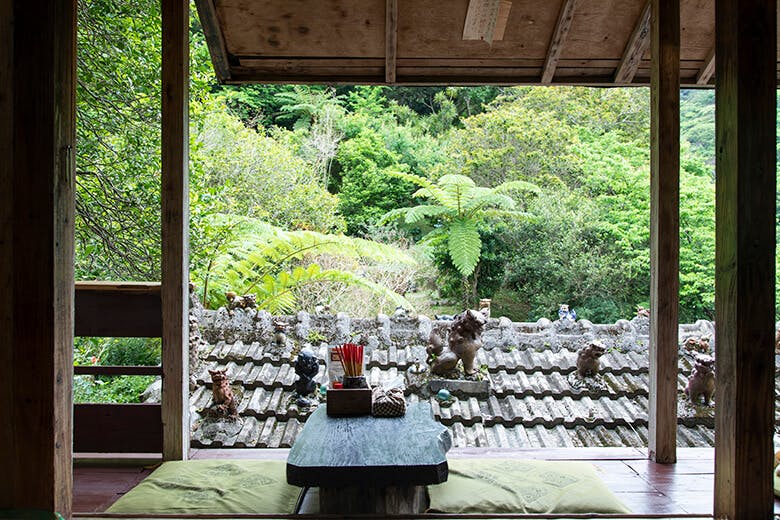
If BookCafe Okinawa Rail is Yanbaru's modern side, Yachimun Cafe Shisa-en is its memory, a beautifully preserved, two-story traditional Okinawan wooden house with a red-tile roof, set in the forested hills of the Motobu Peninsula near Mount Yaedake.
It's open from 11:00 AM to 5:00 PM, closed Mondays and Tuesdays. The interior keeps its tatami floors, and the second floor opens onto a wide engawa, a traditional veranda, that puts you at eye level with the clay shisa figures perched on the roof below. Seating is low and relaxed, built for lingering rather than rushing.
The menu is rooted in old Okinawan flavors: chinpin, a sweet crepe rolled with brown sugar; hot brown sugar milk; brown sugar zenzai; and freshly squeezed acerola and shikuwasa citrus juices. Almost everything is priced around 600 yen, with most visits coming in under 1,000 yen total. Cash is preferred, though PayPay is accepted.
What makes this place special on a rainy day is the veranda itself. Sitting up there, watching rain run off the clay roof tiles and drip past the shisa guardians, with the smell of wet cedar and forest drifting up from below, it's quiet in a way that's hard to find elsewhere on the island. There's private parking at the base of the path leading up to the café.
This corner of Yanbaru, forested, slow, full of small surprises like this one, is the kind of place that rewards a bit more time than most visitors give it.
Making the Most of a Rainy Day in Okinawa
The real trick to a good rainy day here is pairing your café stop with something else nearby, so a squall becomes a pause in your plans rather than the end of them.
In Naha, a morning at HUU'S COFFEE pairs naturally with some indoor shopping, SAN-A Naha Main Place or the T Galleria duty-free store complex in Shintoshin are both close by. For a bigger indoor option that can fill a whole day on its own, the Okinawa Prefectural Museum and the adjoining museum of art near Omoromachi has a modest entrance fee and galleries spacious enough for a long rainy stretch. Or go cultural: browse the Tsuboya Pottery Folk Museum before settling in at Uchinachaya Bukubuku, where your tea will be served in pottery from the very district you just walked through. The covered arcades of Heiwa Dori and the food stalls of Kokusai Dori Yataimura are also solid backups for an evening when rain just won't quit.
In Chatan, a rainy morning at AIEN can roll into an afternoon at American Village, covered shopping, bars and restaurants, and even a movie if it really comes down hard. Just inland, AEON Mall Okinawa Rycom is another solid full-afternoon option, with a gourmet food court and enough stores to fill a whole day browsing, plus the occasional duty-free store counter. And since ZHYVAGO sits in the same building as the Lequ Okinawa Chatan Spa & Resort, a soak in the hot springs followed by coffee and Beni Imo cheesecake might be the single best rain-day combination on this list.
In the north, a rainy day can center around the Okinawa Churaumi Aquarium on the Motobu Peninsula, a world-class indoor experience regardless of weather, easily filling a few hours entirely indoors, followed by the short drive to Yachimun Cafe Shisa-en for something traditional, or further into the national park to BookCafe Okinawa Rail for an afternoon by the fire. Nearby, the city of Nago is also home to the DMM Kariyushi Aquarium, a newer indoor option worth adding to the route, note that "reservation required" applies to some of its evening viewing sessions, so it's worth checking ahead.
One practical note: a rental car genuinely is close to essential during rainy season, especially if Yanbaru is part of your plans. Squalls move fast, and having your own transport means you're never stuck waiting somewhere you didn't choose.
Frequently Asked Questions
What's the rainy season like in Okinawa? Okinawa's rainy season, or tsuyu, typically runs from early May to late June, averaging around 43 days. Rather than constant drizzle, expect short, intense downpours, often 20 to 30 minutes, followed by clear skies and high humidity. Naha sees over 200mm of rain in both May and June, with 15 to 18 rainy days each month.
Are coffee shops a good rainy-day activity in Okinawa?
Yes, cafés are one of the best ways to handle Okinawa's sudden squalls. Because storms pass quickly, a coffee shop with good seating and a view lets you wait out the rain comfortably, often with a front-row seat to watch the weather clear.
What other indoor activities work well on a rainy day in Okinawa?
The Okinawa Churaumi Aquarium, covered shopping arcades like Heiwa Dori, American Village's indoor shopping and dining, museums such as the Tsuboya Pottery Folk Museum, and onsen facilities like the one in Chatan's Lequ resort all work well alongside a café stop.
How long does rain typically last during Okinawa's rainy season?
Most rain events are short and intense, often clearing within an hour. Because weather systems move quickly across the narrow island, a downpour rarely derails an entire day, even during peak tsuyu season in May and June.
If your rainy day ends up pointing you north, into the forests and mountain roads of Yanbaru, that's not a bad place to end up at all. It's a part of Okinawa that rewards a bit of guidance, someone who knows which roads to take and where the rain looks best from. If that sounds like your kind of detour, it's worth learning a bit more about exploring Yanbaru with someone who knows it..
Evertrail Tours · June 13, 2026