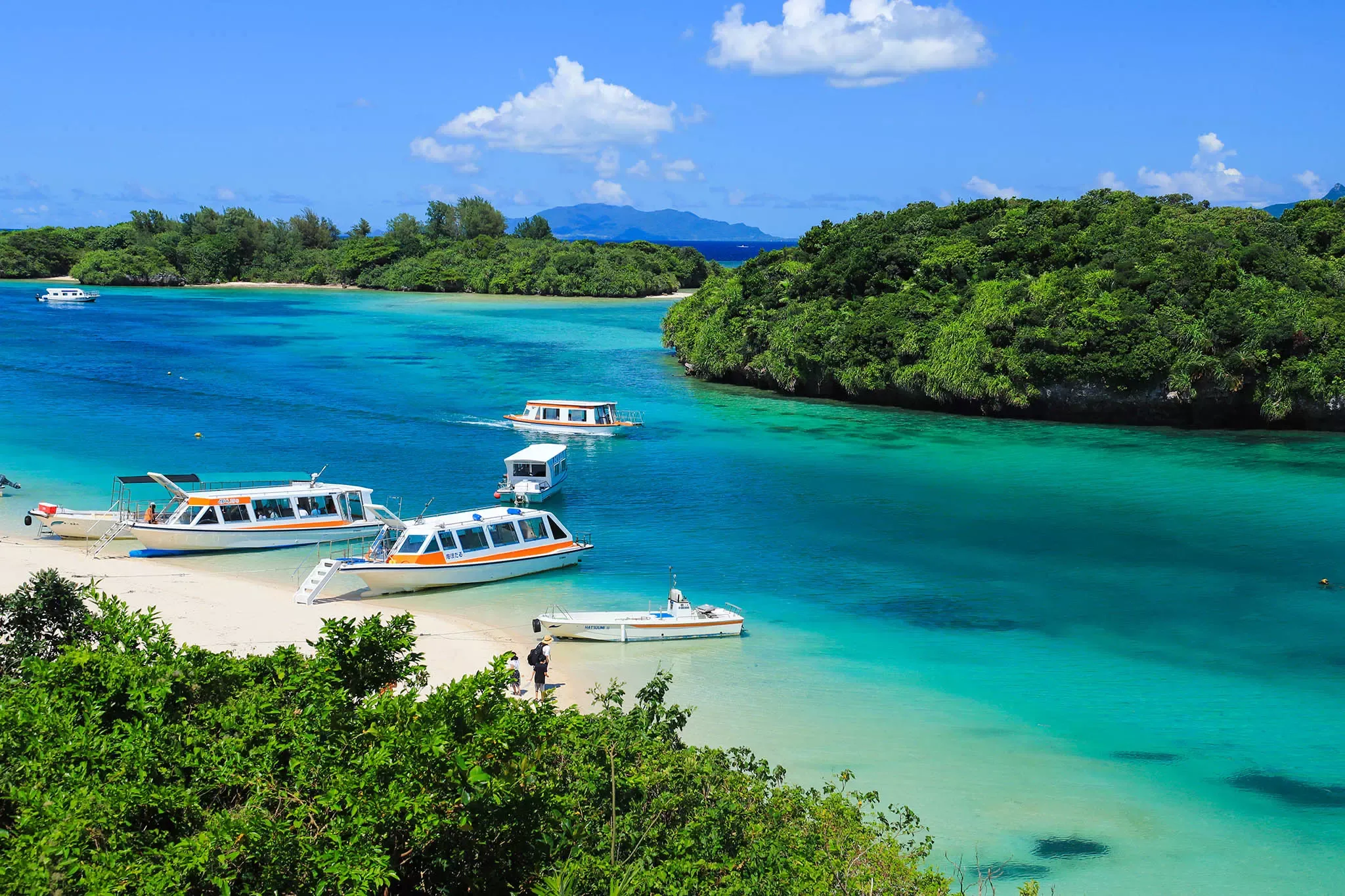
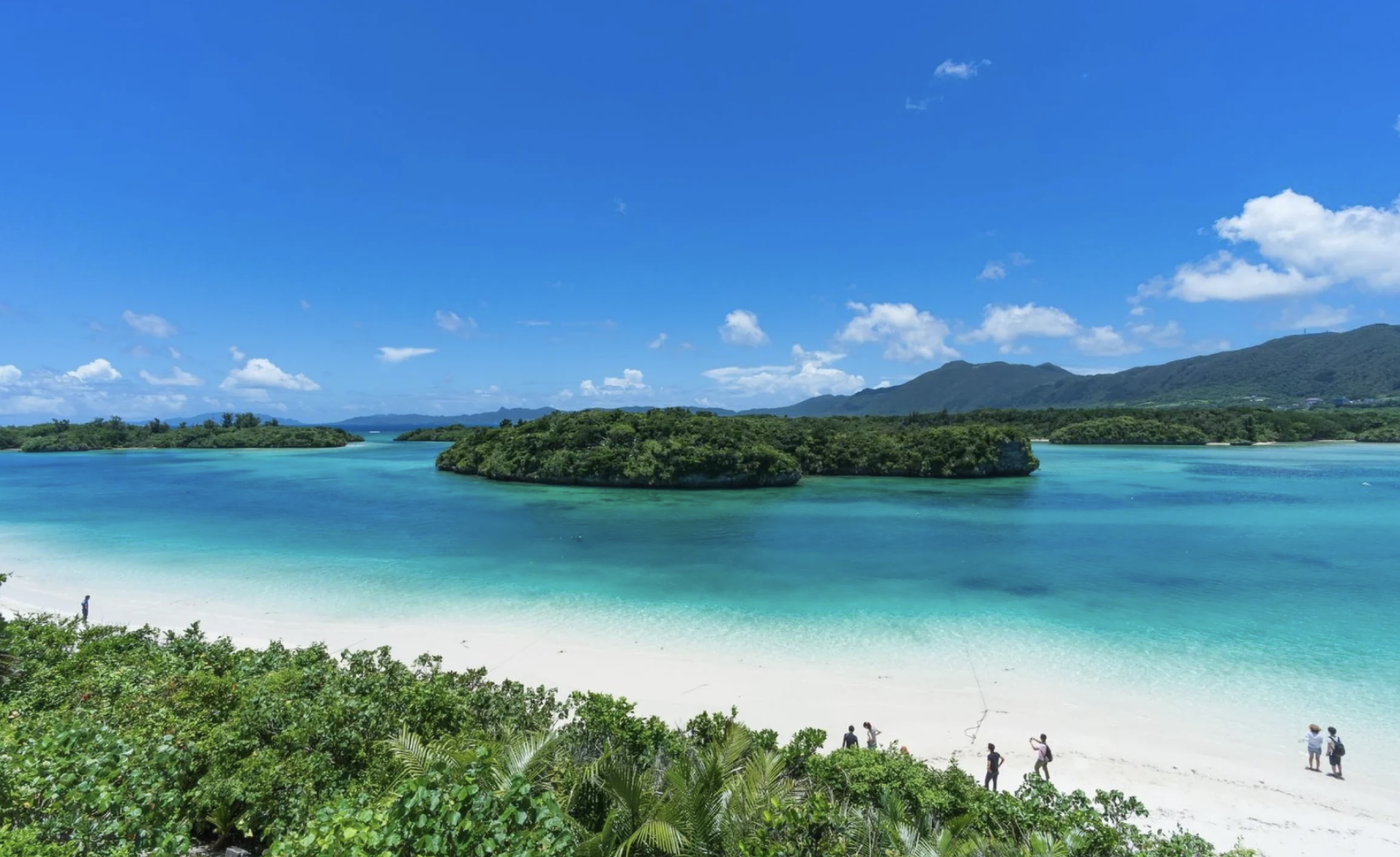
The turquoise water is real. The coral reef, the long lazy afternoons on a pristine white sand beach, watching the sunset turn the ocean gold from a resort balcony — on these tropical islands, all of it is exactly as good as the photos promise. I'm not here to talk you out of any of that.
But I've lived on the islands of Okinawa long enough to know that the resort strip is maybe half the story, and not the more interesting half. Drive twenty or thirty minutes inland from the Onna coast and the beach umbrellas vanish. You find a diner with no English menu and a vending machine for ordering. A bar with no sign. A grove of trees that the people around you treat as something closer to a cathedral than a park.
That's the Okinawa locals actually live in. And the good news is that across this whole cluster of islands, more of it is open to you than you'd think, if you know how it works, and you slow down enough to be let in.
Here's how to experience Okinawa like a local, from someone who calls it home.
What it actually means to experience Okinawa like a local
Start with the history of Okinawa, the thing most guidebooks skip: Okinawa is not mainland Japan. Not really.
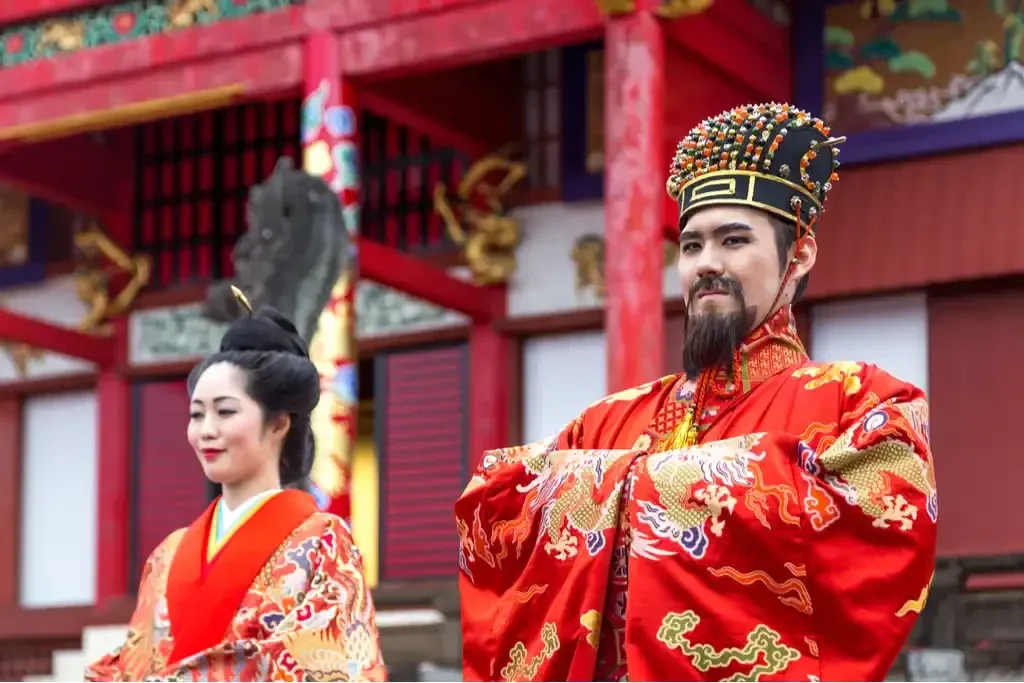
These islands were the Ryūkyū Kingdom, a wealthy, independent maritime nation that spent centuries trading with China, Korea, and Southeast Asia before Japan's Satsuma domain invaded in 1609 and the Meiji government formally annexed it in 1879. Then came the Battle of Okinawa and decades of postwar American administration. All of that is still in the soil here. It shapes the food, the music, the gods people pray to, and the language older folks still speak, Uchināguchi, which is its own tongue, not a dialect of Japanese.
So when people say they want to see the "real" Okinawa, what they're really brushing up against is this: the resort coast runs on a global tourism template, and everywhere else runs on something much older and more local. The divide that matters isn't tourist versus local. It's resort-strip Okinawa versus everywhere else.
You'll feel it first in the pace of life. Locals call it uchinā time, island time, and visitors love to joke that it means nobody's ever on schedule. That's not quite it. People here are perfectly punctual for work and for meetings with outsiders; they simply reserve a softer relationship with the clock for weddings, banquets, and long evenings with family. Uchinā time isn't laziness. It's a decision about what's worth rushing for.
You'll hear it in the words people live by, too. Ichariba chōdē, "once we meet, we are family", is the hospitality reflex of a place where island life once depended on trusting strangers fast. Nankurunaisa is usually translated as "it'll work out," but locals will tell you it carries a condition: do the right thing, work honestly, and then trust things to fall into place. Experiencing Okinawa like a local starts with absorbing that frame. You're not collecting sights. You're slowing down into a different way of moving through a day.
Eat like a local: morning markets, the shokudō, and the bar with no sign
If there's one fast track into local life here, it's the food, because Okinawan cooking is genuinely a cuisine unique to Okinawa, hearty and pork-heavy and shaped by trade and scarcity and the postwar American years, nothing like the delicate seafood palate of mainland Japan.
The place to start is the shokudō, the no-frills, family-run neighborhood eatery that functions as the working person's dining room. Somewhere like Takara Shokudō in Naha's Wakasa district. There's no host, no reservation, often no English. You buy a meal ticket from a machine by the door, hand the slip to whoever's working, and find a seat, and during the lunch rush you may well end up sharing a table with a stranger, which is normal and expected.
Order the "A Lunch" at least once. It's a glorious postwar invention, fried pork cutlet, fried shrimp, slow-simmered pork ribs, a fried egg, a mountain of rice, and a side of Okinawa soba, usually for under a thousand yen. It is not subtle. It's not supposed to be. Locals swear by the soba at Kuko Shokudō inside Naha Airport, too, an old staff canteen, not a tourist stop.
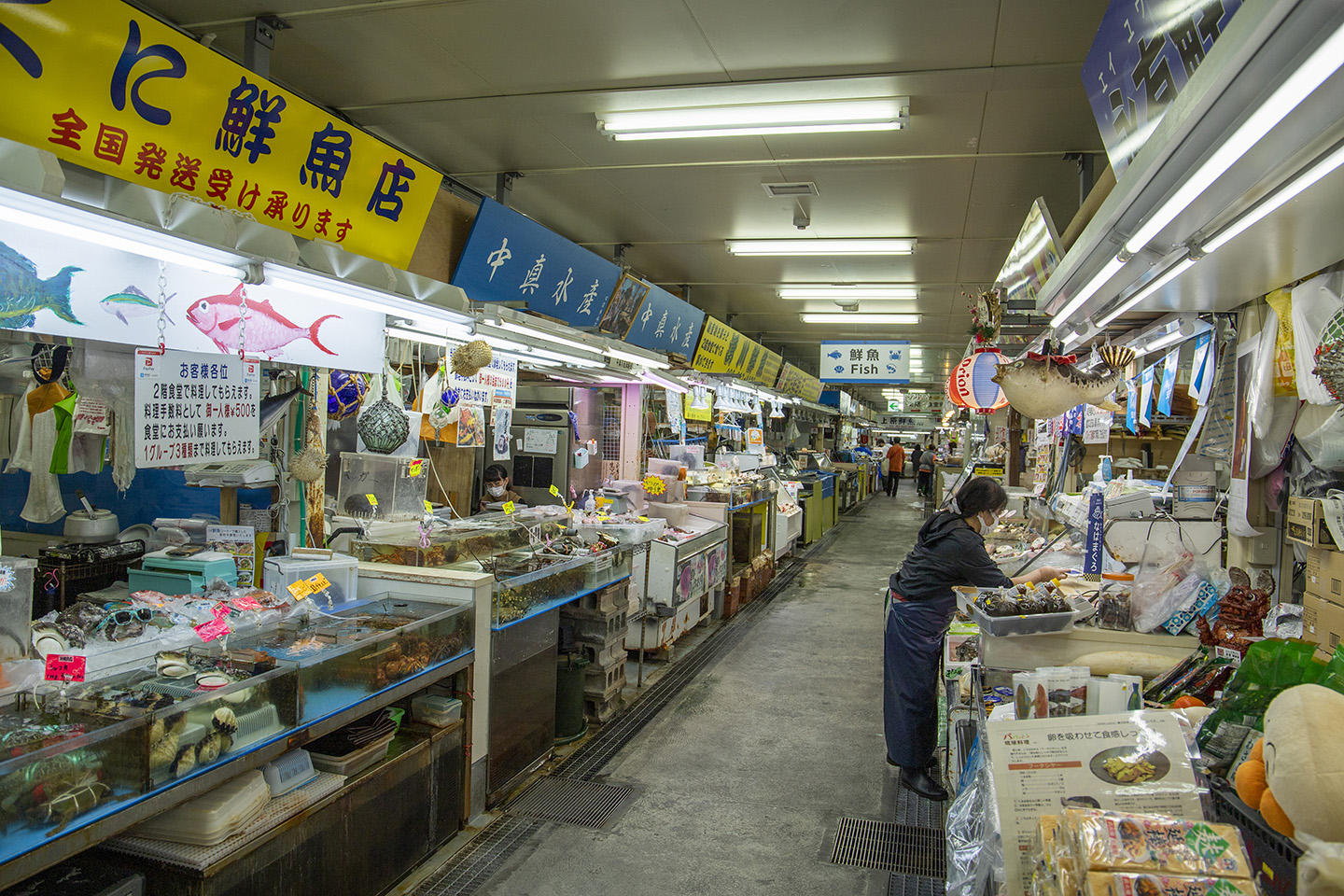
For markets around Naha, the heart of the city is the First Makishi Public Market, rebuilt and reopened in 2023 and still called "Naha's Kitchen." Go in the morning, when the vendors are just setting up and the crowds haven't arrived. The first floor is a sensory archive, pork in every form the island has ever found a use for, neon-bright reef fish like the parrotfish (irabuchā), sea grapes, bitter melon, wild island shallots, blocks of firm island tofu, and purple sweet potato.
Then learn the trick that makes it local: the mochiage system. You buy raw fish or meat downstairs, carry it up to the second-floor kitchens, and for a flat cooking fee of around 500 yen they'll turn it into classic Okinawan dishes, sashimi, a stir-fry, or a grilled plate, on the spot. The etiquette is to ask the ground-floor vendor for advice, they'll point you to whichever upstairs kitchen does your fish justice. It's hawker-center logic transplanted to Okinawa, and it works beautifully.
And then there's awamori, the oldest distilled spirit in Japan, made for more than five hundred years from long-grain Thai rice and black koji mold, the koji being an old, clever adaptation to the heat: it floods the mash with citric acid and keeps it from spoiling in the subtropical heat.
Awamori has its own rituals, and you'll find them in the unmarked little bars locals favor. The good stuff comes in a karakara, a clay flask with a tiny clay marble inside, when the flask runs dry, the marble rattles against the wall to tell your host it's time for another round. You sip it from thimble-sized clay cups called chibuguwa. Aged three years or more, it becomes kusu, sweet with notes of vanilla and caramel despite having no sugar in it at all. Locals splash chili-infused awamori, kōrēgusu, over their soba, and in casual moments mix the spirit with sweet coffee milk, which is far more dangerous than it sounds.
Move at island pace: getting past the resort strip
Here's the unglamorous truth nobody puts in the brochure: outside Naha, the Okinawa main island is a car society. The Yui Rail monorail covers the city, but getting around the countryside or the north is another story, the buses thin out, most visitors rent a car, and here a car stops being a convenience and becomes the thing daily life is built around. Researchers up at the science institute in Onna will tell you that without a car, the nearest grocery store is a half-hour walk.
That single fact explains one of the most quietly fascinating pieces of local life: the Daiko system.
Japan has near-zero tolerance for drinking and driving, the legal limit is crossed by less than half a drink, and the penalties are severe. But Okinawans drink, and they drink together, and the culture would lose something essential if everyone had to stay sober to get home. So the island built a workaround. When you're done with the Orion beers at the izakaya, the staff call a Daiko service, and a car arrives carrying two drivers. One gets behind the wheel of your car and drives you home in it; the other follows to pick the first driver back up. It costs about one and a half times a taxi fare, runs around the clock, and locals treat it as a simple, ordinary cost of being social.
Once you understand Daiko, you understand the rhythm. People here don't rush the evening because they don't have to. The slowness isn't an absence of plans, it's the plan.
.webp)
The culture locals actually live
The Okinawan culture you most want to see isn't a staged attraction performed for visitors. It happens in neighborhoods, on a schedule set by the lunar calendar, and it belongs to the people who live there.
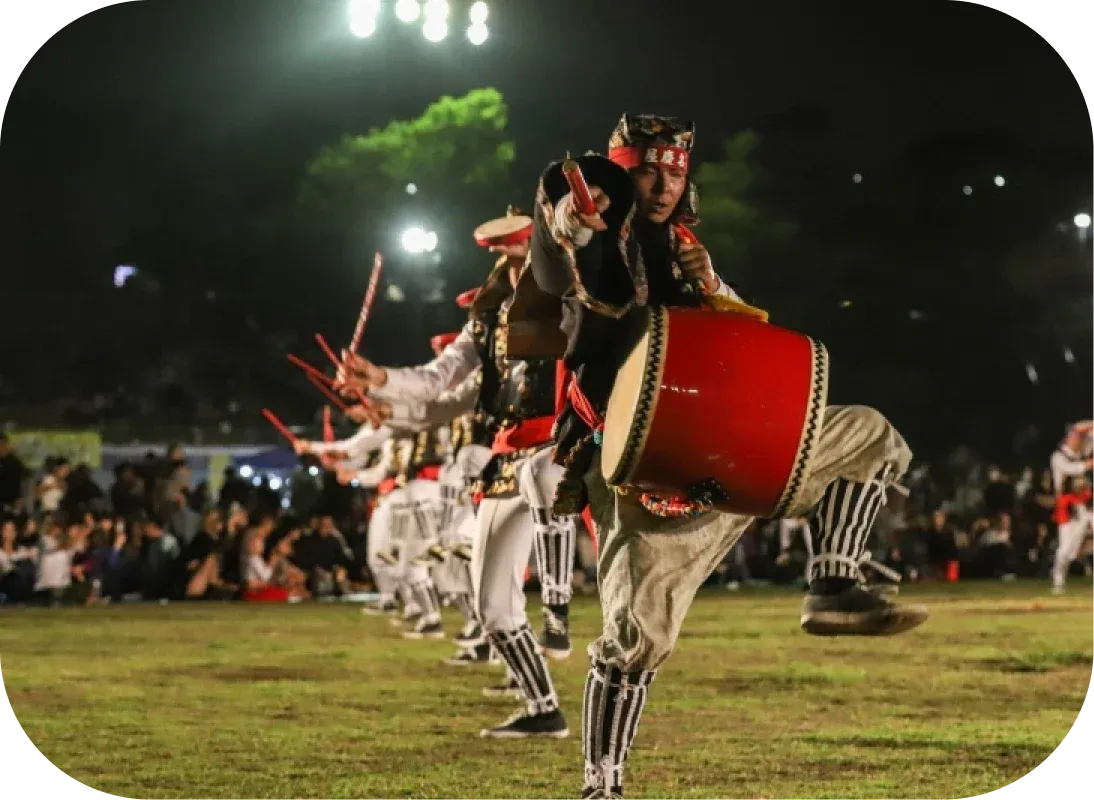
The clearest example is eisā, the drum-and-dance tradition of the summer Obon season. Tourists often catch it as a stage show, but in its real form eisā is a ritual, a way of welcoming ancestral spirits back and then sending them off safely at the end of Obon. It's organized and rehearsed entirely by the neighborhood Seinendan, the local youth associations. During Obon they perform michi junee, night parades that wind through the narrow residential lanes of their own district, driven by huge taiko drums, sharp hand-drums, and the raw strum of the sanshin. Every neighborhood guards its own choreography and costumes. It's less a performance than a neighborhood declaring who it is.
Karate works the same way. Okinawa is the birthplace of karate, but forget the image of big commercial studios. Most authentic training happens in a machi no dojo, a neighborhood dojo often no bigger than a two-car garage, tucked between houses and marked only by a small weathered wooden sign. Inside, the dojo runs as a family: the sensei is the father, senior students the older siblings, newcomers the youngest.
The etiquette tells you everything about the values. You don't hand the master cash, it's considered crude. You place your fee in a plain white envelope and present it with a bow, the respect mattering more than the amount. And you don't "dojo-hop": loyalty to a single school is close to sacred, and training elsewhere without your master's blessing is a real breach. This is also why walking in off the street rarely works, but more on that below.
You'll see one more martial tradition if your timing is lucky: mura-bo, village staff-fighting, performed only at local festivals. Each village keeps its own guarded choreography, historically meant to defend its own boundaries. At the great Itoman tug-of-war, the "men of the staff" still put on fierce, acrobatic demonstrations to charge the community's spiritual energy.
Sacred ground and local etiquette: how to be a respectful guest
This is the part where being a good visitor matters most, because Okinawa's everyday life rests on a living indigenous religion, older than mainland Shinto, and, unusually, led by women, who are traditionally seen as the spiritually powerful ones.
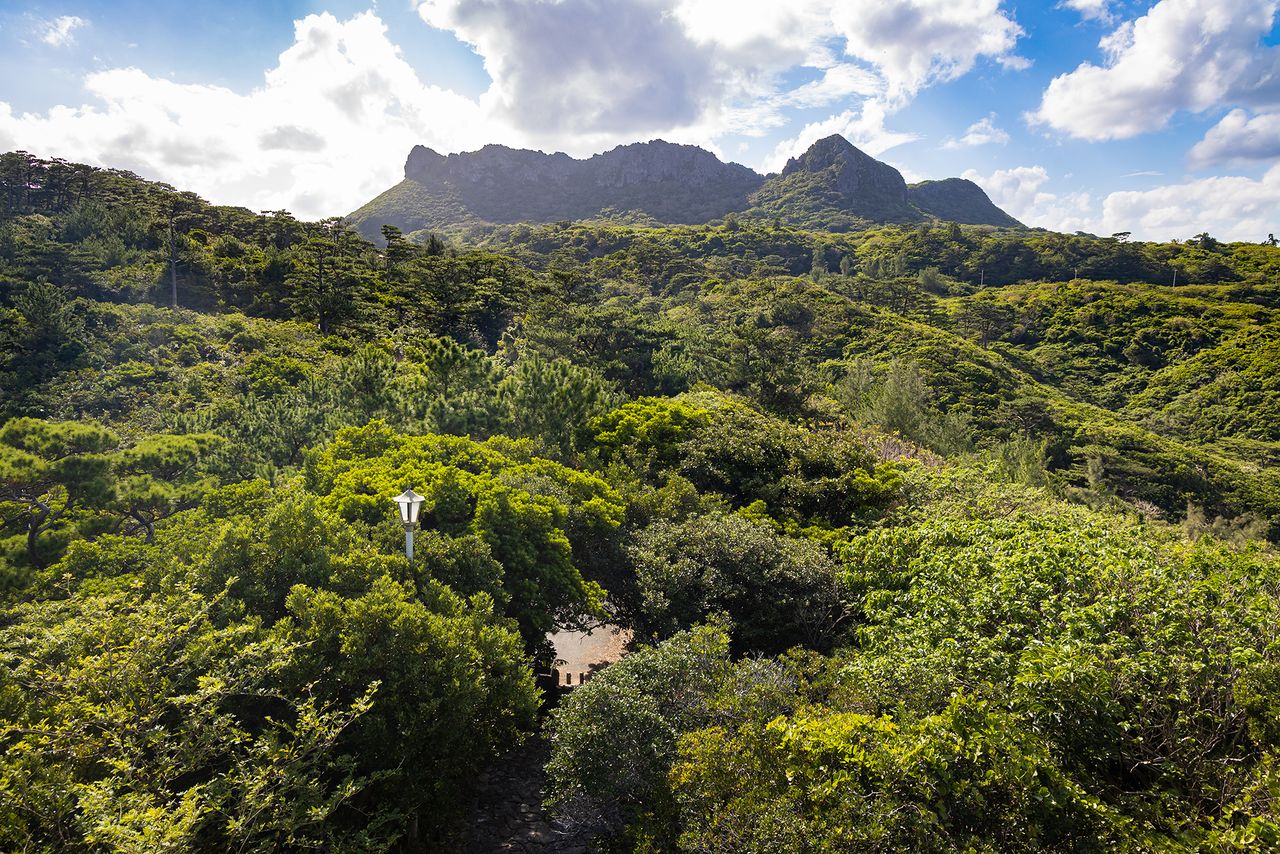
The sacred sites are called utaki, and they will confound you if you arrive expecting a shrine. A true utaki has no buildings, no statues, no grand gates, it's a natural place, a clearing among fan palms, a cliff, a cave, a spring, where the gods and ancestors are believed to come ashore from Niraikanai, the paradise across the sea. Deep inside many of them is the ibi, an inner sanctuary that men are forbidden to enter at all.
A quick myth to retire: you'll read that a place like Sefa Utaki is a "power spot" for great photos and recharging your energy. That framing misses what it is. These are active places of worship. Treat them that way.
If you visit one, the rules are simple and worth honoring. Watch the orientation video at the visitor center if there is one. Dress modestly, shoulders and knees covered, and wear shoes with grip, because the limestone gets dangerously slick. Keep your voice down, stay on the marked paths, and don't touch altars, offerings, or the stone incense burners. Photography is restricted at the active sacred points; check the signs. Drones and staged social-media shoots are simply off-limits.
It helps to know who keeps this world running. The noro are the official priestesses, their role passed down through the female line, presiding over communal village rites in white robes. The yuta are something else, shamans and mediums who are "called" through a personal crisis or illness rather than born to the role, and who work privately, consulted by locals on everything from health to family disputes. There's a saying here: "half doctor, half yuta." People see a physician for the body and a yuta for the spiritual disharmony underneath.
One more line you shouldn't cross: Okinawan tombs. Don't point at them, don't raise your voice near them, and never photograph a family tomb without permission. Approaching one you have no connection to, especially at night, is taken very seriously.
.webp)
Where locals actually go
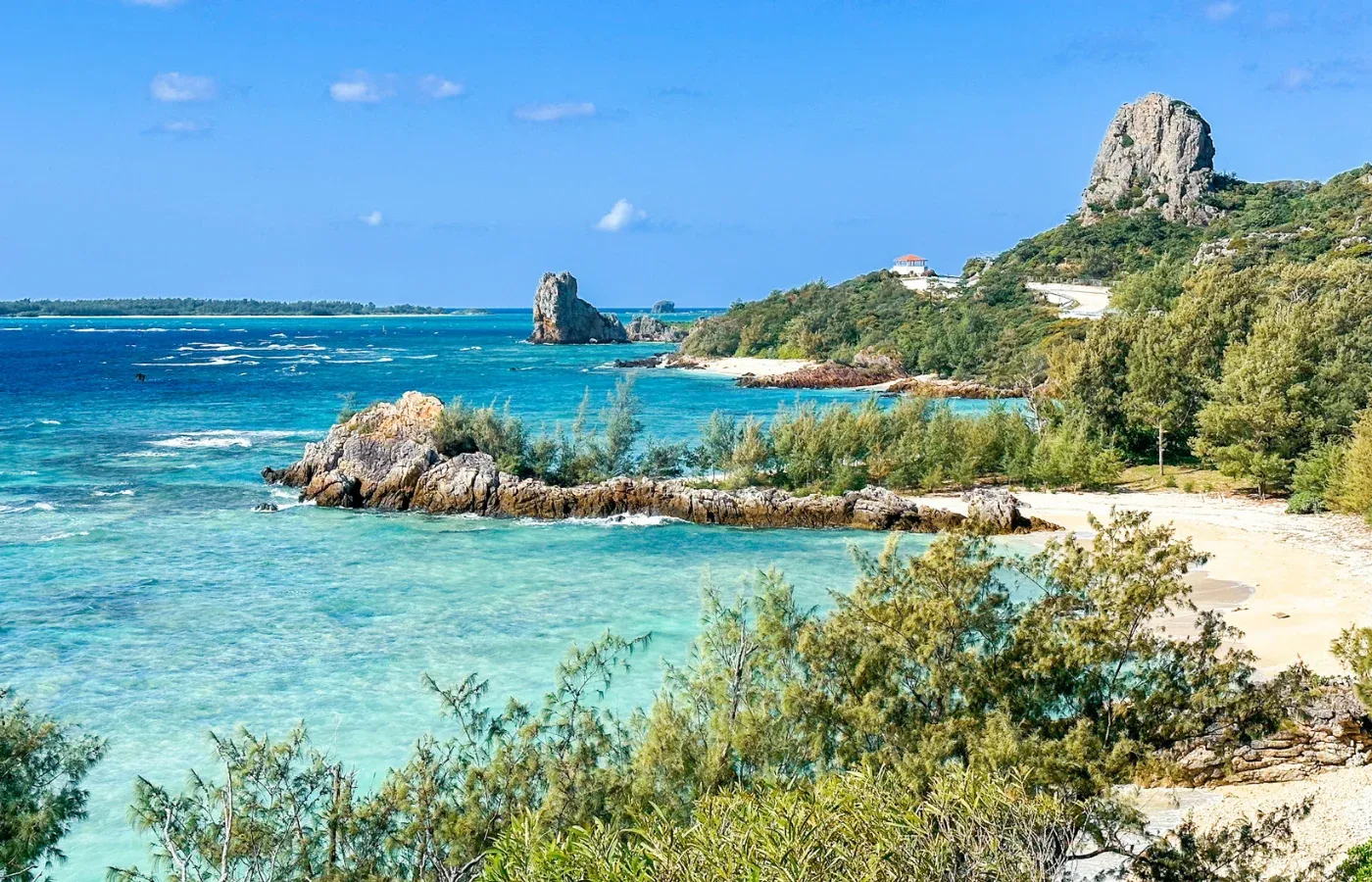
So where does real local life actually live, if not the resort coast and the headline attractions in Okinawa? Mostly in two directions: up, into the wild northern forest of Yanbaru — rich with flora and fauna found nowhere else on earth, and out, to the quiet beaches with no parking lots and the small islands the ferries reach but the tour buses don't.
The ones I'd point you toward are Izena and Iheya, a pair of sister islands thirty to forty kilometers off the northwest coast of Okinawa's main island (Okinawa Honto), out in the East China Sea, reached by ferry from Unten Port in Nakijin, about 55 minutes to Izena, 80 to Iheya.
Izena especially feels like stepping back into the Okinawa of an earlier century. There are no traffic lights, no convenience stores, no chain restaurants. Life runs on sugarcane, rice, and mozuku seaweed, and the old village layout is intact: red-tiled roofs guarded by shīsā lion-dogs, coral-stone walls built by hand, and dense rows of fukugi trees whose rubbery leaves act as a firebreak and whose roots brace the houses against typhoons. (A practical note for nervous hikers: Izena has no habu vipers, while Iheya's mountains do.)
You can do this independently, the ferries are public, you can rent a bike at the port, and small family-run minshuku guesthouses, some of the most memorable places to stay in Okinawa, will feed you breakfast and dinner. But the islands also reward arriving with someone who already knows them. Our own Island Hopping Experience crosses to Izena for an afternoon of fishing or snorkeling and ends the day in a traditional guesthouse, eating dinner with locals over sashimi cut from your own catch, which is about as close to the real rhythm of these islands as a visitor can reasonably get.
Do you need a guide? The honest answer
I'll be straight with you, because pretending otherwise would be selling you something.
For most of what makes Okinawa feel local, you don't need anyone. You can walk into a shokudō and buy your "A Lunch" from the machine. You can work the mochiage system at Makishi yourself. You can take the public ferry to Izena, attend the big eisā parades on Naha's Kokusai Street, drink awamori in a back-lane bar. All of that is open to anyone willing to slow down and pay attention.
But there's a deeper layer that money can't simply buy a ticket to, and this is the honest case for a local.
A genuine machi no dojo won't take a stranger off the street; it needs a proper introduction so you enter the dojo family the right way. A real yuta consultation isn't advertised, it comes through word of mouth from someone the practitioner trusts. The most insular village rites are ceremonies, not spectacles, and require quiet, invited attendance. The line between what you can do alone and what requires a hand on your shoulder is exactly the line between the island's surface and its interior.
That's the work our guides actually do, and the reason it matters that they live here rather than commute in for the season, fully licensed under Okinawa Prefecture regulations. Even something as simple as our Northern Okinawa Full Day, a small-group, scenic river trek through the forested hills of Nago to a waterfall, lunch laid out on the rocks, capped at six people, works because someone spent years learning precisely where to take you and how to behave once you arrive. A good local guide doesn't hand you a louder version of the tourist Okinawa. They shorten the years it would otherwise take to be let past the front door.
Experiencing Okinawa like a local, in the end, isn't a checklist of the usual things to do in Okinawa or a packed Okinawa itinerary. The best time in Okinawa is spent operating on the island's terms, on its own time, around its own gods, through its own deeply communal habits. Eat where there's no English menu. Go in the morning. Drive north. Take the slow road around Okinawa. Keep your voice down in the grove. Let the evening run long.
Do that, and the turquoise water stops being the whole trip and becomes what it actually is to the people who live here: the easy, beautiful surface of something much deeper.
Frequently Asked Questions
What does "Okinawa time" (uchinā time) mean?
Uchinā time is the island's relaxed relationship with the clock. It doesn't mean locals are careless about punctuality, they're reliably on time for work and for meetings with visitors. The looser timekeeping is reserved for social occasions like weddings and banquets, which routinely start later than the printed time.
What's the best way to experience Okinawa like a local?
When you visit Okinawa, get off the resort coast. Eat at a neighborhood shokudō, shop the morning markets, give yourself time to explore the north or take a ferry to a small island, and slow your pace to match the island's. The single biggest shift is mental: treating a day as something to move through rather than a list of sights to clear.
Where do locals actually eat in Okinawa?
At shokudō, small, family-run diners where you order from a ticket machine and may share a table at lunch, and at public markets like Naha's First Makishi Public Market, where the mochiage system lets you buy raw fish downstairs and have it cooked upstairs for a small fee.
Is Okinawa different from mainland Japan?
Yes, considerably. Okinawa was the independent Ryūkyū Kingdom for centuries and retains its own language, music, cuisine, and indigenous religion. The culture, pace, and food are all distinct from mainland (Yamato) Japan.
Do you need to speak Japanese to experience local Okinawa?
It helps but isn't essential. Markets, shokudō, ferries, and public festivals are navigable with a few words and some patience. Deeper experiences, a traditional dojo or a private spiritual consultation, generally require an introduction, which is where a local guide or contact becomes valuable.
What is an utaki, and can visitors go in?
An utaki is a sacred natural site in the Ryūkyūan religion, a grove, cliff, cave, or spring rather than a built shrine. Many are open to respectful visitors, but the innermost sanctuary (the ibi) is often off-limits, and some areas are restricted to men. Dress modestly, stay on the paths, keep quiet, and check photography rules.
When can you see eisā and local festivals?
Eisā peaks during the summer Obon season, when neighborhood youth associations parade through residential lanes at night. Large public events like Naha's eisā parade and the great tug-of-war happen in summer and early autumn and are open to everyone.
Do I need a guide to see the "real" Okinawa?
For most of it, no, the food, markets, ferries, and public festivals are all accessible independently. A guide matters for the layers that require trust and introductions, such as traditional karate dojos, genuine yuta consultations, or insular village ceremonies, and for unmarked places you'd struggle to find on your own.
Evertrail Tours · June 16, 2026