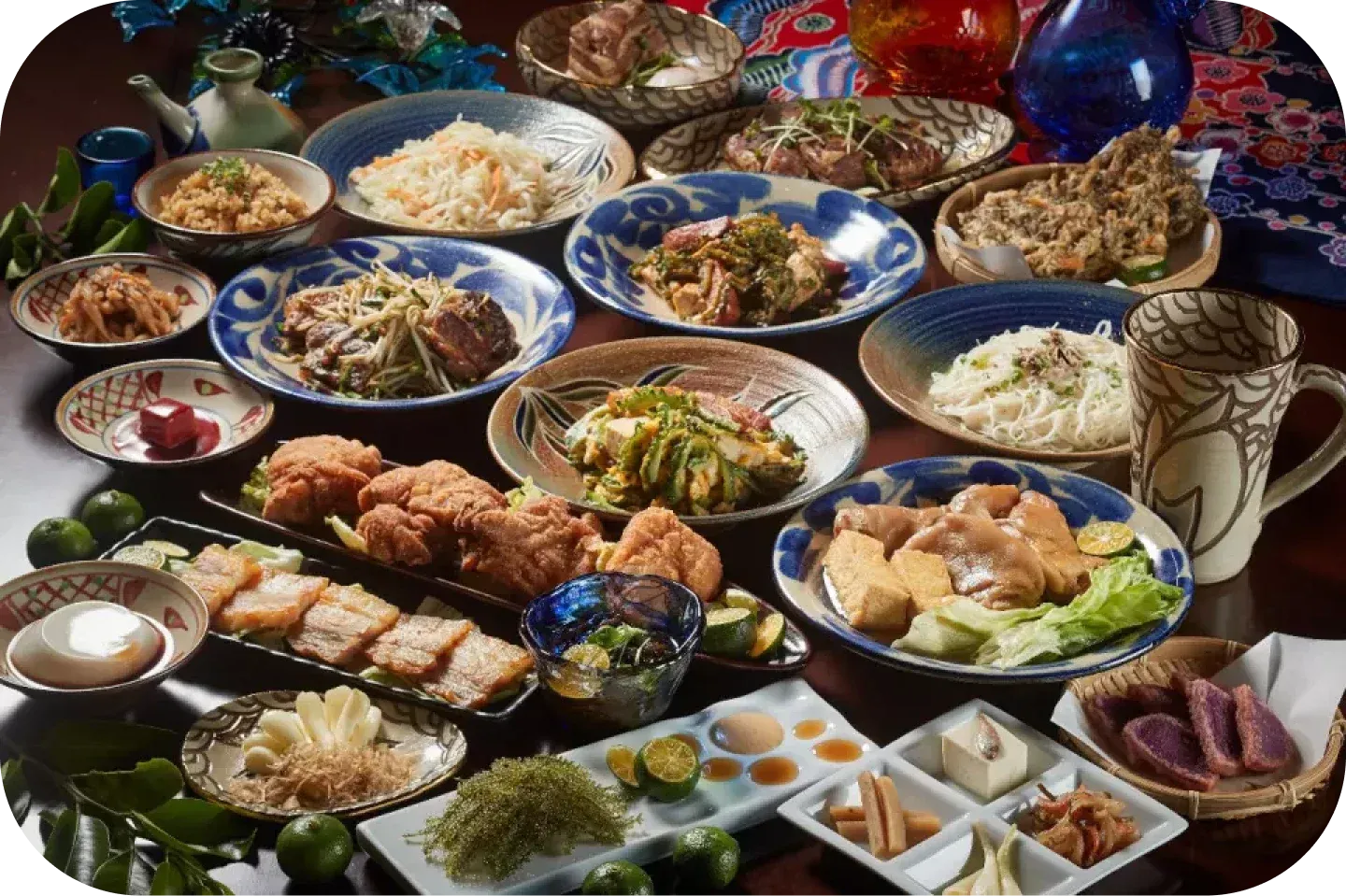
Okinawa is one of Japan's most magical destinations, turquoise water, ancient castles, slow-paced island life, and a food culture unlike anything else in the country. But if you're traveling with dietary restrictions, you've probably already asked yourself the hard question: can I actually eat well here?
The honest answer is: it depends, and this vegan guide (and halal, kosher, and gluten-free guide) is going to tell you exactly what that means for your specific needs.
Okinawan cuisine is pork-heavy, deeply reliant on fish-based broths, and wheat-adjacent in ways that can catch even experienced travelers off guard. At the same time, the island has a growing number of genuinely excellent vegan cafés, halal-certified hotels, a dedicated gluten-free bakery, and a community of local restaurants that go out of their way to accommodate dietary needs. For any foodie traveling with restrictions, it's a destination worth understanding deeply before you arrive.
What separates a great trip from a stressful one is preparation. By the time you finish reading this guide, you'll know exactly which restaurants to book, which dishes to order (and which to avoid), what Japanese phrases to use with staff, and how to handle everything from Naha to the northern coast, whether you're halal, vegan, gluten-free, or keeping kosher.
Let's dig in.
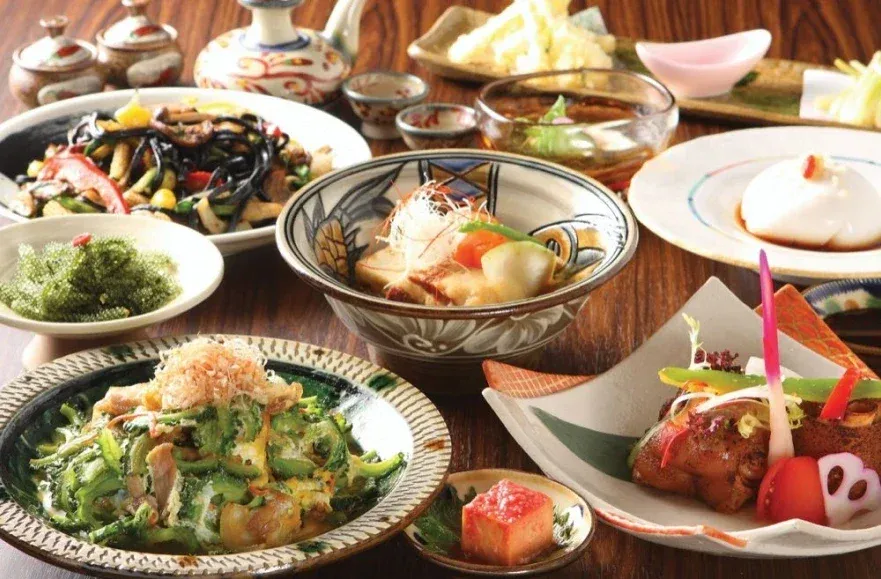
Understanding Okinawan Cuisine Through a Dietary Lens
Before we get into specific restaurants and dishes, there are a few things you need to understand about how Okinawan food is built — because the traps here are different from what you'll find in Tokyo or Osaka. Whether this is your first trip to Japan or your fifth, eating gluten-free in Okinawa, following a vegan diet, or navigating halal requirements takes a specific kind of awareness that general Japan travel guides rarely cover.
The "Big 5" Hidden Ingredients
These five ingredients are responsible for almost every dietary restriction surprise in Okinawa. Learn them now, and your trip will go much more smoothly.
Katsuobushi (bonito flakes) is shaved dried tuna used as a seasoning or garnish. It turns up in broths, on top of stir-fries, and inside packaged sauces. It's often invisible until you ask. For vegetarian and vegan travelers, bonito is one of the most common hidden ingredients you'll encounter in Japanese food.
Dashi (soup stock) is the foundation of Japanese cooking, and in Okinawa, as throughout Japan, it's almost always made from katsuobushi, sometimes with a base of konbu (kelp) seaweed. Dishes that look entirely plant-based are frequently simmered in fish dashi. This is the single biggest trap for vegan and vegetarian travelers.
Pork lard appears in traditional Okinawan cooking more than mainlanders expect. The island has a deep pork-cooking tradition, and rendered lard was historically used to season woks and cooking surfaces. It shows up in places you wouldn't expect, including some baked goods and processed foods.
Wheat-based soy sauce (shoyu) is Japan's default soy sauce and it contains wheat. Standard Japanese soy sauce is not gluten-free. Most restaurants do not keep gluten-free tamari as an alternative unless you specifically ask. Soy sauce also contains wheat alongside barley-adjacent fermentation byproducts in some regional varieties, so coeliac travelers need to be especially careful.
Awamori is Okinawa's traditional distilled rice spirit, and it turns up in braises, sauces, and marinades across the local menu. For halal travelers, it's a constant to check for, it behaves like sake in mainland Japanese cooking.

A Quick Dish Safety Matrix
Okinawa soba contains pork and uses awamori and dashi stock, so it's not suitable for halal, vegan, or kosher diets, and the wheat noodles also make it off-limits for gluten-free guests.
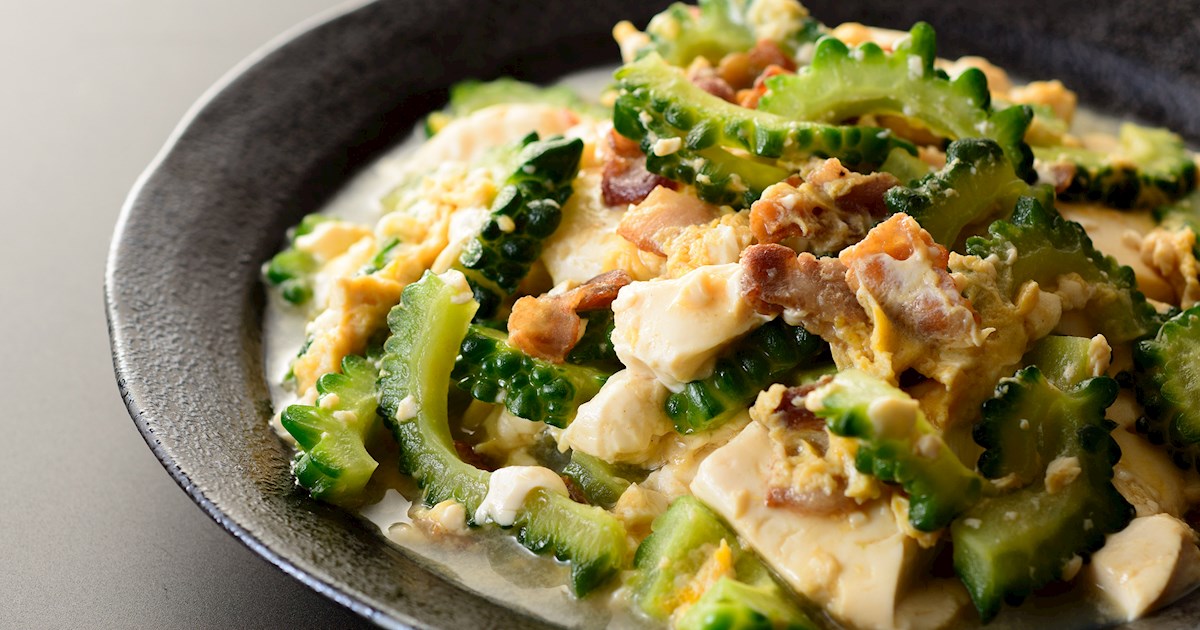
Gōyā champurū is modifiable for halal, vegan, and kosher needs, though the soy sauce used is a gluten concern to watch.
Rafute (braised pork belly) is unsuitable for halal, vegan, and kosher diets due to the pork, and the soy sauce warrants a gluten-free caution.
Umibudō (sea grapes) is a safe choice across the board, it's halal, vegan, gluten-free, and kosher.
Mozuku seaweed is halal, vegan, and gluten-free, though kosher guests should check whether the accompanying sauce has been certified.
Taco rice is generally gluten-free and can be modified for halal and vegan diets; kosher guests should check the meat and any dairy components.
Sātā andagī is halal when fried in vegetable oil, but the eggs rule it out for vegans, the wheat flour makes it a gluten issue, and eggs and dairy are concerns for kosher diners.
Tebichi (stewed pig's trotter) is not suitable for halal, vegan, or kosher diets, and the soy sauce adds a gluten-free caution as well.
The best news: umibudō (those extraordinary little sea-grape bubbles you'll see everywhere) is safe for virtually everyone, as long as you eat it plain or ask for lemon instead of ponzu.
.webp)
Halal Dining in Okinawa
The Real Situation in 2025
Okinawa is making genuine progress as a Muslim-friendly destination, but it's important to be realistic. This is not Tokyo or Kuala Lumpur. Fully halal-certified restaurants are rare, and the majority of what you'll find falls into one of three tiers:
- Halal-certified, a restaurant or hotel that has received formal certification from a recognized body, with a kitchen using halal-certified meat and verified preparation protocols
- Muslim-friendly, a restaurant that can prepare pork-free, alcohol-free dishes on request, often from a separate section of the menu
- Pork-free / alcohol-free on request, restaurants willing to accommodate, but without formal protocols or certification
Almost nothing here is walk-in halal at the restaurant level. The norm is advance reservation, sometimes days in advance, sometimes weeks. Book ahead or you may arrive to an empty table and a staff member who doesn't know what you're asking for.
With that framing, here's what you'll actually find.
Naha
Naha is where your halal options are strongest, and it should be your base if you have strict dietary needs.
Ukishima Garden in Matsuo (a short walk from Kokusai-dori, near Miebashi Station) is one of the most reliably accommodating restaurants on the island. Fully vegan, the operator describes the menu as halal- and kosher-suitable, without allium vegetables on request. It's also accessible for gluten-free diners. Lunch sets run around ¥1,400; the six-course dinner option is around ¥4,000 and is worth every yen. Reservation recommended.
Suitenrou near Makishi in Naha serves halal-certified Okinawan cuisine, including local dishes you'd otherwise have to miss, but requires about one week's advance notice. Tel: 098-863-4091. This one is worth calling ahead for, especially if you want to experience traditional Ryukyuan flavors in a way that respects your dietary needs.
Pacific Hotel Naha offers a halal-certified beef steak course, but it requires a full two weeks of advance reservation. Tel: 098-869-3433. Worth planning around if you want a formal dinner experience.
Suimui, near Shuri Castle in the Kinjo area, has a Muslim-friendly menu including a keema curry and soy-meat mabodofu. It's a good spot if you're sightseeing around Shuri and need a reliable lunch nearby. Prior reservation is recommended.
Donburi Nantoya has two locations: one in Naha Airport's 4F international terminal, and a main shop in Kunigami in the north. The airport location is particularly useful. it's one of the few places at Naha Airport where you can get a proper meal that's clearly labeled for halal, vegan, and allergy needs. If you land hungry, head here first.
Chatan / American Village / Central Okinawa
The Chatan area, built around American Village near the US military base corridor, has more allergy- and dietary-awareness baked into its restaurant culture than anywhere else on the island. English is widely spoken, staff are generally more comfortable with restriction-based requests, and many venues display multilingual allergen information.
Krishna Indian Restaurant, located in Plaza House Shopping Center in Okinawa City, uses halal-certified meat and has no pork on the menu. It's listed in the official OIST (Okinawa Institute of Science and Technology) dining guide for international staff — a reliable enough signal of quality and consistency.
Northern Okinawa / Nago / Onna
Hotel Yugafuin Okinawa in Nago is the standout for halal travelers visiting the northern part of the island — and arguably the most significant halal-certified accommodation in all of Okinawa. It became the first hotel in Okinawa Prefecture to receive Muslim-friendly certification, certified by NPO Nippon Asia Halal Association (NAHA), an organization with mutual accreditation with Malaysia's JAKIM and Singapore's MUIS. The kitchen uses halal-certified meat and is physically separated from non-halal food preparation. Halal buffet requires at least three days' advance reservation. Tel: 0980-53-0031.
Ryukyu Mura in Onna Village, the living-culture theme park, offers Muslim-friendly Okinawan cuisine and can arrange a tatami room for prayer on request. It's a good option for families who want to combine culture and lunch without the stress of cross-referencing multiple restaurant options.
Nantoya (the main Kunigami location in northern Okinawa) offers the same multi-restriction menu as the airport branch, halal, vegan, vegetarian, and allergy-accommodating, in a quieter, more rural setting.
Useful Japanese Phrases for Halal Travelers
Print these, screenshot them, or copy them into a notes app to show restaurant staff. Speaking them aloud often doesn't work as well as showing the Japanese text directly.
私はムスリムです。豚肉とお酒は食べられません。 Watashi wa Musurimu desu. Butaniku to o-sake wa taberaremasen. "I am Muslim. I cannot eat pork or alcohol."
これに豚肉は入っていますか? Kore ni butaniku wa haitte imasu ka? "Does this contain pork?"
みりん・料理酒は使っていますか? Mirin / ryōri-shu wa tsukatte imasu ka? "Do you use mirin or cooking sake?"
ハラル認証はありますか? Hararu ninshō wa arimasu ka? "Is this halal-certified?"
Halal-Friendly Supermarkets
Self-catering is one of the smartest strategies for halal travelers in Okinawa, and the good news is that the options are genuinely useful.
Gyomu Supermarket (業務スーパー) : the nationwide budget wholesaler, stocks halal-certified frozen chicken (in 1.3 and 2 kg packs from Brazil), halal beef, halal nuggets, and occasionally halal-certified mutton. You'll also find Indonesian and Malaysian halal spice pastes and bumbu, which are invaluable for cooking your own meals. Multiple Okinawa locations.
A-Price is Gyomu's sister chain and carries a similar selection at comparable prices.
Jimmy's is Okinawa's beloved local supermarket chain, founded in 1956 by Moriyasu Inamine. It has 23 locations across the island and an attached buffet restaurant at the main Naha branch. The import section stocks American, Australian, and European products, read labels carefully for halal symbols if that's important to you.
Prayer Facilities
Okinawa Islamic Culture Center : Located in Nishihara, oppened in 2013
Naha Airport (4F) : Located on the international terminal restaurant level, this prayer room features Ryukyu tatami, gender-segregated wudu areas, prayer mats, and a qibla indicator on the ceiling. Open approximately 7:00–22:00.
AEON Mall Okinawa Rycom (2F) : One of the most conveniently located prayer rooms on the island, inside a major shopping mall with a food court, supermarket, and halal-friendly restaurant options nearby. Open during mall hours.
San-A Naha Main Place (5F) : Another accessible central Naha option.
Okinawa Masjid / University of the Ryukyus (Nishihara) : The main mosque community on the island. The university campus prayer facility is used regularly by the Muslim student community and is open to visitors.
Ryukyu Mura (Onna) : Tatami room available for prayer on request.

Vegan & Vegetarian Dining in Okinawa
The Dashi Problem and How to Solve It
This is the most important thing any vegan or vegetarian needs to know before eating in Okinawa, or anywhere in Japan: most Japanese broth is fish-based by default.
Dashi made from katsuobushi (bonito fish flakes) is the bedrock of Japanese cooking. It's in soups, simmered vegetables, noodle broths, braising liquids, and sauces. Dishes that appear entirely plant-based, a simple simmered eggplant, a bowl of miso soup, a plate of sautéed greens, will frequently contain fish stock. This lack of understanding among travelers is what leads to the most common vegan dining frustrations in Japan.
The fix is a specific phrase. When ordering, ask:
魚のだしは使っていますか?昆布だしのみでお願いします。 Sakana no dashi wa tsukatte imasu ka? Konbu-dashi nomi de onegai shimasu. "Do you use fish stock? Konbu (kelp) dashi only, please."
At dedicated vegan restaurants, this is already handled for you. At mainstream restaurants, this phrase, shown in writing, is your single most useful tool.
Dedicated Vegan Restaurants
Ukishima Garden (Naha, Matsuo) is the island's most celebrated fully vegan restaurant, and it deserves every bit of its reputation. The menu centers on Okinawa's extraordinary local produce, shima yasai (island vegetables) prepared in ways that feel both deeply Japanese and genuinely inventive. No meat or fish, no dashi, everything is plant-based and free of animal products. English menu available. Lunch sets around ¥1,400; dinner six-course around ¥4,000. Book ahead, especially for dinner.
Tami's Vegan Cafe (Chatan, Carnival Park Mihama near the American Village Ferris wheel) is run by macrobiotic chef Tamie Hirokawa and is the best vegan restaurant in central Okinawa. The menu reads like comfort food taken seriously: veggie fish burgers, teriyaki mayo plates, miso cutlets, daily specials, desserts, soft serve. Hours: weekdays 11:00–15:00 and 18:00–21:00; weekends 11:00–22:00; closed Tuesdays. Credit cards accepted. A second branch in Yomitan leans more toward raw food. Highly recommended.
Mana (Naha, Tsuboya) is an all-vegan spot where staff speak English, offering a warm rustic atmosphere and a menu built around vegan plates, curries, and desserts. Reservation recommended for dinner.
LaLa Zorba (Naha, Matsuo, roughly four minutes from Kokusai-dori) serves Asian ethnic vegan with Tibetan, Vietnamese, Nepalese, and Indian influences. No meat, no fish, no eggs, no dairy. English menu available. Dinner only, Thursday through Monday. Many dishes can be made gluten-free on request, which makes it one of the most broadly accommodating restaurants on the island.
Cafe VG (Naha, near Miebashi Station) is a vegetarian/vegan-friendly café with an organic wine list. Smaller and more casual than Ukishima Garden, it's a good option for a lighter lunch or early dinner. Hours: Wednesday–Sunday, 11:30–14:30 lunch, 17:00–20:00 dinner. Closed Monday and Tuesday. Call ahead to confirm it's open before making the trip.
Esparza's Tacos and Coffee (American Village, Chatan) is not exclusively vegan, but it does Mexican food seriously, with four dedicated vegan taco options (refried beans, grilled vegetables, roasted tofu, falafel), vegan enchiladas with jackfruit, a peanut-based mole sauce option, and crepes-style churros. It even does a pan-fried dumpling appetizer on the rotating specials menu. A genuinely fun spot if you've had your fill of Japanese food for a night.
Cafe Niceness (Nago) serves Tarkari-style Nepalese curry built from hyper-local Okinawan ingredients, mushrooms from Nakijin, chickpeas and black beans from Motobu, potatoes from Nago. All vegan, and a beautiful representation of how the island's produce can work in non-Japanese cooking.
Modifying Classic Okinawan Dishes for Vegans
Even at mainstream restaurants, some Okinawan dishes can be adapted if you know what to ask for.
Gōyā champurū is Okinawa's signature stir-fry of bitter melon, tofu, and (usually) pork and egg. To make it vegan, ask for: no pork (buta nashi), no egg (tamago nashi), and konbu dashi only (konbu-dashi de onegai shimasu). At a good restaurant that understands the request, you'll get bitter melon and tofu stir-fried with veggies in a clean plant-based seasoning, and it's still excellent.
Taco rice is one of the most vegan-friendly dishes on the island if you can find a health-oriented restaurant making it with soy-meat mince. Ukishima Garden's version, tofu mince, brown rice, and fresh salad, is a revelation. Even at mainstream spots, request without cheese and ask about the sauce base.
Jūshī (Okinawan mixed rice) can sometimes be made vegan at more accommodating restaurants by requesting no pork and konbu-only dashi.
Umibudō (sea grapes) needs no modification. Order it with lemon or salt instead of the standard ponzu dipping sauce (which may contain fish extract) and it's one of the most naturally vegan-friendly and uniquely Okinawan things you'll eat.
Mozuku (brown seaweed served in vinegar dressing) is also naturally vegan, just check that the bottled dressing doesn't include bonito or shrimp extract. At supermarkets, you can buy plain unsauced mozuku and dress it yourself with rice vinegar and a pinch of salt. Fresh pickled mozuku with plain rice vinegar is one of the island's most underrated simple pleasures.
Apps & Tools for Vegan Travelers
HappyCow is the most reliable app for finding vegan and vegetarian restaurants in Okinawa. Filter by "vegan" (not just "vegetarian-friendly") to find the dedicated options above. Reviews are generally accurate and up to date.
Vegewel (available in English) is a Japan-specific alternative with solid Naha/Okinawa listings and useful filtering by allergy type as well as diet.
Gluten-Free Dining in Okinawa
Where Gluten Hides in Okinawan Cuisine
Let's start with the most important warning: Okinawa soba is not soba.
Despite the name, Okinawa soba is made entirely from wheat flour, thick, chewy wheat noodles served in a pork-and-bonito broth, topped with braised pork and fish cake (kamaboko, also contains wheat). It has nothing to do with buckwheat and it is not safely eaten by coeliac travelers or anyone with a serious gluten intolerance. This is the most common dietary trap for gluten-free visitors to Okinawa, because they assume "soba" means the same thing as on the mainland. Think of it more like a ramen noodle dish built on a wheat base — entirely off-limits for GF diners.
Other hidden gluten sources to know:
Fu champuru, fu is literally wheat gluten, shaped into blocks and stir-fried. If you see fu on a menu or in a dish, it is entirely wheat. Never eat this if you have celiac disease.
Standard soy sauce (shoyu) contains wheat. It's in marinades, braises, dipping sauces, and many pre-packaged items. Ask for shōyu nashi (no soy sauce) or komugi-furi no shōyu (wheat-free soy sauce). Tamari is the wheat-free alternative, but most restaurants don't stock it by default. Some fermented condiments also contain barley or rye derivatives, so always check the allergen label.
Tempura batter is wheat flour. Vegetable tempura, a common veggie side dish at izakayas, is just as much off-limits as shrimp or crab tempura for GF diners. The classic Okinawan sweet sātā andagī is also wheat-flour based, though some vendors are now making rice-flour versions.
Kamaboko (the pink-and-white fish cake that floats in soba broth) typically contains wheat starch.
The Dedicated Gluten-Free Venues
米m BEIEMU is Okinawa's dedicated gluten-free rice-flour bakery, with a Yomitan main shop and a Chatan location at Uminchu Wharf (54 Mihama, Chatan). Every single item is made with rice flour, no wheat, no cross-contamination from wheat in the kitchen. The rotating daily menu includes fresh rice-flour sweets and onigiri (rice balls). This is the safest baked-goods option on the island for celiacs and coeliac travelers. If you can visit only one gluten-free-specific spot, make it this one.
アレルギー対応cafe 52hertz (Allergy-friendly Cafe 52hertz) in Naha (now located at 3-2-1 Matsugawa, Naha 902-0062) operates a 100% gluten-free menu in a dedicated kitchen. The rice-flour karaage chicken, hamburger, French toast, and chocolate cake are all GF. The owner is deeply knowledgeable about celiac needs and travelers consistently report that staff bring out the chef to confirm safety. The space is small, limited seating, limited English, so contact ahead via Instagram. Reviewers describe walking significant distances in bad weather rather than skip it, which tells you something about how good it is.
Dōlce (LeQu Okinawa Spa & Resort 1F, 34-1 Mihama, Chatan) is a small gluten-free-focused bakery in American Village. Celiac and coeliac travelers rate it consistently well for cakes, cheesecake, scones, pastry, and cookies. A reliable sweet stop near the Chatan dining cluster.
GF-Accommodating Restaurants (Not Dedicated, Lower Cross-Contamination Risk)
Tamatebako (Naha, near Kokusai-dori) : vegan Okinawan restaurant using gluten-free soy sauce. Not a dedicated GF kitchen, but the combination of GF soy sauce and vegan cooking significantly reduces cross-contamination exposure. Busy between 7–9 PM; reserve for groups of three or more.
LaLa Zorba (Naha, Matsuo) : can prepare most of its tofu tikka masala and curry dishes gluten-free on request. Ask specifically when ordering.
Vongo & Anchor (Chatan, Depot Island Seaside) : has an allergen menu available online with a wheat-free filter. Celiac-safe per traveler reviews, with good staff responsiveness to allergy cards.
Yakiniku NABESHIMA (AEON Mall Rycom, 5F) : tableside grilling significantly reduces cross-contamination from kitchen prep. Knowledgeable staff; presents well for travelers using a GF allergy card.
Naturally Gluten-Free Okinawan Foods
When in doubt, these are your safe defaults:
Plain rice (gohan), Okinawan purple sweet potato (beni-imo), sea grapes (umibudō), fresh fish sashimi (confirm no soy sauce marinade), plain tofu, mozuku seaweed (without bottled sauce), fresh tropical fruit. These are all inherently GF and together give you a solid foundation for self-catering or supplementing restaurant meals. Sushi made with plain rice and fresh fish, without soy sauce, is another safe option when you can verify the ingredients.
At Jimmy's supermarket, you can find Western-style GF products, rice-flour mixes, and imported GF snacks if you're staying somewhere with a kitchen. Convenience stores like FamilyMart and Lawson carry onigiri (rice balls) with plain fillings, look for ume (pickled plum), konbu, or plain salt varieties — that are generally safe, though always check the allergen label on the packaging.
A Note for Celiac Travelers Specifically
The American Village / Chatan area is the most celiac-friendly zone in Okinawa, full stop. The US military community's influence on the local food culture has created far higher allergy literacy here than anywhere else on the island. Showing a printed Japanese celiac allergy card to staff at restaurants in this area consistently produces better results than anywhere in Naha, though 52hertz in Naha is the gold standard for safety.
For resort accommodation in Onna and Motobu (the luxury beach resort corridor), international hotels can accommodate gluten-free dietary needs with advance notice — but you need to contact them directly after booking, ideally at least two weeks out. Don't rely on a general dietary preference box at check-in.
A Useful Japanese Phrase Card for Gluten-Free Travelers
私は小麦アレルギーです。小麦が入っているものは食べられません。 Watashi wa komugi arerugī desu. Komugi ga haitte iru mono wa taberaremasen. "I have a wheat allergy. I cannot eat anything containing wheat."
Note: komugi arerugī (wheat allergy) consistently works better than "celiac disease" or "gluten-free" when speaking to Japanese restaurant staff, who may not recognize the latter terms.
グルテンフリーの醤油(たまり)はありますか? Guruten-furī no shōyu (tamari) wa arimasu ka? "Do you have gluten-free soy sauce (tamari)?"
沖縄そばは小麦ですよね? Okinawa soba wa komugi desu yo ne? "Okinawa soba contains wheat, right?" — a useful confirming question that shows staff you know what to avoid.
Kosher Dining in Okinawa
Here's where honesty matters most: Okinawa is not a good destination for travelers who keep strictly kosher.
There are no certified kosher restaurants in Okinawa. There is no Chabad house. There is no kosher butcher. Pork is central to Okinawan culinary identity, this is an island that celebrates pig from ears to trotters, and the infrastructure for Jewish dietary law simply does not exist here.
If you keep chalav Yisrael, glatt kosher, or strictly observe hilchos basar b'chalav, Okinawa will require full self-catering. If you keep what's sometimes called "kosher-style" (avoiding pork and shellfish, not mixing meat and dairy), you have more options, but they're still limited.
What Kosher Travelers Can Actually Eat
Ukishima Garden in Naha describes its menu as suitable for halal and kosher diets (fully vegan, no allium on request). This is the operator's own characterization, there is no third-party rabbinical certification, but for travelers whose kosher observance is about ingredients rather than supervision, it's the strongest restaurant option on the island.
Fresh fish with fins and scales is abundant and inherently kosher-eligible. Okinawa's prefectural fish, gurukun (banana fish), is excellent. Tuna (maguro), yellowtail (hamachi), and mahi-mahi (shiira) are widely available. The Tomari fish market in Naha is worth a visit — you can buy whole fish and self-prepare. Avoid the ubiquitous shrimp, squid, and octopus common to Okinawan seafood dishes. Crab and shellfish are particularly prevalent in local seafood menus, so stay vigilant.
Plain Japanese rice, fresh local fruit (Okinawa's tropical fruit is extraordinary, passionfruit, dragonfruit, shikuwasa lime, mango, purple sweet potato in season), and umibudō are all inherently kosher-eligible.
Gyomu Supermarket and Jimmy's are your best resources for self-catering. Some European and American imported products at Jimmy's carry OU, OK, or Star-K certification, bring your knowledge of which symbols to look for. Gyomu carries halal-certified Brazilian frozen chicken and beef, which may overlap with your needs depending on your standard.
The Honest Advice
For most kosher travelers, Okinawa works best as a short add-on to a Tokyo, Kyoto, or Kobe itinerary. Those major cities have established Jewish communities, Chabad houses, and certified kosher restaurants. Plan those cities as your kosher base, and treat Okinawa as a few days of beaches, history, and self-catered meals. You'll enjoy the island far more without the stress of hunting for certified options that don't exist.

Essential Tools for All Dietary Travelers
Apps Worth Downloading Before You Arrive
HappyCow : vegan and vegetarian restaurants globally. Filter to "vegan" for dedicated options, "vegetarian-friendly" for places with strong vegan options.
Halal Navi : Japan-specific halal restaurant finder. More accurate for Japan than global halal apps.
Halal Gourmet Japan (halalgourmet.jp) : the most comprehensive Japanese halal database. Also lists prayer facilities.
Find Me Gluten Free : strong Okinawa coverage, with celiac-specific ratings and cross-contamination notes from traveler reviews.
One important caveat for all of these: listings go stale. Restaurants close, change ownership, and lose certifications. Always verify directly — by phone or Instagram : before committing a special-occasion meal to an app listing.
A Complete Japanese Phrase Card
Print or screenshot this multilingual allergy card before you travel. Show it to staff rather than attempting to speak it — the written form is understood more reliably, and many restaurants will appreciate the clarity around your food allergies and dietary requirements.
For all travelers:
- これにアレルギーがあります。 / Kore ni arerugī ga arimasu. / "I have an allergy to this."
- 原材料を見せていただけますか? / Genzairyō wo misete itadakemasu ka? / "May I see the ingredient list?"
For halal travelers:
- 私はムスリムです。豚肉とお酒は食べられません。 / Watashi wa Musurimu desu. Butaniku to o-sake wa taberaremasen. / "I am Muslim. I cannot eat pork or alcohol."
- これに豚肉は入っていますか? / Kore ni butaniku wa haitte imasu ka? / "Does this contain pork?"
- みりん・料理酒は使っていますか? / Mirin/ryōri-shu wa tsukatte imasu ka? / "Do you use mirin or cooking sake?"
For vegan/vegetarian travelers:
- 私はヴィーガンです。肉・魚・卵・乳製品は食べられません。 / Watashi wa vīgan desu. Niku, sakana, tamago, nyūseihin wa taberaremasen. / "I am vegan. I cannot eat meat, fish, eggs, or dairy."
- 魚のだしは使っていますか? / Sakana no dashi wa tsukatte imasu ka? / "Do you use fish stock?"
- 昆布だしのみでお願いします。 / Konbu-dashi nomi de onegai shimasu. / "Konbu dashi only, please."
- 動物性の食材は使っていませんか? / Dōbutsusei no shokuzai wa tsukatte imasen ka? / "Are animal ingredients used?"
For gluten-free travelers:
- 私は小麦アレルギーです。小麦が入っているものは食べられません。 / Watashi wa komugi arerugī desu. Komugi ga haitte iru mono wa taberaremasen. / "I have a wheat allergy. I cannot eat anything containing wheat."
- グルテンフリーの醤油(たまり)はありますか? / Guruten-furī no shōyu (tamari) wa arimasu ka? / "Do you have gluten-free soy sauce (tamari)?"
Frequently Asked Questions
Is Okinawa good for vegans?
Okinawa is manageable but requires planning. Hidden fish-based dashi is the main obstacle, dishes that look plant-based often aren't. That said, the island has excellent dedicated vegan restaurants, especially in Naha (Ukishima Garden, Mana, LaLa Zorba) and Chatan (Tami's Vegan Cafe). Research and the dashi phrase above are essential. With preparation, you can eat very well. Veganism is growing in visibility across Japan, and Okinawa is slowly catching up.
Is Okinawa soba gluten-free?
No. Despite the name, Okinawa soba noodles are made entirely from wheat flour, not buckwheat. They are not safe for celiac or coeliac travelers or anyone avoiding gluten. Always confirm before ordering anything labeled "soba" in Okinawa.
Are there halal restaurants in Okinawa?
Yes, but options are limited and almost nothing is walk-in halal. The strongest halal-certified option is Hotel Yugafuin Okinawa in Nago (the first hotel in Okinawa Prefecture to receive Muslim-friendly certification). In Naha, Suitenrou, Pacific Hotel Naha, and Ukishima Garden are the most reliable options. Most require advance reservation of several days to two weeks.
Can I eat kosher food in Okinawa?
Certified kosher dining is not available in Okinawa — no Chabad, no kosher butcher, no certified restaurant. Practical options include fresh sashimi (fin-and-scale fish only), plain rice, tropical fruit, and self-catering with imported products from Jimmy's supermarket. Strictly observant kosher travelers are better served basing themselves in Tokyo or Kyoto and visiting Okinawa as a short beach retreat.
What is dashi and why does it matter for vegan travelers in Japan?
Dashi is the fundamental Japanese stock, almost always made from bonito fish flakes (katsuobushi) and sometimes konbu seaweed. It forms the base of soups, broths, and sauces across Japanese cooking, including dishes that appear fully plant-based. Vegan travelers must ask specifically for konbu dashi only, and confirm no bonito is used.
Is there a prayer room at Naha Airport?
Yes. Naha Airport has a prayer room on the 4F restaurant level of the international terminal, featuring Ryukyu tatami, wudu facilities, prayer mats, and a qibla indicator. The same floor has Donburi Nantoya, which caters to halal, vegan, and allergy dietary needs.
Are there gluten-free restaurants in Okinawa?
Yes. The most reliable dedicated gluten-free options are 米m BEIEMU (rice-flour bakery in Yomitan and Chatan) and Allergy-friendly Cafe 52hertz in Naha. Several other restaurants in Chatan/American Village and Naha accommodate GF requests, though none are fully dedicated facilities. Celiac travelers should always verify cross-contamination protocols.
What Japanese phrases do I need for dietary restrictions?
The most important are: 豚肉は入っていますか?(Does this contain pork?), 魚のだしは使っていますか?(Do you use fish stock?), and 私は小麦アレルギーです (I have a wheat allergy). Show these in written Japanese, it communicates more clearly than speaking them aloud. The full phrase card in this article is printable and works as a ready-made allergy card for restaurants.
Can halal travelers self-cater safely in Japan?
Absolutely, and it's often the smartest strategy. Gyomu Supermarket carries halal-certified frozen meats from Brazil (chicken, beef, sometimes mutton) and halal-certified Southeast Asian pantry staples. Jimmy's supermarket carries imported Western products, some of which may carry halal certification. Many longer-stay travelers supplement restaurant meals with supermarket finds, especially for breakfast. Convenience stores are less useful for halal self-catering but can provide packaged snacks and plain onigiri rice balls in a pinch.
Planning Your Trip: A Practical Summary
The key variables that determine how easily you'll eat in Okinawa are: which area you're staying in, how strictly you observe your dietary practice, and how much advance booking you're willing to do.
Naha is the best base for all restriction types. It has the highest concentration of dedicated vegan restaurants, the most halal-certified options, the airport prayer room, and the best access to specialty supermarkets.
Chatan / American Village is the most celiac-friendly zone on the island and has excellent vegan options. If GF is your primary concern, consider basing yourself here.
Northern Okinawa (Onna, Nago) is where Hotel Yugafuin stands as the island's gold standard for halal accommodation. It's also where many of the island's luxury beach resorts are concentrated, book dietary accommodations at those directly, well in advance.
Wherever you stay, book the restaurants that matter to you before you arrive. Pacific Hotel Naha's halal course needs two weeks. Hotel Yugafuin needs three days minimum. Ukishima Garden fills up for dinner. 52hertz is tiny. The travelers who eat well in Okinawa with dietary restrictions are almost always the ones who sent a few emails and made a few phone calls before they landed.
Bring a printed phrase card. Download HappyCow and Halal Navi. And stock up at Gyomu Super or Jimmy's on your first day, so you always have a fallback.
Evertrail Tours · May 25, 2026