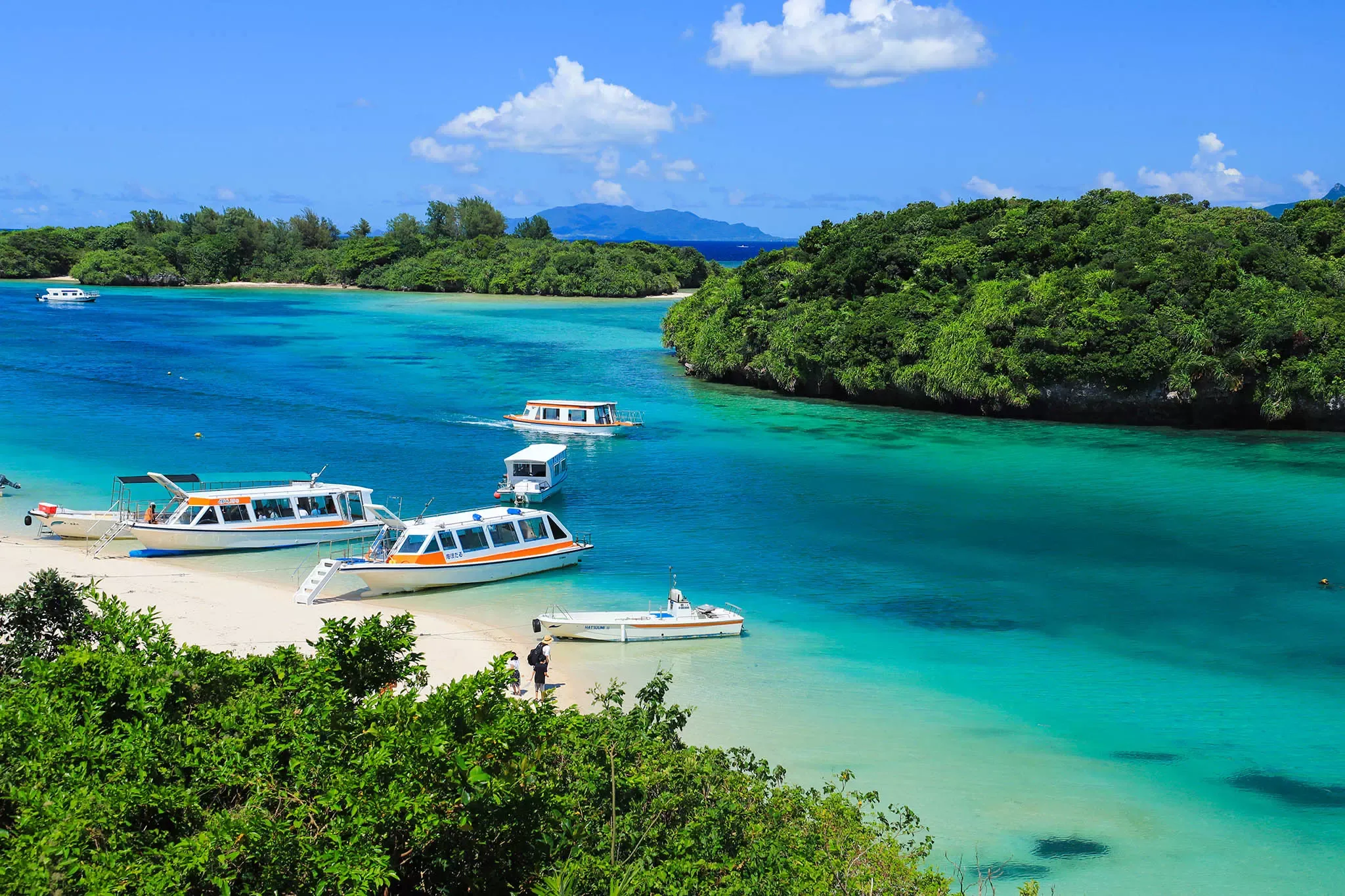
The best outdoor activities in Okinawa live in two very different worlds. One is the water, that impossible shade of blue the locals call Kerama Blue, where you can drift over coral with a sea turtle one morning and watch whales surface the next. The other is the forest, the dense subtropical jungle of the Yanbaru north, where birds that exist nowhere else on the planet still pick their way across the road at dusk.
After years of living and guiding across this corner of the Ryukyu islands, I have learned the one rule that matters more than any other: match the activity to the month and the region, and Okinawa rewards you. Visit Okinawa at the right time of year and the whole prefecture opens up. Get it wrong, and you spend a rainy afternoon staring at a closed ferry terminal.
Think of this as an Okinawa travel guide built around getting outside. It walks you through the water activities and adventure activities worth your time, plus the standout things to do in Okinawa across the main island and the nearby islands of Okinawa: Ie-jima, Minna and the Kerama group. Real costs, real ferry times, real sea temperatures, and honest notes on what works for families and what does not. Consider it your ultimate guide to the outdoor side of any trip to Okinawa.
Key Takeaways
- Yanbaru, the northern third of Okinawa Island, became a UNESCO World Natural Heritage site on July 26, 2021, and sits inside Yambaru National Park, which covers more than 13,000 hectares of forest.
- The sea is swimmable all year, peaking around 29°C in August and cooling to about 21°C by March. The comfortable beach window runs roughly April through November.
- The Kerama Islands are a ferry ride from Naha's Tomari Port: around 35 to 70 minutes to Tokashiki, and around 50 to 120 minutes to Zamami and Aka.
- The Blue Cave at Cape Maeda is the main island's signature beginner snorkel and dive spot. Snorkel tours run about ¥3,000 to ¥6,000, and introductory dives about ¥8,000 to ¥12,000.
- Humpback whale watching runs January through March around Zamami, with trips lasting about two hours.
- Okinawa's rainy season usually falls between mid-May and late June, and the islands see more typhoons than anywhere else in Japan, with a clear peak in August and September.
- A rental car is essential for the north. Budget roughly ¥5,000 to ¥8,000 a day, and bring an International Driving Permit.
Water activities
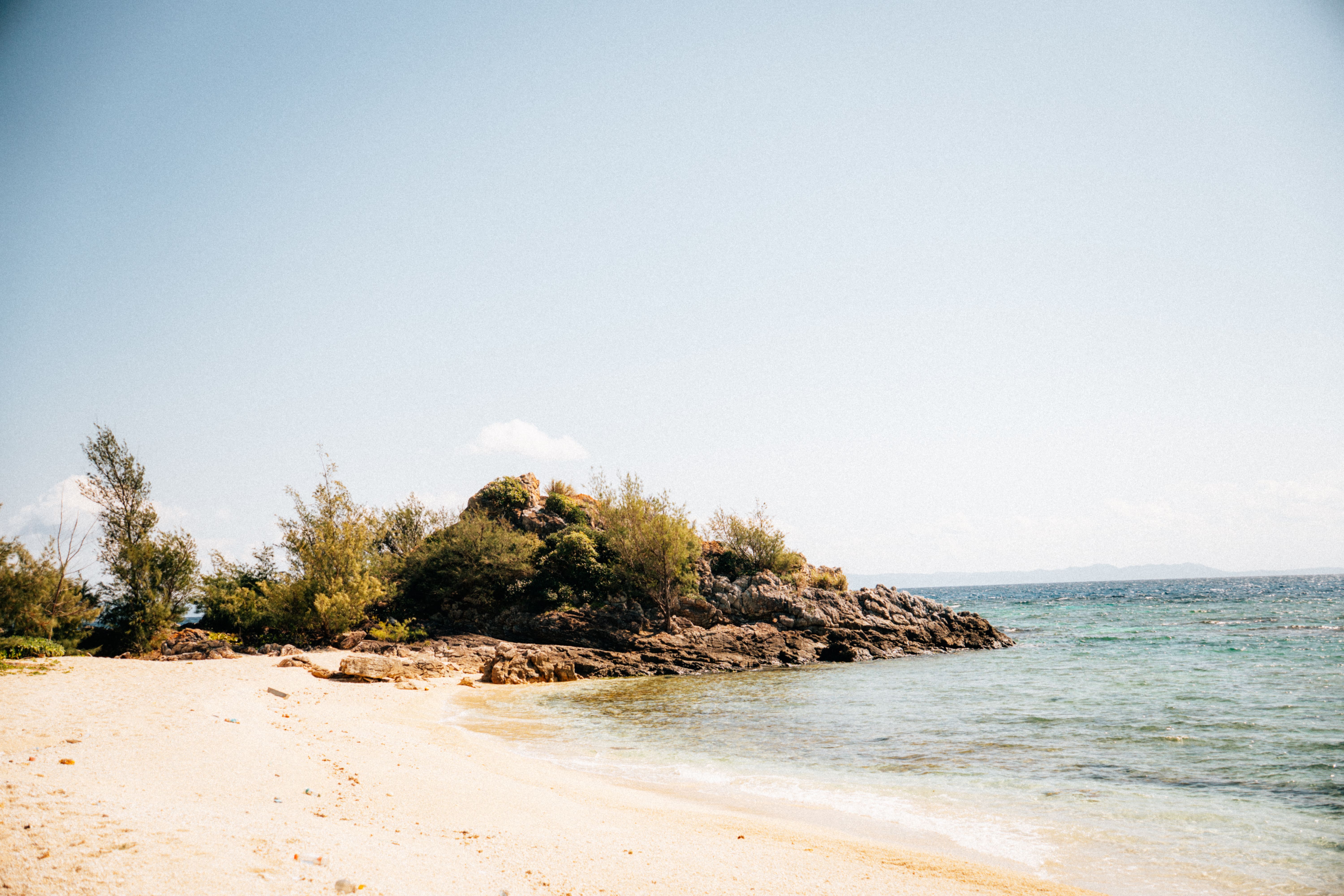
Okinawa water activities are reef and ocean experiences built around snorkeling, scuba diving, sea kayaking and whale watching in the warm Kuroshio current. For most visitors, this is the whole reason to come, and the water clarity genuinely lives up to the postcards.
Snorkeling and diving at the Blue Cave
The Blue Cave at Cape Maeda is the most popular snorkeling and diving site on the main island, a half-submerged sea cave that glows electric blue when sunlight bounces up through the water. One of the most famous caves in Okinawa, it is shallow, about six meters at its deepest, and forgiving. Snorkelers wear life jackets and can be towed along by a guide, so you do not need to be a strong swimmer. Most shops welcome kids from around age six for snorkeling and twelve for an introductory dive.
You get into the water one of two ways. You can walk down the cape's eighty-odd steps, or you can take a short boat ride from a nearby port, which is far kinder on small children and anyone who would rather skip the climb.
A word of warning: by mid-morning in summer the Blue Cave gets crowded. Book the first tour of the day and you will have it almost to yourself. Snorkel tours sit around ¥3,000 to ¥6,000, and introductory dives around ¥8,000 to ¥12,000.
Diving the Kerama Islands
The Kerama Islands are a marine national park about 40 kilometers west of Naha, with roughly fifty dive sites and visibility that can stretch to 50 meters on a good day. Expect sea turtles, manta rays and coral in excellent health in these clear waters. There is something here for everyone, from calm inner-bay reefs perfect for beginners to open-ocean walls with real current for experienced divers.
A two-tank boat dive off the main island runs around ¥13,000 to ¥18,000 with gear, while a three-dive Kerama trip lands closer to ¥21,000. Because the water stays between about 22 and 29°C all year, Okinawa is one of the only places in Japan you can dive in a wetsuit in any month you like.
Beach snorkeling on the outer islands
If you want clear water without a dive shop, the outer islands deliver. Minna Island, nicknamed Croissant Island for its shape, is a fifteen-minute high-speed ferry from Toguchi Port, with shallow, glassy water that families love. Ie-jima, half an hour by ferry from Motobu, adds stand-up paddleboarding and banana-boat rides to the mix.
In the Keramas, Furuzamami Beach on Zamami and Nishibama Beach on Aka are the standout snorkel beaches, all soft sand and blue ocean. If you have young kids in tow, Ama Beach on Zamami is shallower and calmer, an easier first taste of the reef, while Aharen Beach on Tokashiki is another gentle favorite. After dark, the lack of light pollution gives these outer islands a genuinely dark sky for stargazing.
Whale watching
Whale watching is Okinawa's great winter activity. From January through March, humpbacks migrate down from the cold north to breed and raise their calves in the warm water around the Keramas. The whale watching tours on Zamami run through the season, usually twice a day and lasting about two hours, and sighting rates are high.
These are big animals, often 13 to 15 meters long, and seeing one breach never gets old. Bring a windbreaker, take motion-sickness medication if you are prone to it, and go in knowing that wild animals make no promises.
Sea kayaking and SUP
Clear-bottom kayak and paddleboard tours are a gentle, year-round joy, especially off Nakijin and Kouri Island in the north. The water is calm, serene and so transparent that you seem to float above the reef rather than on it. This is one of the few water activities that stays lovely right through the cooler months.
Land and jungle activities
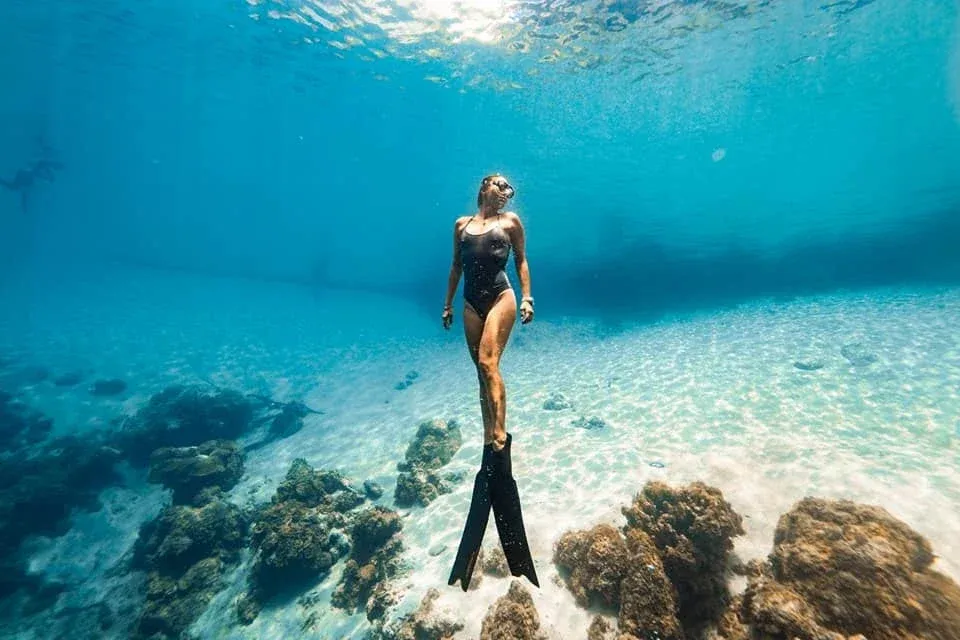
Okinawa land activities are forest, karst and coastal-hill experiences, and almost all of them sit in the Yanbaru north. This UNESCO-listed subtropical rainforest is a unique ecosystem with endemic wildlife found nowhere else on Earth, and it is the side of Okinawa most international visitors miss. It is the side I love most.
Yanbaru trekking and Hiji Falls
Yanbaru trekking means walking the trails and river valleys of Yambaru National Park, spread across the villages of Kunigami, Ogimi and Higashi. The classic walk leads to Hiji Falls, the tallest waterfall on the main island, where water drops 26 meters into a pool below. The trail runs about 1.5 kilometers each way, takes roughly 40 minutes, and crosses a suspension bridge that gives the nervous a moment of pause.
One important note before you set your heart on it: heavy rain badly damaged the Hiji Falls trail and campground in late 2024, and the route has remained closed for repairs well into 2026 with no firm reopening date. Check the current status before you drive all the way north. When it is open, entry is around ¥500 for adults, and swimming at the waterfall is not allowed.
Daisekirinzan karst hiking
Daisekirinzan, near Cape Hedo at the island's northern tip, is the world's northernmost subtropical karst, a landscape of weathered limestone pinnacles and enormous banyan trees that has been forming for some 200 million years. It is one of the most striking natural spots in Okinawa. Four color-coded trails branch out from a central rest hut, and they suit almost everyone. The longest runs a little over a kilometer through dramatic rock formations, while a 600-meter boardwalk is wheelchair and stroller accessible, opening the scenery up to seniors and small children alike.
Entry pricing has shifted in recent years, so confirm the current fee before you go, but it includes the shuttle bus and a small stone museum. Cape Hedo, with its cliff views and reversion monument, is a five-minute drive away and worth pairing with the visit.
Endemic wildlife watching
Yanbaru is a true biodiversity hotspot, home to creatures found nowhere else on Earth. The star is the Okinawa rail, a flightless, ground-dwelling bird whose existence was only confirmed in 1978 and whose entire range covers a mere 260 square kilometers. Sharing the forest is the Okinawa woodpecker, one of the rarest woodpeckers in the world, which in recent years has clawed its way back from the brink thanks to conservation work.
The best way to meet them is a guided night drive with a certified local guide who knows where to look and how to do it without disturbing the animals. Some forest roads close after dark, and a few protected zones need permits, so this is one activity where going with a local pays off.
Mangrove kayaking
Mangrove kayaking on the Gesashi River in Higashi Village glides you through the largest mangrove forest on the main island, a protected natural monument since 1972. Tours run about 90 minutes, cost roughly ¥4,400 to ¥5,500, and welcome children from around age five. The water is calm and shaded as you weave between the mangrove trees, and the trips are timed around high tide, so departure times shift from day to day. It is one of the most relaxing things you can do here.
Island hiking
Over on Ie-jima, the cone-shaped Mount Gusuku, known locally as Tacchu, rises 172 meters out of an otherwise flat island. The climb is short, about 462 steps in fifteen minutes, and the reward is a full 360-degree panorama with breathtaking views of the blue ocean. In the Keramas, the ridge trails and observatories above Zamami double as whale-watching lookouts in winter.
Cultural-outdoor crossovers
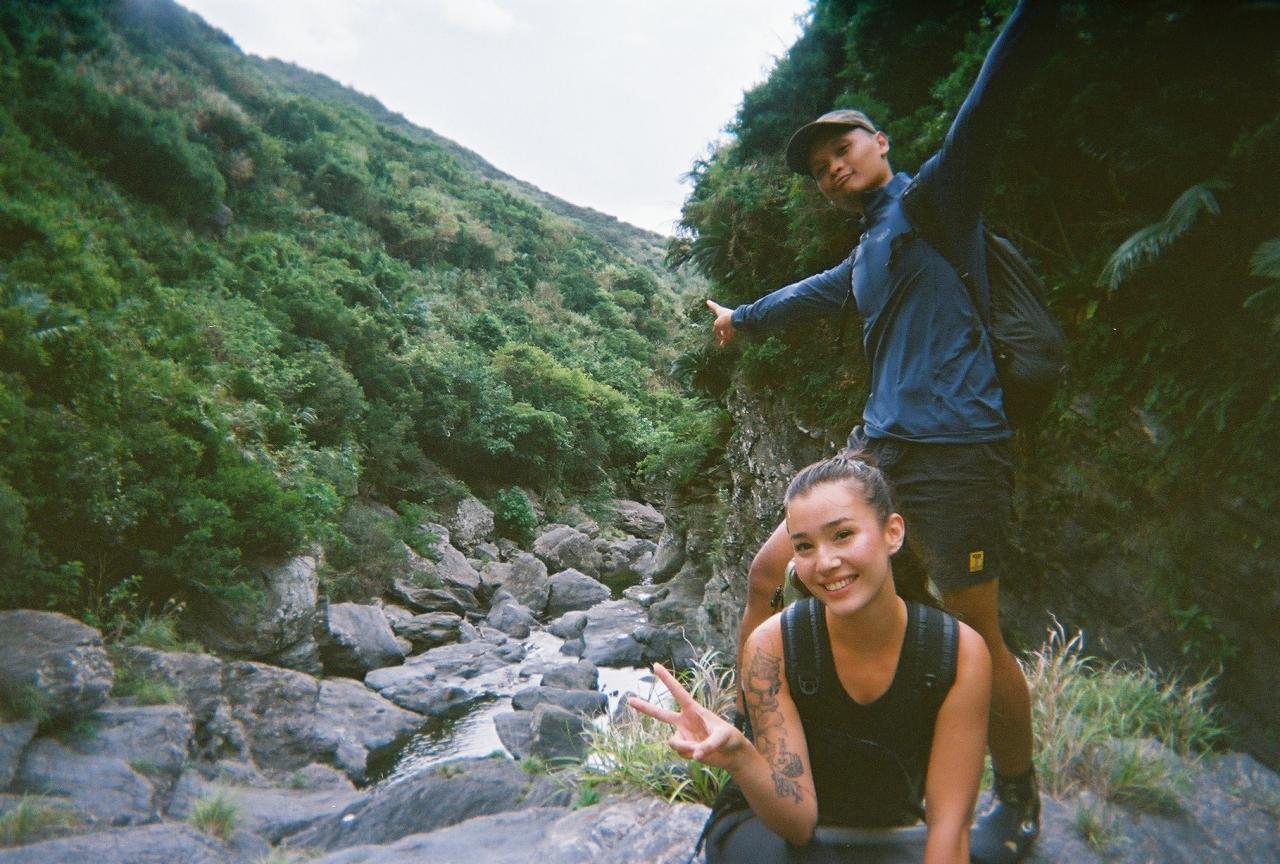
Cultural-outdoor crossovers are activities that fold Okinawa's former Ryukyu Kingdom heritage and wartime history into your time outside. Daisekirinzan, for instance, sits within Ashimui, one of the oldest sacred areas in Okinawa, its trails dotted with worship sites the locals consider power spots. Look around the villages and you will spot shisa, the Okinawan guardian lion-dogs, watching over the rooftops.
Ie-jima pairs its hike up Tacchu with WWII battleground sites, the Ernie Pyle monument and the Niya-Thiya cave that once sheltered islanders during the fighting. Visit in late April or early May and you catch the Lily Festival, when around a million Easter lilies bloom across the island. And up at Cape Hedo, a coastal walk comes with the monument marking Okinawa's 1972 return to Japan, a quiet reminder of how recent some of this history is.
Best time of year (seasonal guide)
The best season for outdoor activities in Okinawa is late April through early July, and again from late September through November, when the seas are warm, typhoon risk is lower and the humidity stays bearable. Here is how the year actually plays out and the best time to travel for each activity.
January to March are the coolest months, with air temperatures around 17°C and the sea cooling to about 21°C. Too chilly for casual swimming, but this is whale-watching season, and Japan's earliest cherry blossoms appear here from mid-January. Prices and crowds are at their lowest.
April to early July is the sweet spot. The air warms into the mid-20s, the sea turns comfortable by late April, and the window right after the rainy season often brings beautifully stable conditions before the typhoons arrive.
The rainy season usually runs from about mid-May to late June. It does not rain all day every day, and you can still get in the water, but skies turn gray and underwater visibility drops after a heavy downpour.
July to September is hot and busy, with the sea peaking around 29°C in August. It is also peak typhoon season, so factor that into your itinerary.
October and November are a quiet favorite among divers. The water stays warm, the crowds thin out, prices fall and typhoon risk drops away by late October. Many regulars call October the best diving month of the year.
A note on typhoons, since they worry first-time visitors. Okinawa sees more of them than anywhere else in Japan, with a clear peak in August and September. Most are near-misses rather than direct hits, but even a passing storm cancels ferries first, then flights. Build a spare day into your itinerary, book a refundable room, and keep an eye on the forecast. The upside: storms often leave behind some of the clearest water of the whole year.
Family-friendly notes
- Blue Cave snorkeling works for kids from about age six with a life jacket. Pick the boat entry over the staircase for little ones.
- Minna Island and Ama Beach offer shallow, calm water that suits small children.
- Daisekirinzan has a 600-meter boardwalk built for strollers, wheelchairs and seniors.
- Gesashi mangrove kayaking takes children from around age five and stays calm and shaded throughout.
- Mount Gusuku on Ie-jima is short but steep, fine for active families, less so for anyone with mobility issues.
- Whale watching boats get cold and bouncy, so bring layers and motion-sickness medication for the kids.
Practical planning
Practical planning for outdoor activities in Okinawa really comes down to one question: do you rent a car or not. Beyond the Naha monorail, public transport thins out fast, and the northern attractions are slow going by bus. For Yanbaru and the trailheads, a car is close to essential. Budget roughly ¥5,000 to ¥8,000 a day, reserve months ahead for summer, and remember that you need an International Driving Permit, not just your home license. From Naha Airport, the far north is about a two-hour drive up through Nago, the gateway to the north. When planning a trip, build in a spare day for the weather.
To reach the Keramas, take a boat from Naha's Tomari Port, which makes them a superb day trip from Naha. Tokashiki is about 35 to 40 minutes by fast boat or 70 by ferry. Zamami and Aka run about 50 to 70 minutes by fast boat or up to two hours by ferry. The high-speed boats sell out in summer, so book early.
For Ie-jima and Minna, the ferries leave from the Motobu Peninsula. Ie-jima is about 30 minutes from Motobu Port, and Minna is about 15 minutes from Toguchi Port.
On booking lead times, Kerama fast boats can fill up weeks ahead for summer and holidays. Marine tours are often bookable a day or two out in the off-season, but reserve well ahead in July and August.
Comparison
Blue Cave snorkeling at Cape Maeda in Onna is an easy activity best enjoyed from April to October, though it runs year-round, costs roughly ¥3,000 to ¥6,000, and suits beginners and families with children aged six and up.
Kerama boat diving in the Kerama Islands is best from March to November, ranges from easy to advanced depending on the site, costs around ¥17,000 to ¥21,000 for a multi-dive trip, and works for both certified and brand-new divers.
Whale watching around Zamami and the Keramas is an easy winter activity from January to March, costs about ¥5,000 to ¥6,000, and is enjoyable for all ages.
Beach snorkeling off Minna, Zamami and Aka is easy, best from April to October, and costs little beyond the ferry (around ¥1,800) plus gear, making it ideal for families.
Yanbaru trekking around Kunigami in the north is a moderate activity best attempted from November to April, costs about ¥500 in entry fees, and is great for hikers, though you should check trail closures first.
Daisekirinzan karst near Cape Hedo in the north is an easy, year-round walk costing roughly ¥1,200 to ¥2,500, and it suits families, seniors and visitors needing step-free access.
Mangrove kayaking on the Gesashi River in Higashi is an easy, year-round trip costing about ¥4,400 to ¥5,500, and welcomes families with children aged five and up.
The Mount Gusuku hike on Ie-jima is a short but moderate climb available year-round, reached by a ferry of around ¥1,800, and best suited to active travelers.
Sea kayaking and clear-bottom SUP off Nakijin and Kouri are easy and available year-round, cost roughly ¥5,000 to ¥8,000, and are perfect for beginners and anyone chasing photos.
Frequently asked questions
What are the best outdoor activities in Okinawa?
The standout things to do in Okinawa outdoors are Blue Cave snorkeling at Cape Maeda, scuba diving in the Kerama Islands, winter whale watching off Zamami, and trekking and mangrove kayaking in the UNESCO-listed Yanbaru north.
When is the best time for outdoor activities in Okinawa?
Late April to early July and late September to November give you the best balance of warm seas, lower typhoon risk and bearable humidity.
Is the sea warm enough to swim year-round?
The water stays swimmable all year, peaking around 29°C in August and dipping to about 21°C in March, though most people find the comfortable beach window runs April through November.
Do I need a rental car?
For the Yanbaru north and most trailheads, yes. Expect to pay roughly ¥5,000 to ¥8,000 a day, and bring an International Driving Permit.
How do I get to the Kerama Islands?
Take a ferry or fast boat from Naha's Tomari Port, around 35 to 70 minutes to Tokashiki and 50 to 120 minutes to Zamami and Aka, which makes the Keramas an easy day trip from Naha.
Is Blue Cave snorkeling good for beginners and kids?
Yes. Life jackets keep you afloat, guides can tow you along, and most operators welcome children from around age six.
Is Hiji Falls open?
As of early 2026 the trail remains closed after storm damage in late 2024, so confirm its status before making the trip north.
When can I see humpback whales?
Whale watching runs from January through March in the Kerama Islands.
How risky is typhoon season?
Okinawa sees more typhoons than anywhere else in Japan, peaking in August and September. Most pass by rather than hit directly, but they might cancel ferries and flights, so leave a buffer day in your plans.
Evertrail Tours · June 18, 2026