5 Places You Should Add to Your Okinawa Itinerary
If you're building an Okinawa itinerary and you've only got a handful of days, the hard part isn't finding things to do in Okinawa, it's deciding what actually earns a place in your limited time. After years of driving this island from end to end, these are the five spots I'd tell a friend planning a first trip to Okinawa to build around: the Churaumi Aquarium, Kōri Island and the Nakijin Castle ruins, Cape Manzamo, Shuri Castle and old Naha, and one ferry-ride day trip out to a smaller island.
This Okinawa travel guide covers the Okinawa main island, the long, narrow one you fly into at Naha, plus a single escape offshore to the kind of blue water the postcards are made of. Okinawa Prefecture stretches much further than that, though: the far-flung subtropical islands like Miyako and Ishigaki are wonderful, but they need their own flights and their own trip, so I've left them out of this list on purpose here.
Okinawa runs north to south, and the drives between regions are longer than the map makes them look. So I've laid these out roughly in that order, from the wild north down to the capital, with notes on how to stitch them together at the end.
The five at a glance
- Churaumi Aquarium (north) : whale sharks, manta rays, and a free seaside park most people forget is included.
- Kōri Island & Nakijin Castle (north) : a bridge drive over impossibly clear water, paired with a quiet UNESCO castle ruin.
- Cape Manzamo (central) : the iconic elephant-trunk cliff on the west coast resort strip.
- Shuri Castle & old Naha (south) : the heart of the old Ryūkyū Kingdom, plus pottery lanes and a market that locals call the island's kitchen.
- An island day trip : the Kerama Islands for most, or quieter Izena if you want somewhere with more goats than tourists.
1. Churaumi Aquarium ~ the one everyone's heard of, for good reason
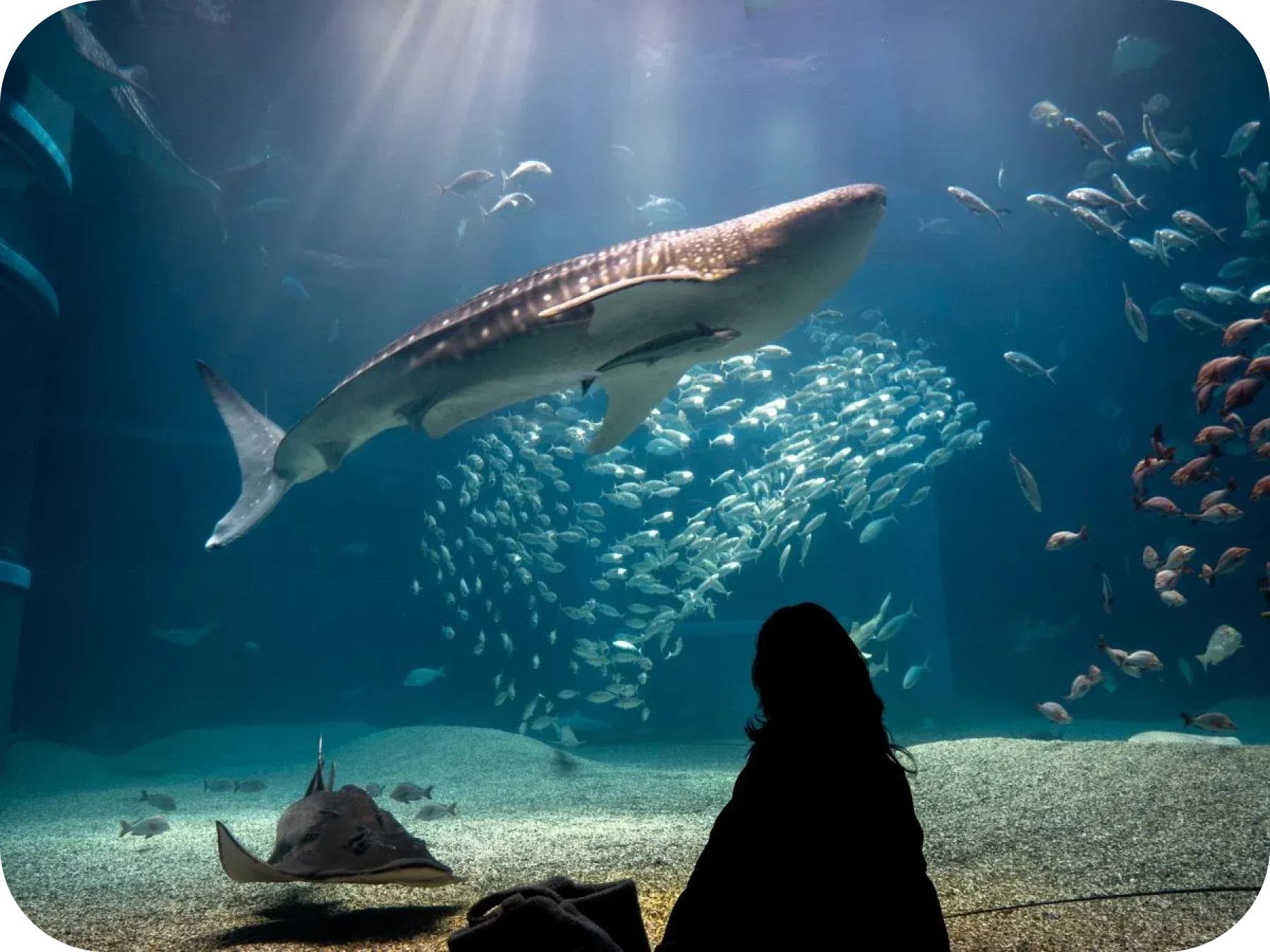
I'll be honest: I used to roll my eyes at "aquarium" on a tropical-island itinerary. Then I stood in front of the Kuroshio Sea tank, eight metres of glass, whale sharks gliding overhead, manta rays banking in formation, and stopped being smug about it.
It's the single most-visited paid attraction on the island, and for a first trip it's worth the hype. What people miss is that the aquarium sits inside Ocean Expo Park, a sprawling free park along the coast with a dolphin show, a beach, and gardens full of subtropical flora and fauna. You can easily fill half a day here without spending much beyond the entry ticket.
A tip from doing this too many times: go in the late afternoon. The tour-bus crowds thin out, the light through the big tank gets gorgeous, and in summer the place stays open late.
The essentials :
Where: 424 Ishikawa, Motobu
Hours: roughly 8:30–18:30 off-season, later in spring and summer (up to 21:00 in August)
Cost: ¥2,180 adults, ¥710 for elementary and middle-schoolers, free under six;
Parking: ¥500
From Naha: about 2 hours by car, closer to 3 by express bus
Time needed: half a day
2. Kōri Island and Nakijin Castle ~ the north's best afternoon
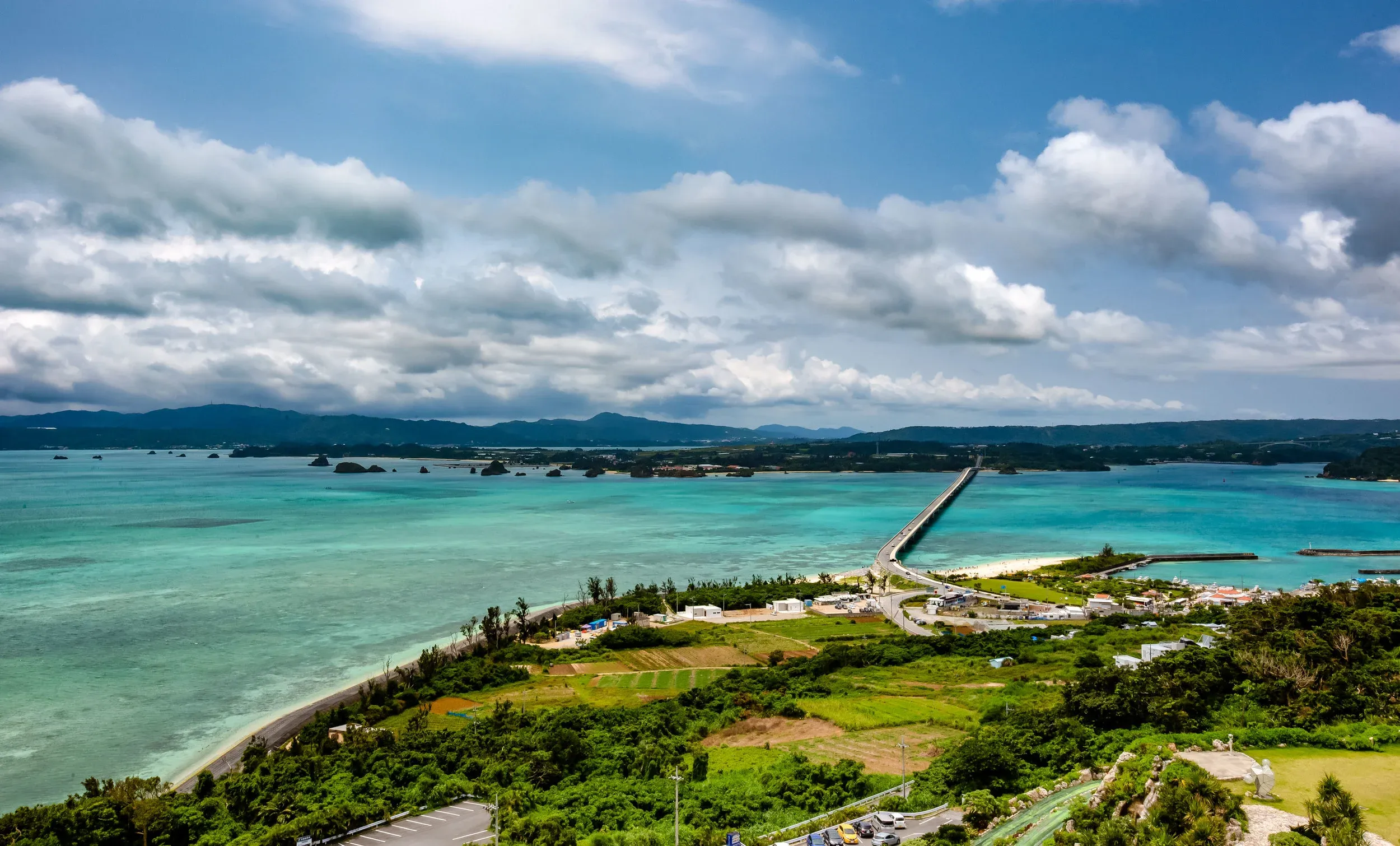
Twenty-five minutes north of the aquarium, the road suddenly lifts onto the Kōri Bridge and the beautiful water below turns a blue that doesn't look real. That's the crossing to Kōri Island (commonly written Kouri Island in English), and even people who claim not to care about scenery tend to go quiet here. The Kouri Bridge itself is worth the drive for the ocean views alone.
The island itself is small and unhurried. You can climb the Kōri Ocean Tower for the panoramic view, or just park near the bridge, walk down to the water, and let it do its thing. There's no entry fee for Kouri Island itself, only for the tower.
Then I'd double back to Nakijin Castle, one of Okinawa's gusuku, the stone fortresses of the old Kingdom of Ryūkyū, now a UNESCO World Heritage Site. I actually prefer Nakijin to the more famous Shuri. The long, curving stone walls run along a ridge with the sea on the horizon, and it's usually peaceful. If you visit in late January or early February, the grounds light up with some of Japan's earliest cherry blossoms, and there's a festival to match.
Churaumi, Kōri, and Nakijin together make one full, satisfying day in the north. If you'd rather not handle the driving, and the north is where a guide really earns their keep, with the back roads and the spots that aren't signposted.
The essentials:
Kōri Ocean Tower: 538 Kōri, Nakijin
Open from 10:00
Around ¥1,000 adults, ¥500 children Nakijin Castle: Imadomari 5101; open year-round, ¥1,000 adults, ¥500 high-schoolers, free for younger kids
From Naha: about 2 to 2.5 hours by car (roughly 110 km)
Best time: late January to February for the cherry blossoms
Pair it with: Churaumi Aquarium, same day
3. Cape Manzamo ~ the cliff that ends up on every camera roll
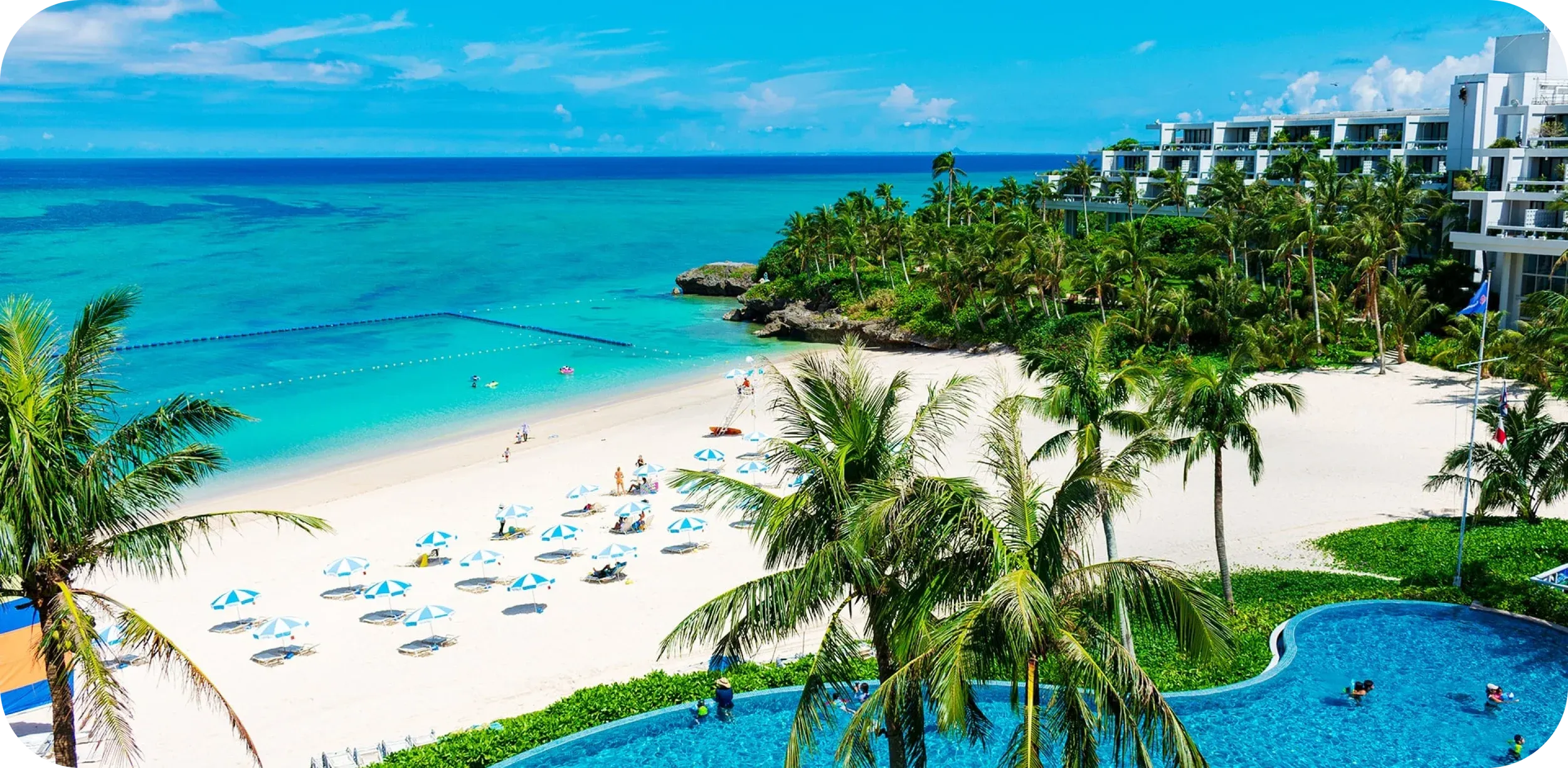
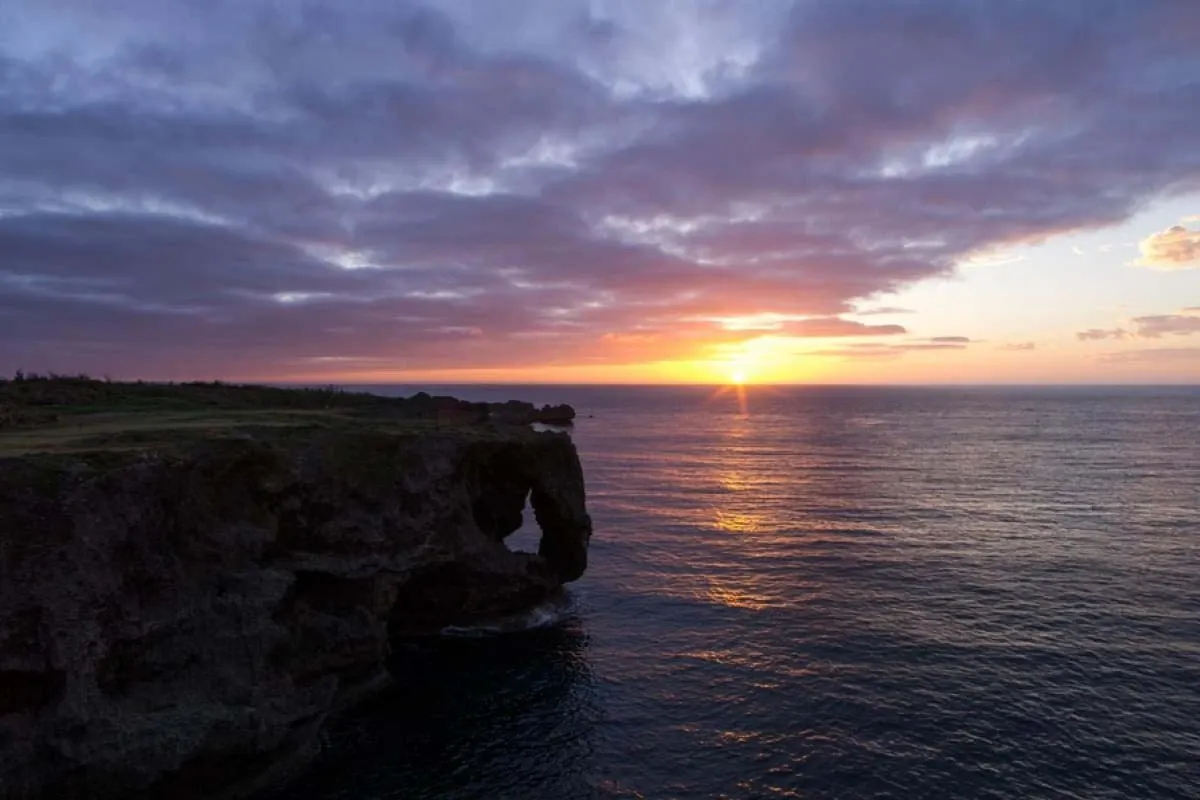
Halfway up the scenic west coast of central Okinawa, in the resort belt around Onna — a strip of beach resorts facing the East China Sea, there's a grassy headland where the cliff has weathered into the shape of an elephant's trunk dipping into the sea. That's Cape Manzamo, and it's one of those places that's genuinely as good as the photos.
Be realistic about what it is, though: it's a short, beautiful stop, not an afternoon. You walk the looped path along the clifftop, take your photos, watch the waves chew at the rock, and move on. Thirty to forty-five minutes is plenty. What makes it worth the detour is where it sits, right in the middle of the Onna coast, the natural base for a beach day, a coastal drive, or an afternoon among Onna's cafes and restaurants.
Go early or near sunset if you can. The midday tour buses can crowd the viewpoint, and the light is far better at the edges of the day.
The essentials:
Where: Onna village, near the village hall
Hours: 8:00–19:00, viewing until sunset
Cost: ¥100 for the viewpoint facility,
Parking free
From Naha: about 90 minutes (roughly 70 km)
Time needed: under an hour
4. Shuri Castle and old Naha ~ the soul of the place
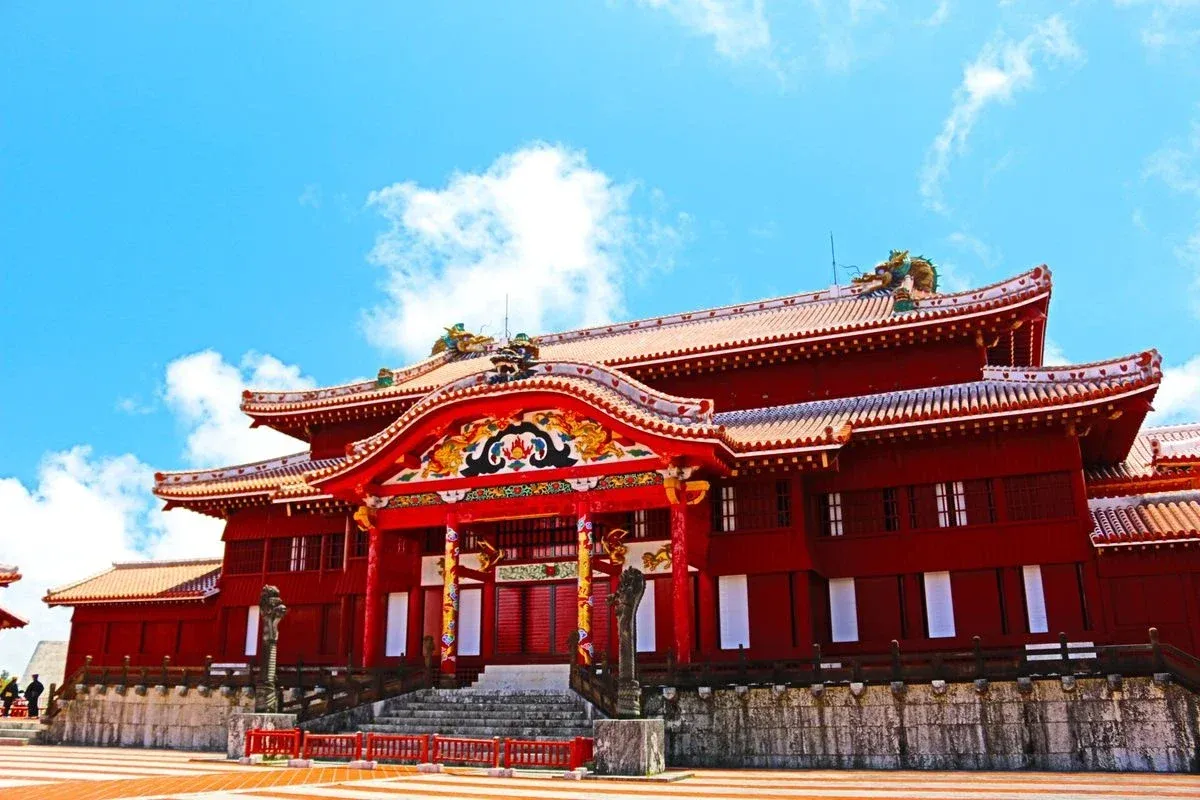
For nearly 450 years, Shuri Castle was the seat of the Ryūkyū Kingdom, a seafaring trading nation with its own language, religion, and ties stretching across China and Southeast Asia. Understanding Okinawa really starts here, on the hill above Naha.
Now, the honest part: the main hall, the Seiden, burned down in a 2019 fire and has been under reconstruction ever since. The exterior is finished, and the official reopening of the main hall is set for late November 2026. Until then, you can wander the free outer grounds, the gates, the walls, the famous Shureimon gate, and watch the restoration happening up close, which is its own kind of rare. It's worth going either way; just know what you're walking into so you're not expecting the full palace interior before it reopens.
From the castle, drop down into old Naha. Just behind the main shopping street lies Tsuboya, the centuries-old pottery quarter, a quiet lane of kilns and ceramic shops where you can pick up a hand-thrown shīsā lion or a sake cup. A short walk away is the Makishi Public Market, reopened in a gleaming new building in 2024 and known as "the kitchen of Okinawa." Three floors, dozens of stalls, pick your fish downstairs, and a restaurant upstairs will cook it for you. Try the rafute, slow-braised pork belly, alongside the seafood. It's the best single place to eat your way into Okinawan food, which stands apart from mainland Japanese food in ways you taste immediately.
The essentials,:
Shuri Castle: 1-2 Kinjō-chō, Naha;
Free areas from 8:00, paid areas ¥400 adults;
Seiden interior reopening November 2026
Tsuboya Pottery Museum: 1-9-32 Tsuboya; 10:00–18:00, closed Mondays; ¥350
Makishi Public Market: Matsuō 2-10-1; roughly 8:00-22:00, closed the 4th Sunday most months
Getting there: easy to sightsee without a car, Shuri Station on the YuiRail monorail, then a 10-minute walk
Time needed: a full, relaxed day
5. A day on the water ~ Kerama, or somewhere quieter
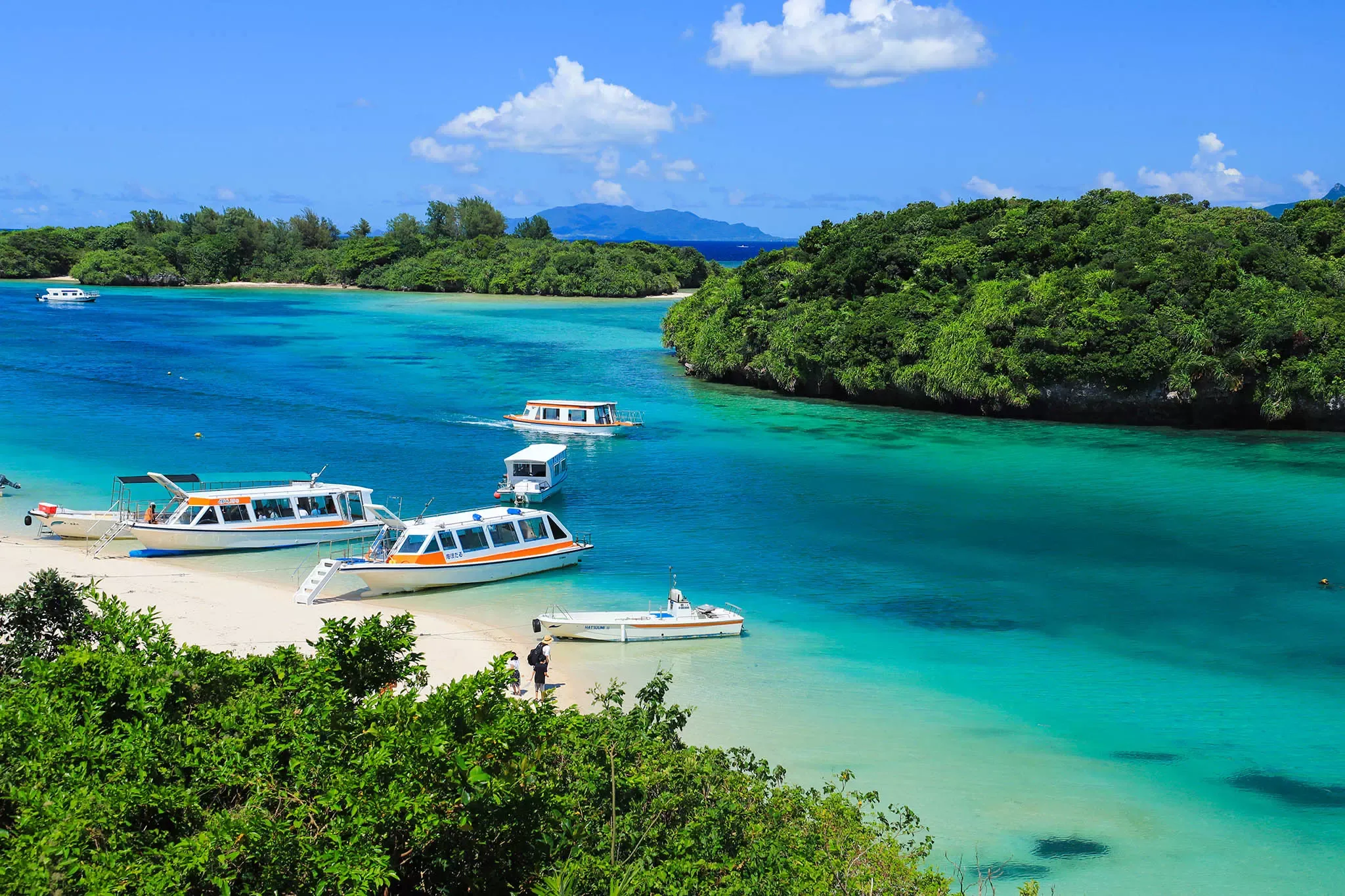
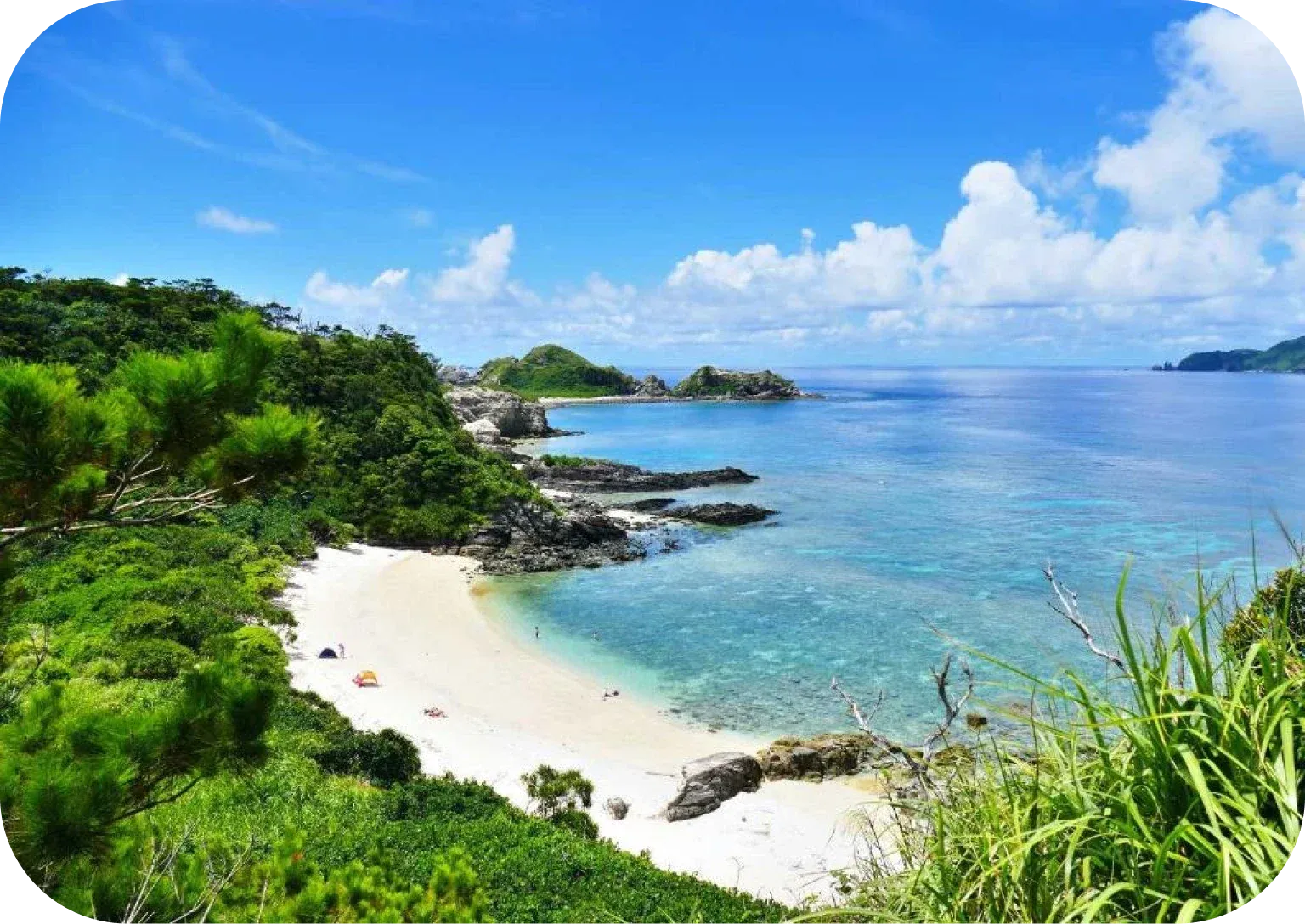
Here's the one most first-timers under-plan. The beaches on the main island are nice, and a few rank among the best beaches in Okinawa. But the water around the smaller islands is a different category altogether, the locals have a word for it, Kerama Blue, and once you've snorkelled it you understand why.
The Kerama Islands, mainly Zamami and Tokashiki, are an easy day trip by ferry from Naha's Tomari Port. The fast boat to Tokashiki takes about 40 minutes; Zamami is roughly 50 to 70. The catch is logistics, boats run only a couple of times a day, some inter-island legs need reservations the day before, and seats fill up, so book ahead and leave your rental car in Naha. If you come in winter, between January and March, you can add humpback whale watching to the day; February is the peak, and sightings are close to guaranteed.
If the Kerama boats sound busy, there's a quieter option I love even more: Izena, a small island off the north coast reached from Unten Port. Fishing boats outnumber tourists, the snorkelling is just as good, and you get the slow, lived-in island feel that the more popular spots have started to lose. That gentler, off-the-radar version of an island day is exactly what our Island Hopping Experience is built around, a river trek and waterfall swim, a night glamping on the coast near Yagaji Island, and a charter boat out to Izena where the locals cook your catch like you're family.
The essentials:
Kerama ferries: from Tomari Port, Naha; year-round, 40–70 minutes; book in advance
Whale watching: January to March, peak in February; tours around ¥5,000–6,000
Izena & Iheya: from Unten Port near Nago; about an hour by ferry, a couple of sailings a day
Time needed: a full day, plan everything else around it
How to fit these into your itinerary
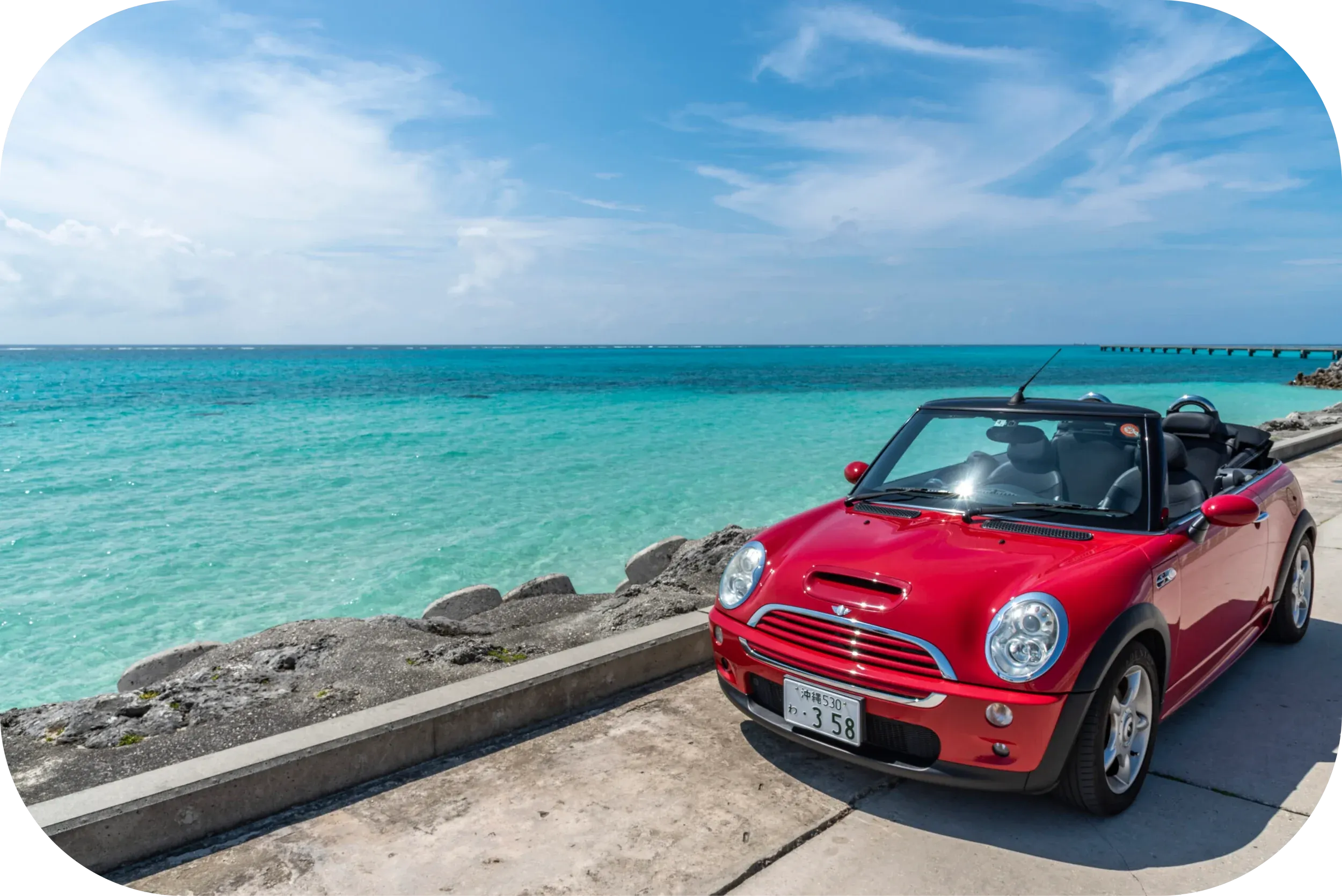
The thing to understand about Okinawa is the geography. It's long and thin, the north is sparsely served by buses, and the freedom to rent a car is what makes most of this list possible. Within Naha city itself you don't need a rental car, the monorail and buses handle Shuri, Tsuboya, and the market fine — but for Manzamo, the north, and the ferry ports, a car is the difference between a smooth trip and a stressful one.
With three or four days, I'd base yourself once, in or near Naha, and run day trips out from there: one big day north for Churaumi, Kōri, and Nakijin; one for the Onna coast and Manzamo; one slow day for Shuri and old Naha.
With five days or more, say, a week in Okinawa, split your stay. Spend 3 nights in southern Okinawa around Naha or the Onna coast, then move your accommodation up to a base near Motobu in the north for a night or two. Where you stay in Okinawa matters more than almost anything for cutting daily driving and freeing up a day for the islands. Naha Airport, the main airport on Okinawa, to the city is only about 15 minutes, so you lose almost nothing on the bookends.
A quick reality check on distances from Naha: it's around 110 km up to Churaumi and Nakijin, about 70 km to Manzamo, and roughly 90 km to the northern ferry port for Izena. None of it is far in the abstract, but it adds up over a day, so group these spots in Okinawa by region rather than zig-zagging.
Frequently asked questions
How many days do you need in Okinawa?
Three days is the realistic minimum to see the main island's highlights without rushing. Five lets you add an island day trip and split your base between north and south.
Do you need a car in Okinawa?
For four of these five places, yes,
the north especially is hard to reach by bus. Within Naha, though, the monorail and city buses are enough to cover Shuri Castle, the pottery district, and the market.
Is Churaumi Aquarium worth it?
Yes. It's the island's top paid attraction, the whale-shark tank is genuinely impressive, and the surrounding Ocean Expo Park is free to enter.
Is Shuri Castle worth visiting during the reconstruction?
Yes. The outer grounds are open, and you can watch the restoration up close, a rare thing to see. Just know the main hall's interior won't fully reopen until late November 2026.
Are the Kerama Islands worth a day trip from Naha?
For clear water and snorkelling, absolutely. The ferry takes under an hour, but book ahead, boats run only a few times a day and seats fill up.
When is the best time to visit Okinawa?
Spring and autumn give the most comfortable weather. Winter, from January to March, is the season for whale watching and the early Nakijin cherry blossoms. Summer is beach weather but also typhoon season.
When do the cherry blossoms bloom at Nakijin Castle?
Late January into February, among the earliest blossoms anywhere in Japan.
Evertrail Tours · June 26, 2026