-1.png&w=3840&q=75)
Historic Caves.
Three caves, three stories — Ryukyu royalty, wartime survival, and the rituals of village life. All before lunch.
A half-day journey through Okinawa's underground, connecting three very different caves and the extraordinary human stories inside them. The morning moves from the glow of ancient stalactites to the quiet weight of wartime memory, to the playful traditions of old village life — then finishes at a local market in Onnason, where lunch is yours to choose.
The day.
- 08:45
Meet & move
Welcome at the meeting point. A short intro to Okinawa's limestone landscape, then we're off.
- 9:25
The cave that saved lives twice
A lit limestone cave in, known locally as Nuchishinuji Gama — the cave where life was preserved. A Ryukyu-era prince once hid here and survived civil war. In 1945, 300 villagers sheltered inside for three months during the Battle of Okinawa, and when the war was over, 302 came out.
- 10:30
The cave where 1,000 souls were saved
A natural, unlit cave in Yomitan where over a thousand terrified villagers hid as U.S. forces landed on 1 April 1945. Two elderly men — both returned from working in Hawaii — stepped forward, spoke to the soldiers, and led everyone out alive.
- 12:00
The cave of dances
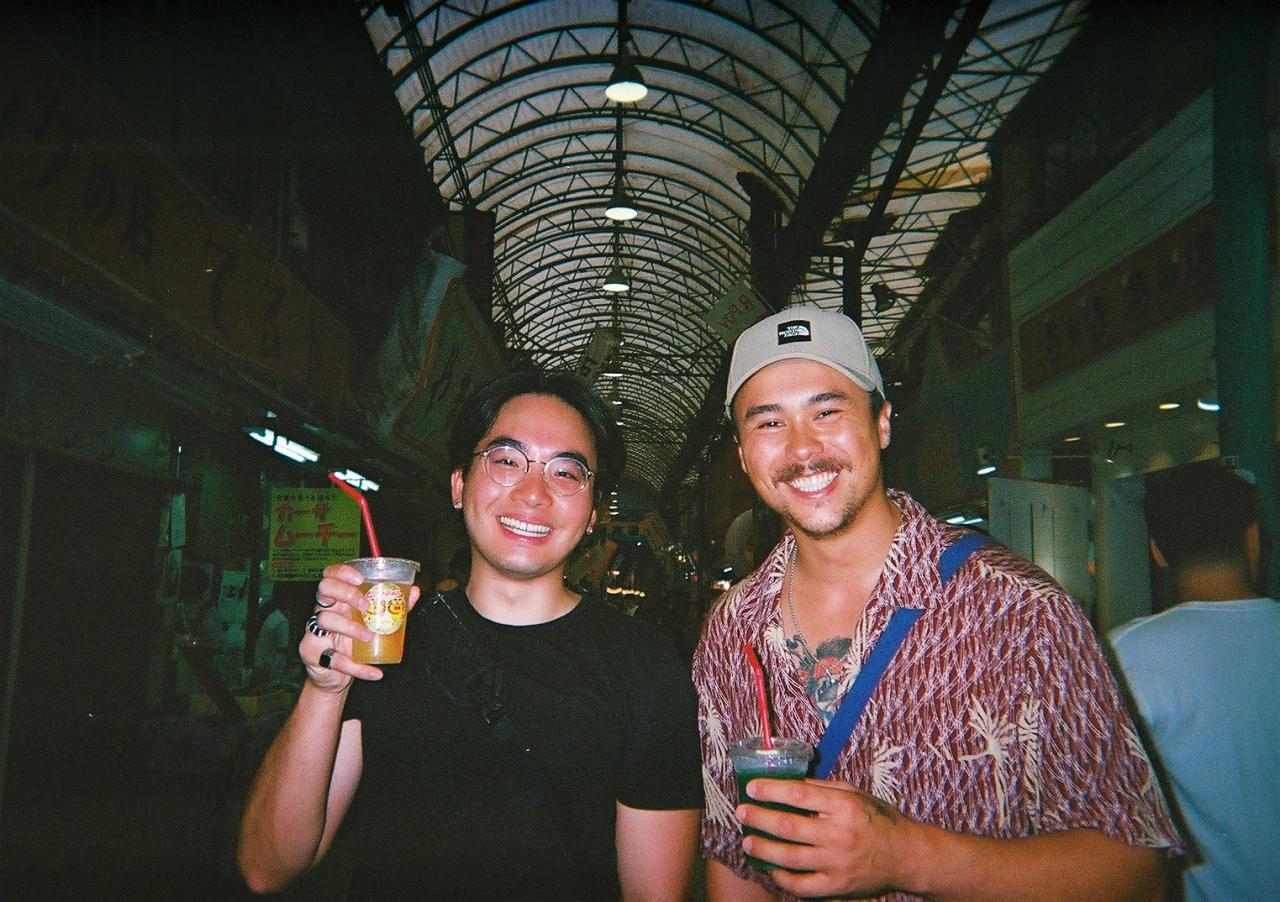
A small coastal cave in Onnason used for centuries by villagers rehearsing kumiodori dance before the annual Mura Ashibai festival. Tradition held that the street parade began from this very spot. Quiet, intimate, and unlike anything we've visited that morning.
- 13:00
Wrap-up
Lunchtime — Onnason market
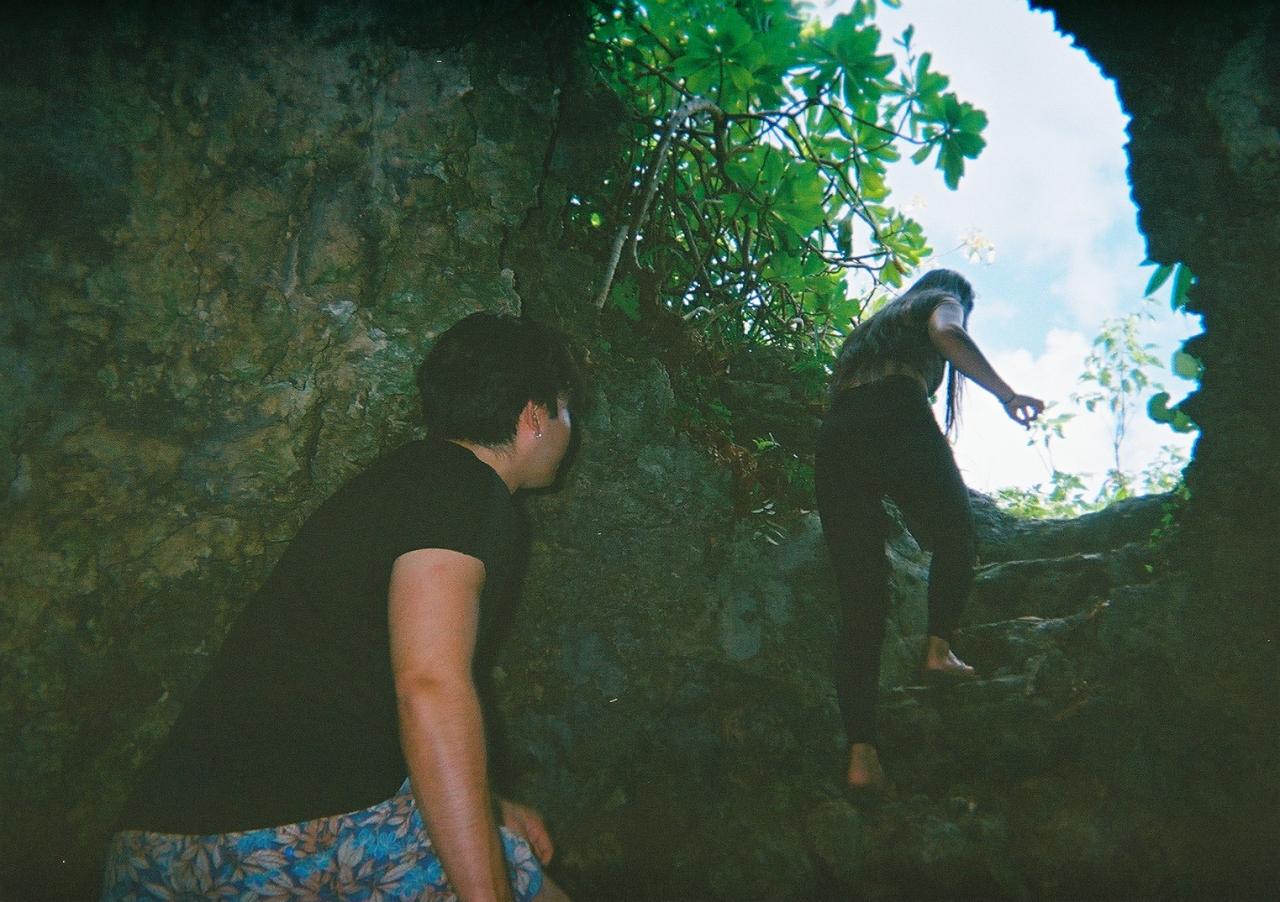
The first cave is the right place to start. It's lit, accessible, and eases you in gently — a proper limestone cave with a 200-metre walkway, glowing stalactites formed over tens of thousands of years, and a history that stretches from Ryukyu royalty to wartime survival. The red and white stalactites in the central chamber are a genuine centrepiece. By the time you leave, the group is warmed up and the morning has a shape to it.
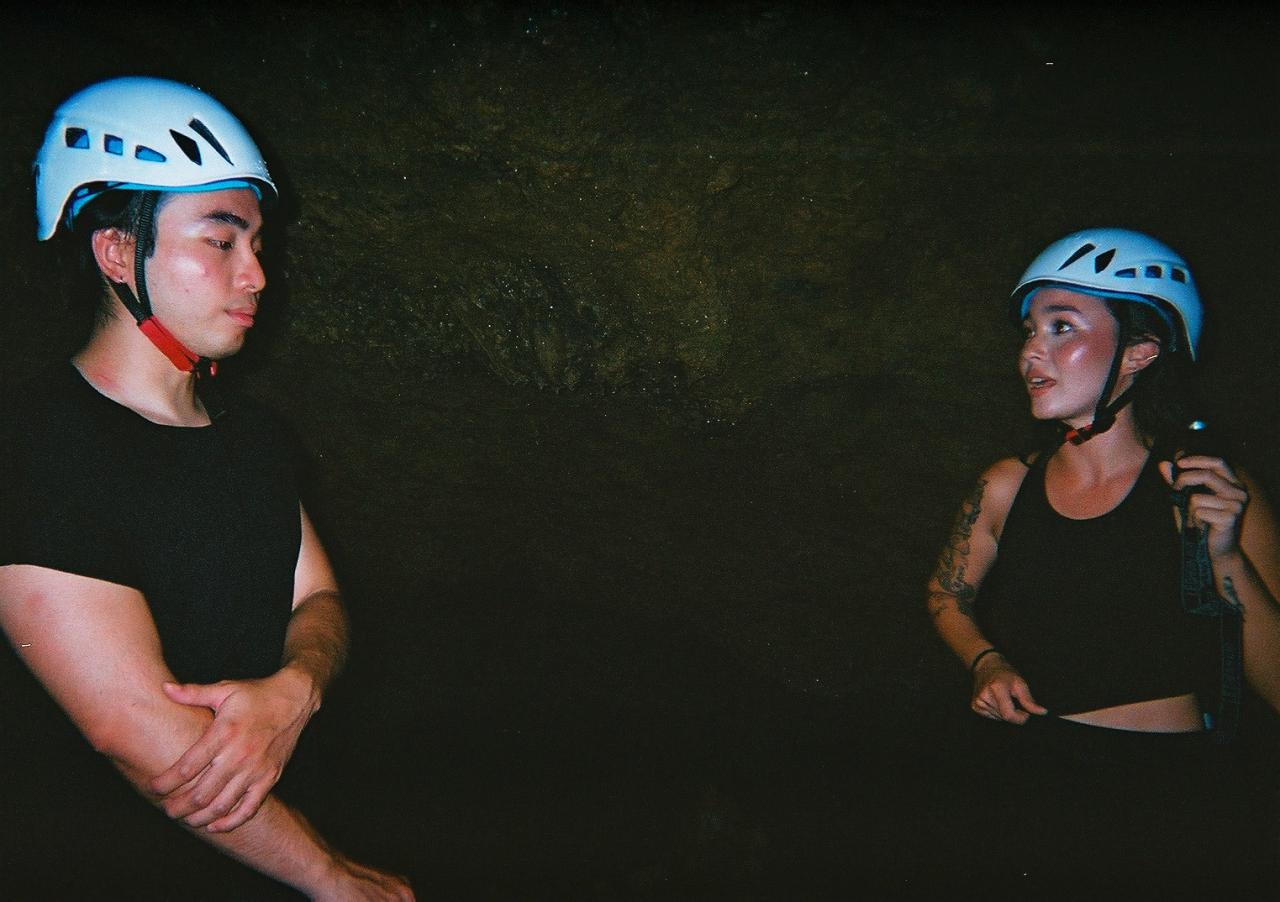
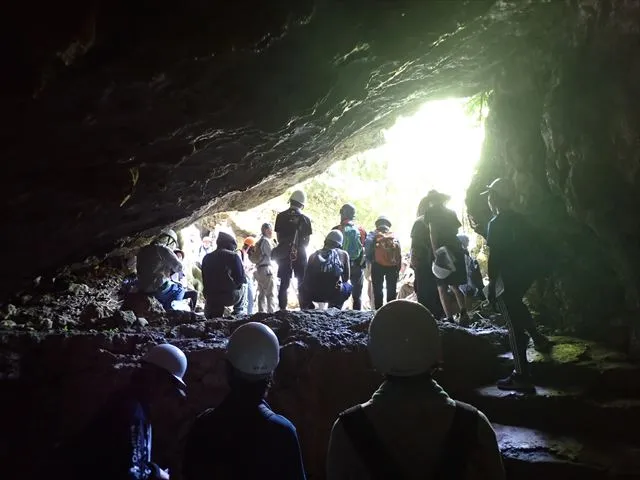
The second cave is something else entirely. No lighting, no boardwalk, no renovations. We bring our own torches, duck inside, and let your eyes adjust. It feels like stepping back in time — raw limestone, low ceilings, the kind of quiet that makes you lower your voice. What happened here in April 1945 is one of the more remarkable stories of the entire Battle of Okinawa, and standing in the dark inside it, you feel the weight of that differently than you would reading it in a museum.
The third is smaller and more personal — a coastal cave used not for refuge, but for rehearsal. Villagers would gather here before the annual festival to practice their dance performances, then set off from this very spot in parade. After the intensity of the second cave, it's a gentle way to surface.
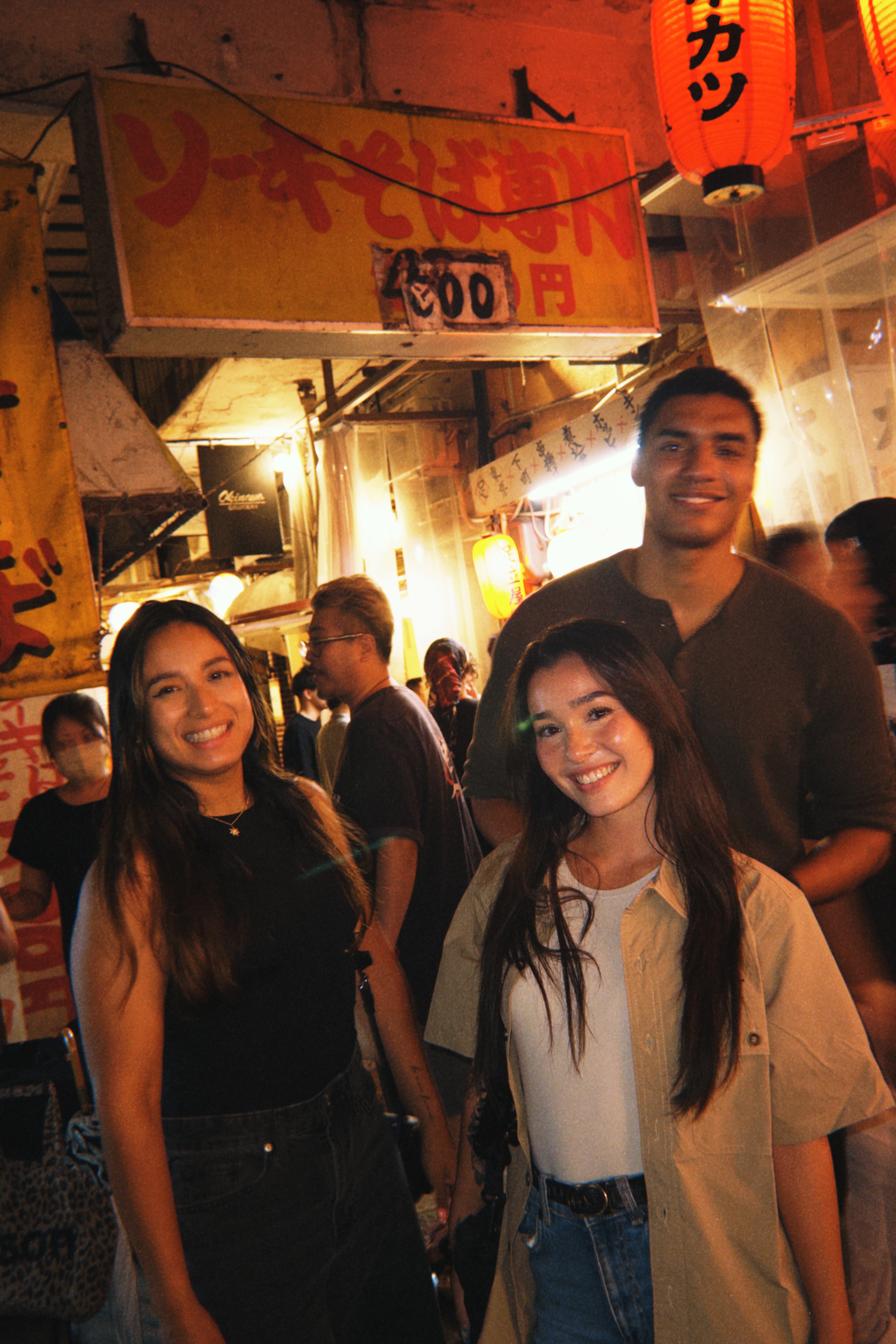
Lunch at the Onnason market rounds the morning off. Real food, local farmers, honest prices. Pick up a bowl of soba, a bag of passion fruit jam, or just a coffee and somewhere to sit. There's no rush.
The practical bits.
- Bilingual local guide (English & Japanese)
- Entry fees for the caves
- Transport between sites throughout the morning
- Lunch and drinks at the Onnason market
- Personal souvenirs and shopping
- Transport to/from your accommodation (available for some locations for private tours)
- Personal travel insurance
- Comfortable closed-toe shoes (essential — cave floors can be uneven or damp)
- Sunscreen and a hat for between stops
- Cash for lunch and souvenirs at the market
- Drinks for along the way
- Difficulty: Moderate. No trekking, swimming, or climbing involved. We will venture into the back of one cave where we will wear helmets and use flash lights.
- This tour runs in all weather — caves are sheltered regardless of conditions outside.
- Suitable for most ages and fitness levels. Contact us if you have mobility concerns.
- Group sign up discount available.
Full payment due at booking to secure your dates and reservations.
Full refund if you cancel 48 hours prior
We build small, hand-walked trips and we'd love to take you out.
— The Evertrail crew
Price per person.
- 1 person
- ¥15,000
- 2 people
- ¥13,000
- 3 people
- ¥11,000
- 4 people
- ¥10,000
- 5 people
- ¥9,000
- 6 people
- ¥8,000
Have a question about this tour?
Send a note — dates, group size, dietary needs, anything. We usually reply the same day.
What guests said.
Read all reviews
Moment incroyable, Yumi nous a partagé son savoir et fait découvrir des endroits incroyables que nous n’aurions jamais trouver seule. Merci !🤩 …

We booked a full day north Okinawa tour and requested both a river trek and a hike up Mount Katsuudake. We had a great time with Yumi (who is fluent in English and - as a native Okinawan - very knowledgeable on local customs). She kept the mood light and fun.

My partner and I toured with Aya today. She was really nice, knowledgeable and pretty chill which is the perfect vibe for a day exploring Okinawa. She knew the area well and told us some more spots we could check out. Would love to come back for more tours!