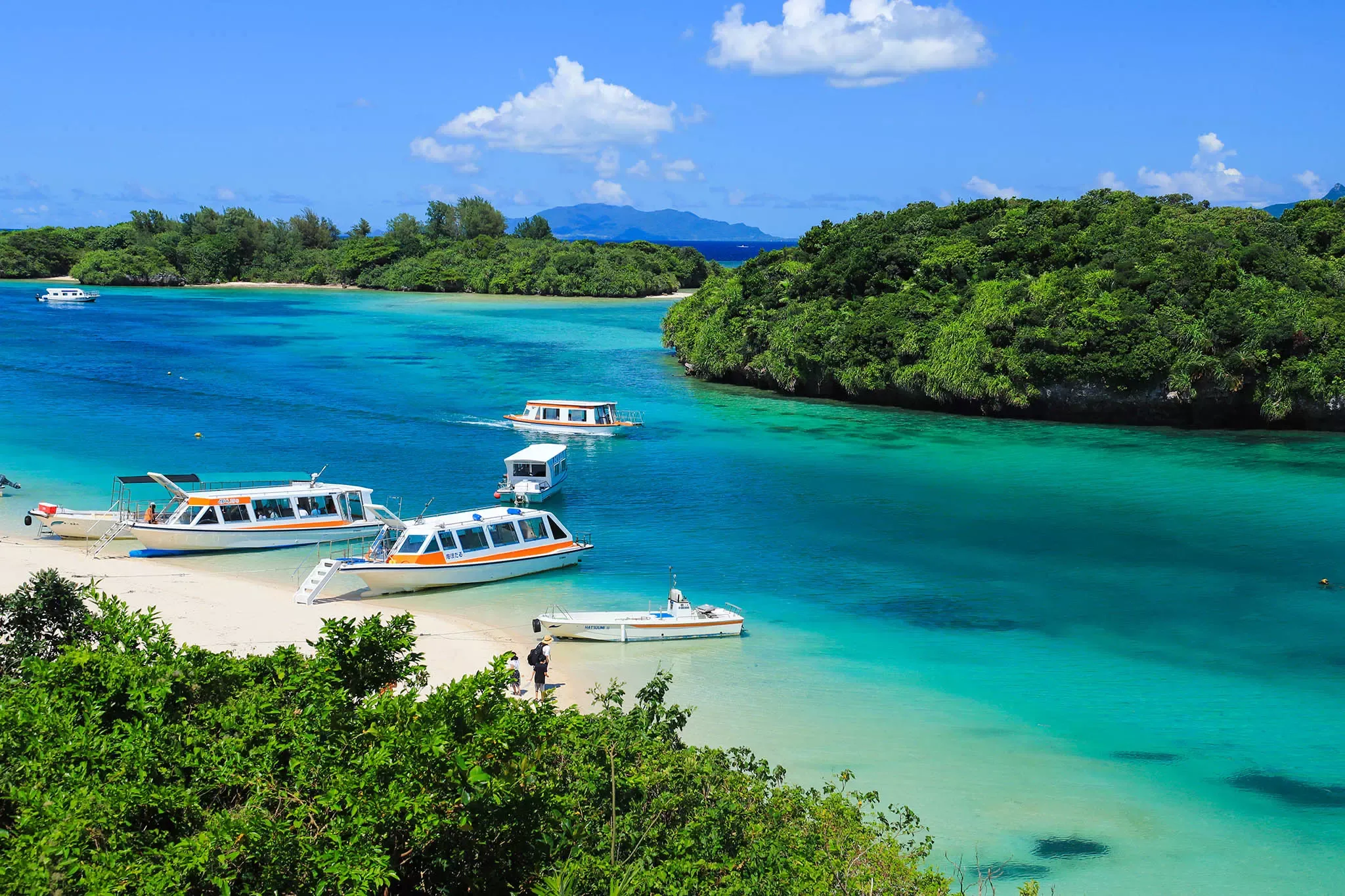
Warm water almost every month of the year, excellent visibility that can stretch past 30 meters, and a spread of dive sites that runs from gentle beach entries to adrenaline-soaked drift dives with schooling sharks, this is what makes Okinawa one of the top diving destinations in the world for scuba diving, and one of the best diving areas in Japan.
The catch is that "diving in Okinawa" isn't one experience. It's dozens, scattered across a 1,000-kilometer arc of the Ryūkyū archipelago. The best dive sites in Okinawa depend entirely on three things: your certification level as a diver, the season you visit, and what you most want to see underwater.
This guide to scuba diving in Okinawa walks through the standout sites on the main island and the outer islands, and helps you match each dive site to the right diver. Let's get you in the water.
Why dive in Okinawa
The islands around Okinawa make up an archipelago of more than 150 in total, and the diving is genuinely varied. You can drift over beautiful coral gardens, thread through limestone caves, hover beside a sunken WWII destroyer, or wait in the blue for hammerheads to materialize out of the current.
Because the islands sit in the path of the warm Kuroshio current, diving is possible year-round, a rarity in Japan. Beginners have a healthy menu of shallow, calm, beach-accessible sites, while experienced scuba divers can chase deep wrecks, cave systems, and big-animal encounters on the remote outer islands.
The trade-off for all that variety is that no single island does everything. Planning around season and skill level is what separates a good dive trip to Okinawa from a frustrating one.
Diving seasons and water conditions
Water temperature in Okinawa sits roughly between 21°C and 30°C across the year. It's coldest in late February and March, dipping to around 21–22°C, and warmest from late July through August, when it climbs to about 29°C.
For gear, a 3 mm wetsuit is comfortable through the warm months. In winter you'll want a 5 mm suit, often with a hood or vest — and for cold-water specialty trips like Yonaguni's hammerhead season, divers frequently go thicker still.
Visibility tends to be excellent in the drier, calmer months, often topping 30 meters in winter, though summer can be just as clear on settled days.
The one thing to plan around is typhoon season, which runs roughly from May to October and peaks in August and September. Okinawa sees more tropical storms than anywhere else in Japan, and even a storm that never makes landfall can churn up swell that shuts down boats and ferries for days. If you visit Okinawa in late summer, build buffer days into your itinerary and favor refundable bookings.
%20(1).jpg)
Okinawa main island dive sites
The main island of Okinawa (Okinawa-hontō) is the easiest place to go scuba diving in Okinawa. For many divers, scuba diving in Okinawa main island waters is where a first trip to Okinawa begins, the main island is home to Naha Airport, the widest range of dive centers in Okinawa, and a cluster of dive sites around the coast within an hour or so of Naha. Bridge-linked Sesoko Island, off the Motobu peninsula, adds quiet caves and coral for local divers.
Blue Cave (Cape Maeda)
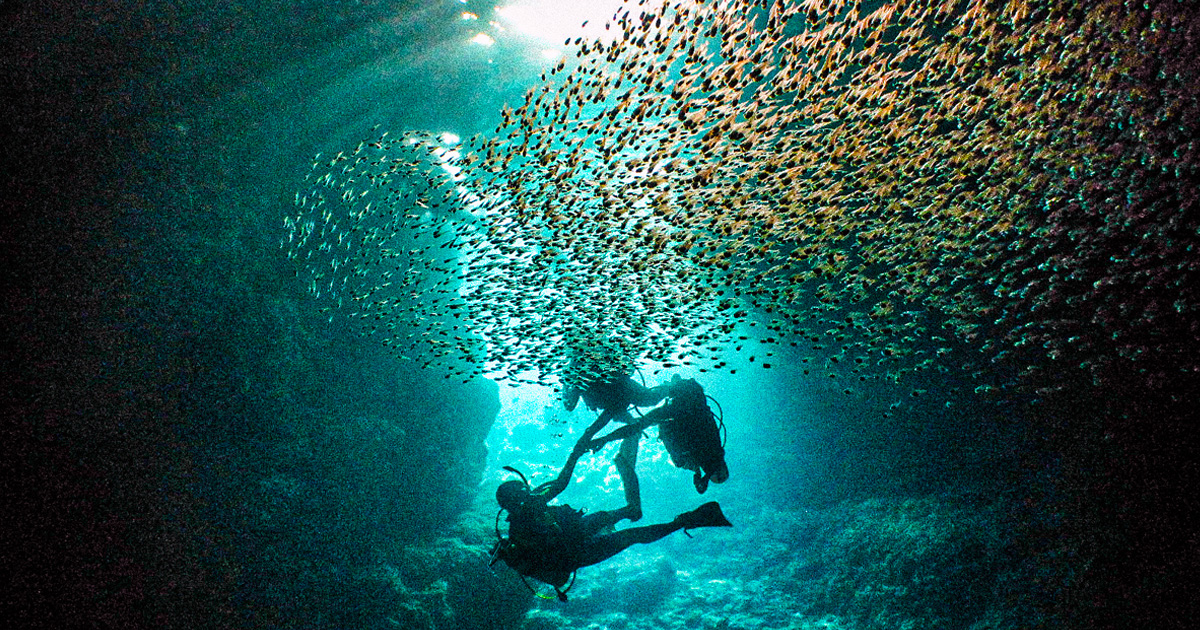
The Blue Cave at Cape Maeda in Onna Village is the island's signature dive site, and for good reason. Sunlight refracts through the water and lights the cavern in an electric blue glow.
It's shallow, only a few meters deep inside, and the top of the cave stays open, so it works for complete beginners and trial dives. It's one of the few sites where divers and snorkelers share the same water, you can snorkel down from the cape steps or arrive by boat.
The one downside is popularity. The Blue Cave gets busy, especially mid-morning, so an early start pays off.
Cape Maeda reef
Beyond the cave, the wider Cape Maeda reef drops down a wall that falls past 40 meters, giving experienced divers a completely different dive from the same headland. Expect clouds of tropical fish in the shallows and the occasional turtle out on the reef.
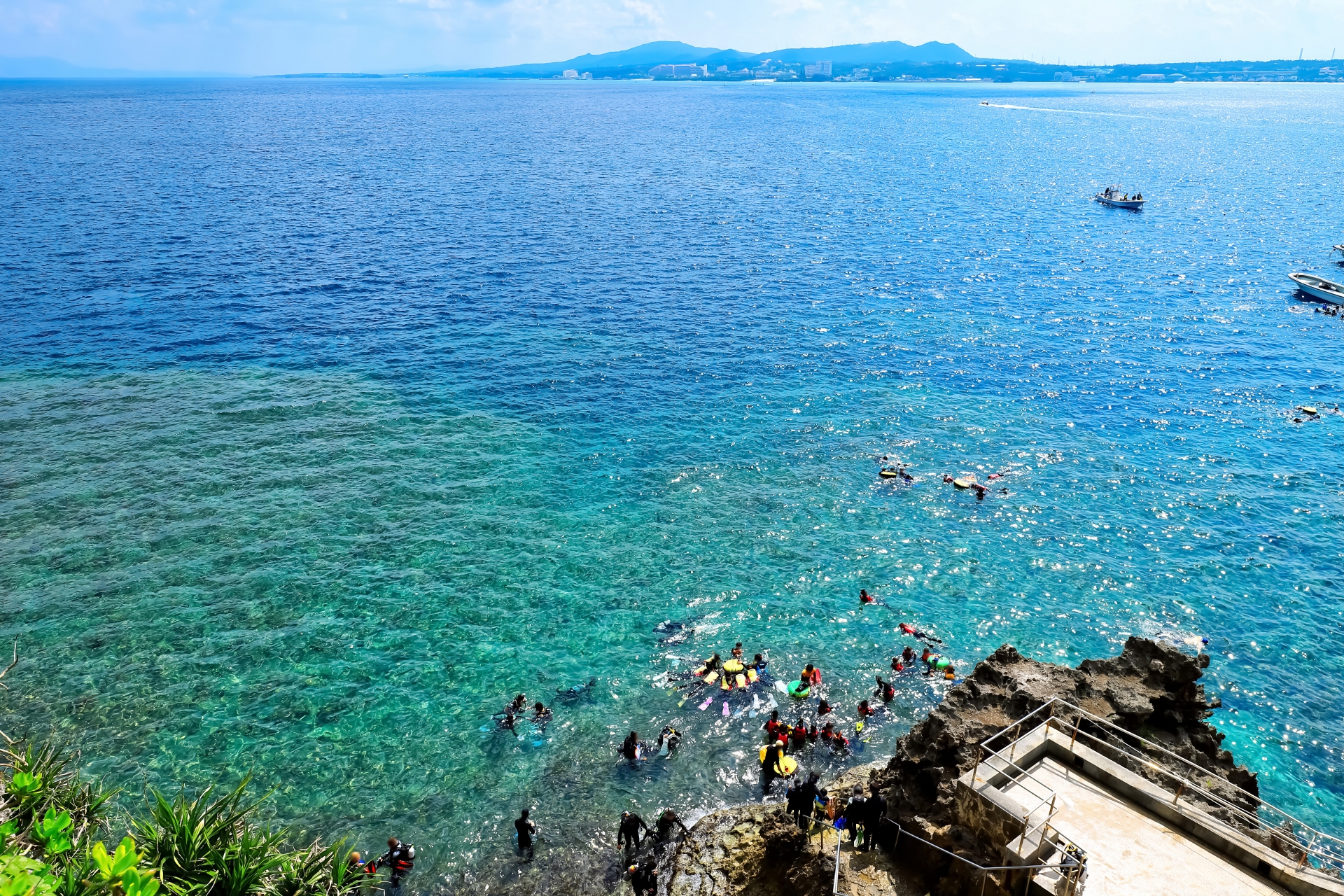
Sunabe Seawall
Sunabe Seawall in Chatan is the local favorite dive site for easy shore diving, and one of the most convenient dive sites near central Okinawa. A two-kilometer concrete wall lines the coast, with staircases leading straight into the water and very little current to fight.
Maximum depth is around 20 meters, but most of the life is shallow. It's a macro-lover's playground, clownfish, gobies, jawfish, and if you're lucky, a pygmy seahorse, plus a much-photographed underwater post box sitting at about seven meters. It's an ideal spot for courses and night dives.
.jpg)
Manza Dream Hole
Off Cape Manza, also in Onna, the Manza Dream Hole is a dramatic step up. You enter through a chimney at around five or six meters and drop vertically into a chamber that opens back out near 25 meters.
This is not a beginner dive. Operators typically want to see an Advanced certification and recent experience, because the overhead sections demand solid buoyancy and calm nerves. In return you get caverns, swim-throughs, and a real sense of adventure.
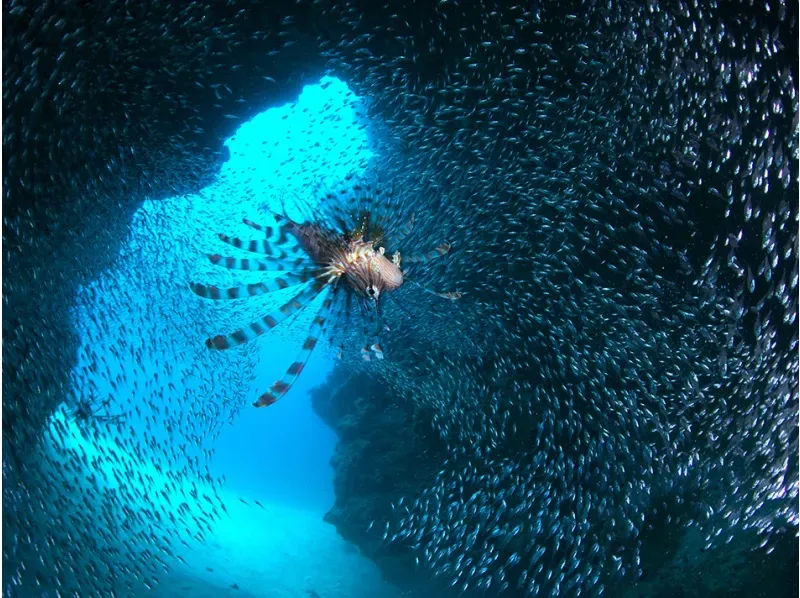
USS Emmons wreck
For wreck divers, the USS Emmons is the main island's crown jewel. She was a US Navy destroyer struck by kamikaze aircraft in April 1945 and scuttled off Kōri (Kouri) Island, where she now rests largely intact.
The wreck lies deep, the structure begins around 34 meters and the deepest sections reach roughly 45 meters, which puts it firmly in advanced territory. Expect operators to require an Advanced certification, often a Deep specialty, and a minimum number of logged dives; some run a check dive the day before. At that depth your no-decompression time is short, so this is a focused, experienced-diver outing rather than a casual one. Out of respect for the men lost aboard, penetration is discouraged.
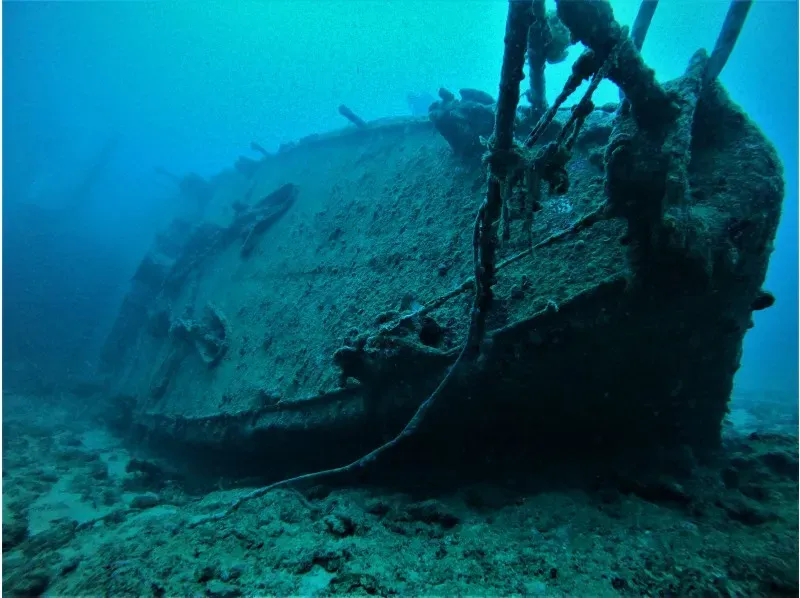
Cape Hedo
At the island's northern tip, Cape Hedo rewards advanced divers with strong drift dives and the striking Hedo Dome, an underwater limestone cavern where you can surface inside a dark air pocket hung with rock formations. Currents here are serious, depths reach into the 30s, and operators expect real experience. It's a long drive north, but a memorable one.
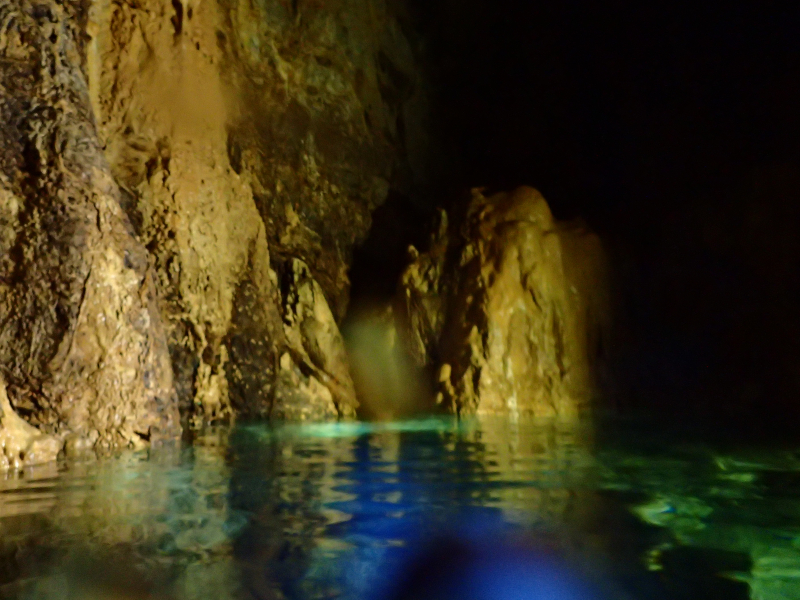
Kerama Islands: the "Kerama Blue" benchmark
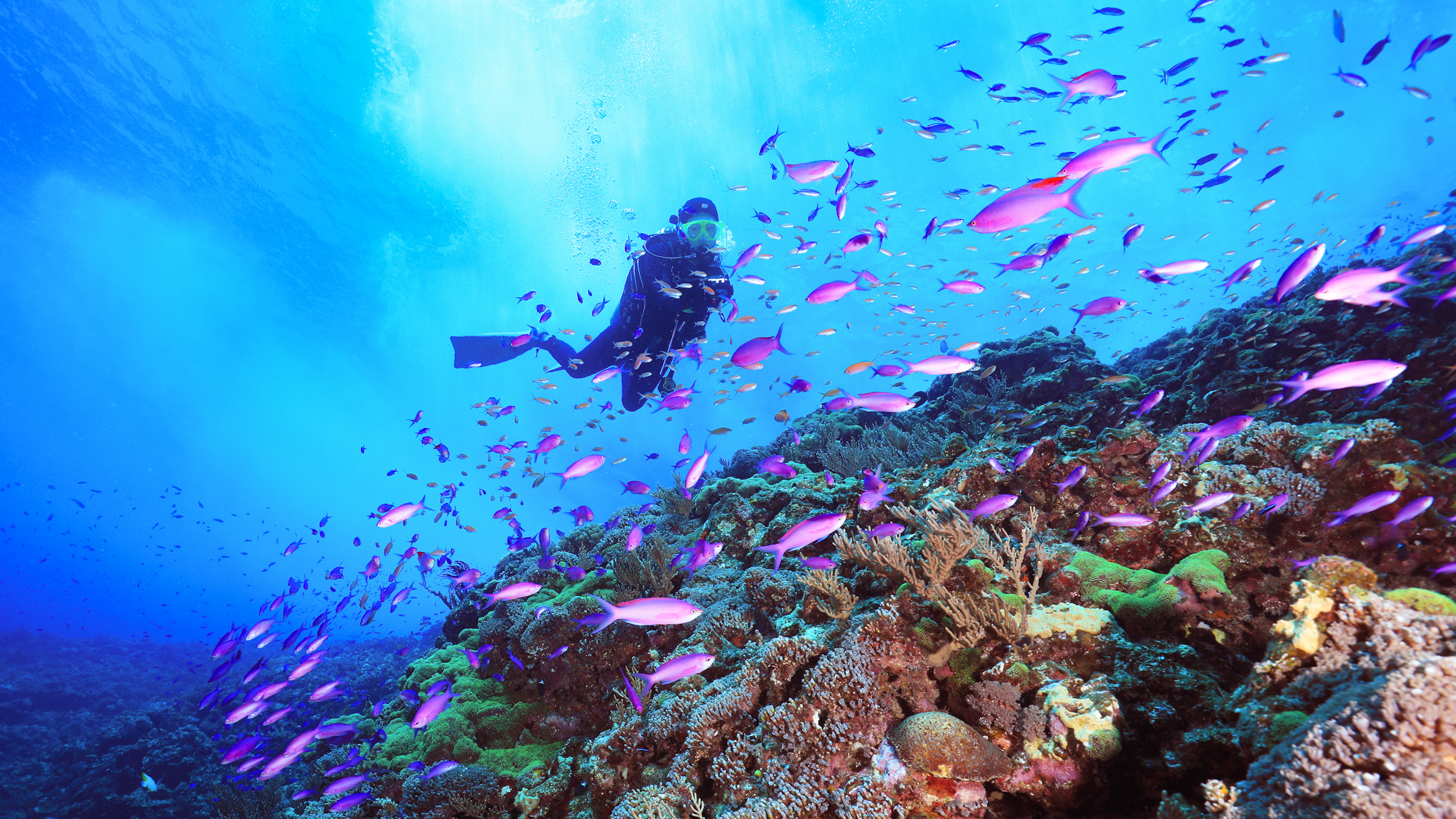
A short boat ride west of Naha, the Kerama Islands set the standard for clear water in Okinawa. The color is famous enough to have its own name, "Kerama Blue", and visibility routinely runs 20 to 40 meters.
The whole group became Kerama Shotō National Park in 2014, Japan's thirty-first national park, and the waters shelter a remarkable share of Okinawa Prefecture's reef-building coral species. That protection shows: the reefs are healthy, and the fish life is dense.
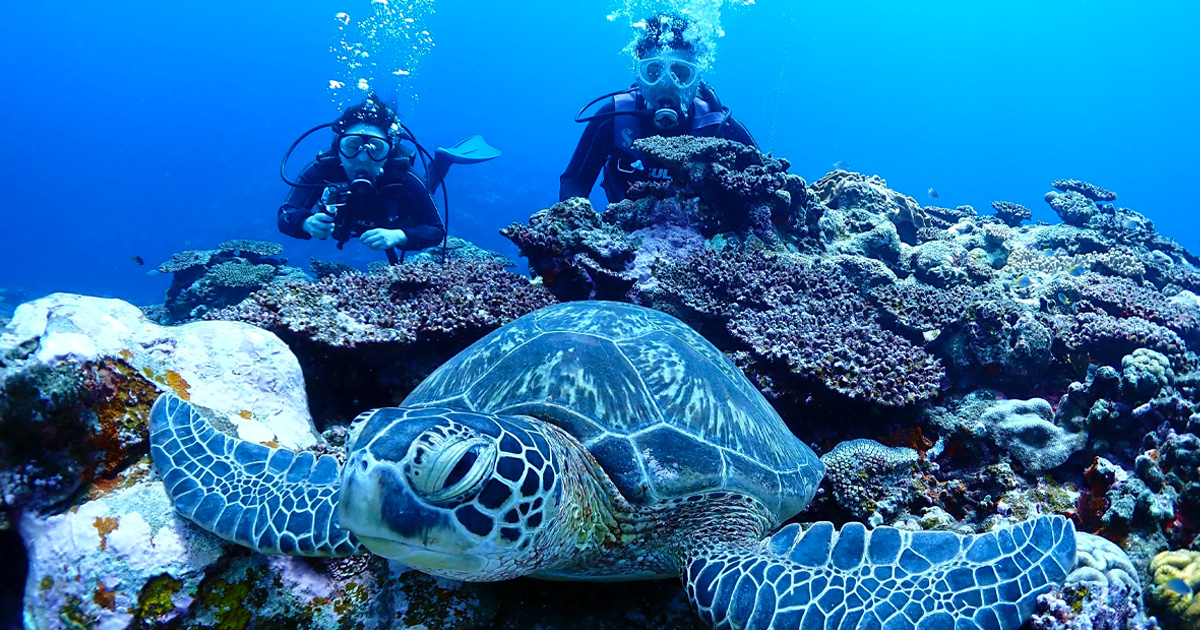
Diving in the Kerama Islands is also one of the most reliable ways in Japan to see sea turtles. Green and hawksbill turtles are common sightings, though as with any wild encounter, nothing is guaranteed.
Sites around Zamami, Aka, and Tokashiki cover every level. Beginners can drift over coral reef at gentle sites like Gina off Aka, while more experienced divers take on stronger drift sites and cavern dives with skylight beams. Because the dive points are boat-access only, most visitors join dive trips from Naha or, better, stay a night or two on the islands. Note that the ferries add a small environmental cooperation tax per person to help fund conservation.
Miyako Islands: topography and cave diving
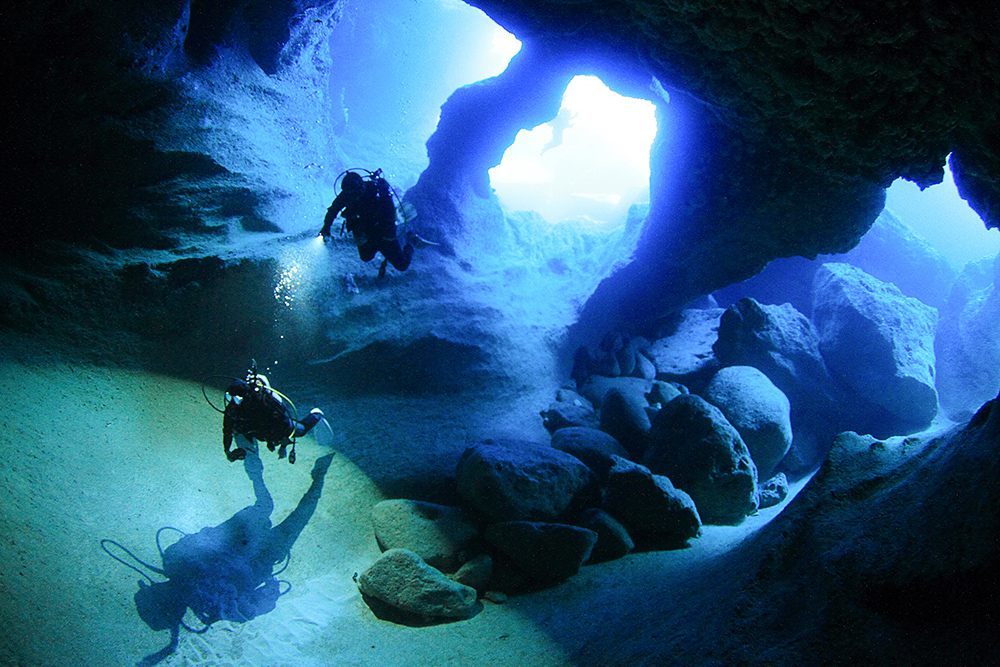
If the Keramas are about color and coral, Miyako is about architecture. Together with the bridge-linked islands of Irabu and Shimoji, Miyako Island is home to some of Japan's most famous dive sites for topography diving, and a bucket-list destination in its own right, a landscape of arches, tunnels, holes, and caverns carved into limestone.
Three sites define it.
Antonio Gaudí, off the west coast of Shimoji, is a chaotic tangle of overlapping arches and holes so intricate that divers named it after the architect. It's a deeper, more demanding dive that reads best when the sun is high and light pours through the gaps.
Devil's Palace, Maō-no-Kyūden in Japanese, is a labyrinth of connected chambers you enter through a crevasse. When the sun sits directly overhead near midday, light spills through openings in the ceiling and lands like a spotlight in the deepest room. It's one of the most photographed dives in the prefecture of Okinawa.
Toriike, also called Tori Pond or the Dragon's Eye, is the most unusual of all. You drop into the sea, swim through a cave, and surface inside a landlocked pond, passing through the shimmering boundary where fresh and salt water meet. It's an advanced overhead dive that needs good conditions and a steady team.
All three demand the skills that cave diving requires: precise buoyancy, good air management, comfortable light handling, and the discipline to hover rather than swim. Guided diving with a local dive center is the norm here for a reason.
The best window for Miyako's terrain sites is roughly autumn through spring. The northerly winds of that season calm the exposed western coast where these caves sit; in summer, diving often shifts to the Irabu side. October is the best of both worlds here, the water is still warm, and the caves are accessible.
Yaeyama and Ishigaki: manta country
Down in the Yaeyama Islands, Ishigaki Island is the name divers associate with manta rays. The Kabira Manta Scramble and the nearby Manta City are cleaning stations where mantas glide in to be tended by smaller fish, and divers hover a respectful distance away to watch.
Both sites are shallow, around 10 to 15 meters, with manageable current, which makes them accessible to newer divers. To protect the animals, only a limited number of boats are allowed at Manta City at any one time.
Manta season is broad. Official and operator sources generally point to a window running from about April to November, with the highest chances in summer and early autumn. Mantas are around at other times too; in winter, viewing often shifts to nearby Kuroshima. As always with wildlife, think of it as a strong likelihood rather than a promise.
Ishigaki isn't only mantas. Coral gardens like those in Nagura Bay offer calm, colorful dives for all levels, and advanced divers can take on the manta-rich drift of the Yonara Channel. Ishigaki is also the gateway to the most remote dive of all, a short flight or a long ferry ride to Yonaguni.
%20(1).jpg)
Yonaguni: hammerheads and the underwater formation
Yonaguni sits at the westernmost edge of Japan, closer to Taiwan than to the Okinawa mainland, the last inhabited island of Japan before the open Pacific, and it's a serious diver's island. Almost everything here is drift diving in strong current, and it draws two very different crowds.
The first comes for hammerhead sharks. In the colder months, schools of scalloped hammerheads, sometimes numbering in the hundreds, gather in the current off the western cape at a dive site called Irizaki. Reported season windows vary by source, but the core runs from roughly November through April, with December to March the classic period. Encounters depend on current, temperature, and luck, so nothing is guaranteed, but when it happens it's one of diving's great spectacles.
These are advanced dives, full stop. Fast current, negative entries, and mid-water hovering with no reference mean operators typically require an Advanced certification and often a substantial number of logged dives.
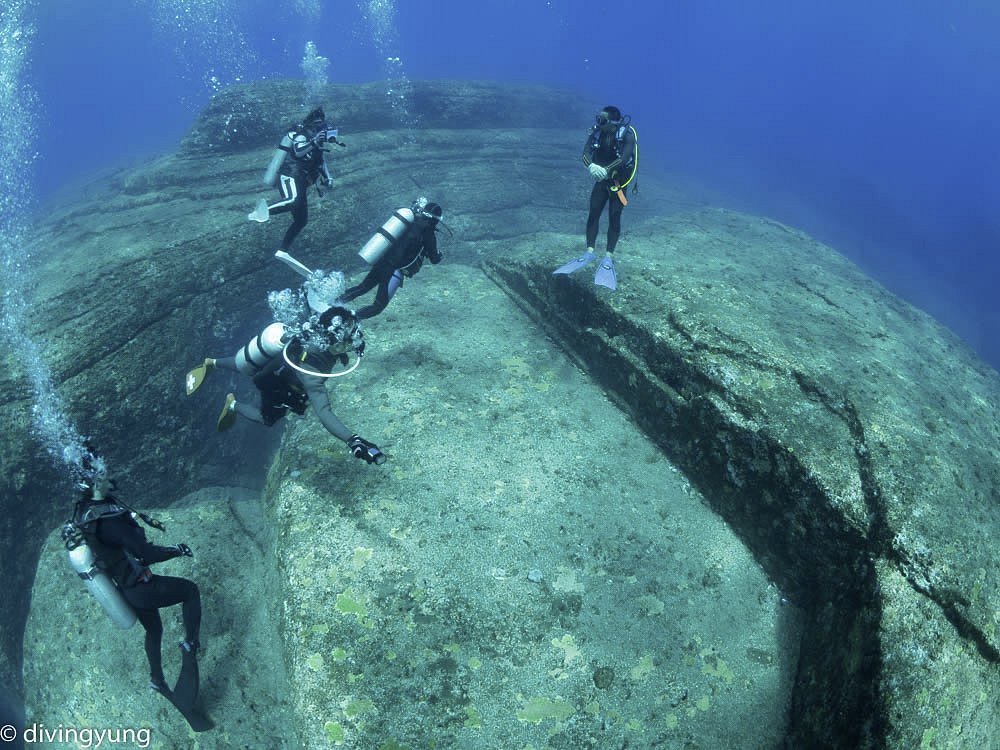
The second crowd comes for the Yonaguni Monument, a massive stepped rock formation discovered in 1986 by a local diver scouting for hammerhead spots. Its dramatic right angles and flat terraces have fueled decades of speculation that it was shaped by human hands. The mainstream scientific view, however, is that it's a natural sandstone formation, the rock fractures along straight bedding planes and joints, producing those uncannily geometric shapes through erosion alone. No Japanese cultural authority recognizes it as man-made. Either way, gliding over it is unforgettable.
Getting to Yonaguni Island means a short flight from Ishigaki Island, around half an hour on a small aircraft, or a slower ferry that runs only a couple of times a week and is easily disrupted by rough seas. Book flights early.
Which dive site is right for you?
With so many options, it helps to work backward from what you want.
By level. If you're a beginner or trying scuba for the first time, the main island has the best spots to start, the Blue Cave, Cape Maeda, and Sunabe Seawall are shallow, calm, and forgiving, and each is an easy dive site to build confidence at. A Kerama day trip is also well within reach for newly certified divers. Intermediate divers ready for terrain and light should point toward Miyako. Advanced divers chasing depth, current, and big animals belong at the USS Emmons, Cape Hedo, and Yonaguni.
By season. The time of year shapes where to go diving: winter is hammerhead time in Yonaguni and prime cave season in Miyako. The warmer months bring the best of Ishigaki's mantas and the strongest light in Miyako's caverns. Late summer offers warm water everywhere but the highest typhoon risk.
By marine life. Turtles point you to Kerama. Mantas point you to Ishigaki. Hammerheads mean Yonaguni. A historic wreck means the USS Emmons. Dramatic underwater landscapes mean Miyako.
%20(1).jpg)
Levels and certification: what you'll need
It's worth knowing where you stand before you book. A trial dive, often called Discover Scuba Diving or Try Scuba, is a guided introduction, not a certification; it keeps you shallow and under direct supervision, and it's enough to enjoy the Blue Cave.
Beyond that, an Open Water certification lets you dive with a buddy to 18 meters, which covers most beginner sites. An Advanced certification extends that to 30 meters and unlocks the majority of Okinawa's marquee dives. Deep and other specialties come into play at sites like the USS Emmons.
The advanced sites ask for more than a card, though. Cave and drift diving demand genuine buoyancy control, disciplined air and depth monitoring, comfortable light handling in the dark, and the composure to hold a line in current. If you're rusty, a refresher or a check dive at a local scuba diving centre is time well spent.
What it costs and how to get around
Prices shift, so treat these as ballpark figures and confirm when you book.
A two-tank fun dive on the main island or the Keramas generally runs somewhere around ¥11,000 to ¥18,000, with gear rental often adding a few thousand yen more. Specialty trips cost more, the USS Emmons and Yonaguni hammerhead dives sit well above the standard rate. If you need to certify, budget roughly ¥60,000 for an Open Water course.
For the outer islands, flying is usually the move. Naha connects to both Ishigaki and Miyako in under an hour, and Ishigaki links to Yonaguni in about half an hour on a small propeller plane. Ferries exist, including a several-hour crossing from Ishigaki to Yonaguni that runs only twice a week, but weather cancels them often, especially in winter. Always double-check current schedules and fares before committing.
Dive responsibly
Okinawa's reefs and marine life are the whole reason to come, and keeping them healthy is on all of us.
Use reef-safe sunscreen, maintain neutral buoyancy so you never touch or stand on coral, and keep a respectful distance from turtles and mantas, no touching, no chasing. Several sites, especially in the Kerama and Ishigaki marine parks, cap the number of boats or regulate access to protect the animals, and small conservation fees help fund that work. Above all, follow your guide's instructions, particularly in current and overhead environments.
Frequently asked questions
Can beginners scuba dive in Okinawa?
Yes. Shallow, calm, beach-accessible sites like the Blue Cave, Cape Maeda, and Sunabe Seawall are well suited to beginners and trial dives, and a Kerama day trip is achievable soon after certification.
Do you need certification to dive in Okinawa?
Certified divers can access the full range of sites. If you're not certified, you can still join a guided intro (Discover Scuba) dive at select shallow sites. Advanced sites such as Yonaguni and the USS Emmons wreck require an Advanced certification or equivalent experience.
What is the water temperature for diving in Okinawa?
It ranges from about 21°C in late winter to around 29°C in late summer. A 3 mm wetsuit works in the warm months; a 5 mm suit is better in winter.
Can you dive in Okinawa year-round?
Yes, with appropriate gear. The best site changes with the season, though, and typhoons between roughly May and October can disrupt boats and ferries.
Where can you dive with manta rays in Okinawa?
Primarily around Ishigaki, at sites like the Kabira Manta Scramble and Manta City. Sightings are most likely across a broad window from about April to November, peaking in summer and early autumn.
Where can you dive with hammerhead sharks?
Off Yonaguni, in the colder months, roughly November through April, with December to March the classic period. These are advanced drift dives.
What is the best outer island for diving?
It depends on your goal: Kerama for clear water and turtles, Miyako for caves and topography, Ishigaki for mantas, and Yonaguni for hammerheads.
Evertrail Tours · July 22, 2026