You open a weather app. There's a swirling icon somewhere south of Okinawa. The word "typhoon" appears. And just like that, the trip you've been planning for months feels suddenly fragile.
Here's what I want you to know before you do anything: close the app, step away from the cancellation button, and read this first.
I've lived and worked in Okinawa through multiple typhoon seasons. I've watched tourists arrive terrified and leave wondering what the fuss was about. I've also seen the real thing — the shuttered windows, the howling wind, the eerie calm that settles afterward. Both exist. But the story most travelers carry in their heads is far darker than reality tends to be.
The quick version:
- Typhoon season runs June through November, with peak risk in August and September
- Okinawa sees an average of around seven to eight typhoons approach per year, but most are near-misses, not direct strikes on the main island
- A genuine direct hit on Okinawa-jima is rare; the last major one before June 2026 was Typhoon Khanun in 2023, nearly three years prior
- When a storm does arrive, the serious weather window is typically 12 to 24 hours
- Airlines, tour operators, and ferries all have clear cancellation and refund policies
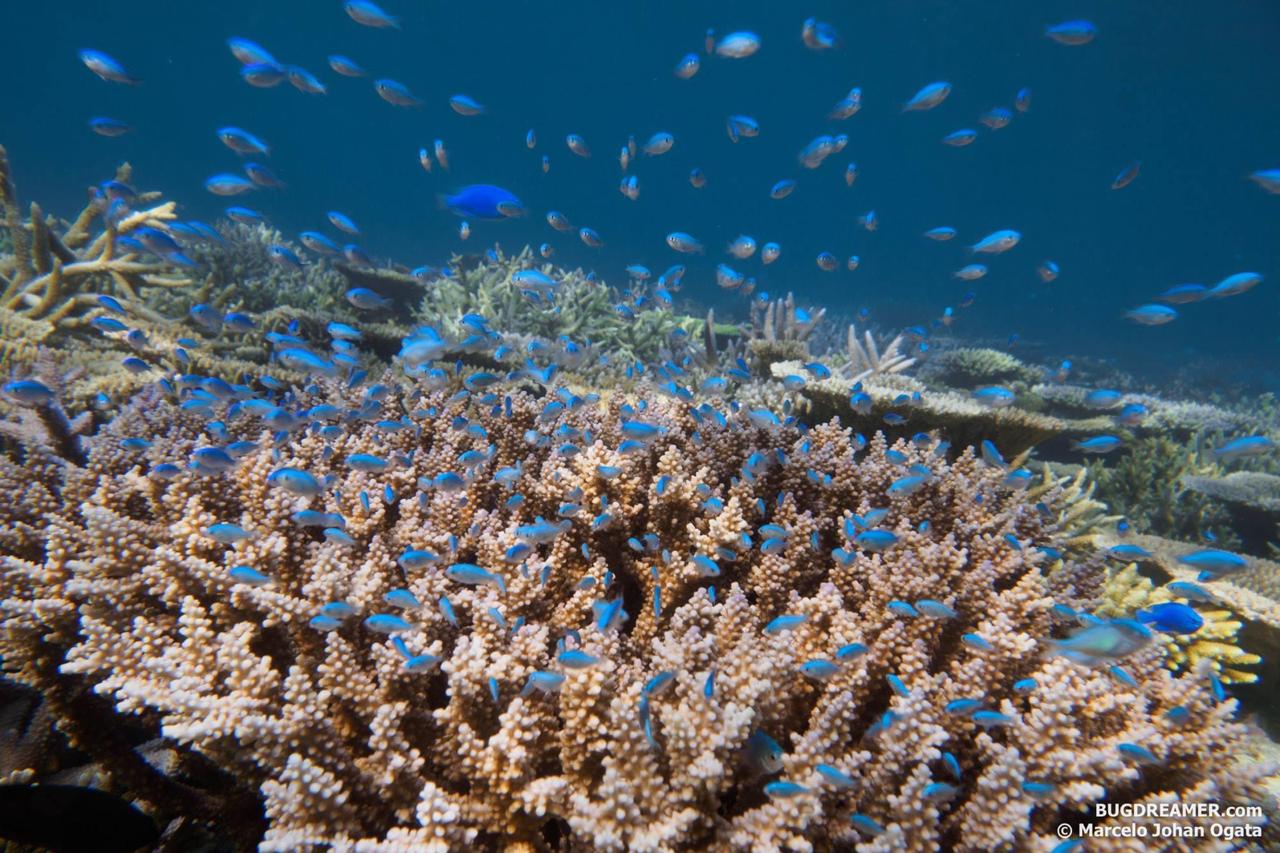
- Typhoons are actually good for Okinawa's coral reefs
If a typhoon hits your trip directly, you were unlucky, not unwise. The statistics simply don't support writing off an entire Okinawa trip over a forecast. This guide covers everything you need to know before you visit Okinawa, Japan during typhoon season, whether you're a first-time tourist or a returning traveller.
What Is a Typhoon and why does it affect Okinawa?
A typhoon is a tropical cyclone, the western Pacific's equivalent of a hurricane, that forms when warm ocean water heats the air above it, driving it upward into a spinning column of clouds, wind, and rain. The system needs sea surface temperatures of at least 26.5°C to develop and sustain itself, and the western Pacific in summer provides those conditions reliably, with waters routinely reaching 28 to 30°C.
Most storms affecting Okinawa form in the Philippine Sea and the tropical western Pacific, roughly between the Philippines and the Marshall Islands. From there, they move northwest, driven by atmospheric patterns known as beta drift, before curving northeast as they encounter the Pacific subtropical high-pressure system, a wide belt of high pressure that sits over the Pacific Ocean and steers storms toward Japan. That curve is the key thing: Okinawa sits almost precisely at the point where typhoons are at or near peak intensity and beginning to recurve toward Japan.
Mainland Japan is further north, which means it tends to catch storms that have already begun weakening as they move over cooler water and encounter the jet stream. Okinawa gets them younger and a bit stronger. It's the geographical reality of the place, and it has been that way for as long as anyone has kept records.
The Role of El Niño and La Niña
The El Niño-Southern Oscillation, ENSO, does influence typhoon behavior, though not as cleanly as you might hope for trip-planning purposes. During El Niño years, typhoon genesis tends to shift southeast, which allows storms to spend more time over warm open ocean, often reaching higher peak intensities. La Niña years can shift genesis zones westward and northward.
The practical upshot: some years are significantly more active than others. 2018 saw thirteen approaches to Okinawa Prefecture, nearly double the average. Other years are quiet. The number of typhoons that affect any given week is unpredictable, which is why the chance of typhoons disrupting your trip varies considerably throughout the year. If you want a rough indicator of whether your travel window might be above or below average, check the ENSO forecast for the season, but don't treat it as a reliable prediction of what your specific week will look like.
How the Japan Meteorological Agency Classifies Typhoons
Japan's official weather authority, the Japan Meteorological Agency, uses a straightforward intensity scale based on ten-minute sustained wind speeds:
Tropical Depression : winds below 17 m/s (about 60 km/h). Not yet a named storm. Brings rain but rarely severe disruption.
Tropical Storm : 17 to 24 m/s (roughly 60–90 km/h). Named at this point. Expect rough seas and cancelled water activities.
Severe Tropical Storm : 25 to 32 m/s (90–115 km/h). Outdoor activities suspended, ferries cancelled, light outdoor objects becoming projectiles.
Typhoon : 33 m/s and above (119 km/h+). The JMA further subdivides this into Strong (33–43 m/s), Very Strong (44–53 m/s), and Violent (54 m/s and above). A Violent Typhoon brings winds exceeding 194 km/h, the kind that makes the news internationally.
Worth noting: JMA's wind figures are based on a ten-minute average, which consistently produces lower numbers than the one-minute averages used by American meteorological agencies. When you see US sources reporting higher winds for the same storm, that's why.
The Real Numbers: How Often Does Okinawa Actually Get Hit?
This is where the conversation shifts, and it's the part most travel sites get wrong when writing about the okinawa typhoon season.
Based on JMA's 1991–2020 climate normals, Okinawa Prefecture sees approximately 7.7 typhoon approaches per year. Understanding the okinawa weather data behind that figure is essential: "Approach" is defined as the storm's centre coming within 300 kilometres of any weather station in the prefecture, and the prefecture spans a 635-kilometre arc of islands, from the main island down to Yonaguni, closer to Taiwan than to Naha.
That 300-kilometre radius is enormous. A storm can track directly south of Miyakojima, brushing it with significant conditions while barely affecting Okinawa-jima at all, and still count as an "approach" in the statistics. Many of the seven to eight annual approaches are exactly this: peripheral passes that bring grey skies and cancelled boat trips to one part of the archipelago while another island stays clear.
There is also a technical detail worth understanding. JMA only counts a formal "landfall" when a typhoon's centre crosses the coastline of Honshu, Hokkaido, Kyushu, or Shikoku, Japan's four main islands. Storms that cross Okinawa are classified as "passing" or "approaching." This means Okinawa is entirely absent from Japan's national landfall statistics, even in years when the main island takes a direct hit. Japan's widely cited figure of around three landfalls per year does not include Okinawa at all.
Direct strikes on Okinawa-jima itself are meaningfully rarer than the approach count suggests. The last major direct hit before June 2026 was Typhoon Khanun in July and August 2023, meaning the main island went nearly three years between significant direct strikes, even while recording six to eight approaches per year in the statistics.
August sees the highest approach frequency (roughly 2.2 per month), followed by September (around 1.9). The season starts picking up noticeably from late July, though July itself is underrated: typhoon season is technically underway, but the monthly approach average is only 1.5, and it falls in the gap between the rainy season and peak typhoon activity.
The takeaway is not that Okinawa is risk-free, it isn't, but that the numbers, read carefully, are considerably less alarming than they first appear.
What a Typhoon Day Actually Feels Like
Let me paint two honest pictures, because they're very different.
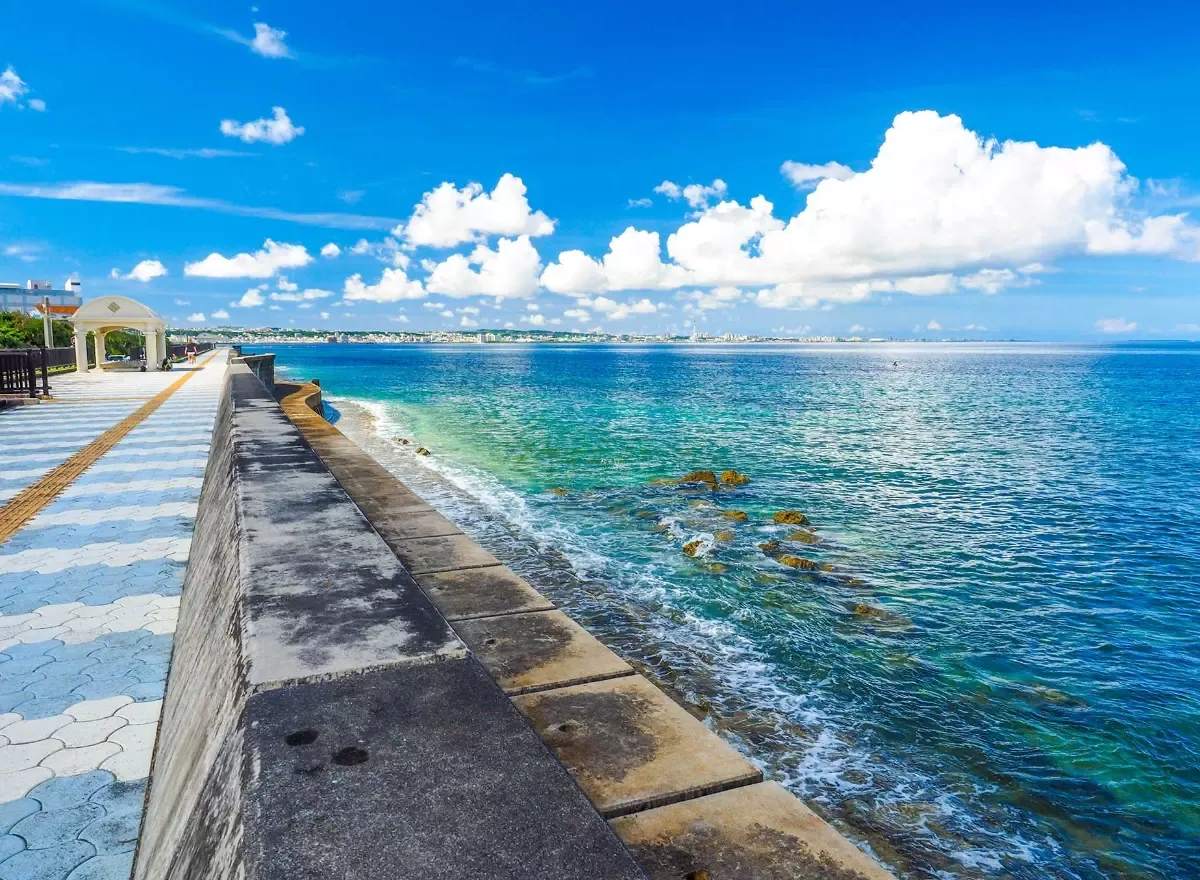
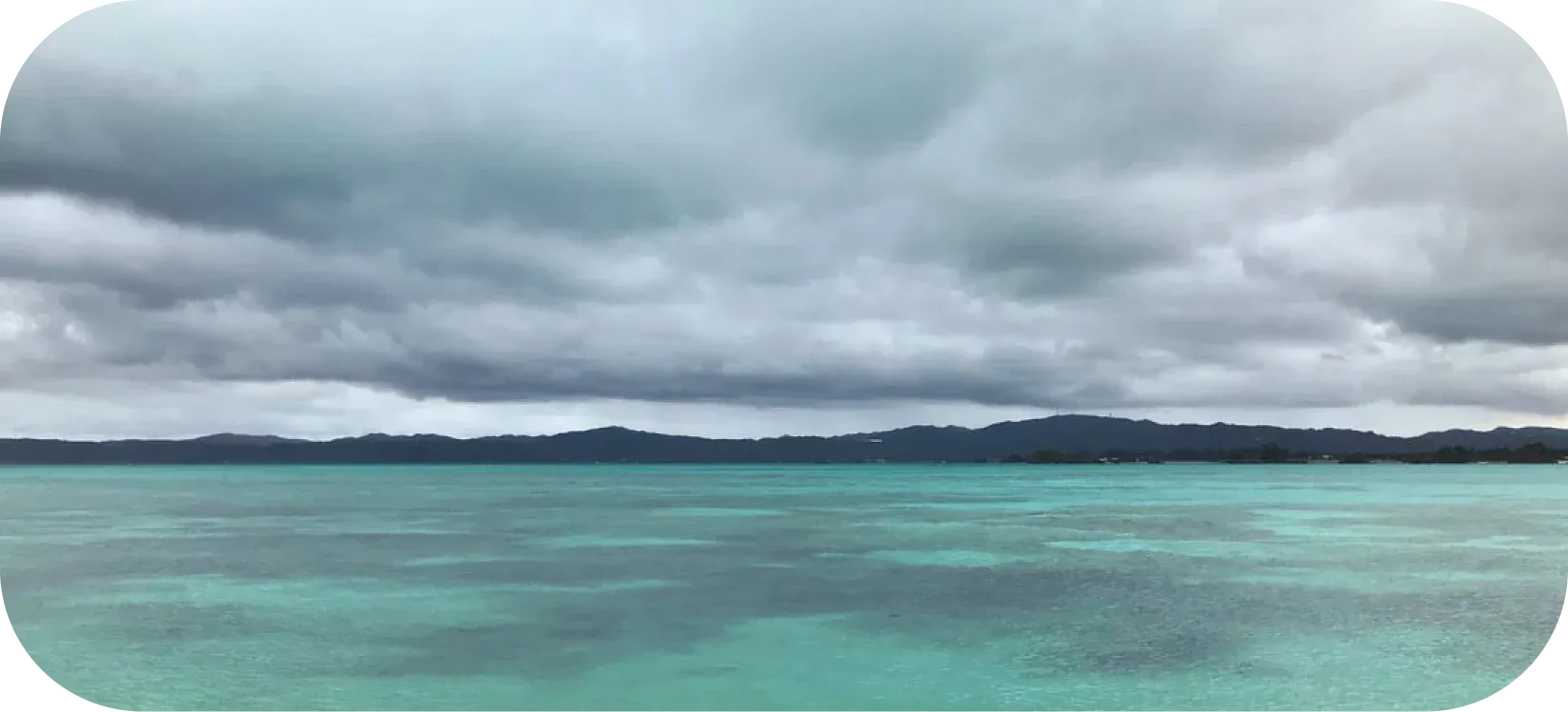
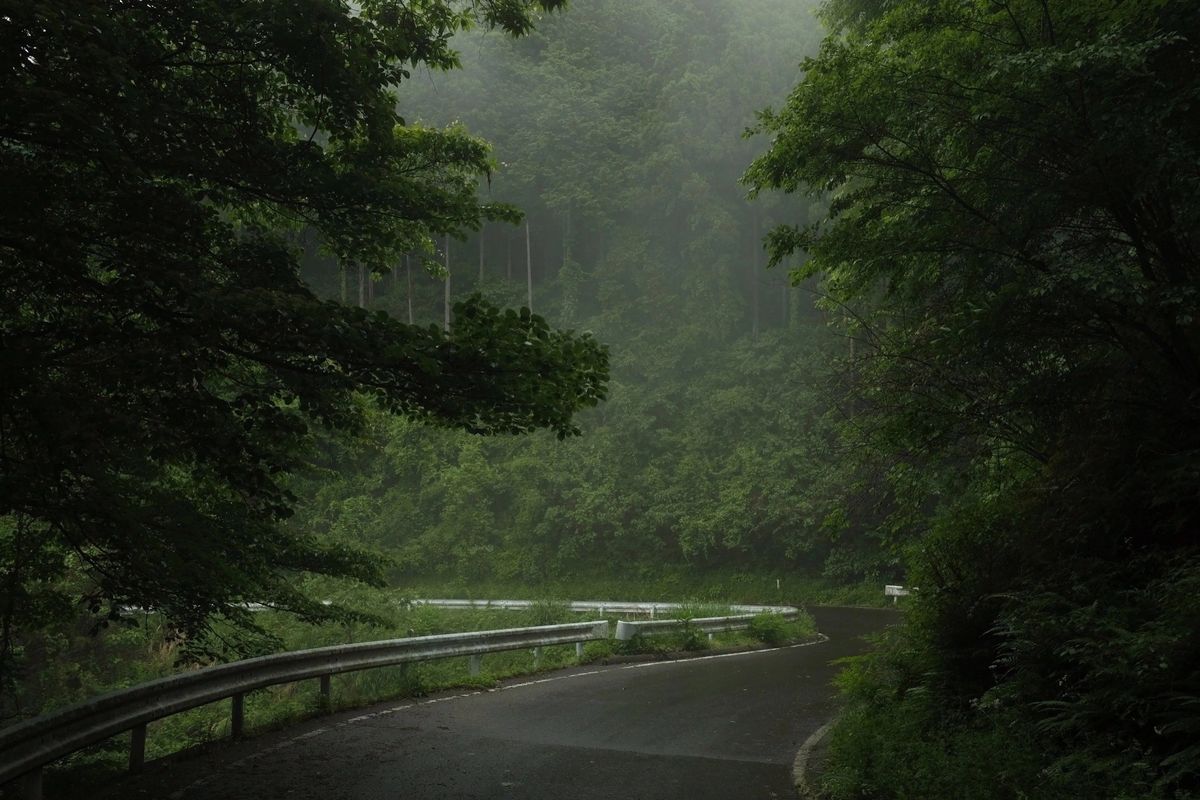
The near-miss. This is what most visitors during typhoon season actually experience, if they experience anything at all. The sky turns a particular shade of grey-green. Strong winds pick up, gusts forceful enough to make walking uncomfortable, seas too rough for boats. Rain arrives in intermittent walls. The air feels thick and humid in the way only a tropical system can produce. Your beach day is cancelled. Your dive trip is cancelled. You spend the day in your hotel, at a convenience store, or at one of the covered sightseeing spots that remain open through all but the most severe conditions. By the next morning, the bad weather has passed, the sea is pulling back toward its usual blue, and you're watching a perfect sunrise from a shoreline that looks like it was rinsed clean overnight.
The direct hit. This is rarer, and it's something else entirely. The wind begins to rise in the late afternoon or evening, building over hours into something that genuinely impresses you. Windows flex. The air has a pressure to it. Power may flicker and go out. The noise, a sustained, deep howl through concrete buildings, is unlike anything most visitors have heard. Convenience stores close early. You stay inside, because there's nothing safe to do outside.
Then, sometimes, something strange happens: the wind drops, the sky clears, and it's briefly, improbably calm. That's the eye of the typhoon passing overhead. It feels like a pause, like the island exhaled. Don't go outside. The second half of the storm, the back eyewall, is coming from the opposite direction, and it can be every bit as fierce as the first.
The intense conditions of a direct-hit storm typically last 12 to 24 hours, sometimes stretching toward 72 hours for a slow-moving system. Then it passes. Roads need clearing of debris; power companies work through the night; within a day or two, restaurants reopen, the ocean recovers visibility, and Okinawa reassembles itself with the practiced efficiency of an island that has been doing this for a very long time.
Why the Buildings Hold
Okinawa doesn't just endure typhoons, it has spent decades engineering itself to withstand them. Approximately 87% of residential buildings in the prefecture are reinforced concrete construction, compared to less than 1% nationally in Japan. The shift began after World War II, when American base construction brought concrete block technology to the island and Okinawans immediately recognised its value against typhoon winds, corrosion, and fire.
The result is a landscape that looks different from anywhere else in Japan, dense, low, utilitarian, with decorative concrete flower-block walls (hanaburokku) that allow airflow while providing windbreaks, and broad extended eaves (amahaji) that shade interiors from low-angle sun. These aren't aesthetic choices. They're centuries of Okinawan and Japanese typhoon experience made structural.
Hotels, which are uniformly concrete construction, remain among the safest places to be during a storm. Convenience stores, FamilyMart and Lawson dominate the island, are typically the last businesses to close and the first to reopen. If you're stocked up and inside a modern building, you're safe.
The Preparation Checklist
The good news: typhoon preparation in Okinawa is simple, and locals have it down to muscle memory. The checklist doesn't change.
Before the storm arrives (24–48 hours out):
Stock up on food and water as soon as the track becomes clear. Target at least three to five days' worth, a slow-moving storm can extend the disruption window, and you don't want to be doing this run the morning of. Water is first priority: roughly four litres per person per day. Bread and fresh items sell out first at convenience stores, so focus on shelf-stable options. Rice cooker batches, instant noodles, tinned goods, simple, practical.
As a basic precaution, pack a rain gear set and a light jacket in an accessible bag. Heavy rain arrives quickly during typhoon conditions, often before the main wind does, and having waterproof layers ready means you can move between your accommodation and nearby shelter without being caught out.
Charge every device you own: phone, laptop, camera batteries, portable power banks. Power outages are one of the more common effects of a direct hit, Typhoon Khanun left around thirty percent of Okinawa residents without electricity, and Jangmi in June 2026 knocked out power to tens of thousands of homes. A charged portable battery is worth more than almost anything else in that situation.
Bring all balcony furniture, potted plants, and loose items inside. Flying objects are the primary cause of injury and property damage in typhoon conditions, wind doesn't distinguish between your neighbour's flower pot and a car window. If it can move, bring it in.
Fill the bathtub. Water supply can be disrupted after a storm even when power returns, and a full tub gives you a reserve for washing and flushing.
Keep cash in small bills. ATMs can fail; card readers go offline. A few thousand yen in your wallet covers most emergencies.
During the storm:
Stay inside. This sounds obvious, but the eye of the typhoon creates a genuinely deceptive calm that can last thirty minutes to over an hour. The storm is not over. The second eyewall arrives from the opposite direction, often without warning, and can be every bit as violent as the first. Wait for the official all-clear from JMA or the municipal authority.
After the storm:
Wait for the all-clear before going outside. Watch for downed power lines, they may not arc visibly but remain lethally charged. Roads outside of central Naha often have debris; drive carefully if you must. Coastal flooding can persist for hours after wind conditions improve. Within a day or two, the island is almost always fully operational again.
Where to Get Information
Your primary source should be JMA's English-language typhoon tracker at jma.go.jp. It updates every hour when a storm is within 300 km of Japan and provides the official position, track forecast, and cone of uncertainty, always check the latest information here rather than relying on general weather apps, which can lag or oversimplify the cone data. NHK World broadcasts continuous English-language coverage during major events and will update you if conditions worsen unexpectedly. Register with your country's embassy in Tokyo if you haven't already, most send emergency alerts during significant weather events.

What Gets Cancelled and What Happens to Your Money
Here is the practical reality most travelers worry about: what happens to the trip I've already paid for?
Tours and activities:
Reputable operators in Okinawa, dive shops, snorkelling tours, kayak outfitters, day tours to the outer islands, cancel all water-based and outdoor activities when typhoon conditions are forecast. This is industry standard and isn't optional; sending guests out on rough seas is dangerous and nobody does it. Refunds or rescheduling are the norm. When booking any activity during typhoon season, confirm the cancellation policy in writing, but be assured that full refunds for weather cancellations are universal practice among legitimate operators. Some years, a cancelled tour turns into an opportunity: guided outdoor activities in the days immediately after a typhoon often offer extraordinary conditions, clear skies, a rinsed landscape, and an ocean that has been stirred into visibility.
If you need indoor activities while waiting out a storm, Okinawa has no shortage of options. The Churaumi Aquarium, where whale shark viewing is one of the island's most iconic attraction spots, Shuri Castle's interior exhibits, the covered arcades of Kokusai-dori in Naha, and numerous craft and cultural workshops all make excellent alternatives when it's unsafe to sightsee outdoors. Taxi services continue to run through early warning phases and can get you between covered venues; there's more to do on a rain day here than most destinations can manage on a sunny one.
Transportation:
During a typhoon warning, all forms of public transportation progressively suspend. The Yui Rail monorail in Naha halts operations when wind speeds reach unsafe levels; buses and taxis stop running; and bridges to offshore islands are closed. Airport operations suspend when conditions deteriorate, check your airline's app for real-time flight status rather than relying on the Naha Airport information boards, which update more slowly. Rental car companies advise against driving once warnings are issued; if you must travel, wait for an official all-clear.
Flights
The four main carriers serving Okinawa, JAL, ANA, Peach, and Jetstar, all have explicit typhoon waiver policies. When flights are cancelled or expected to be cancelled due to weather, each airline allows passengers to rebook on the next available flight without penalty, or to cancel for a full refund. The specifics vary slightly: JAL and ANA extend rebooking windows of around 30 days from the original departure and allow even normally non-changeable discount fares to be modified once. Peach and Jetstar operate similarly, with refund applications typically accepted within 10 days of the original departure date.
The practical action: as soon as an airline lists your flight as "conditional" or cancels it, open the app or website immediately and rebook. Don't call, the lines are overwhelmed. Flights out of the storm window fill quickly.
Ferries
Inter-island ferries to destinations like Ishigaki, Miyako, and the Kerama Islands cancel before flights do. The trigger is generally a gale warning from JMA, wave heights of two to three metres and winds of fifteen to twenty metres per second. High-speed ferries cancel before larger vessels on the same route. If island-hopping is part of your itinerary, build in at least one buffer day before any return connection. Ferry cancellations are fully refunded.
Accommodation
Most Okinawa hotels will extend a stay at the existing rate if a return flight is cancelled due to typhoon. This is common practice, not policy, ask the front desk directly when you make your reservation, not after the storm arrives. In the event of a typhoon, having confirmed that your accommodation can extend your stay removes one of the biggest stressors from disrupted travel plans. What no airline, ferry, or tour operator will cover is the extra accommodation cost you incur; that falls to travel insurance. Comprehensive travel insurance covering weather disruption is strongly recommended for any trip during the June-to-November window.
The Part Nobody Tells You: Typhoons Are Good for the Reef
This is the section that surprises people most, and it's backed by peer-reviewed research from Okinawa's own waters.
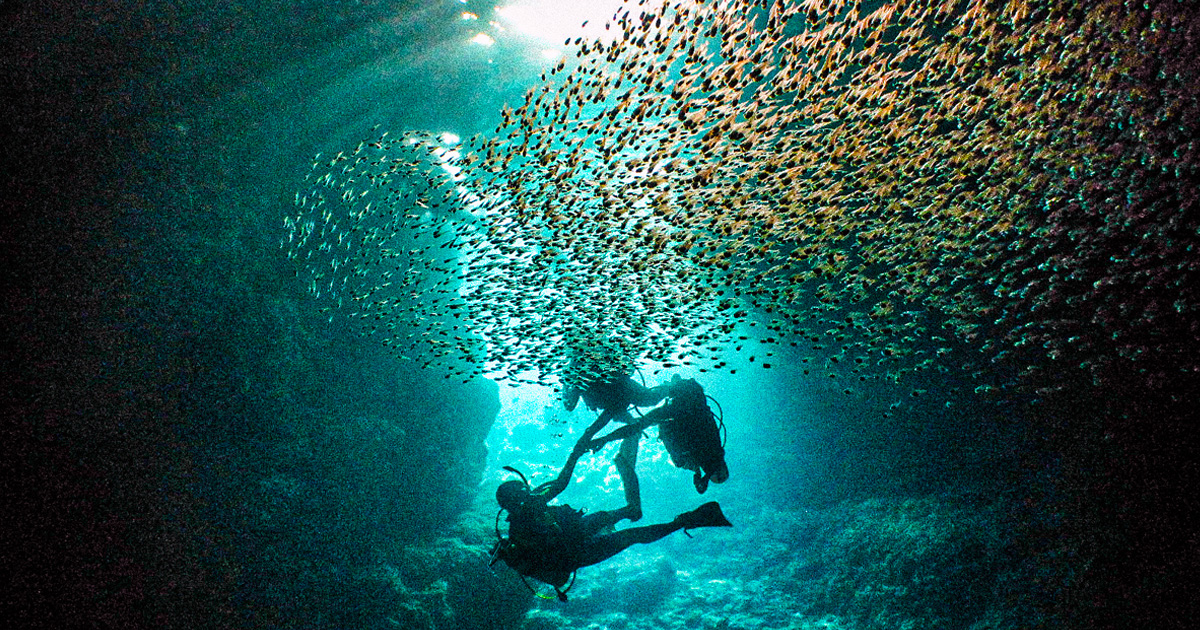
The East China Sea heats significantly over summer. By August and September, sea surface temperatures regularly reach 29 to 30°C, and coral begins to bleach when temperatures stay elevated for extended periods. Bleaching doesn't necessarily kill coral immediately, but sustained thermal stress does, and Okinawa's reefs have suffered badly in recent years from prolonged heat events: 2016 and 2022 were particularly severe bleaching years. These same warm waters attract magnificent marine life, whale sharks gather off Ishigaki Island, manta rays circle cleaning stations in the Kerama Islands, and the diversity of species you can swim alongside during a marine activities dive in summer is extraordinary. But sustained warmth without any relief tips the balance toward bleaching.
This is exactly where typhoons do something unexpected and valuable. As a storm passes, it churns the ocean, pulling cold water from depth up to the surface and reducing sea surface temperatures by five degrees Celsius or more. Research conducted at Sekisei Lagoon, Japan's largest coral reef system, in Okinawa's Yaeyama Islands, documented precisely this effect during typhoon passages in 2013, 2014, and 2015. The cooling was significant, localised around the island topography, and directly reduced the thermal stress driving bleaching.
It's not just cooling. The wave action flushes accumulated sediment and organic waste from reef structures. Nutrient-rich water from depth gets mixed into the surface layer, fuelling phytoplankton growth that supports the reef food chain. There's also a documented case for resilience: reefs that experience regular moderate disturbance appear to develop greater long-term resistance to subsequent storms, and the ecological spaces opened by storm damage allow more diverse species assemblages to establish.
The caveat is important, and honesty requires it: a direct, intense strike causes real physical damage. Studies of Okinawa's Ryugu Reef after Typhoon Jelawat in 2012 documented significant losses of coral coverage, particularly among foliose species at depth. But the same study followed recovery over three years and found new coral growth appearing just two to three months after the storm, with species diversity actually increasing as disturbance opened ecological niches. Okinawa's reefs have been living through typhoons for millennia. They are not fragile, they are adapted, and the storms are part of the system.
What this means for you as a diver or snorkeller: the days immediately following a typhoon often bring exceptional clarity once the water settles. The ocean has been stirred and cleaned. Visibility can be remarkable. If your trip overlaps with the tail of a typhoon, the diving in the days after can be some of the best of the season.
How to Read a Typhoon Forecast Without Panicking
Understanding how JMA's forecast works changes how you respond to it.
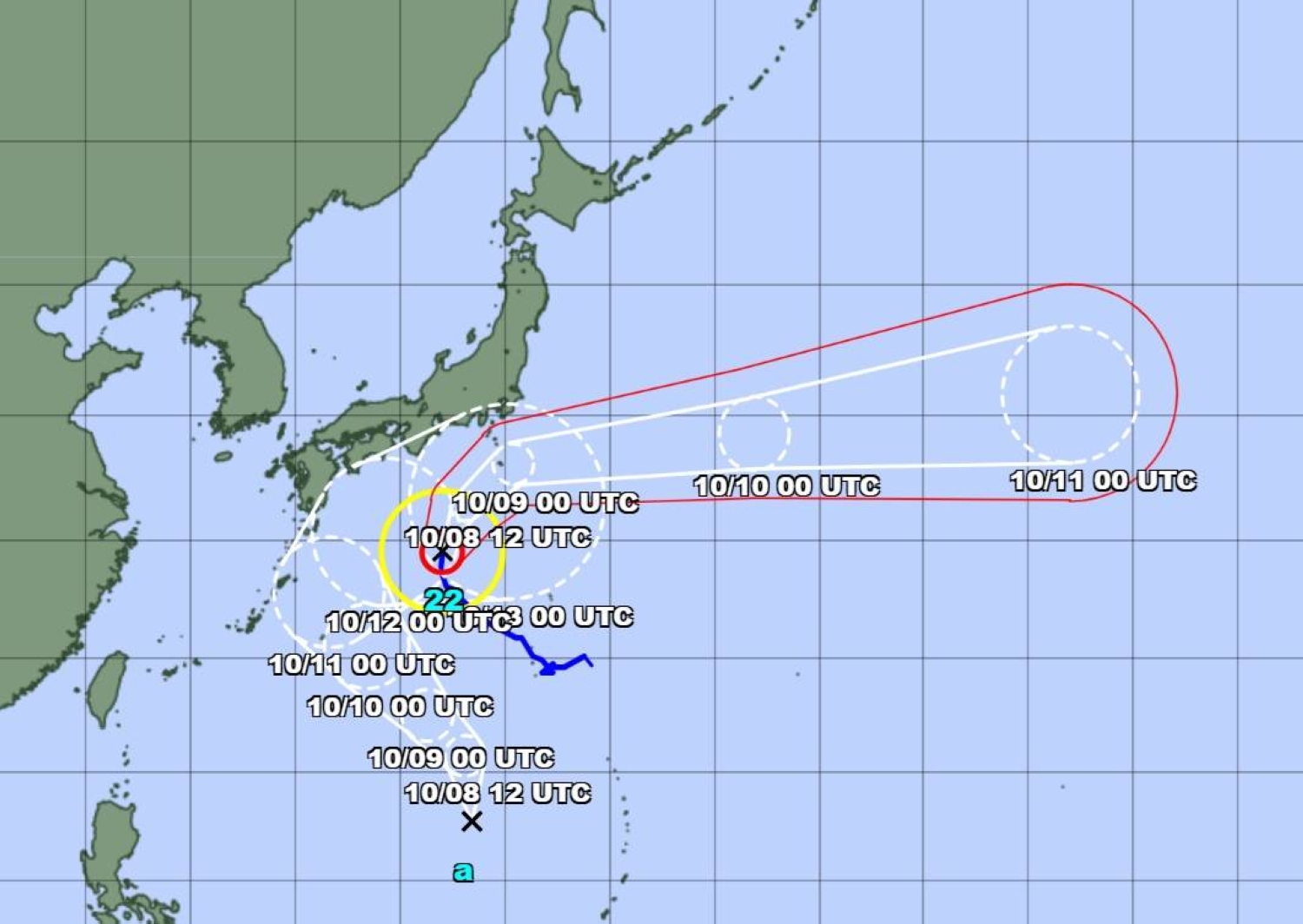
JMA issues five-day track forecasts via its Typhoon Ensemble Prediction System. The "cone of uncertainty" you see on typhoon maps represents the area within which the storm's centre is expected to remain with 70% probability at each forecast time step. The cone gets wider with time because track errors compound: a five-day position forecast has far more uncertainty than a 24-hour forecast. About one in three storms tracks outside its own cone.
When a forecast shows a typhoon "heading toward Okinawa" at five days out, what you are actually seeing is a track model suggesting that scenario is more likely than alternatives, but not that it's certain, and not that it means a direct hit on your specific island. The storm may track fifty kilometres north or south, which makes an enormous difference in the conditions you experience. It may weaken unexpectedly. It may accelerate and pass before your arrival. It may stall over open ocean and dissipate entirely.
The rational threshold for actively adjusting plans is somewhere around 48 to 72 hours, when track confidence improves substantially and airlines typically begin issuing conditional advisories. Before that point, monitoring is sensible; cancelling is premature.
When to Visit, Timing Your Trip Around Typhoon Season
The honest answer is that Okinawa's best beach weather and its most active typhoon period overlap almost exactly. You cannot entirely separate them. What you can do is choose shoulder windows that reduce (not eliminate) risk, or visit peak season with a flexible approach. Understanding the weather in Okinawa by month is the key to finding the best time to visit for your priorities.
Mid-May to early June is low-risk. The tsuyu rainy season brings regular rain, not constant, but more than you'd want for a beach trip, and lifts around late June, usually in the third week of the month. Typhoon approaches in May and June average fewer than one per month combined. Water temperatures are climbing toward the upper 20s. Crowds are thin and prices are lower. For visitors arriving by ship on a longer itinerary, this is an excellent entry window.
July is underrated. It sits in the gap between tsuyu and the August typhoon peak, with an approach average of around 1.5 per month and sea temperatures at their clearest. The main island can be gloriously hot and sunny for days on end between any weather systems. Fewer crowds than August; still peak summer conditions.
August and September are peak season in every sense, peak heat, peak crowds, peak beach conditions, peak typhoon frequency. August averages around 2.2 approaches, September around 1.9. This is when the 7.7 annual figure is concentrated. It is also when the water is warmest, the visibility for diving is often at its best, and the island is fully alive. The right approach is not to avoid these months but to book with flexibility, build buffer days into any island-hopping plan, and accept that a one-day disruption is possible. Most trips don't get one.
October sees conditions improving. Approach frequency drops to roughly 1.1 per month, and Naha is statistically among its sunniest in October. Sea temperatures remain warm enough for swimming through the month. The island quiets down noticeably after the August peak; prices soften; mornings are comfortable.
November is largely clear. Approach frequency drops below one every three months. Water begins cooling into the mid-20s but remains swimmable. If you want to visit Okinawa with autumn weather and no typhoon worry, this is the window.
FAQ
When is typhoon season in Okinawa?
Officially June through November, with peak intensity in August and September. May sees occasional early-season activity, and November activity is rare. The bulk of approaches, over half the annual total, occur in August and September combined.
How often does a typhoon directly hit Okinawa's main island?
Far less often than the "seven to eight approaches per year" figure suggests. Those approaches cover the entire 635-kilometre Ryukyu island chain, many passing well south or east of the main island. The main island went nearly three years without a major direct strike between Typhoon Khanun (2023) and Typhoon Jangmi (June 2026). Some years pass with approaches that affect only the outer islands.
What should I do if a typhoon warning is issued during my trip?
Stock up on food, water, and medication before stores close. Charge all devices. Bring outdoor items inside. Stay in your accommodation when conditions deteriorate, and do not go outside until the official all-clear, including any calm period that might be the storm's eye. Monitor JMA's English typhoon tracker at jma.go.jp.
Will my tour be cancelled and can I get a refund?
Yes, and yes. Reputable operators cancel all water-based and outdoor activities when typhoon conditions are forecast. Full refunds or rescheduling are the universal practice. Confirm cancellation policies when booking, particularly for dive trips and inter-island excursions.
What happens to my flight if a typhoon approaches?
JAL, ANA, Peach, and Jetstar all issue penalty-free rebooking or full refunds when flights are cancelled due to typhoons. As soon as your flight is listed as conditional or cancelled, rebook online immediately, the waiver window is typically 30 days but seats on alternate flights fill quickly. Bear in mind that accommodation costs during any extended stay are your own responsibility; travel insurance is valuable here.
Are ferries cancelled during typhoons?
Yes, and typically earlier than flights. Inter-island ferries to Ishigaki Island, Miyako, the Keramas, and other outer islands suspend service when gale warnings are issued. Build at least one buffer day into any itinerary that involves a ferry connection before a return flight.
Is it safe to travel to Okinawa during typhoon season?
Yes, with realistic expectations. Millions of people visit Okinawa Japan every year during this period without major incident. Okinawa is exceptionally well-prepared: its buildings are overwhelmingly reinforced concrete, its emergency systems are well-developed, and its residents have been managing typhoons for generations. The real risk is travel disruption — a cancelled tour, a delayed flight, a day indoors, not physical danger from the storms themselves. If you book flexibly and carry travel insurance, a typhoon during your trip is an inconvenience, not a disaster.
Are typhoons bad for Okinawa's coral reefs?
Not really. Moderate typhoon passages benefit reef health by cooling thermally stressed water, flushing sediment, and delivering nutrients from depth, effects documented in peer-reviewed research at Okinawa's Sekisei Lagoon. A very intense direct strike can cause physical coral damage, but Okinawa's reefs have evolved with these storms over millennia and show strong recovery. In the days after a typhoon passes, once the water clears, diving and snorkelling conditions are often exceptional.
The Honest Conclusion
Here's the thing about typhoon season in Okinawa: most visitors don't experience a typhoon at all. They see grey skies for a day, maybe some wind. They eat convenience-store rice balls and watch the weather roll in from the window of a concrete hotel room. And the next morning, the ocean is an improbable shade of blue and the air smells like it was made fresh overnight.
Some visitors do experience a real storm. The howl through the shutters, the gone-quiet convenience stores, the eye passing overhead like a held breath. It's significant. It can disrupt plans and delay flights and eat a day or two of an itinerary. If that happens to you, you were unlucky, genuinely unlucky, not statistically expected.
But a forecast showing a typhoon in the region five days from now is not a reason to cancel. It is a reason to monitor, to book flexibly, to make sure your insurance is in order, and to identify the indoor options that Okinawa, with its world-class aquarium, its ancient castle ruins, its market arcades and craft workshops, provides in abundance.
The island has been here for this for a long time. It knows how to weather the season, and so, with a little preparation, can you.
Evertrail Tours · June 9, 2026