There's a moment, if you're lucky enough to find it, when you're standing inside a quiet dojo in Okinawa, watching a grandmaster move through a kata in absolute silence, and you realize that what you're witnessing isn't sport. It's something older, and something far more serious than that.
Most people know karate as kicks and competitions. A few know it as discipline and self-defense. But almost nobody talks about the true origins of karate, a small island kingdom in the East China Sea, a warrior class forced to train in secrecy, and centuries of cultural pressure that forged one of the world's most practical martial arts. If you're planning to visit Okinawa, Japan, understanding this history doesn't just add context. It completely changes how you experience the island.
The Ryukyu Kingdom: The Early History of Where It All Started
To understand Okinawan karate, you have to go back to the Ryukyu Kingdom, an independent maritime empire that existed from 1429 until 1879. Sitting at the crossroads of the East China Sea, Okinawa was a thriving trade hub with deep ties to China, Japan, Korea, and Southeast Asia. Ships came and went constantly. Ideas traveled with them.
In 1392, a group of Chinese scholars, artisans, and bureaucrats, known as the 36 Families of the Min, settled in the port district of Kumemura near Naha. They brought with them Chinese Chuan Fa, a system of fist boxing rooted in Chinese martial arts traditions, which gradually blended with an indigenous Ryukyuan fighting tradition called Te (or Ti). This fusion is what eventually became karate, a fighting art born in Okinawa from the meeting of two cultures.
One popular myth is worth clearing up immediately: karate was not invented by oppressed peasants using farming tools as weapons. The historical evidence points in the opposite direction. The art was developed and closely guarded by the Pechin, the aristocratic warrior class of Ryukyu. These were the palace guards, court officials, and educated gentry. Karate was their privilege, passed down in secret.
Weapon Bans and the Birth of a Devastating Art
The development of Okinawan karate was turbocharged by two major events that stripped the island's warriors of their weapons.
The first came in 1477, when the Okinawan king Sho Shin of the Second Sho Dynasty restricted the possession of weapons and ordered provincial nobles to relocate to the capital of Shuri under royal supervision. Then, in 1609, the Japanese Satsuma clan invaded and subjugated the Ryukyu Kingdom, enforcing strict weapon bans while keeping Okinawa's trade with China running for their own profit.
The okinawan warriors found themselves under constant surveillance, their weapons gone, facing armored Japanese samurai trained in the deadly Jigen-ryu sword style. They had no choice but to adapt. Karate training moved underground, literally, in some cases, happening at night in secret locations.
The philosophy that emerged from this pressure was called ikken hissatsu: to neutralize an opponent with a single, decisive strike. There was no room for testing an enemy or playing the long game. Every technique had to work the first time, against a trained and armored opponent. That uncompromising standard is baked into Okinawan karate to this day, and it's one reason this ancient form of karate remains so technically demanding after years of training.
The Three Styles: Shuri-te, Naha-te, and Tomari-te
By the 18th century, karate had crystallized into three distinct regional fighting styles, each named after the Okinawan town where it developed. The towns of Shuri, Naha, and Tomari sit only a few miles apart, but their different social environments produced strikingly different martial philosophies.
Shuri-te, known as Shuri-te from its royal capital origins, developed inside Shuri, practiced by palace guards and court nobility. It's characterized by lightning-fast linear techniques, explosive power from natural stances, and an emphasis on that deadly first strike. The kata Naihanchi, Kushanku, and the Pinan series all trace back to this lineage. Its karate masters — Kanga Sakugawa, Sokon Matsumura, Anko Itosu , are the founding figures of what later became Shorin-ryu and, through Gichin Funakoshi's journey to mainland Japan, modern Shotokan.
Naha-te emerged from the bustling port city of Naha, heavily shaped by southern Chinese martial arts arriving through trade. Among the Chinese martial influences was the White Crane style, a Chinese martial art emphasizing circular movements and close-range strikes — which profoundly shaped Naha-te's technical character. It favors close-range combat, circular defense, and the deep diaphragmatic breathing technique called ibuki, which tenses the entire body to absorb strikes. Practitioners train primarily in the Sanchin-dachi stance, low, rooted, isometric. Kanryo Higaonna and Chojun Miyagi developed this tradition into what the world now knows as Goju-ryu.
Tomari-te, cultivated in the harbor town of Tomari by sea merchants and harbor officials, blended the agility of Shuri-te with the deceptive, evasive footwork of southern Chinese temple styles. It incorporated joint locks, throws, and rapid body-shifting (tai sabaki) in ways the other two styles did not. Okinawan karate masters like Kosaku Matsumora and Chotoku Kyan carried this tradition forward into what became several sub-styles of Shorin-ryu and Matsubayashi-ryu.
These aren't just academic distinctions. Watch karate practitioners from each tradition and you'll see completely different bodies moving in completely different ways, different stances, different timing, different ideas about what a fight actually looks like. Karate practitioners around the world who trace their lineage to Okinawa are, in many ways, practicing three separate martial arts styles that happen to share a name.
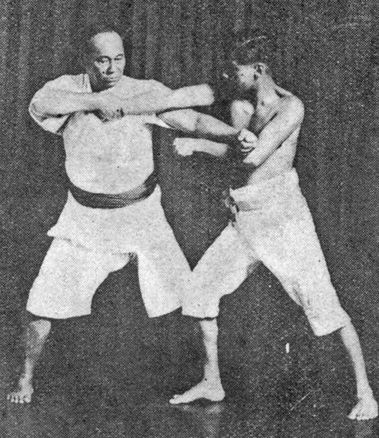
Shurijo Castle: Where the Art of Karate Was Hidden in Plain Sight
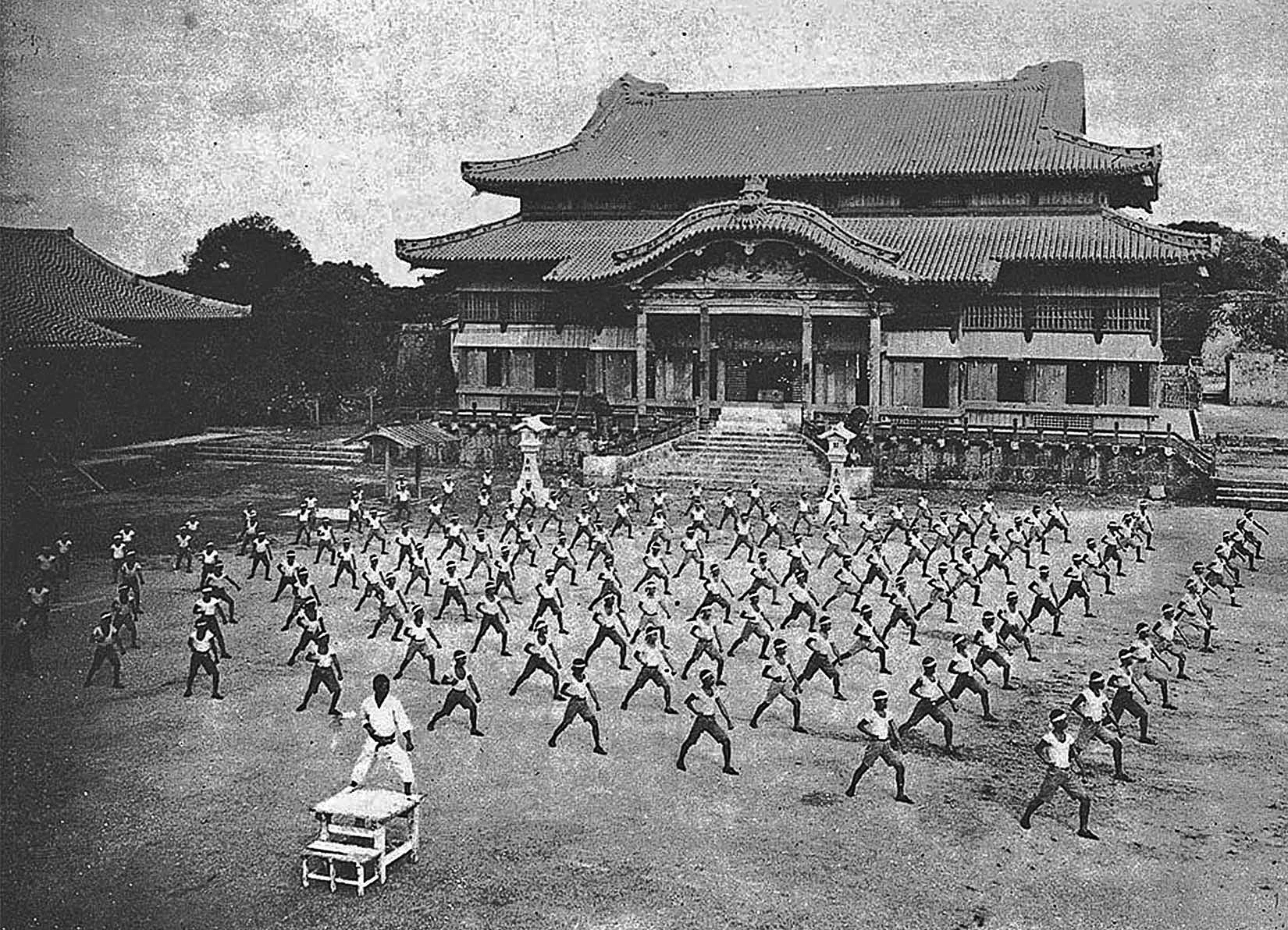
No visit to Okinawa's martial heritage is complete without walking through Shurijo Castle, the architectural centerpiece of the Second Sho Dynasty and the physical home of Shuri-te.
The castle sits on a limestone hill about 130 meters above sea level, its walls built from organically curved Ryukyuan coral stone that hardens over centuries of exposure. Unlike the angular, watchtower-heavy castles of mainland Japan, Shurijo flows, its defensive walls undulating in long arcs, reflecting a distinct blend of Chinese, Japanese, and Korean architectural influences.
You enter through the iconic Shureimon Gate, its red-lacquered wooden frame bearing a plaque that reads Shurei no Kuni, "Ryukyu Kingdom is a land of propriety." That phrase carries martial meaning: the concept of shurei-no-kokoro, the spirit of karate, courtesy and respect, is foundational to Okinawan culture and to the martial art itself. The art was never supposed to be about aggression.
Moving deeper into the complex, through the Zuisenmon, Koufukumon, and Houshinmon gates, you reach the Una, the grand administrative courtyard paved in alternating red and white tiles. This was where court officials stood during state ceremonies. The Seiden (Main Hall) at the center is spectacular: a three-story wooden structure in brilliant vermilion lacquer, adorned with golden dragon carvings.
Here's what makes this place remarkable for the history of karate: this is where the Pechin warriors performed Te disguised as classical court dances during royal banquets. Right in front of foreign diplomats and Satsuma observers, they were practicing their fighting art in plain sight, dressed as performance. The techniques survived because of that deception.
The castle suffered serious damage in a 2019 fire, but active reconstruction work is underway, and visiting now means witnessing a living restoration, a fitting parallel to the martial art itself, always being rebuilt and passed on.
The Okinawa Karate Kaikan: The Modern Home of the Empty Hand
If Shurijo Castle is where karate's history lives, the Okinawa Karate Kaikan in Tomigusuku City is where its future is being written.
Opened in 2017 on a scenic hill just south of Naha, minutes from the airport, this 3.8-hectare complex was built specifically to preserve and promote traditional Okinawan karate as a living cultural practice. It's not a museum in the dusty sense. It's an active karate training facility that also happens to contain an excellent interactive museum, and it's one of the best reasons to visit Okinawa, Japan if you have any interest in the martial art's origins.
The main building houses four competition-standard karate dojo courts, a modern training room, a reference library, and exhibition spaces where you can study antique training uniforms and classical weapons. The museum section lets visitors get hands-on with traditional conditioning tools: the makiwara (a striking post for building toughened fists), the nigiri-game (heavy ceramic jars used for grip strength), and the chi-ishi (weighted stone levers for building wrist and arm power). These aren't props, they're working tools that serious practitioners still train with.
Standing apart from the main building is the Shurei Hall, also called the Special Dojo. This is the piece of architecture that stays with you. Built in traditional Ryukyuan style with warm wooden walls and a roof of red clay akawara tiles sealed in thick white plaster, it looks like it belongs to the castle. The red tiles are porous and breathable, absorbing tropical humidity; the white plaster joints anchor them against Okinawa's powerful typhoons. Inside, 91 square meters of polished hardwood floor, reserved for high-level black belt examinations, official demonstrations, and special ceremonial events.
Standing in the courtyard outside the Special Dojo, looking out over the blue East China Sea while wind chimes move in the breeze, you understand something about Okinawan karate that no diagram or article can fully convey: the art grew from this landscape. The patience, the focus, the willingness to train quietly for decades, it reflects the island itself.
Karate Day: The Best Time to See It All in Action
If your visit to Okinawa can be timed around one date, make it October 25th.
Okinawa Karate Day is an island-wide annual celebration established by the Okinawa Prefectural Assembly to honor the art's core values — peace, self-discipline, and respect for all life. The day is packed with events, most of them free.
The schedule runs roughly like this:
The day opens at the Peace Memorial Park in Itoman City, where senior grandmasters and okinawan karate masters perform classical katas in complete silence as a dedication to world peace. There's something in watching this that hits differently than any competition. These are people who have spent 50 or 60 years mastering these movements, and they're performing them not for points but as a form of prayer.
From there, the Dedicatory Demonstration moves to the Special Dojo at the Karate Kaikan, where grandmasters of Goju-ryu, Shorin-ryu, and Uechi-ryu perform refined forms under the red-tiled roof. Access to this event is limited, so arriving early matters.
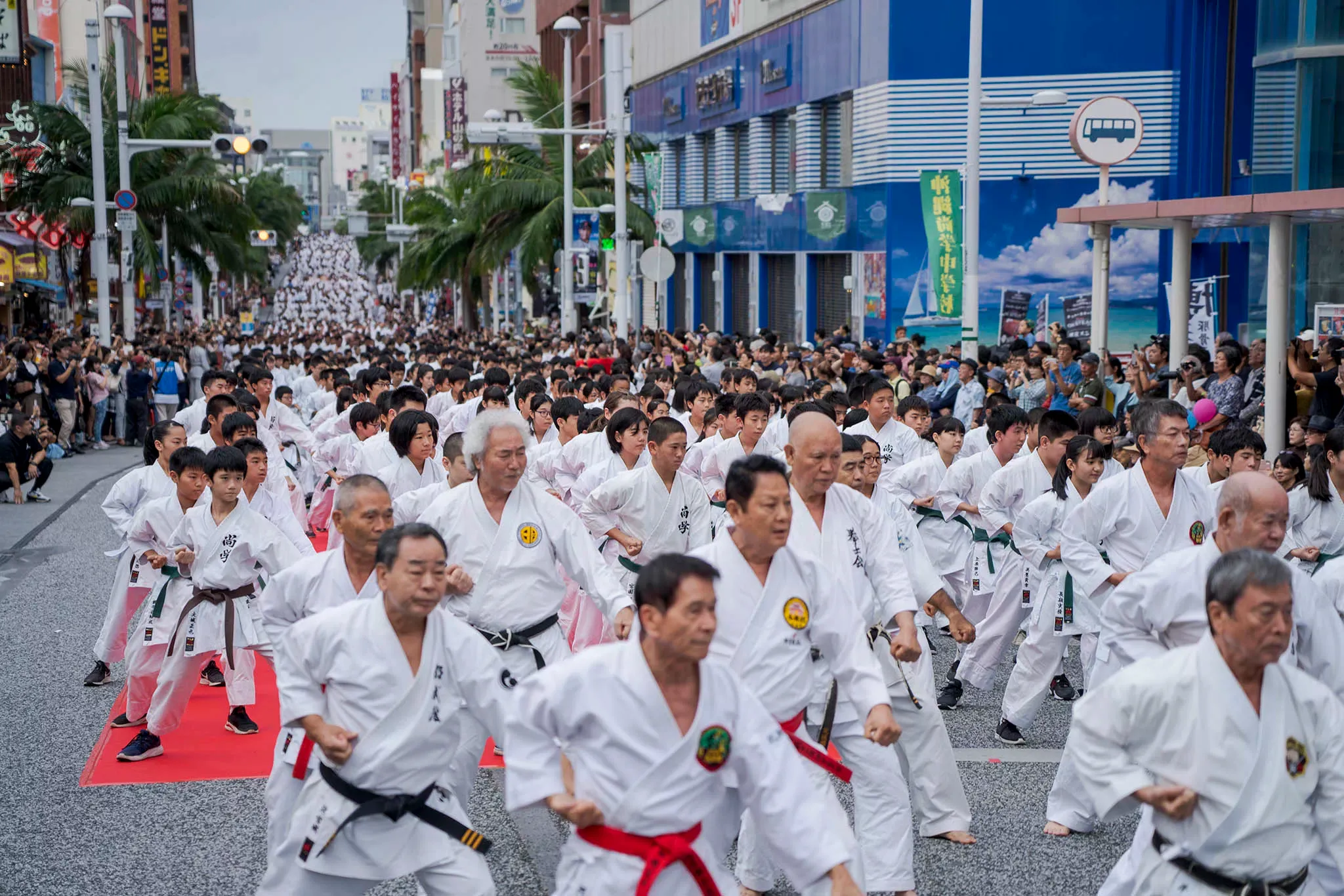
The day builds to the Kokusai Street Demonstrations in downtown Naha, where thousands of practitioners from around the world gather on the famous shopping street to perform together. In previous years, this event broke a Guinness World Record when 3,973 people performed the Naihanchi kata simultaneously, including karate practitioners from every corner of the globe. It's one of the genuinely extraordinary things you can see in Japan.
The celebrations extend into the following day, with a grand public demonstration on Kokusai Dori Street near Tenbusu Naha running from 3:00 PM to 4:30 PM, an excellent opportunity to see the full range of Okinawan martial arts traditions up close.
Admission to all public events is free. The mapcode for primary event navigation is 33 037 875*26.
For those planning further ahead: in 2026, the Dedication Demonstration falls on Sunday, October 25th, with the Commemorative Demonstration Festival following on Sunday, November 8th.
Visiting a Traditional Dojo: What You Need to Know
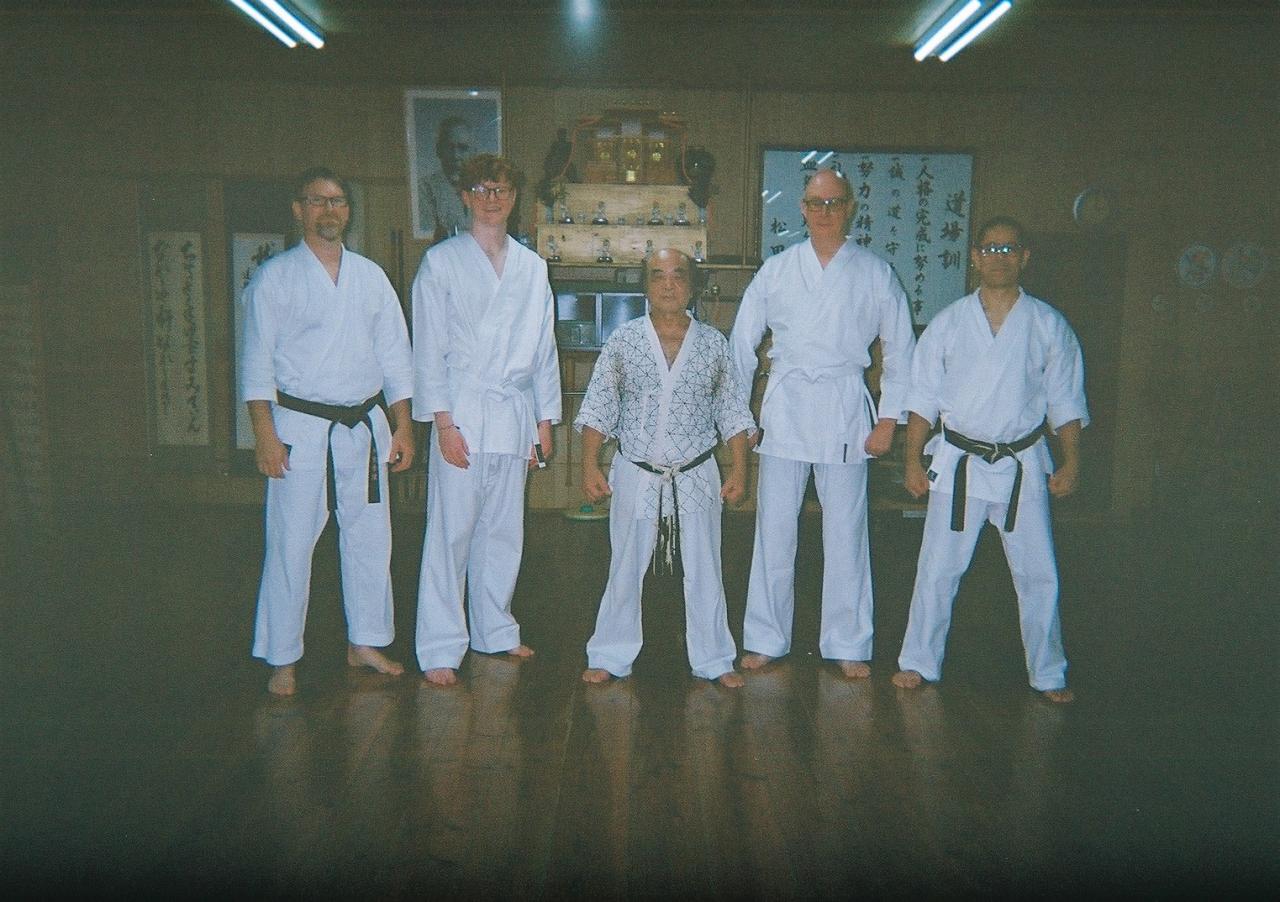
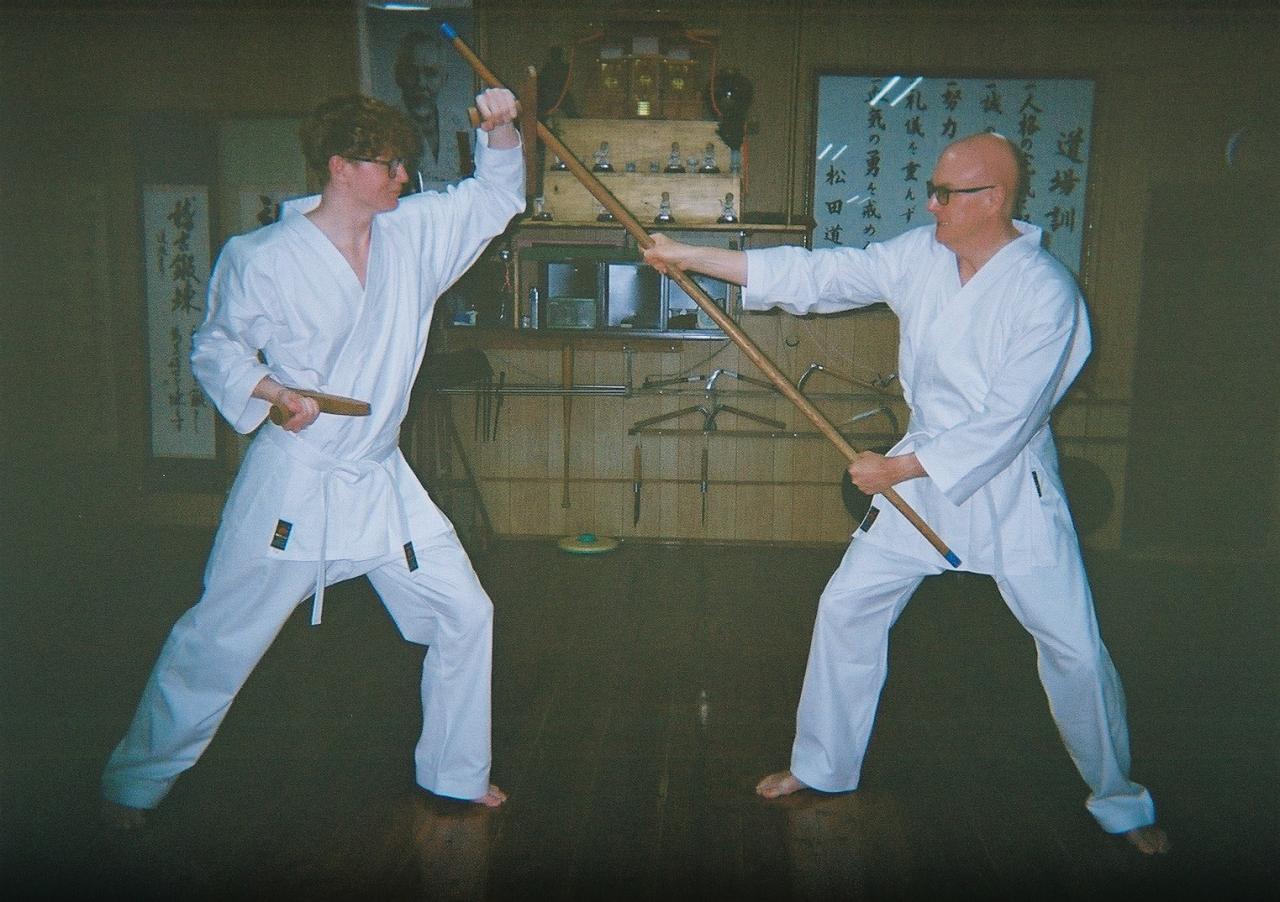
One of the best experiences available to visitors in Okinawa is training at a traditional dojo — not a tourist class, but an actual session at one of the small, family-style karate schools where the original art is still practiced. This is absolutely possible, but it requires knowing how to show up correctly.
The most important thing to understand: an Okinawan dojo is not a gym. It's a sacred space, the spiritual home of the karate master who runs it. How you enter, how you behave, and how you present yourself matters enormously.
Before you arrive:
Wear a white karategi (uniform), not sportswear. If you don't own one, purchase a quality Okinawan-made uniform from Shureido in Naha or Ippondo in Okinawa City. Rentals are also available at the Karate Kaikan and through Airent. If you hold a black belt in any style, bring both your black belt and a white belt, wear the white belt first to show humility, and only switch to the black if the karate master specifically asks you to.
When you enter:
Remove your shoes immediately at the entrance and arrange them neatly, toes facing outward. Bow when you step onto the dojo floor, and bow again when you leave. Training is done barefoot. Jewelry, watches, rings, and socks all come off. Keep fingernails and toenails trimmed short, this is practical, not ceremonial.
During training:
Keep talking to an absolute minimum. If you're in an adjacent hallway, speak softly, interrupting an active class is a serious breach. Never take photos or video without explicit permission from the master. If you need to adjust your uniform or belt, turn to face the back of the dojo. Never sit with your legs stretched out or your feet pointing toward the master or the front shrine; sit in seiza (kneeling) or cross-legged.
For payments:
If you're paying tuition or making any offering to the Sensei, never hand over cash directly. Place it in a plain white envelope and present it with both hands while bowing slightly.
None of this is difficult once you know it. And showing up correctly signals to the master that you're there to learn karate, not just to watch, which changes everything about how you'll be received.
How Karate Left Okinawa (and What Was Left Behind)
The story of how karate spread to the world is one of the more fascinating acts of cultural diplomacy in martial arts history.
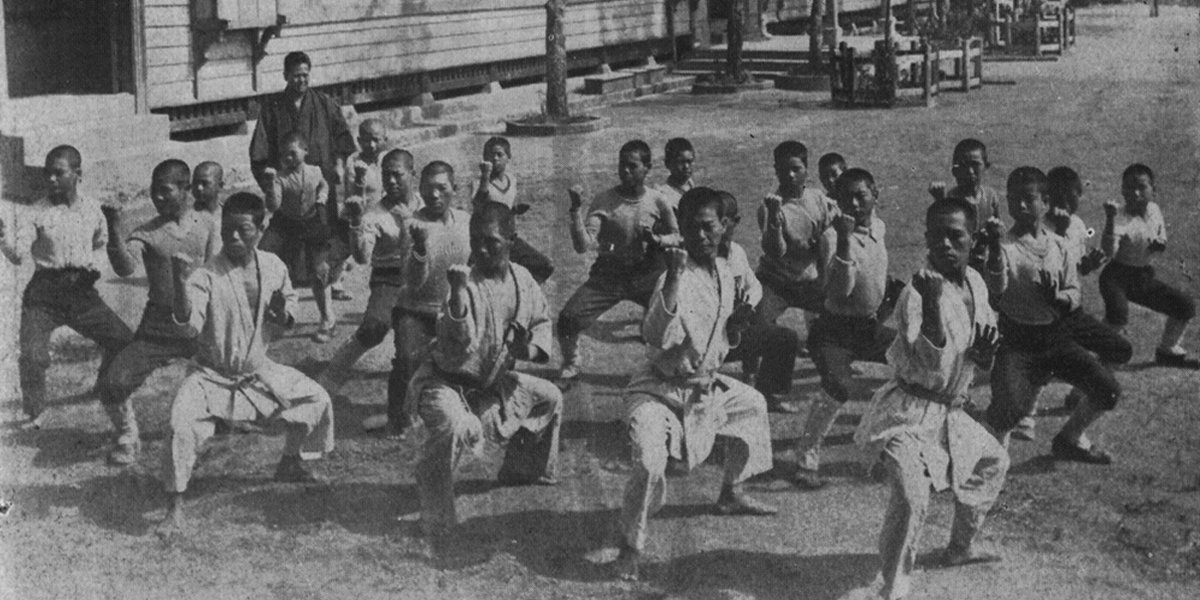
In 1901, master Anko Itosu introduced karate into Okinawan primary schools, a transformative decision that required simplifying the most dangerous techniques to make them safe for children. He created the Pinan kata series specifically for this purpose, shifting the emphasis from lethal combat toward fitness, character, and civic virtue. This was arguably the first time the practice of karate became widely accessible to ordinary people in Okinawa prefecture.
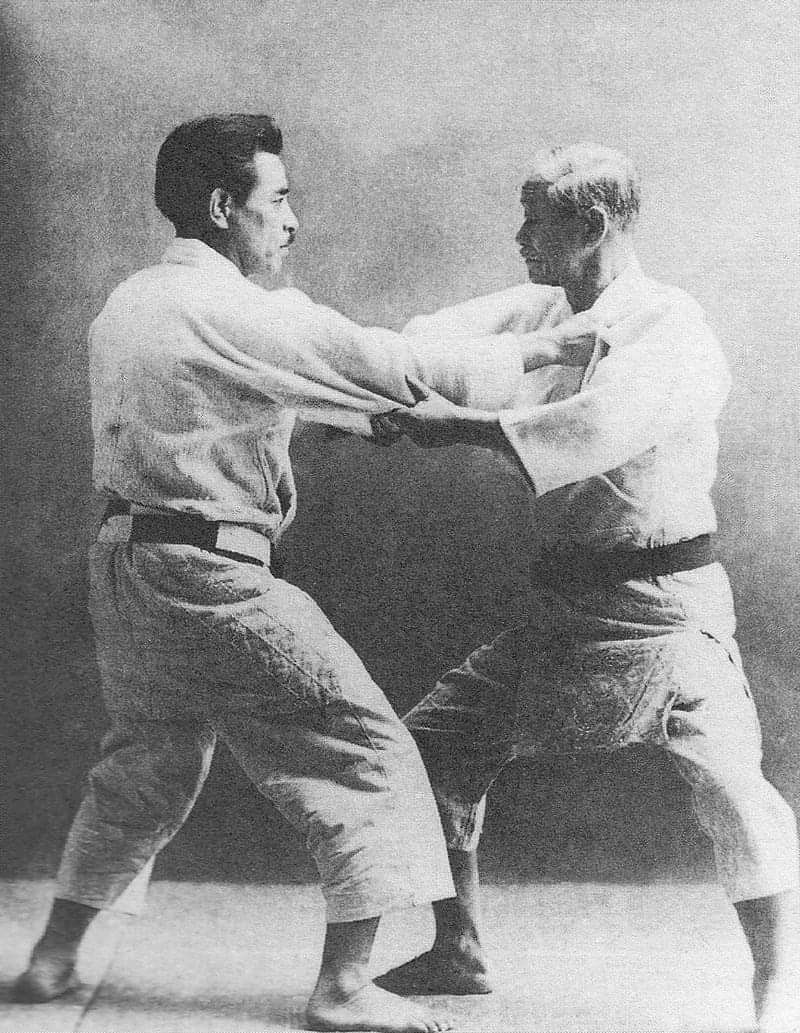
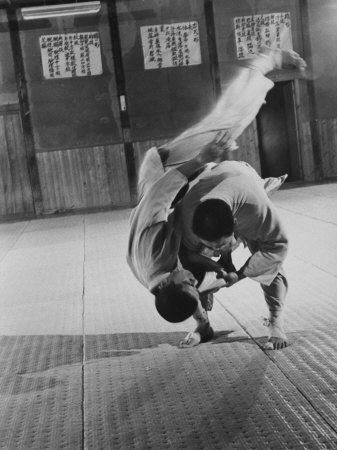
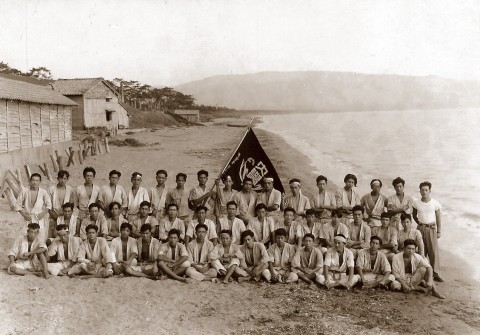
When masters like Gichin Funakoshi, Choki Motobu, and Kenwa Mabuni brought karate to mainland Japan in the early 1920s, they entered a highly nationalistic environment. Gichin Funakoshi in particular worked hard to adapt what was an Okinawan martial art into a form that Japanese culture would accept, renaming it from Tode (Chinese hand) to Karate (empty hand) and framing it within the vocabulary of Japanese martial arts. To protect the deepest applications of the Ryukyuan system, these teachers made a quiet, deliberate choice: they taught the external shapes of the katas but withheld the practical bunkai, the joint locks, throws, and pressure-point applications that make the techniques actually work. The mainland received an athletic, formalized discipline. The original fighting art stayed home.
Modern karate, the sport version seen in competitions and karate clubs worldwide, owes much to this mainland evolution. The Japan Karate Association, founded in 1949, formalized and spread this sportified style globally, and modern karate became the version most people encounter today. International karate organizations now govern millions of karate practitioners across hundreds of countries, and karate kumite (sparring) even made its Olympic debut in 2021.
This explains why sport karate and traditional Okinawan karate can look so different today. High competition kicks, point-scoring kumite, and athletic aesthetics are a mainland Japanese evolution. The original system, close-range, full-body, uncompromising, is still alive in small dojos across Okinawa, in karate schools practiced by people who never forgot what it was for.
Why It Matters That You Go
The Okinawa Karate Kaikan, the annual Karate Day celebrations, and the quiet effort of traditional dojos across the island are all working toward the same thing: keeping the original art alive in a world that's more interested in the sport version.
The popularity of Okinawan karate has grown steadily among martial artists seeking to return to the source, to find what karate was before it became a sport. And the island of Okinawa remains the only place where that source is still fully alive.
When you walk the limestone slopes of Shurijo Castle knowing what happened there, when you watch a grandmaster move through a kata under the red-tiled roof of the Special Dojo, or when you bow into a small dojo and train alongside people who learned from people who learned from people who were there, you're participating in something that matters. The arts of Okinawa don't exist in textbooks or YouTube compilations. They exist in the bodies of the people who practice them, passed down through an unbroken chain of human contact.
Traditional Okinawan karate was never just a fighting system. It was a culture's way of encoding its values, its history, and its resilience into the human body. That's worth going a long way to see.
FAQ: Okinawan Karate for Visitors
What is the best place to see traditional Okinawan karate?
The Okinawa Karate Kaikan in Tomigusuku City is the best single destination, it combines a world-class museum, active training facilities, and the beautiful Special Dojo. Shurijo Castle in Naha provides essential historical context on how karate was born in Okinawa. For living practice, visiting a traditional dojo during a class is the most authentic experience available.
When is Okinawa Karate Day?
October 25th every year. Events include grandmaster demonstrations at the Peace Memorial Park and the Karate Kaikan, plus mass public performances on Kokusai Street in Naha. Most events are free to attend.
What are the three styles of Okinawan karate?
The three historical roots are Shuri-te (from the royal capital, fast and linear), Naha-te (from the port city, close-range with deep breathing), and Tomari-te (from the harbor town, fluid and evasive). These evolved into the major modern karate styles: Shorin-ryu and Shotokan from Shuri-te; Goju-ryu from Naha-te; Matsubayashi-ryu and related styles from Tomari-te.
Can visitors train at a traditional dojo in Okinawa?
Yes, many traditional dojos welcome respectful visitors for single sessions or short-term training. The Karate Kaikan can help connect visitors with appropriate karate schools. Bringing a white karategi and following proper dojo etiquette is essential.
Is karate from Okinawa different from Japanese karate?
Significantly. Traditional Okinawan karate emphasizes close-range combat, full-body conditioning, and practical self-defense applications. Japanese karate evolved toward a more formalized, athletic, and eventually competitive sport. The two share the same roots but diverged considerably after karate was exported to Japan in the 1920s.
Where can I buy a traditional karate uniform in Okinawa?
Shureido in Naha and Ippondo in Okinawa City are the most respected shops for authentic Okinawan-made uniforms. The Karate Kaikan also offers uniform rentals for visitors who want to train without buying.
Evertrail Tours · May 23, 2026