
Whale Watching in Okinawa: Best Time, Best Place, and Tips for First-Time Visitors
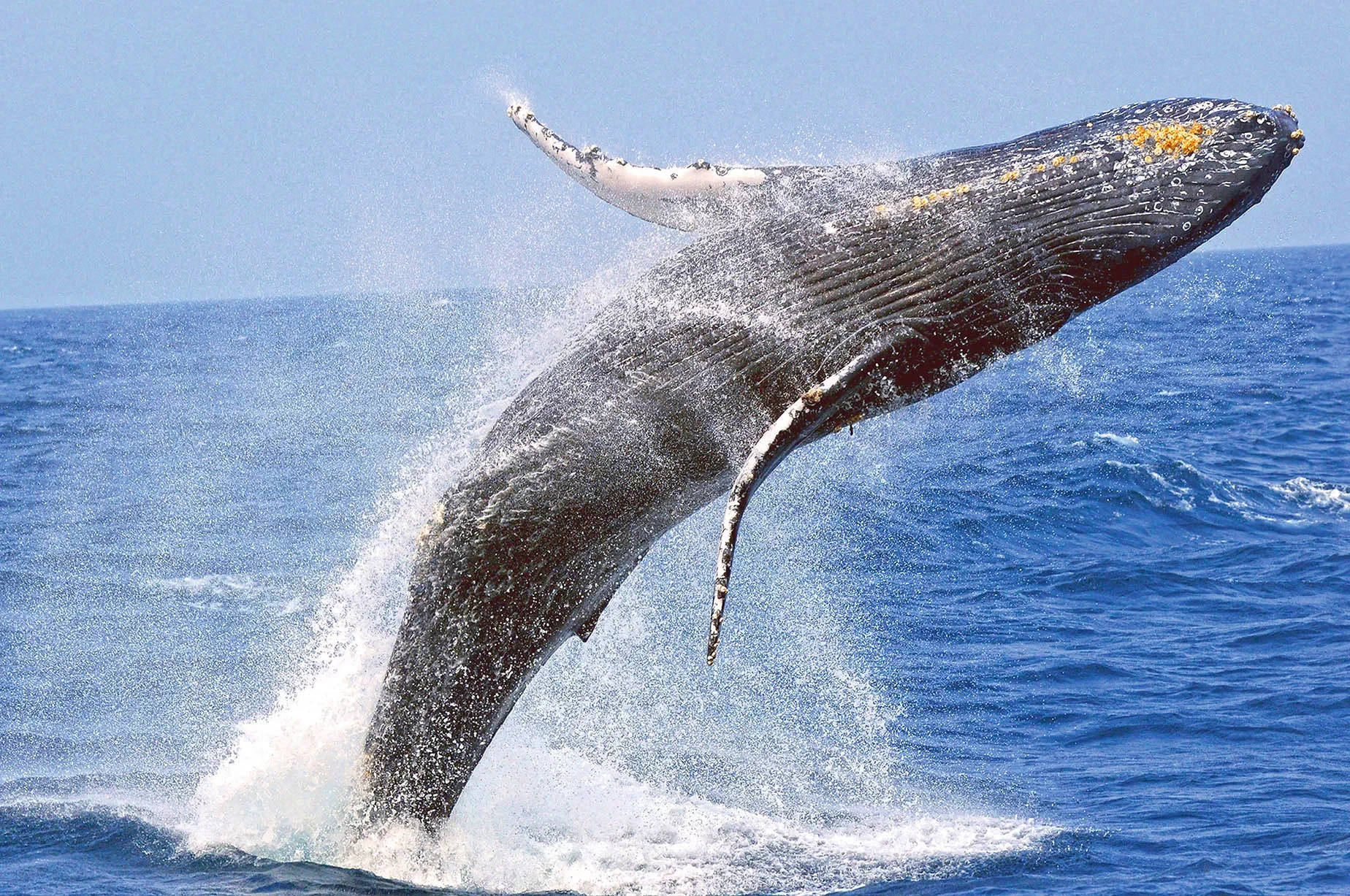
Whale watching in Okinawa is at its best in winter: tours typically run from late December through April, with January to March widely treated as the core season, and late January to February often cited as the optimum window around the Kerama area. In practice, the most reliable sightings are associated with the waters around the Kerama Islands, especially around Zamami and Tokashiki, where humpback whales arrive to breed and raise calves. Most first-time visitors book a boat tour, often about two hours, commonly offered in morning and afternoon slots, and plan a flexible itinerary in case seas are rough.
Planning snapshot
- Season: late December to April
- Core months: January to March
- Peak timing: late January to February is often described as the optimum period in the Kerama area
- Best-known area: Kerama Islands, part of Keramashoto National Park
- Main islands for “Kerama whale watching”: Zamami Island and Tokashiki Island
- Fast access by ferries: from Naha via Tomari Wharf Passenger Terminal, typical guide times are around 40 minutes by express to Tokashiki, and around 50 minutes to 1 hour 10 minutes by express to Zamami. Regular ferries take longer.
- Typical tour format: about two hours, often morning and afternoon departures. Recommended clothing tends to be warm plus windproof or waterproof, plus trainers, and seasickness precautions if you are prone.
When is whale watching season in Okinawa?
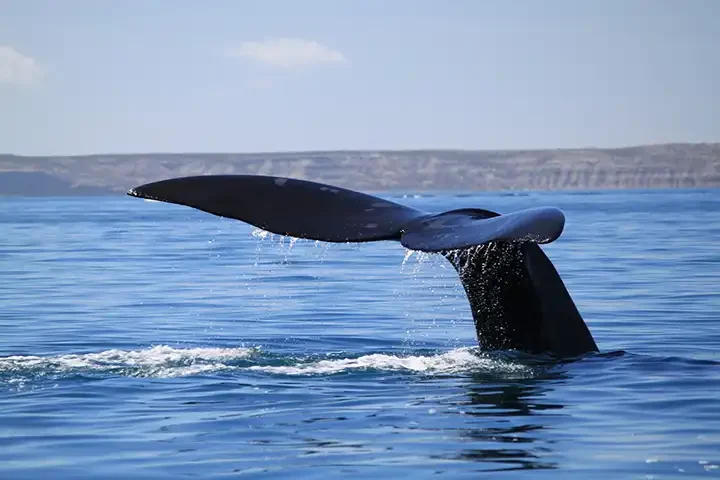
The practical answer: plan for late December to April, with January to March as the headline “Okinawa whale watching season” months in most guides. This matches how the National Parks of Japan guidance describes the Kerama area, late December to April, and how the official Okinawa guide frames the most active period, January to March.
Peak timing, when you want the highest odds: for the Kerama area specifically, one National Parks of Japan guide names late January to February as the optimum time. Because ferry and tour operations can vary by season and weather, this is best treated as a planning bias rather than a promise. Use it to choose dates, then confirm exact operating days with the operator you are considering.
Why winter is the window: winter is when humpback whales gather in these warm waters for courtship, breeding, and raising calves after migrating from northern feeding grounds in the North Pacific Ocean, including northern waters around Russia and Alaska, as described in official Okinawa tourism materials.
Where are the best places to go whale watching in Okinawa?
Okinawa offers multiple departure styles, but most first-time visitors get the clearest planning outcome by deciding between Kerama-based whale watching, the classic hotspot, and main-island departures, which are convenience-led.
Kerama whale watching: the classic choice
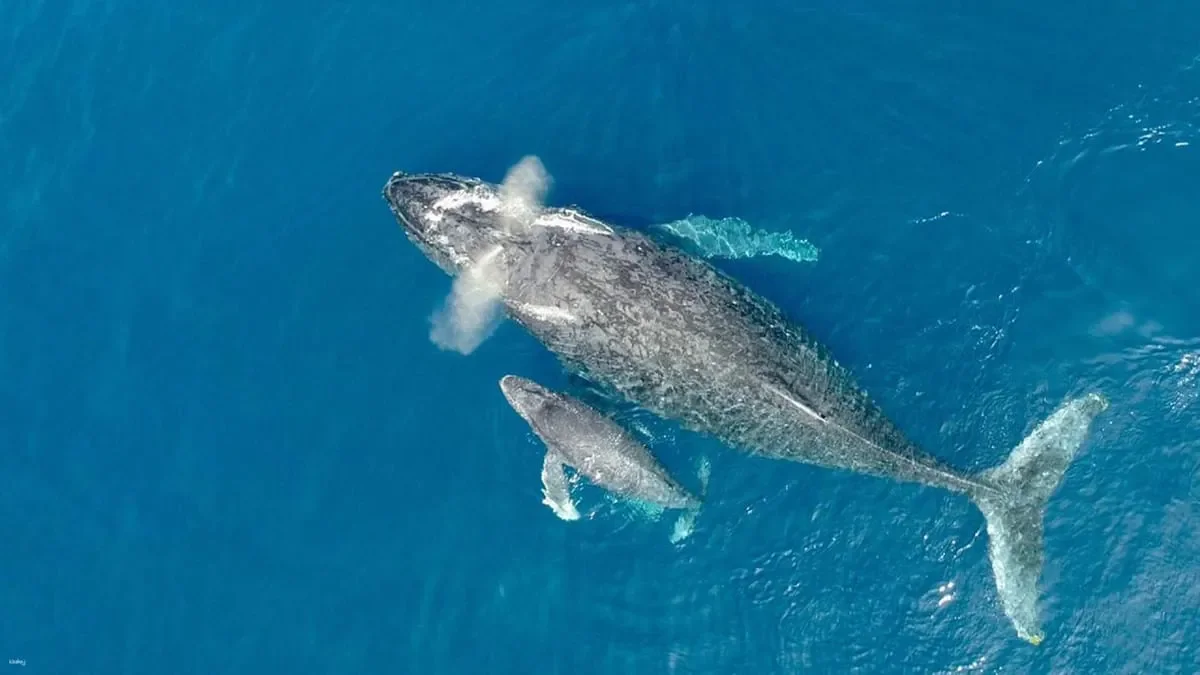
The waters around Zamami and Tokashiki are repeatedly highlighted as a whale watching “mecca” and a core viewing zone for humpbacks in the region. The National Parks of Japan guidance explicitly frames whale watching as one of Keramashoto National Park’s highlights and notes that humpbacks migrate here to breed, give birth, and raise young between late December and April.
A useful detail for trip planning: if seas are too rough for boats, or you simply prefer staying on land, official park guidance also points to island observatories as alternative vantage points and specifically names Inazaki and Teruyama observatories among suitable locations.
Whale watching from Naha and other main-island departures
If your itinerary is centred on the main island, official Okinawa tourism guidance notes that tours have multiple starting points including Naha, Yomitan, and Onna. The same guide also notes that other areas, such as northern Okinawa and Ie Island, offer whale watching tours as well.
Getting there: the ferry reality you should plan around
For travellers combining whale watching with an overnight or day trip to the Keramas, the official Okinawa ferry guide lists Tomarin, Tomari Wharf Passenger Terminal, as a key port in Naha and provides typical travel-time ranges: for Tokashiki, about 40 minutes by express and 1 hour 10 minutes by regular ferry. For Zamami, via Aka, about 50 minutes to 1 hour 10 minutes by express and 2 hours by regular ferry. The same guide warns that not all services operate daily, frequencies can vary by season, and weather can affect operations and travel times, so treat times as estimates and check timetables close to your travel date.
What whales can you see and what behaviours might you observe?
Species you are most likely to encounter
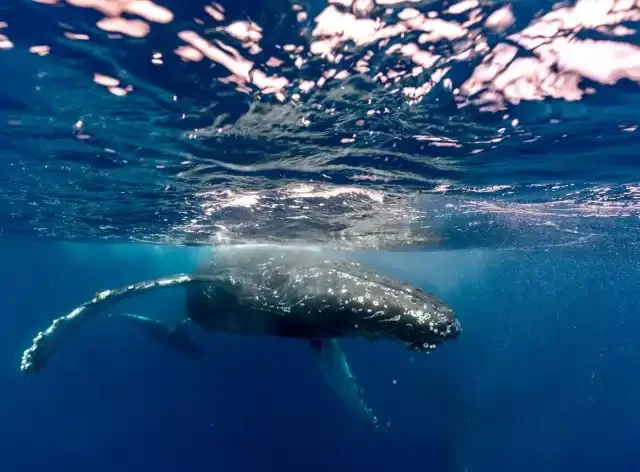
Both National Parks of Japan guidance and the official Okinawa travel guide describe humpback whales as the headline species for whale watching in this region during the winter season. The official Okinawa guide describes humpbacks travelling to the Kerama area from northern waters and gives a typical adult size of around 15 metres and a weight on the order of tens of tonnes, while National Parks of Japan similarly gives a common size range of around 12 to 15 metres.
The behaviours to look for, and what they mean
If you have never watched whales before, it helps to know the handful of behaviours operators and guides most commonly call out:
- Blow: a forceful exhale at the surface that produces a visible cloud of moist air or spray
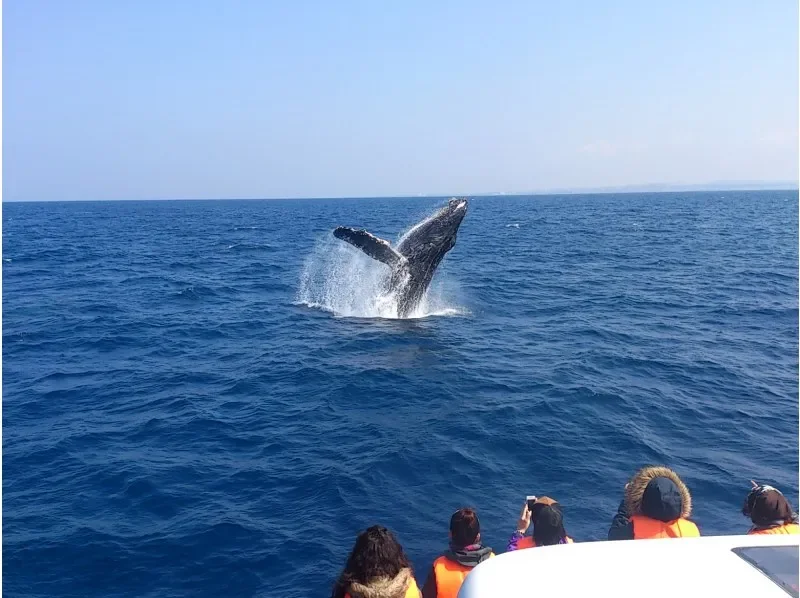
- Breaching: the whale leaps and can expose a large portion of its body above the surface
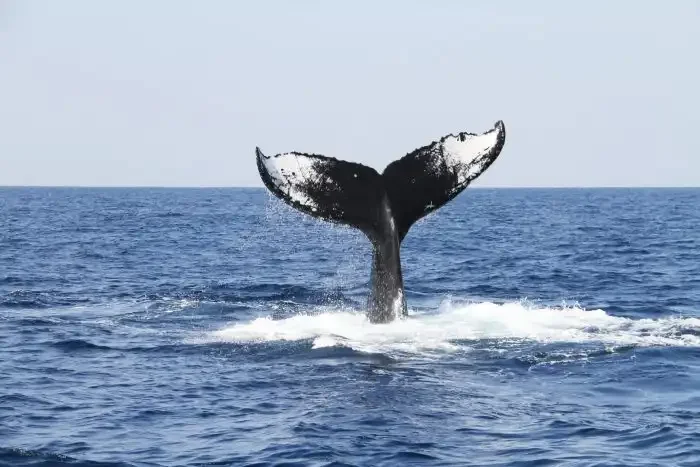
- Tail slap: the whale strikes the surface with its tail, often repeatedly, producing a loud sound and splash
- Calf sightings: official guides explicitly note that visitors may see mother and calf pairs during this season because the whales are using these waters for breeding and raising young
If you want to add extra local flavour in your final draft, the official Okinawa guide also lists movement patterns like spy hops and fin or pectoral displays to help beginners recognise what they are seeing.
What to expect on a whale watching tour
Duration, timing, and how tours actually work
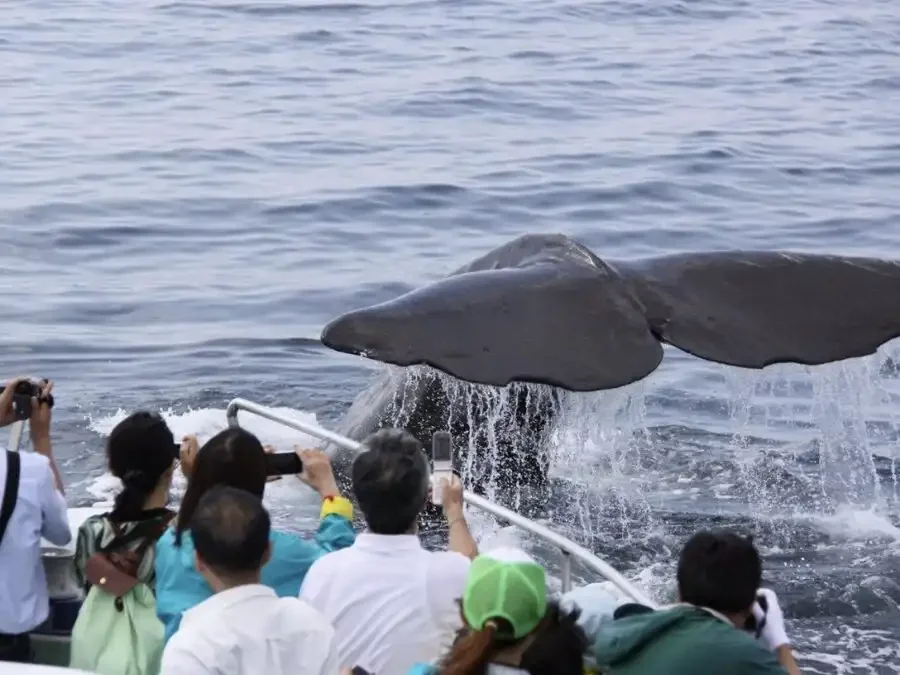
Many Okinawa whale watching trips are designed as half-day activities rather than all-day excursions. One National Parks of Japan “Wildlife Tours” listing describes tours as about two hours and notes they are commonly offered in morning and afternoon slots. That same guidance describes a scouting system used in the Kerama area, where an island-based scout from the Zamami Whale Watching Association watches from an observation deck and relays whale locations to the boat.
Just as important: official park guidance explicitly notes that when seas are too rough, whale watching boats may not venture out. In those cases, land-based observatories can be a fallback option.
Comfort, crowding, and what it feels like on board
Boat types and onboard comfort vary by operator, but the felt reality is consistent: you will be exposed to wind on deck, will likely be standing and scanning the surface for long stretches, and may shift positions quickly when whales appear. The official Okinawa guide therefore recommends clothing that is warm and water-resistant and footwear such as trainers rather than heels or restrictive clothing.
Seasickness: how to reduce the odds of a miserable trip
If you are prone to motion sickness, treat it as something to manage proactively. The official Okinawa travel guide explicitly recommends bringing motion sickness medicine and taking precautions before boarding. From a general health guidance standpoint, the NHS advises practical strategies such as avoiding reading or film use during travel and avoiding heavy meals or alcohol shortly before or during travel. The Centers for Disease Control and Prevention also notes that motion-sickness medication is generally most effective when taken before exposure rather than after symptoms begin.
What to wear and bring for whale watching in Okinawa
Official guidance is unusually specific here, and it aligns with what you feel on the water:
- Sun protection: even in winter, the official Okinawa guide advises sunscreen, plus hat and sunglasses
- Windproof or waterproof outer layer: both National Parks of Japan and the official Okinawa guide recommend waterproof or windbreaker-type clothing
- Stable shoes: trainers or sneakers are recommended, as boats can be tricky to walk on even when water is calm
- Seasickness plan: bring appropriate medication if needed, look towards the horizon, and reduce close-up screen time if you are sensitive
Naha day trip vs overnight stay: how to choose
The best choice depends less on where whales are, because they are moving, and more on your time budget, flexibility, and tolerance for transport variables.
Choose whale watching from Naha when convenience matters most
A Naha-based plan is ideal if you are on a short Okinawa holiday, travelling with a mixed-interest group, or want whale watching to be a single activity rather than the focus. This is why the official guide emphasises multiple tour starting points on the main island, including Naha, Yomitan, and Onna. The best way to make this work is to keep your schedule flexible and to treat weather as a controlling factor. The official ferry guidance makes the same point for sea travel generally.
Choose an overnight on Zamami or Tokashiki when you want more than a boat trip
An overnight stay makes sense when you want to pair whale watching with the Keramas’ beach and seascape experience and reduce day-trip time pressure. It is also the easiest way to use island observatories as a backup if boats are delayed or conditions are rough, because the park guidance explicitly positions these observatories as alternate vantage points.
A practical way to decide
If you are torn, use this simple decision rule:
- Pick a main-island departure if you can only spare a half day and you would rather minimise dependencies on ferry timetables
- Pick an overnight island stay if whale watching is a must do, you want added flexibility, and you are comfortable building your itinerary around sea conditions and schedules
Responsible whale watching, FAQs, and publishing checklist
Responsible whale watching in Okinawa
The Kerama area is repeatedly presented as a place where whale watching is managed with rules intended to protect breeding grounds. National Parks of Japan guidance states that whale watching boats follow strict rules including slowing down within 300 metres of a whale, minimising boat movement within 100 metres, and not interfering with whale activity. Official information from the Ministry of the Environment, Japan also notes that local whale watching associations have self-regulatory guidelines designed to protect humpback whale reproduction without hindering the whales.
The most useful way to reflect this in your article, and to keep it non-salesy, is to turn it into a short reader checklist:
- choose operators who reference or align with the local self-regulatory rules
- avoid tours that promise chasing or close approaches
- treat the experience as observation, not interaction
- build your schedule with weather flexibility, because responsible viewing and safety often mean cancellations in rough conditions
FAQ
When is the best time for whale watching in Okinawa?
Most guides point to winter, with tours typically running from late December through April and the core season falling in January to March. If you are choosing a best-bet window specifically for the Kerama area, one National Parks of Japan guide describes late January to February as the optimum time.
Can you go whale watching from Naha?
Yes. Official Okinawa tourism guidance describes multiple tour starting points on the main island, including Naha, alongside Kerama-based tours. Practically, this lets you keep whale watching as a half-day activity without committing to island overnights, just keep your schedule flexible in case sea conditions affect operations.
Where are the best places to see whales in Okinawa?
The most consistently highlighted hotspot is the Kerama area, especially waters around Zamami and Tokashiki, where humpback whales gather in winter to breed and raise calves. Official sources also mention that northern Okinawa and Ie Island offer whale watching tours, but the Keramas are the signature destination in most planning guides.
What kind of whales can you see whale watching in Okinawa?
The headline species in official travel and park guidance is the humpback whale. These whales migrate to the region’s warm winter waters for breeding and raising calves, and guides commonly describe adults in the 12 to 15 metre range, sometimes with calves nearby.
What whale behaviours might I see on a tour?
Commonly observed behaviours described in official guides include the blow, a forceful exhale at the surface, breaching, which is leaping out of the water, and tail slaps, striking the surface with the tail, often repeatedly. Because the season overlaps with breeding and calf-rearing, you may also see mother and calf pairs.
How long do whale watching tours last in Okinawa?
Many tours are designed to fit into a half-day schedule. A National Parks of Japan listing for the Kerama area describes a typical tour duration of about two hours and notes that trips are commonly run in morning and afternoon slots.
What should I wear for whale watching in Okinawa in winter?
Expect wind and sea spray. Official guides recommend warm, water-resistant layers such as a windbreaker, stable footwear like trainers, and sun protection such as sunscreen, hat, and sunglasses, even in winter. Clothing that is easy to move in is also recommended for walking safely on a boat.
I get seasick easily, what can I do?
First, plan ahead: official Okinawa guidance recommends bringing motion sickness medicine. General health guidance recommends practical habits like avoiding reading or screens during travel and avoiding heavy meals or alcohol shortly before travel. Clinical travel guidance also notes medication tends to work best when taken before exposure rather than after symptoms start. If you are unsure what is suitable, consult a pharmacist.
Is it worth staying overnight on the Kerama Islands just for whale watching?
It can be, especially if whale watching is the main goal of your trip. Overnight stays give you more flexibility around ferry schedules and sea conditions, and official park guidance notes that island observatories can serve as alternate viewing points when boats cannot go out. If your trip is short or packed, main-island departures may fit better.
How do I get to Zamami or Tokashiki from Naha?
The official Okinawa ferry guide lists Tomarin, Tomari Wharf Passenger Terminal, in Naha as a key port for Kerama ferries. Typical guide travel times from there include around 40 minutes by express to Tokashiki and around 50 minutes to 1 hour 10 minutes by express to Zamami, with regular ferries taking longer. Services can vary by season and be affected by weather, so check timetables close to departure.
Can I watch whales without going on a boat?
Sometimes, yes, especially if you are already staying on the islands. Official park guidance notes that if seas are too rough for whale watching boats, visitors can watch from island observatories, with binoculars recommended. This is best treated as a complement to tours rather than a replacement, because whales are mobile and conditions vary.
What should I look for in a responsible whale watching operator?
Start with whether they explicitly reference the local self-regulatory approach: official park guidance describes strict viewing rules, including speed reduction within 300 metres, minimising movement within 100 metres, and not interfering, and the Ministry of the Environment notes that local associations have self-regulatory guidelines aimed at protecting humpback reproduction. A responsible operator should align with those principles and prioritise safety and animal welfare over closeness.
If you would like to experience whale watching or another unforgettable tour in Okinawa, please click the link below to explore our tours.
