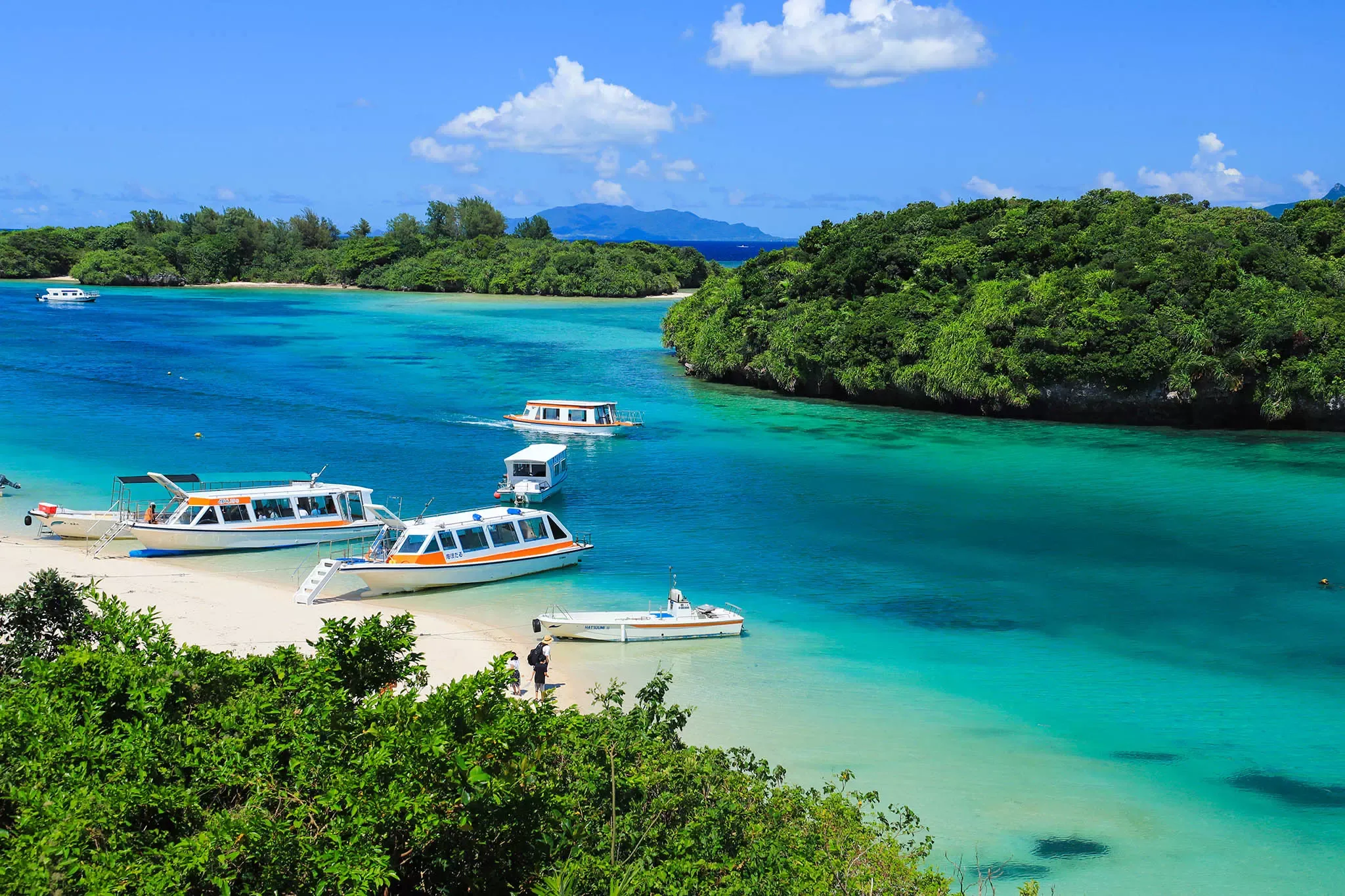
Key takeaways: Miyako Island is best approached as a “sea-first” destination—think beaches, coral reefs, and island-hopping drives. It’s compact enough for easy day-to-day exploring by car, but public transport can be limited or seasonal, so trip planning matters. Weather is generally warm year-round, with a defined rainy season and a typhoon risk window that can affect flights and ocean activities.
Miyako Island at a glance
Miyako Island is a compact, beach-focused getaway in the Miyako island group of Okinawa—famous for white sand, unusually clear water, and easy “bridge-hopping” to nearby islands.
Where is Miyako Island and what is it known for?
Miyako Island sits around 300 km southwest of Naha, roughly “between” Taiwan and the main Okinawan island chain. It’s also described as being almost as close to Taiwan as it is to Okinawa itself. The island is small enough that a drive between its farthest capes can take roughly 45 minutes, which is why many trips here feel relaxed and unhurried.
What it’s best known for is the combination of:
- Long, scenic beaches including a seven-kilometre stretch at Yonaha Maehama Beach.
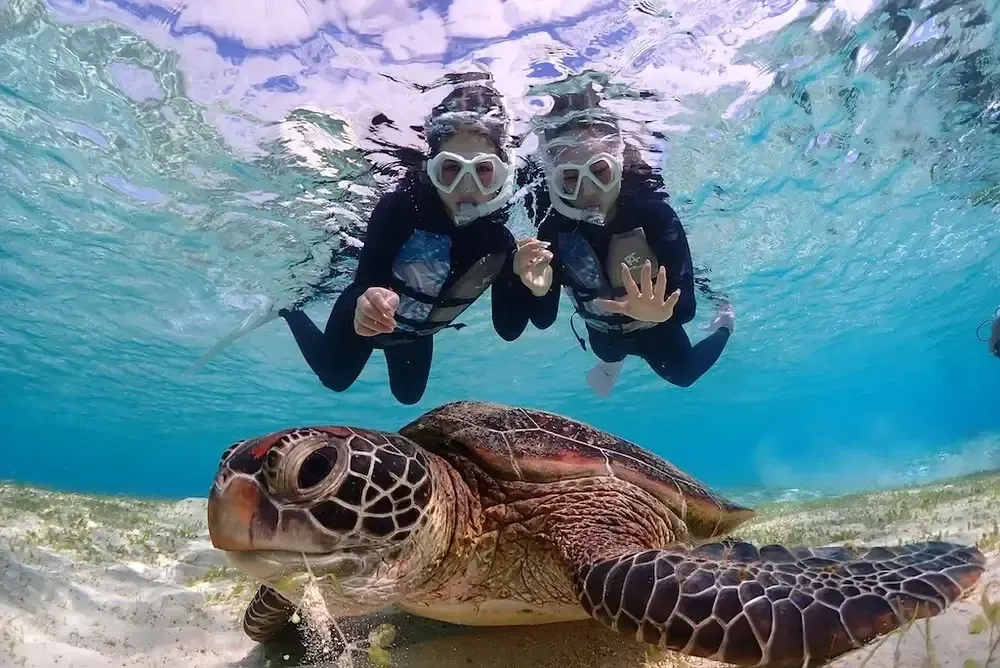
- Coral reefs and marine activities including snorkelling, diving, and paddle sports.
- Iconic coastal viewpoints like Higashi-Hennazaki Cape, including a lighthouse at the cape.
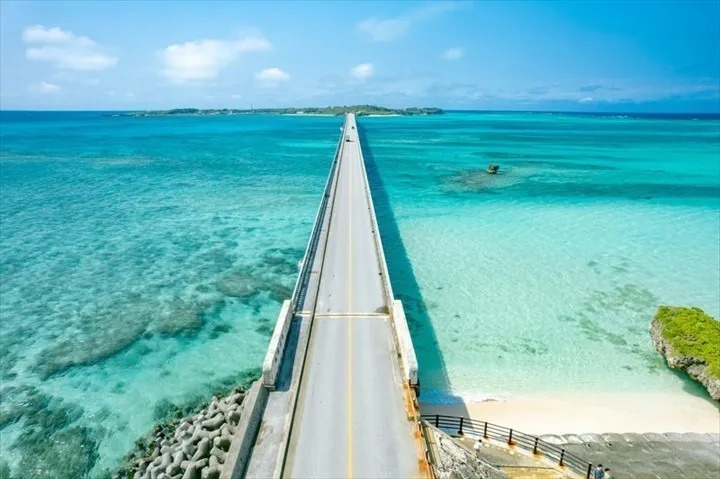
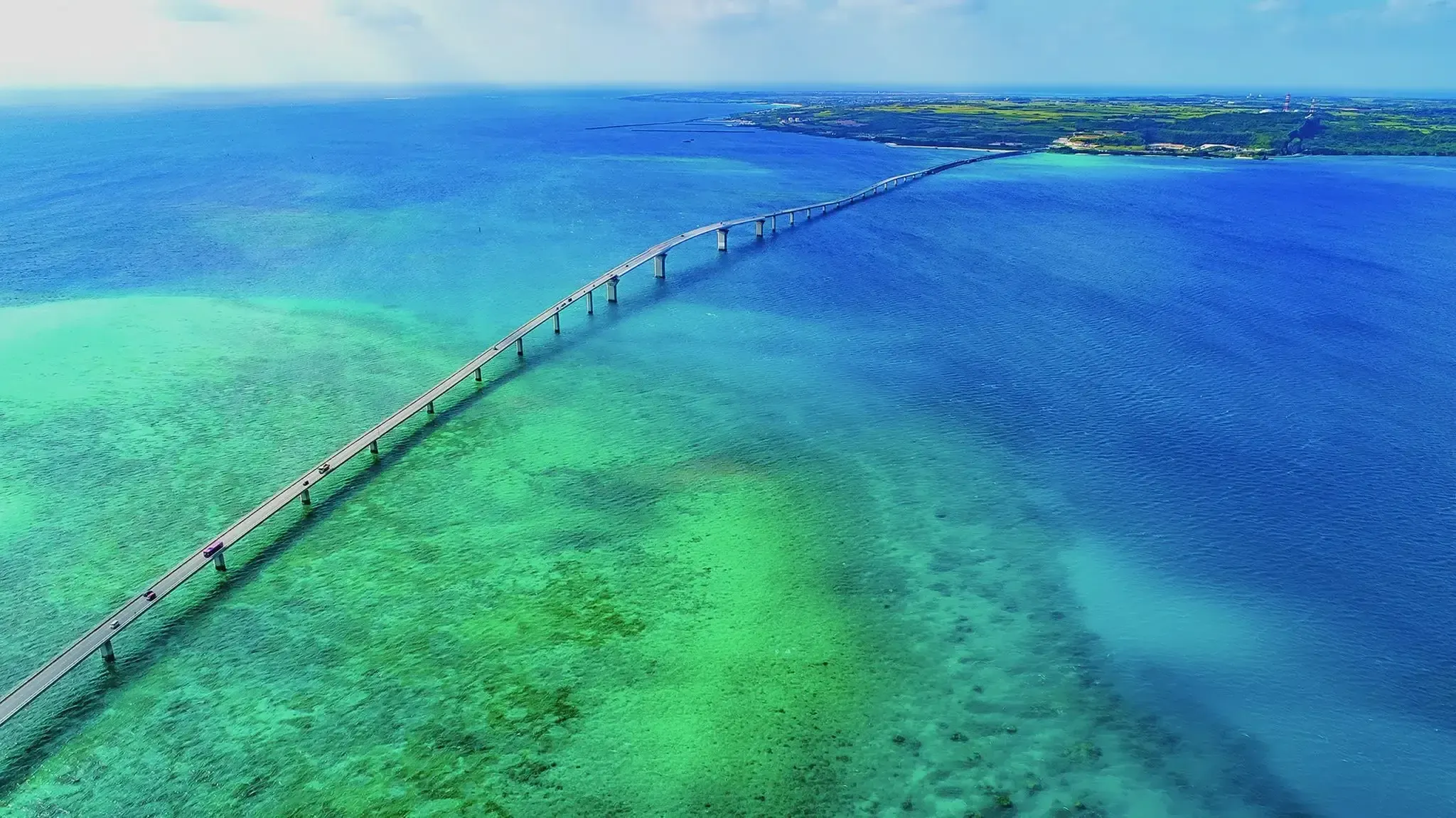
- Island-hopping by bridge, including Irabu Bridge, described as Japan’s longest toll-free bridge at 3,540 m.
Why visit Miyako Island?
If you’re choosing between “classic sightseeing” and “sea-and-sky reset,” Miyako leans strongly towards the latter. The Japan National Tourism Organization describes it as a peaceful escape where “hitting the beach is the number one pastime,” far from city nightlife.
This is a destination that works especially well if you like:
- Beach days that still feel varied, because each coast has a different texture—long open sands, sheltered coves, shallow snorkelling beaches.
- Driving viewpoints-to-beaches-to-dinner in a single day, without spending hours on the road.
- Underwater scenery, including large reef systems and, for experienced divers, caves and tunnels.
How to get to Miyako Island
For most travellers, the practical answer is: you fly in, then choose whether to base on Miyako Island itself or one of the bridge-connected islands.
Flying in
Miyakojima is served by two airports:
- Miyako Airport on Miyako Island.
- Shimojishima Airport, often used for routes branded as “Miyako [Shimojishima]”; the terminal is in the Irabu area of Miyakojima City.
Official local tourism guidance notes you can reach Miyako Island not only via Naha, but also via direct flights from major Japanese cities such as Tokyo, Osaka, Nagoya, and Fukuoka, with some routes operating seasonally.
Time-sensitive note: Airport and airline timetables change, sometimes seasonally, and sometimes at short notice, especially around storms. The official Miyako Airport Terminal schedule page explicitly warns that flight schedules may change and advises confirming with each airline.
Arriving by sea for nearby islands
While mainland-to-Miyako travel is generally flight-based, there are local ferries to smaller neighbouring islands, which matters if you’re building a wider island-hopping itinerary. The local tourism association lists passenger ferries linking Miyako to Tarama Island, about two hours and typically one round trip per day, and Ogami Island, about 15 minutes with multiple sailings, departing from local ports.
How to get around Miyako Island
For typical first-time visitors, the simplest rule is: if you want freedom, plan on a car, or combine taxis with very selective buses.
Do you need a car in Miyako Island?
In practice, a hire car is the easiest way to see beaches, capes, and bridge-connected islands at your own pace. National tourism guidance explicitly says the best way to get around is by rented car or taxi and notes local bus services can be difficult to access. It also notes it can be possible to drive around the whole island in roughly three to four hours, which is useful context for planning “one base, many day trips.”
If you’re staying mainly at a resort and mostly want beach time plus one or two excursions, you can sometimes manage with:
- Hotel shuttles if offered by your accommodation.
- Taxis which are easy for point-to-point use, but less ideal for spontaneous multi-stop days.
- Airport access buses, particularly around Shimojishima routes.
Buses and shuttles
There are government and airport-linked bus options, but they can be seasonal or tied to flight times:
- Shimojishima airport documentation notes that access buses run between the airport and city or hotel areas in coordination with flight times, and points travellers to official route information.
- The Miyako Island Loop Bus has operated as a time-limited project. As of early March 2026, its official site states the service ended on 28 February and that the next operating year is undecided.
If you want to rely on buses, build your plan around the current published timetables and have a back-up plan for evenings or remote beaches.

Best areas to stay
The best place to stay depends less on “the prettiest beach” and more on how you want your days to feel: lively and walkable, quiet and resort-like, or geared towards day trips.
A practical way to choose is to decide which of these you want to optimise:
Town convenience and easy meals
Staying near the main town area, often referenced as Hirara, can make evenings easier with more casual restaurants, shops, and access to the port area. This is a good choice if you like to plan less and wander more after sunset.
Resort-style relaxation
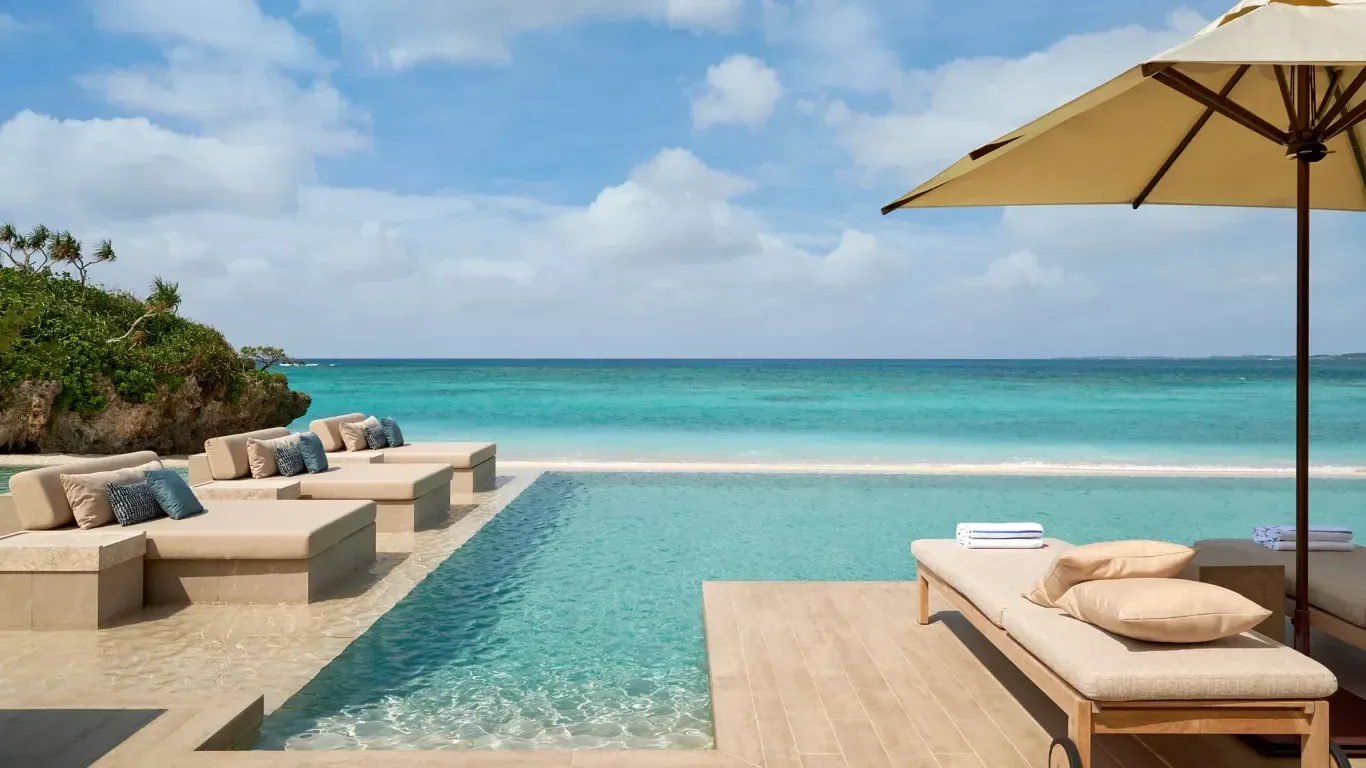
If your dream is “breakfast, beach, pool, repeat,” resort areas in the south and along popular beach stretches can be ideal. A key trade-off is that you’ll likely depend on a car, taxis, or hotel transport for exploring more widely.
Island-hopping focus
Because bridges connect Miyako to several smaller islands—Irabu Island, Shimoji Island, Kurima Island, and Ikema Island—you can also base yourself to prioritise day trips and quieter beaches. For example, Shimoji Island has limited accommodation, so nearby Irabu is often the practical choice if you want that side of the islands.
Best things to do
If you only remember one planning principle, make it this: choose a handful of “anchor experiences” such as one beach day, one bridge day, one snorkel or dive day, and one viewpoint or sunset, then let everything else be optional. That’s how you keep Miyako feeling calm rather than rushed.
Original version included an image carousel here featuring Yonaha Maehama Beach, Irabu Bridge, Higashi-Hennazaki Cape lighthouse, and Tooriike Pond on Shimoji Island.
Start with the beaches
A good first-time beach trio, each with a different feel, is:
- Long, iconic sands: Yonaha Maehama is highlighted by both Okinawa’s official tourism guide and national tourism sources as a standout, and is described as roughly seven kilometres in length.
- A smaller, photogenic cove: Sunayama Beach is noted for its arch-shaped rock formation and cove-like setting.
- Shallow snorkelling: Aragusuku Beach is described as a place where you may see subtropical fish in shallow, clear water.
Safety tip, worth taking seriously: official Okinawa guidance recommends wearing a life jacket for marine activities and sticking to designated swimming areas and reputable operators.
Drive the bridges and make a day of it
Miyako’s bridge-linked islands are not just “side trips”—they’re a core part of what makes the area special. Okinawa’s official guide describes multiple bridge connections, including Irabu and Ikema, plus access towards Kurima, and notes Irabu Bridge’s standout length and toll-free status.
Two useful planning notes:
- Don’t overload the day. One “bridge day” can comfortably include a scenic drive, one or two short stops, and a long lunch near the sea.
- Park considerately. Local sustainability guidance explicitly asks visitors not to do nuisance parking, including on bridges or near intersections.
Snorkel or dive with a reef-first mindset
The Miyako Islands are described as being surrounded by large coral reefs and offering plentiful marine activities. If you want a “big reef” experience, Yabiji Reef, also known as Yaebiji, is described as one of Japan’s largest reef groups, stretching about 17 km north to south, and is noted as a Natural Monument of Japan.
If you’re diving:
- Okinawa’s official diving guidance notes Miyako is especially popular for cave dives, with some sites described as technical, and that diving plans should account for typhoons and winter winds.
- The same guidance states that certification is required for open-water dives, while discovery experiences exist for people without licences.
See the capes and coastal viewpoints
If beaches are Miyako’s “soft side,” the capes are its dramatic side. Okinawa’s official guide highlights coastline views at Higashi-Hennazaki and also mentions Cape Nishi-Hennazaki as a contrasting viewpoint with island views.
These cape stops are ideal for:
- Early morning or late afternoon light
- Windy days when the beach isn’t inviting
- A one-hour mini-adventure when you want something other than swimming
Visit a distinctive natural landmark
On nearby Shimoji Island, Tooriike Pond is described as two deep blue ponds beside the ocean, viewed via a looping walking trail. Another local cultural and museum source adds detail: the ponds connect to the ocean via an underwater cavern, about 10 m in diameter, and their depths change with the tide.
Important nuance: Okinawa’s official guide notes that diving here exists but that exploring the tunnels requires advanced diving skills, so for most travellers, this is best treated as a scenic walk rather than an activity spot.
Taste local flavours you’ll actually remember
A Miyakojima guide feels incomplete without at least two food notes:
- Okinawa’s official Miyako page calls out Miyako soba and highlights local mangoes, with mango season noted as June through August.
- Because Miyako is small, a good strategy is simply to pick one evening for a “local-speciality night” with soba and an island fruit dessert, then keep the rest flexible.
How many days to spend and when to visit
A good Miyako plan balances time in the water with time to slow down—and it’s much easier to do that with at least a few nights.
How many days do you need?
A first-time framework that fits most travellers:
A long weekend length trip
Enough for one iconic beach day, one bridge day, and one snorkel or viewpoint day without cramming.
A four-night length trip
Enough to build in weather flexibility, which is important on subtropical islands, plus a slower day where you do very little and love it.
A week length trip
Best if you want to add a boat or snorkel tour day, repeat your favourite beach, and take the “when we feel like it” pace seriously. This is also the trip length where basing on a bridge-connected island can be worthwhile.
Best time to visit Miyako Island
The climate is broadly warm, but your experience will vary a lot depending on rainfall, humidity, and storm risk.
According to the Japan Meteorological Agency normal values for 1991 to 2020 for Miyakojima, average temperatures rise from about 18 to 20°C in winter to around 28 to 29°C in summer, with monthly rainfall generally higher in late spring and summer. The local meteorological office also describes the region as warm and humid, subtropical, with a rainy season typically running from around early to mid May to around late June, and notes a tendency for strong typhoons around September.
If you’re choosing based on trip style:
- For swimming and classic “Miyako blue” beach weather: late spring through autumn tends to align with warmer sea and air temperatures, but it overlaps with rain and typhoon risks, so build in flexibility.
- For diving visibility and fewer crowds: cooler months can still be diveable. Official Okinawa guidance notes diving is possible year-round with the right gear, and highlights wind and boat chill in winter.
- For maximum safety and comfort: avoid forcing ocean plans on high-wind or rough-sea days. Local guidance recommends skipping the ocean when waves are high or weather is poor.
Sample Miyako Island itinerary ideas
These are intentionally flexible, so you can swap beaches and viewpoints based on weather.
Two day Miyako Island itinerary
Arrive, settle in, sunset near the coast.
Next day: one iconic beach morning, a relaxed lunch, then a cape viewpoint in late afternoon.
Three day Miyako Island itinerary
Day one: town plus easy beach.
Day two: bridge drive and beaches on a neighbouring island.
Day three: a snorkel tour or shallow-water snorkel beach, then an unplanned café stop.
Four day Miyako Island itinerary
Use one day as a weather buffer. If the sea is rough, make it your viewpoints plus local food day. If conditions are calm, use it for a reef tour such as Yabiji by boat.
Practical tips and responsible travel
The best Miyako trips combine good planning with good manners, because the island’s appeal depends on healthy reefs, clean beaches, and respect for the people who live here.
Practical tips for first-time visitors
Plan your transport before you arrive.
If you want a hire car, book early around peak seasons. If you want buses, check what’s operating at the time of your trip, as some services have operated on a limited or trial basis.
Treat ocean conditions as the boss of your schedule.
Official guidance emphasises life jackets and avoiding the ocean when you’re unwell or when conditions are rough.
Keep one spare half-day.
This is the easiest way to handle surprise rain, wind that makes beaches unpleasant, or a day where you simply want to do nothing, and that’s part of the point.
Time-sensitive note: Flight schedules can change, so always confirm on official airport and airline channels close to departure.
Responsible travel tips
Local tourism guidance frames Miyako’s nature and culture as precious but not “forever,” and asks visitors to follow sustainable tourism guidelines. The visitor actions list in the official sustainability guideline includes clear, practical do’s and don’ts:
- No-touch coral manners: don’t stand on coral or rocks in shallow reef areas, don’t kick coral with fins, and avoid long fins in shallow reef zones.
- Don’t feed marine life, including sea turtles and fish, and don’t touch wildlife.
- Use reef-safer sun protection and consider rash guards and sunglasses to reduce reliance on sunscreen.
- Take your rubbish with you and avoid litter, including cigarette ends.
- No fires or barbecues on beaches and parks is stated as a general rule.
- Respect local communities: don’t walk around residential areas in swimwear only, avoid nuisance parking, and be mindful of restricted or sacred places.
These aren’t just nice ideas. They’re the difference between Miyako remaining a place people want to visit and a place residents feel overwhelmed by.
FAQ
Is Miyako Island worth visiting?
If you want a calm, sea-centred trip with beaches, reefs, and coastal views, Miyako Island is one of Okinawa’s strongest choices.
Do you need a car in Miyako Island?
For most first-time visitors, yes. National tourism guidance says the best way to get around is by rented car or taxi, and notes local buses can be hard to use.
What are the best beaches on Miyako Island?
If you want one signature beach to start with, Yonaha Maehama is widely highlighted and described as a long, seven-kilometre stretch. Smaller beaches like Sunayama and shallow snorkel-friendly beaches like Aragusuku offer variety.
What is Miyako Island famous for besides beaches?
Bridge-connected island drives, especially Irabu Bridge, cape viewpoints like Higashi-Hennazaki, and coral reef experiences like Yabiji are among the most distinctive.
When is the best time to visit Miyako Island?
It depends on priorities. Warmer months suit swimming, while shoulder seasons can still be warm but require flexibility due to rain and storm patterns. Local meteorological guidance notes a rainy season in late spring and a typhoon tendency in summer to early autumn.
Final thoughts
The most satisfying Miyako Island itinerary is rarely the most packed one. Pick a few anchor experiences—the long beach, the bridge drive, a reef day, a viewpoint sunset—then leave space for weather, wandering, and slow meals. That’s when Miyako stops being a checklist and starts feeling like a real holiday.
If you are looking for island hopping experiences in Okinawa, why not join an island hopping experience with Evertrail Tours and discover another side of the islands at a slower, more memorable pace?
Evertrail Tours · March 13, 2026