Shuri Castle is one of the most important historic places in Okinawa, and even during restoration it remains one of the best places to understand the story of the Ryukyu Kingdom.
Set on a hill above Naha, Shuri Castle was the political, diplomatic, and cultural center of the Ryukyu Kingdom for around 450 years. It was not simply a fortress. It was a royal palace, a ceremonial space, and a symbol of a maritime kingdom shaped by exchange with China, Japan, Korea, and Southeast Asia.
Many visitors still assume the whole site is closed because of the 2019 fire, but that is not the full picture. Shurijo Castle Park is still open, and visitors can walk through gates, courtyards, viewpoints, and sacred spaces across the grounds. You can also now see the rebuilt exterior of the Seiden, or main hall, from the paid area, which makes the visit much more rewarding than many people expect.

Key takeaways
- Shuri Castle was the royal palace of the Ryukyu Kingdom and the center of politics, diplomacy, and culture for centuries.
- The site is part of the UNESCO World Heritage property called Gusuku Sites and Related Properties of the Kingdom of Ryukyu.
- The Seiden main hall was destroyed in the October 31, 2019 fire, along with nine other facilities.
- The rebuilt main hall exterior was completed in July 2025, and the temporary roof was removed by the end of October 2025.
- Interior work is still ongoing, with the official target set for fall 2026.
- Shurijo Castle Park remains worth visiting during restoration because visitors can still explore gates, viewpoints, sacred sites, and exhibition spaces, while also seeing the rebuilt exterior of the main hall.
.webp)
What is Shuri Castle?
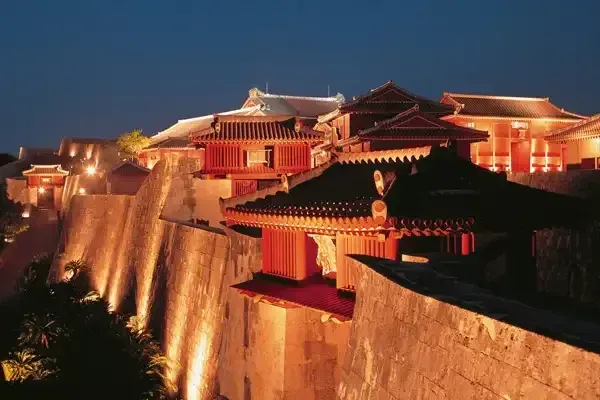
Shuri Castle, or Shurijo, was the royal palace complex of the Ryukyu Kingdom in what is now Naha. While many people picture only the bright red main hall, the site is really a much larger castle environment, with stone walls, ceremonial spaces, royal areas, gates, viewpoints, and sacred places spread across the hilltop grounds.
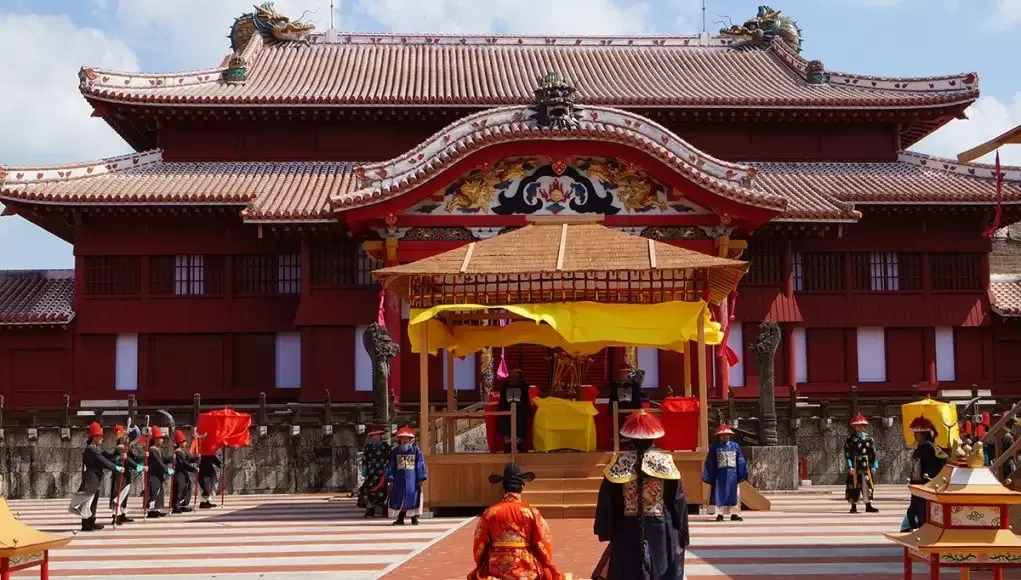
The heart of the site is the Seiden, the main hall. The official park describes it as the largest wooden structure of the Ryukyu Kingdom and the symbolic center of royal authority. It was a two layer structure with three floors, with the first floor used for political duties and ceremonies, and the upper level connected to rituals involving the king, his family, and court women.
As for its origins, the official park explains that the Seiden is believed to date from around the late 14th century, based on excavation work carried out before the 1992 restoration. That is the safest and most useful date to use today, especially since older tourism summaries sometimes describe the castle more broadly as having 13th century origins.
What makes Shuri Castle feel different from castles elsewhere in Japan is that it reflects the world of the Ryukyu Kingdom rather than samurai era Japan alone. The architecture shows influences from both China and Japan, but the overall result is distinctively Ryukyuan. The red lacquered appearance, dragon pillars, and ceremonial layout all reflect a court culture that developed in its own way.
Why Shuri Castle matters in Okinawan history
To understand why Shuri Castle matters, it helps to think of it less as a single building and more as the symbolic center of an island kingdom.
The Ryukyu Kingdom existed from 1429 to 1879, and Shuri Castle stood at the center of its political life. This was where rulers governed, where ceremonies were performed, where diplomacy was staged, and where the kingdom presented itself to foreign envoys. The wider site included ceremonial, residential, and administrative zones, which shows just how much more it was than a simple fortress.
UNESCO places the site within a much larger historical frame. The World Heritage property represents five hundred years of Ryukyuan history and reflects the role of the Ryukyu Islands as a center of economic and cultural interchange between Southeast Asia, China, Korea, and Japan. That matters because it explains why Okinawan culture feels connected to the wider region while still remaining clearly distinct.
Shuri Castle also matters because it sits within a sacred landscape. Across the wider World Heritage property, UNESCO highlights the survival of an indigenous tradition of nature and ancestor worship. At Shuri itself, that deeper spiritual dimension can still be felt in places like Sonohyan utaki Ishimon, where Ryukyu kings once prayed for safe journeys.
For Okinawans, the castle is not only a historic monument. It is also a powerful symbol of identity, memory, and continuity. That is one reason the restoration after the 2019 fire has carried such emotional weight.
A short history of destruction and rebuilding
Shuri Castle has been destroyed and rebuilt many times, and fire is part of its story long before the events of recent years.
The Seiden is believed to date from around the late 14th century. Over the centuries, the castle burned multiple times and was repeatedly rebuilt, usually on nearly the same spot. The version that later became the model for modern restoration was rebuilt in 1712.
In 1925, the prewar Seiden was designated a National Treasure. Then came the Battle of Okinawa in 1945, when the castle was destroyed again. The loss was enormous. What visitors came to know in the late 20th century was the result of a major postwar restoration effort, with the reconstructed main hall completed in 1992.
In 2000, Shuri Castle became part of the UNESCO World Heritage property Gusuku Sites and Related Properties of the Kingdom of Ryukyu.
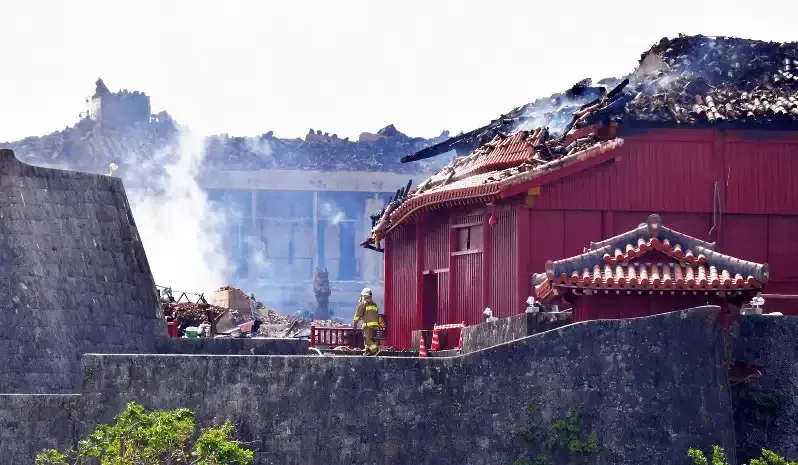
Then, in the early hours of October 31, 2019, disaster struck once more. A fire broke out inside the Seiden and destroyed the main hall along with nine facilities. The fire burned for around 11 hours, and investigations did not establish a definitive cause.
Japan adopted its basic restoration policy in December 2019, followed by a formal reconstruction roadmap in March 2020. Part of the paid area reopened in June 2020, allowing visitors back into sections of the site. Major reconstruction of the Seiden moved forward after a groundbreaking ceremony in November 2022.
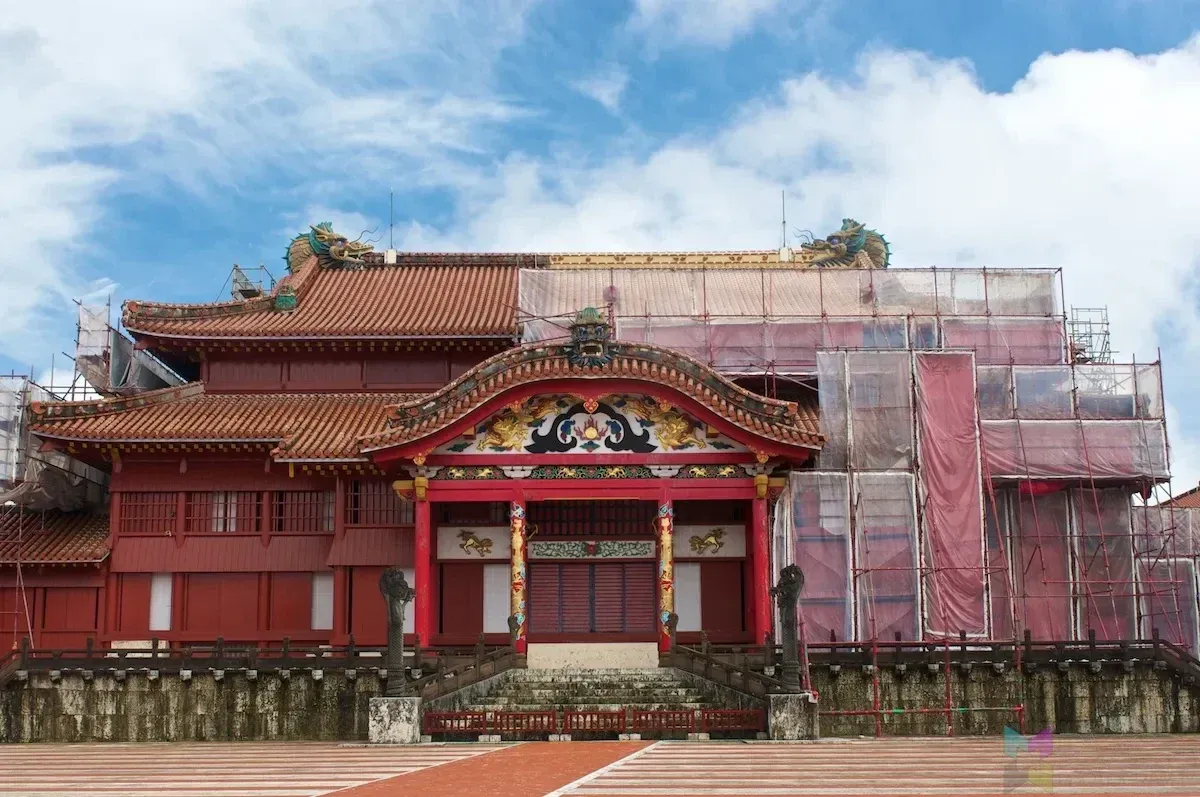
Several recent milestones are especially important. Official reporting states that exterior coloring work was completed in May 2025. The roof and overall exterior were completed in July 2025. The temporary roof structure that had enclosed the work was dismantled by the end of October 2025. As a result, visitors can now once again see the rebuilt main hall exterior from inside the paid area.
Interior work is still ongoing, and the official target remains fall 2026.
What to see at Shurijo Castle Park today
One of the biggest strengths of Shuri Castle right now is that the visit still feels layered. Even without full access to the rebuilt main hall interior, there is plenty to see.
The park clearly separates free and paid areas. The free area includes Kankaimon, Kobikimon, and Kyukeimon. The paid area includes Houshinmon, Yohokoriden, and Agari no Azana. For many visitors, the paid area is worth it, not just because it gets you closer to the rebuilt Seiden, but because it gives you a much better sense of how the castle functioned as a royal complex.
One of the most famous landmarks is Shureimon Gate, which remains one of the best photo spots in the park. It is the classic image many people associate with Shuri.
Another essential stop is Sonohyan utaki Ishimon. This stone gate, made of Ryukyuan limestone, stands just outside the core castle area and carries real historical meaning. It dates to 1519 and was the place where the king prayed for safe travel whenever he left the castle. It gives the visit a spiritual dimension that many casual guides barely mention.
Inside the paid area, Yohokoriden and the restoration related exhibition spaces help connect the physical site to the lost interior world of the kingdom. Depending on the timing of your visit, displays may include decorative elements, prototypes, and interpretation related to the rebuilding process.
Then there are the viewpoints. Agari no Azana is one of the best known, but the wider hilltop setting matters too. The castle stands above Naha, and that elevated position helps explain why the site was so important in the first place. On clear days, some viewpoints stretch far across the city and out toward the sea.
It is also worth remembering that this is a walking site. The park sits on a hill about 120 to 130 meters above sea level, with slopes, steps, and stone paved paths throughout. Comfortable shoes make a real difference here.
.webp)
Restoration updates in 2026
If you want the simplest possible summary of the current situation, it is this: the rebuilt main hall exterior is complete and visible, while the interior is still under construction.
According to official reporting, exterior coloring work was completed in May 2025, followed by the roof and overall exterior in July 2025. Interior work, including painting, joinery, and mechanical and electrical systems, is ongoing and scheduled for completion in fall 2026.
That means visitors in 2026 are seeing Shuri Castle in a meaningful in between stage. The site no longer feels like a fully hidden construction zone, because the rebuilt exterior is back in view. At the same time, the project is not finished, and some aspects of the full visitor experience are still to come.
There is another important part of the story too. The restoration is not just about rebuilding what was lost. It is also about reducing the risk of another disaster. Government restoration policy has placed major emphasis on stronger fire prevention measures, including upgraded alarms, sprinkler systems, and improved water supply infrastructure for firefighting. That may not be the most romantic part of the story, but it is one of the most important.
Is Shuri Castle worth visiting during restoration?
For most travelers, yes.
If your only goal is to step inside a fully finished main hall interior, then it may make sense to wait. But for almost everyone else, Shuri Castle is still worth your time. In some ways, it may even be more interesting now than people expect.
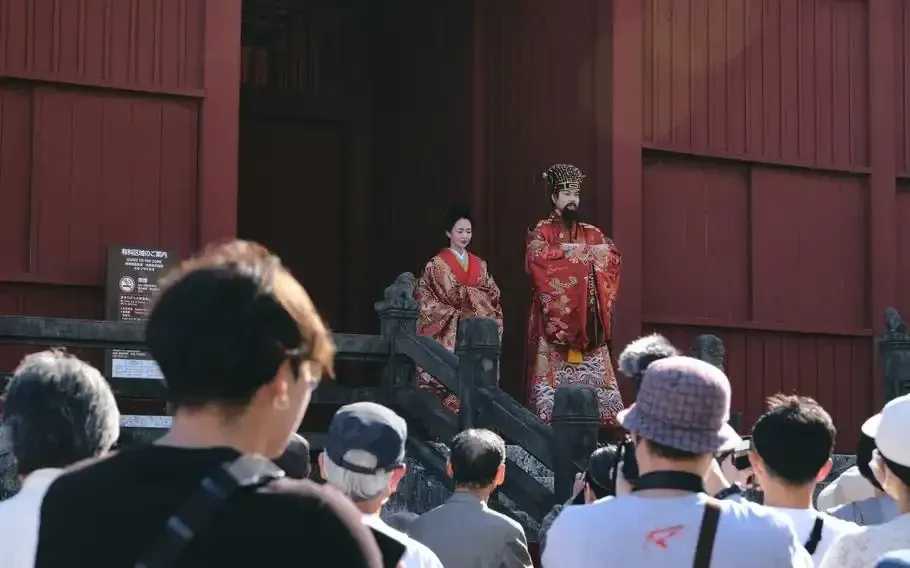
You are not just looking at a restoration site. You are walking through the political heart of the Ryukyu Kingdom, seeing how the landscape, gates, sacred spaces, and viewpoints all fit together. You are also seeing a major cultural reconstruction project in progress, one tied closely to Okinawan identity and memory.
Earlier visitors saw more enclosed construction infrastructure. Visitors now get the very different experience of seeing the restored exterior itself, which makes the visit feel more complete again.
So is it worth visiting now? If you care about Okinawan history, Ryukyu culture, architecture, or simply understanding a place beyond its postcard image, absolutely. If you are expecting a completely restored interior and zero restoration related limitations, it is better to go with tempered expectations.
Practical visitor tips
Shurijo Castle Park publishes separate seasonal hours for the free and paid areas, so it is worth checking the official site before your visit. As of March 2026, the free area opens earlier than the paid area, and paid area ticket sales end 30 minutes before closing.
The paid area admission fee is currently 400 yen for adults, 300 yen for high school students, and 160 yen for elementary and junior high school students. Children aged 6 and younger enter free.
Getting there is straightforward without a car. The most common route is to take the Yui Rail to Shuri Station, then walk about 15 to 20 minutes or continue by local bus. From central Naha, bus access is also easy.
Accessibility is better than many people expect for a historic hilltop site. The park provides free wheelchair rentals and lists features such as a wheelchair elevator, lifts, slopes, and accessible washrooms. Assistance dogs are also permitted.
FAQs
Is Shuri Castle open in 2026?
Yes. Shurijo Castle Park is open, and visitors can access both free and paid areas. The main hall interior is not yet fully reopened, but the site is still very much visitable.
Can you see the rebuilt main hall now?
Yes. The rebuilt exterior of the Seiden is now visible from the paid area after the temporary roof structure was removed in late October 2025.
When will Shuri Castle restoration be finished?
The official target for completion of the main hall interior remains fall 2026. This should still be checked close to your publication or visit date in case the schedule changes.
Is Shuri Castle still a UNESCO World Heritage site?
Yes. Shuri Castle remains part of the UNESCO World Heritage property called Gusuku Sites and Related Properties of the Kingdom of Ryukyu.
What can you see during restoration?
Visitors can still see major gates, courtyards, viewpoints, sacred features, exhibition spaces, and the rebuilt exterior of the Seiden. The site still offers a meaningful and visually rewarding visit.
How much does it cost to enter Shuri Castle?
The paid area admission fee is currently 400 yen for adults, 300 yen for high school students, and 160 yen for elementary and junior high school students. Children aged 6 and younger enter free.
Is Shuri Castle worth visiting while reconstruction is still ongoing?
Yes, especially for travelers interested in history, architecture, Okinawan culture, and meaningful heritage sites. It may be less satisfying only for those who want a fully finished interior experience right now.
How do you get to Shuri Castle without a car?
The easiest way is usually to take the Yui Rail to Shuri Station and then walk or take a short local bus ride. It is also easy to reach by taxi from central Naha.
Final thoughts
Shuri Castle is not a place you visit only to tick off a famous landmark. It is a place that helps explain Okinawa itself.
Its history is a story of kingdom, exchange, destruction, memory, and rebuilding. Its UNESCO status is not just a label. It reflects the fact that this site sits inside a much wider story about Ryukyuan culture and its place in East Asian history. And its present condition, even during restoration, still offers more than enough for a meaningful visit.
If you go now, you are not seeing a finished monument frozen in time. You are seeing a living historic site in the middle of its next chapter. For many visitors, that may be the most compelling time to see it.
If you are planning a trip to Okinawa, take a look at our tours below and let us help you experience more of the island.
Okinawa Culture & History Tours
Evertrail Tours · March 12, 2026