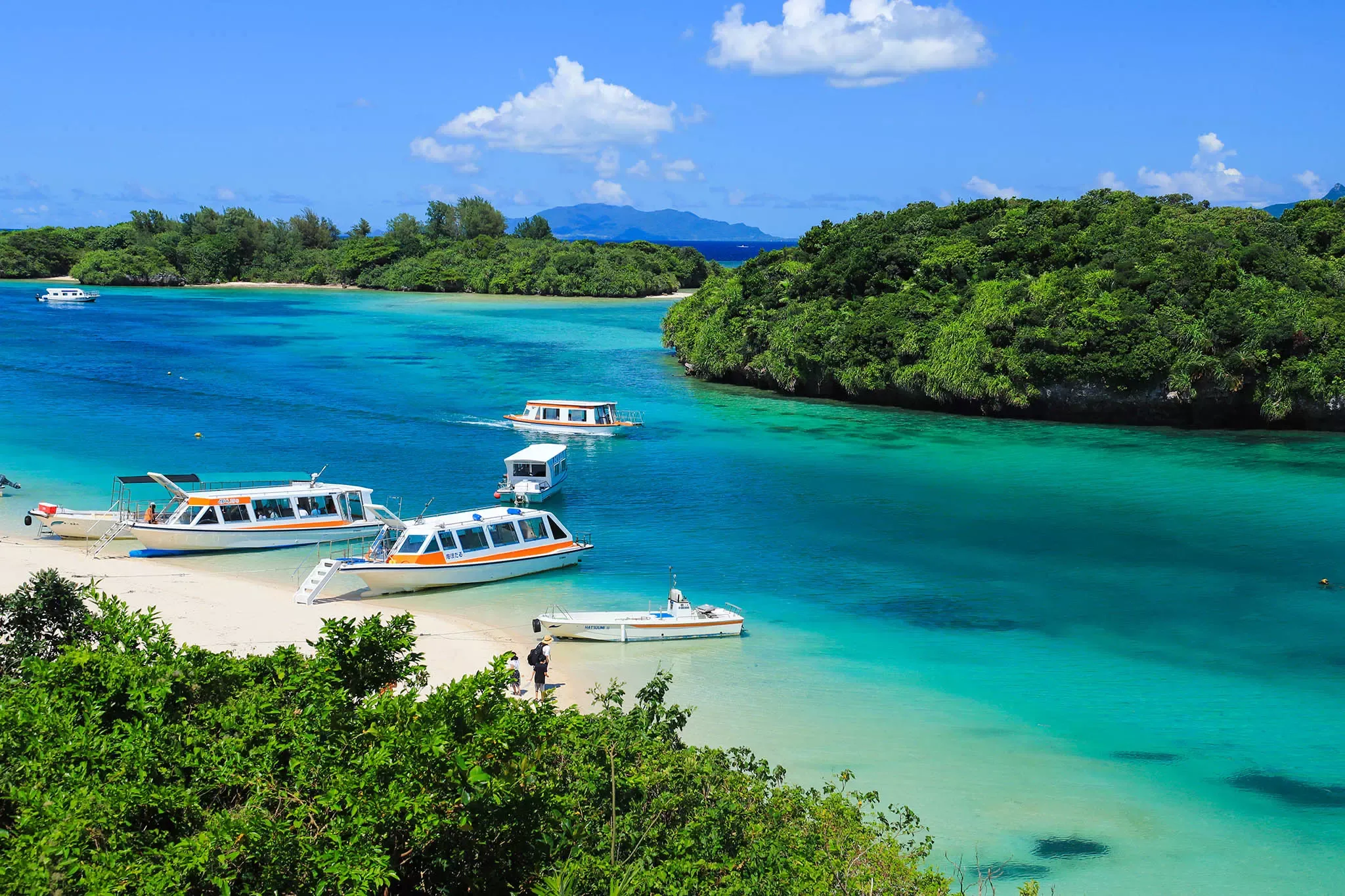
A real-world guide for parents traveling with children from toddlers to early teens
You already know about Churaumi Aquarium. Everyone does. It's magnificent, it's iconic, and yes, you should absolutely go. But if that's the only pin on your Okinawa map, you're leaving behind one of the most genuinely family-friendly destinations in all of Asia.
Okinawa with kids isn't just doable. It's exceptional. The water is warm and crystal clear enough to snorkel all summer. The food is mild, varied, and affordable. The locals are famously welcoming toward children. The island is small enough that nothing feels too far, yet different enough from mainland Japan that your kids will feel like they've landed somewhere genuinely foreign and exciting. Whether you're visiting beautiful Okinawa for the first time or returning for another trip to Okinawa with the whole family, there is always something new to discover.
This Okinawa family itinerary is built for real families, the ones travelling with a toddler who needs a nap by 1pm and a twelve-year-old who's already bored of "just another beach." It's five days of fun things to do in Okinawa with kids you can actually use, with honest notes on transport, food, rainy-day swaps, and what makes each experience worth the effort.
Let's get into it.
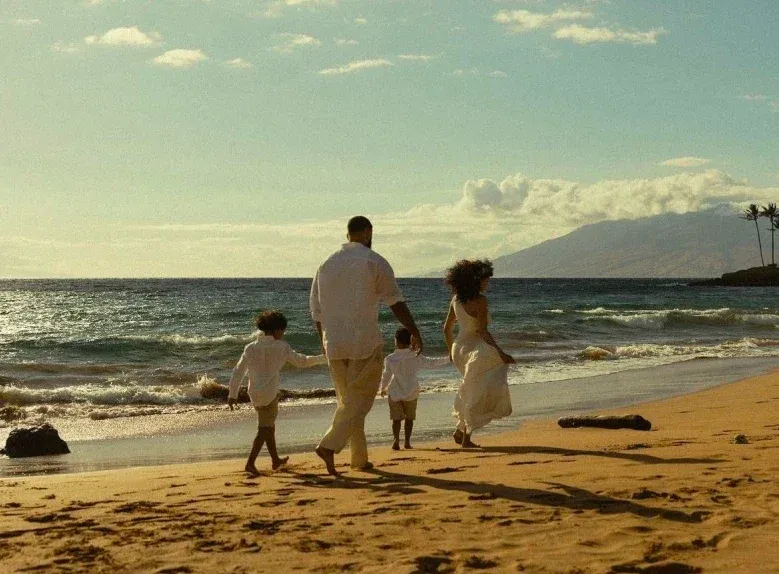
Before You Go: Essential Logistics for Families
Getting Around Okinawa with Kids
Here's the honest truth: you need a rental car.Okinawa has a monorail in Naha, and it's handy for the city, but beyond that, public transport is infrequent and genuinely difficult to navigate with young children and gear in tow.
A rental car gives you the freedom to time driving legs to nap schedules, stop at roadside shaved ice stalls on a whim, and discover the kind of unmarked beach that never appears on any tourist map. Most car rental agencies operate near Naha Airport, with free shuttle transfers from the terminal. One important note: build a 60–90 minute buffer into your arrival day to account for shuttle waits, contract processing, and vehicle checks. Don't try to be clever and squeeze in sightseeing straight from the airport, this is the mistake that derails Day 1 for so many families.
You'll also want an ETC (Electronic Toll Collection) card, which lets you sail through Okinawa Expressway toll booths without fumbling for cash. Ask for one when you book your car. And if your GPS unit is Japanese, familiarise yourself with MapCodes, a numerical system that pinpoints exact locations in rural areas where street addresses get vague.
Don't forget to arrange your International Driving Permit before you leave home. Most Japanese car rental agencies require one issued under the 1949 Geneva Convention, and it must be obtained in your country of residence.
If you have a toddler, reserve a child car seat explicitly, don't assume it's included. And if you're visiting during the Japanese school holiday peak of late July through August, be sure to rent a car well in advance. They sell out. It's also worth noting that the Klook Okinawa Multi-Attraction Pass can bundle admission to the aquarium, Okinawa World, and Nago Pineapple Park at a notable saving over gate prices, worth looking into before you go.
When to Go
April to early May (Urizun season) is the sweet spot. Temperatures are warm but not suffocating, the ocean is swimmable, flowers are blooming, and you'll share the island with considerably fewer crowds than summer brings. Water visibility for snorkelling peaks here.
Late May to June is rainy season. It doesn't rain all day every day, but you'll want solid indoor backup plans. The upside: discounted accommodation and almost no queues anywhere.
July and August are peak season, hot (34–36°C with thick humidity), intensely crowded, and jellyfish are at their most abundant. If summer holidays are your only option, go anyway, but book everything months ahead and schedule all outdoor activities before 10am.
September and October offer beautiful weather but typhoons are a real possibility. Check forecasts daily and keep flexibility in your plans.
Winter (November–March) is too cool for ocean swimming but excellent for hiking, cultural sightseeing, and exploring the north. Cherry blossoms appear at Nakijin Castle as early as January, the first in all of Japan. Prices are at their lowest.
What to Pack
- Reef-safe sunscreen : standard sunscreen damages Okinawa's coral reefs and some beaches actively enforce this
- Rash guards for everyone : the Okinawan sun burns fast, even through cloud cover
- High-SPF sunscreen and wide-brimmed hats : the UV here is significantly stronger than mainland Japan
- Waterproof sandals (Keens or similar) that handle both beach and restaurant
- Water shoes for tide pool exploring, at low tide, coral and sea urchins are sharp underfoot
- A lightweight stroller with all-terrain wheels, or a good carrier for toddlers
- A small first-aid kit with antihistamine cream, sand fly bites are common in summer
- Slide seats : more on this later, but trust us on this one

The 5-Day Okinawa Family Itinerary
Day 1: Naha : History, Markets, and Settling In
Theme: Gentle arrival with just enough excitement
Your first day in Okinawa sets the tone for everything that follows. This is not the day to drive two hours north. It's the day to land, decompress, eat something good, and let the island slowly reveal itself. Day 1 belongs to Naha, Okinawa's capital and the perfect soft landing for families.
Morning: Shuri Castle
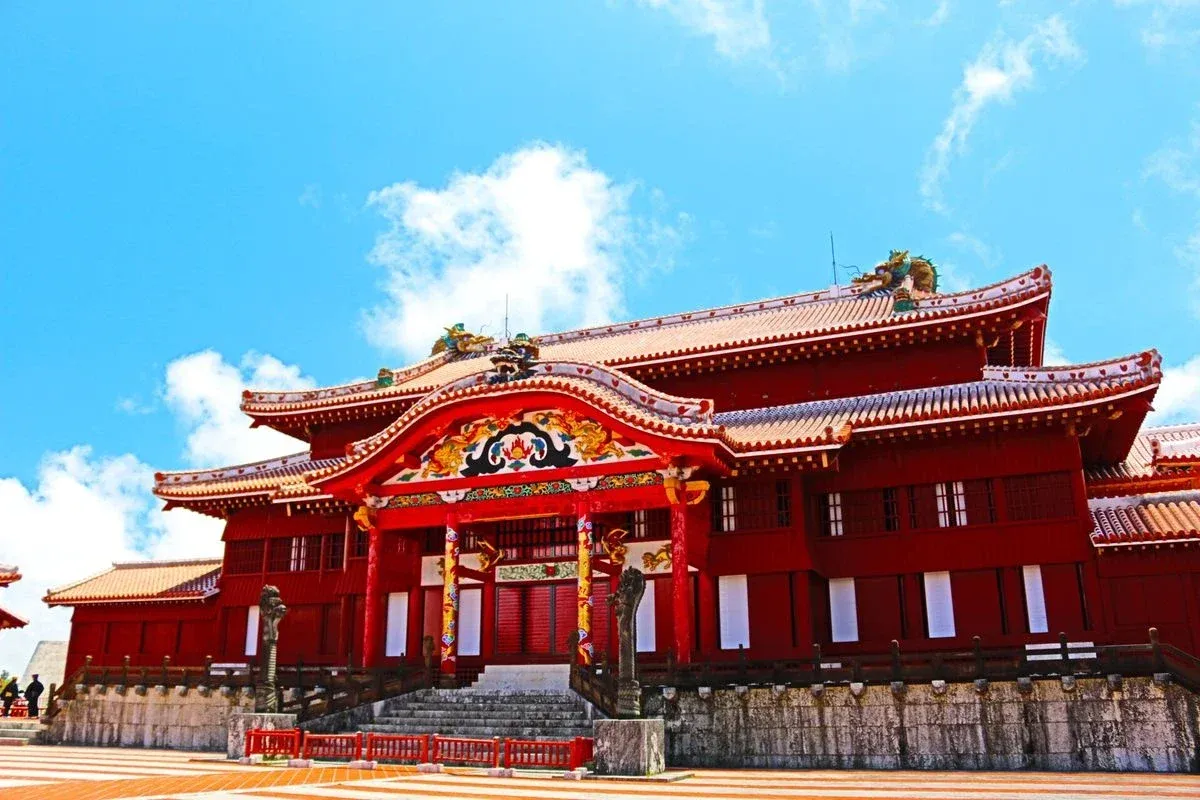
Start with Shuri Castle (Shurijo), the iconic symbol of the Ryukyu Kingdom and Okinawa's most visited historical site. A devastating fire in 2019 destroyed several of the main structures, but the site remains open, and visiting during the reconstruction turns out to be genuinely fascinating.
You can watch traditional craftsmen at work using ancient techniques, and the castle has introduced a stamp-collecting activity designed to keep children engaged. Kids collect stamps at various gates and fortresses around the grounds, essentially "rebuilding" the castle on a paper map as they go. What could be a dry historical walkthrough becomes a scavenger hunt.
The outer walls offer panoramic views of Naha City, giving everyone a useful geographical orientation for the trip ahead. For families with toddlers, note that the stone-paved paths are uneven in places, a carrier tends to work better than a stroller here.
Afternoon: Kokusai-dori and Makishi Public Market
After the castle, head down to Kokusai-dori (International Street) for the afternoon. Yes, it's touristy. But it's also wide, flat, and strategically stocked with exactly what you need after a long journey: pharmacies, convenience stores, shaved ice, and souvenir shops piled high with shisa lion-dog statues, Okinawan textiles, and capsule toy (gachapon) machines that will mesmerise your kids for longer than you expect.
Let each child pick one souvenir here. It sets the tone that this trip involves them making real choices, and a shisa painting kit from a 500-yen bin will keep a six-year-old busy for an entire rainy afternoon later in the week. While you're on Kokusai-dori, look out for a Blue Seal Ice Cream shop, an Okinawan institution since 1948, with flavours like beniimo (purple sweet potato) and salt cookie that children absolutely love. Blue Seal is so embedded in local culture that a scoop here almost counts as a cultural experience in itself.
Five minutes off the main street, the Makishi Public Market, nicknamed "the Kitchen of Okinawa", is a sensory experience that older children in particular find thrilling. The ground floor is a vivid, slightly chaotic parade of Okinawan marine life: neon-coloured whole fish, sea cucumbers, enormous crab claws, and sea grapes (umi-budo). Very few kids are unmoved by a bright blue parrotfish sitting on ice. On the upper floors, a unique "bring-your-own-seafood" service lets you take fish purchased downstairs to be cooked by local chefs for a small fee, a fantastic experience for adventurous families.
Rainy Day Alternative for Day 1
If the weather doesn't cooperate, swap the market for OkiMu, the Okinawa Prefectural Museum and Art Museum in the Omoromachi district. Its architecture, inspired by traditional Okinawan castle design, is a visual marvel even from the outside. For children, the star attraction is the Fureai Experience Room: unlike a traditional gallery, this space contains over twenty objects that children are actually encouraged to handle, pottery shards, traditional musical instruments, biological specimens from the reef. It's a tactile, hands-on environment that younger children respond to brilliantly.
Dinner
Find a shokudo (Okinawan diner) and order broadly. Champuru stir-fries, soki soba (thick noodles in a sweet pork broth), and taco rice, taco filling served over white rice, invented near the American military bases, are the dishes children almost universally embrace. Portions are generous, meals are inexpensive, and nobody will look twice at your toddler making a mess.
Early bedtime. Tomorrow is big.
Day 2: Central Okinawa : Botanical Garden, American Vibes, and a Legendary Playground
Theme: Something for everyone
Day 2 explores central Okinawa, a region defined by an unusual cultural fusion between indigenous Ryukyuan traditions and the lasting influence of the American military presence. The result is a genuinely unique "champuru" atmosphere that children find immediately engaging and that the entire family can enjoy.
Morning: Southeast Botanical Garden
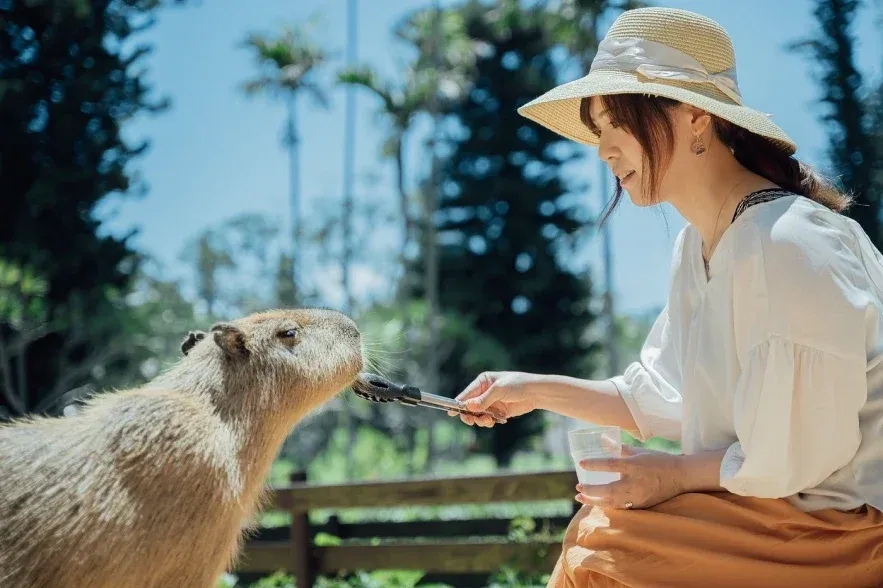
The Southeast Botanical Garden is a highlight that many families stumble upon by accident and end up rating as one of their trip's best mornings. The botanical garden combines rare tropical horticulture with intimate animal encounters, including the daily capybara feeding sessions that children lose their minds over.
Staff provide specialised tongs so kids can safely hand-feed cabbage to the capybaras, which are famously gentle and unflappable. Beyond that, the gardens include a petting zoo with monkeys, cranes, and tortoises; a daily bird show at 11am showcasing tropical bird agility and intelligence; and a lush backdrop of rare tropical flora, including the tallest Alexander palms in Japan.
Feeding times for capybaras and monkeys run at 12:00pm and 4:00pm daily, with an additional 2:00pm slot on weekends, plan your visit around one of these.
Lunch and Afternoon: Mihama American Village
Head to Chatan's American Village for lunch and an easy afternoon. The irony of eating American-style food in Japan is not lost on anyone, but families genuinely enjoy this place. It's a colourful outdoor complex in Chatan with a Ferris wheel, a SEGA arcade, specialty boutiques, and restaurants ranging from Hawaiian plates to proper burgers, GORDIE'S, in particular, is a standout with high chairs, a solid kid's menu, and burgers that adults will be thinking about for days afterward.
After lunch, walk to Sunset Beach or Araha Beach, both within walking distance of the complex. These are calm, monitored beaches with shallow entry, lifeguards in season, and in Araha's case, a large playground directly on the sand. Young children paddle in ankle-deep water; older kids snorkel or play beach volleyball. The facilities are excellent.
Late Afternoon: Urasoe Grand Park
Before heading back to the hotel, make time for Urasoe Grand Park, which is widely regarded as one of the finest examples of Japanese playground design. It's divided into age-appropriate zones: a fenced, toddler-safe area with a soft lawn for the under-threes, and a dramatic large-structure zone with climbing frames and the famous long roller slide for children aged six and up.
That roller slide needs a special mention. It's genuinely exhilarating, and it genuinely creates friction heat. Bring slide seats (small plastic sleds) or even a piece of cardboard to protect your children's legs. Parents who didn't bring them and watched their child yelp on the way down will confirm: this is not optional advice.
Day 3: The Motobu Peninsula : Aquarium Day Done Right
Theme: The day everyone came for
Yes, this is Churaumi day. But the Motobu Peninsula has considerably more to offer than the aquarium alone, and building the day thoughtfully means you come home with full memories, not just tired legs.
Early Morning: Drive North and Detour to Bise Fukugi Tree Road
Leave by 8:30am. The drive north on Highway 58 hugs the coastline for much of its length, the scenery is worth it. Stop at a convenience store en route for onigiri and coffee; this is breakfast culture in Okinawa and it works beautifully.
Before the aquarium, make a short detour to Bise Village and its famous fukugi tree road. Centuries-old fukugi trees form a dense green tunnel above the narrow village lanes, filtering light into something cathedral-quiet. Children often go instinctively still here. If you can rent bicycles nearby, cycling through takes about fifteen minutes and is one of those experiences that stays with you.
Late Morning: Motobu Genki Village
Before the aquarium, stop at Motobu Genki Village, a marine education facility that prioritises hands-on interaction over passive observation. With over 60 different programmes, it works for every age group.
For toddlers and young children, the "Mogu Mogu Picnic" is a standout: a 40-minute guided session where kids feed dolphins, sea turtles, and tortoises under the supervision of professional trainers. For older children and teens, the options expand significantly, dolphin trainer programmes, kayaking, stand-up paddleboarding, sailing in the sheltered bay, and glass-bottom boat tours for those not yet confident in the water.
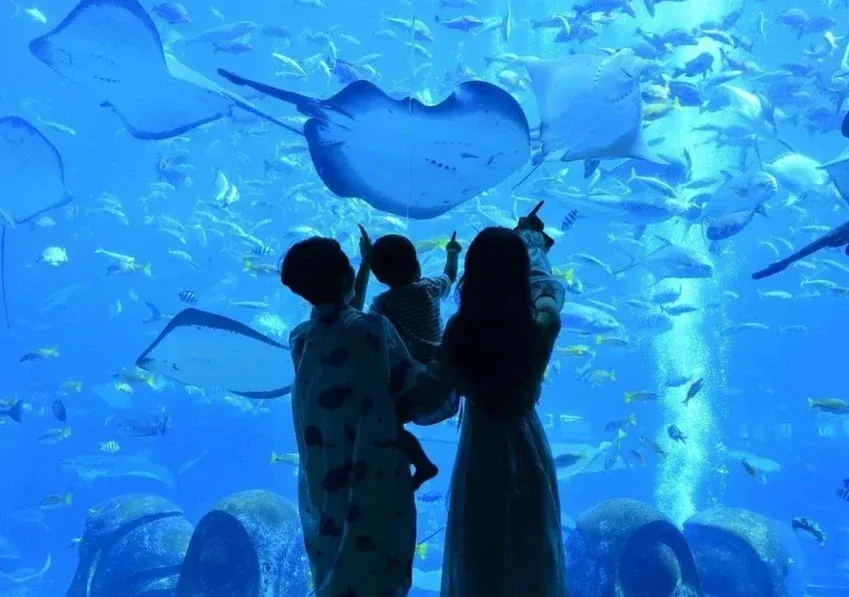
Midday: Okinawa Churaumi Aquarium
Fine. Let's talk about it properly.
The Okinawa Churaumi Aquarium is legitimately one of the world's great aquariums, and it earns every superlative. The Kuroshio Sea tank, home to three whale sharks and the second-largest aquarium tank on Earth, stops children mid-stride. Even jaded teenagers go quiet in front of it. Make a reservation in advance during peak season to avoid long queues, and arrive when the doors open at 8:30am to watch the whale shark feeding, which happens around 10am and draws significant crowds.
The Churaumi Aquarium sits within Ocean Expo Park, and the combined site is enormous. Budget around 3 hours total to see the highlights comfortably. Key stops beyond the main tank include:
- The Dolphin Show (free with park entry) : genuinely impressive; the dolphin acrobatics are a highlight for children of all ages
- Manatee pools : West Indian manatees are accessible at nose level for toddlers
- The Coral Sea Restoration area : older children can engage with reef conservation science
- Okinawa Kashinoumi traditional village : reconstructed historic houses with live weaving and music demonstrations
Bring snacks; the park food is overpriced.
Afternoon: Emerald Beach
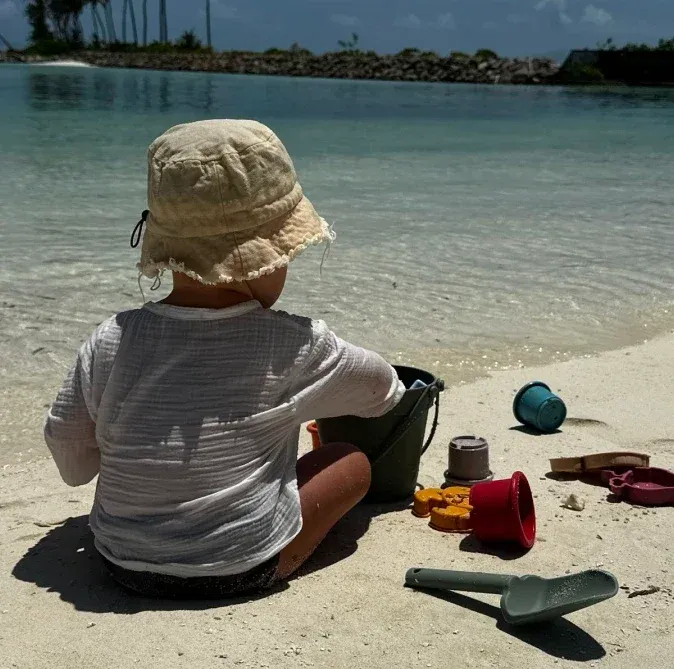
Immediately adjacent to the Expo Park, Emerald Beach is one of Okinawa's most photographed beaches, and one of its best-equipped for families. The crystal clear water is the specific shade of blue-green that makes adults reconsider where they live. The beach features extensive jellyfish netting (critical in summer), dedicated lifeguard stations, clean showers, locker rooms, and a convenience store near the parking lot for snacks and sun protection. After the aquarium, an hour or two here is the perfect decompression.
If you have energy left, Nago Pineapple Park makes an excellent late afternoon add-on, especially for younger children. An automated "pineapple train" winds through tropical gardens and pineapple fields, and a recent addition, animatronic dinosaurs integrated into the walking path, has made it a genuine hit with toddlers and preschoolers. Entry is free under 6, making it a particularly smart stop for families with young kids. The visit ends at the Pineapple Kitchen, where kids devour pineapple juice and beniimo (purple sweet potato) tarts while adults quietly sample pineapple wine.
Tonight: Stay near Motobu or Nago rather than driving back to Naha. You'll thank yourself in the morning.
Day 4: Northern Okinawa : Ancient Forests, Wild Nature, and the Edge of the Island
Theme: Where Okinawa goes wild
The fourth day in northern Okinawa moves into Yambaru National Park, recently designated a UNESCO World Heritage Site for its extraordinary biodiversity. This subtropical forest, dense, humid, ancient-feeling, is home to species that exist nowhere else on Earth. The pacing here is slower and the experiences quieter, but they tend to be the ones families remember longest. Northern Okinawa is an essential part of any Okinawa itinerary for families who want to see the island beyond its beaches.
Morning: Hiji Falls Trek
The hike to Hiji Falls is the right level of adventure for families with children aged six and up. The trail runs approximately 1.5 miles each way, around 1.5 hours total with children, following a well-maintained system of wooden steps and boardwalks through subtropical forest. The highlight mid-route is a suspension bridge offering a bird's-eye view of the canopy, children invariably stop here and don't want to leave.
The destination is a 26-metre waterfall, which provides a genuinely rewarding payoff for the effort. Along the trail, patient eyes will spot endemic wildlife: Ryukyu black-breasted leaf turtles, colourful lizards, and the sounds of birds found nowhere else in Japan.
For families with toddlers too young for the hike, the trail entrance area has shaded seating and access to the forest atmosphere without the full route.
Midday: Cape Hedo and Yambaru Kuina Observatory
Cape Hedo is Okinawa's northernmost point, where the East China Sea and the Pacific Ocean collide in a display of dramatic surf and spray. The limestone cliffs and 360-degree horizon have a genuine end-of-the-world quality that children find instinctively thrilling.
Right beside Cape Hedo, the Yambaru Kuina Observatory is shaped like a giant yambaru kuina, the endemic, flightless rail bird that lives only in these forests. Children can climb inside the structure and look out through the bird's "chest" at the surrounding national park. It's playful, it's memorable, and it naturally opens a conversation about conservation that older children often find surprisingly engaging.
While you're exploring the north, it's worth noting that Sesoko Island, connected to the main island by a short bridge near Motobu, has one of the most beautiful stretches of beach in northern Okinawa. The water is crystal clear water and calm, and the beach is far less developed than the resort corridor to the south. If you're staying nearby, it's perfect for families who want a quieter swim.
If you have time before the falls, Kouri Island is another worthwhile detour: a small island connected by a long, scenic bridge with a stunning beach on the far side. The view from the bridge alone is worth the short drive, and Kouri Island's beach is one of the most photogenic spots around the island.
Early Afternoon: Nakijin Castle Ruins
On the return journey south, stop at Nakijin Castle Ruins (Nakijin-jō Ato). This UNESCO World Heritage site offers a different perspective on Ryukyuan history than Shuri Castle, the site is less visited, more atmospheric, and the long, winding stone walls curve dramatically along the hillside above open sea views. In winter, Nakijin is famously the first place in Japan to see cherry blossoms, which arrive as early as January. In any season, it's a peaceful, beautiful spot for a slow afternoon walk.
Late Afternoon: Yambaru Forest Toy Museum
For families with very young children who need a quieter, shaded activity, the Yambaru Forest Toy Museum in Kunigami Village Forest Park is a hidden gem. The museum features high-quality traditional toys crafted from local Okinawan wood, in a calm, sensory-focused environment where toddlers can engage in imaginative play away from the heat. It's not on most tourist itineraries, which means it's wonderfully unhurried. These are exactly the kinds of family-friendly activities that make the north worth the drive.
.webp)
Day 5: Southern Okinawa : Peace, Caves, and a Mediterranean Send-Off
Theme: Going deeper before you leave
The last day in Okinawa returns south, close to the airport for afternoon departures, and covers southern Okinawa's most distinctive experiences, including one site that slows every family down in the best possible way.
Morning: Okinawa Peace Memorial Park
Okinawa Peace Memorial Park at Mabuni Hill sits on ground where some of the most intense fighting of the Battle of Okinawa took place in 1945. It is, genuinely, one of the most thoughtfully designed memorial sites in Japan.
For families with children aged nine and up, this visit carries real educational weight. The museum's permanent exhibition tells the story of the battle through the experience of Okinawan civilians, not just military narratives, in a way that younger visitors can absorb and process. The outdoor memorial gardens, where stone walls list the names of all 240,000 people who died regardless of nationality, are peaceful and strikingly beautiful.
For younger children, the park itself is large and calm, wide paths, sea views, and no obligation to enter the museum. Simply being in the space has its own quiet power.
Mid-Morning: Gyokusen-do Cave and Okinawa World
Twenty minutes north of the Peace Park, Gyokusen-do is Okinawa's largest stalactite cave, five kilometres long, with 890 metres open to visitors along a well-lit walkway. The formations are spectacular, the theatrical lighting is perfectly calibrated, and the temperature inside hovers around 21°C year-round. In summer, stepping into the cave is like finding air conditioning designed by nature.
The cave is the centrepiece of Okinawa World, a broader cultural park that includes:
- Kingdom Village : a reconstructed traditional village where children can try glassblowing (making Ryukyu glass), weaving, and pottery workshops
- Eisa Dance Performance : a high-energy traditional drum dance in vivid costumes that children watch with wide eyes
- Habu Center : an educational facility focused on Okinawa's venomous pit vipers, complete with a live (entirely non-contact) show that is either thrilling or terrifying depending on your child's temperament
Budget two to three hours here. It's one of those places that manages to cover a lot of ground without feeling rushed.
Afternoon: Mibaru Beach and Glass-Bottom Boats
A short drive brings you to Mibaru Beach, one of Okinawa's best-kept family secrets. The water is shallow and calm, ideal for toddlers and the beach offers glass-bottom boat tours that run for about twenty minutes over the adjacent reef. Through the glass floor, children clearly see colorful fish like clownfish and blue tangs, sea snakes, and the occasional turtle without ever needing to put their face in the water. The boats are stable and the duration is short enough even for children prone to seasickness. It's as close to snorkelling as you can get without actually snorkelling, and for many young children it's the moment that turns a trip into a memory.
Evening: Senagajima Umikaji Terrace
Close out the trip at Senagajima Umikaji Terrace, a hillside development of white-washed buildings overlooking the sea, just minutes from Naha Airport. The architecture is reminiscent of a Mediterranean village, genuinely beautiful, and the restaurants here serve excellent local food at a relaxed pace.
Children will be mesmerised watching planes take off and land at the airport below. When you're done, return the car to one of the nearby rental depots and head to your terminal with full hearts. Parents will feel the specific kind of exhausted-happy that only a great family trip produces.

Rainy Day Alternatives by Region
Okinawa's subtropical weather can be unpredictable, particularly in spring and typhoon season. Here's what to do when the sky falls in:
Southern Region: The Gyokusen-do Cave at Okinawa World and the Fureai Experience Room at OkiMu museum are both fully undercover and excellent. Shuri Castle's reconstruction activities are also largely sheltered.
Central Region: The SEGA Arcade in American Village is a reliable fallback for older kids and teens. AEON Mall Okinawa Rycom is an enormous shopping complex featuring an indoor play area, food hall, a substantial aquarium display, and arcades, you can genuinely spend a full day here without going outside.
Northern Region: The Yambaru Forest Toy Museum and Neo Park Okinawa's walk-through aviaries offer good cover from the elements and work especially well for toddlers and young children.
Across all regions: Any large Kaiten-zushi (conveyor belt sushi) restaurant, chains like Sushiro or Hama Sushi, turns a rainy hour into a cheerful one. Children select whatever catches their eye off the moving belt, the system removes the stress of ordering in a second language, and the familiar items (egg sushi, chicken, fries from the belt) give hesitant young eaters plenty of safe options. And if all else fails, there's always a vending machine stocked with cold Pocari Sweat or hot corn soup just around the corner, a small but genuine delight for children discovering Japan's vending machine culture for the first time.
Food Guide: Eating in Okinawa with Kids
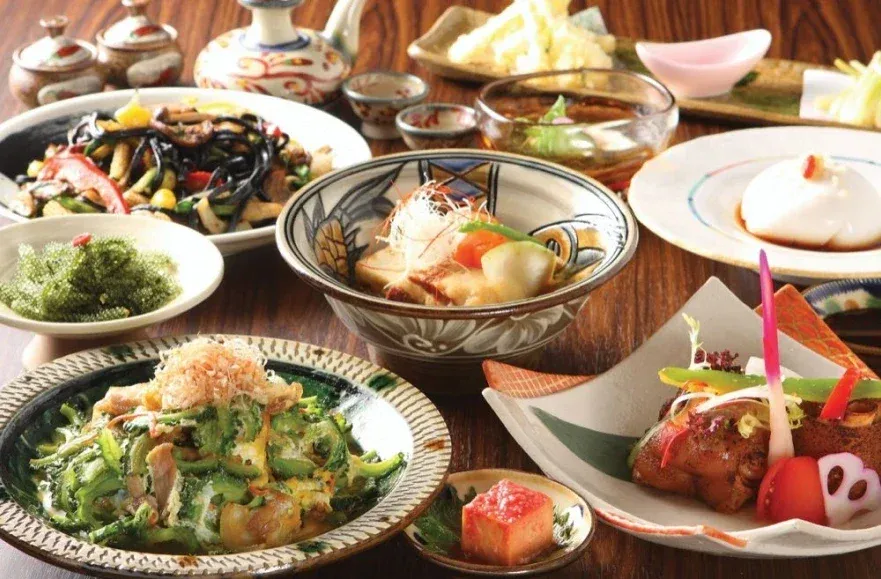
Okinawan food is, broadly speaking, excellent for children. Flavours are mild and familiar, portions are generous, and the cuisine revolves around approachable proteins: pork, tofu, eggs, and white rice.
Dishes most kids will embrace:
- Taco rice : taco filling on white rice, invented near the American bases, universally beloved by children
- Okinawa soba : mild, sweet pork broth with thick wheat noodles; add sōki (braised pork ribs) for the adults
- Sata andagi : Okinawan fried doughnuts, dense and lightly sweet, sold everywhere from market stalls to vending machines
- Beniimo anything : purple sweet potato ice cream, tarts, chips. Children are reliably delighted by purple food. Blue Seal ice cream in beniimo flavour is the definitive Okinawan children's snack; you'll find Blue Seal shops and freezer units across the island
- Pork and egg onigiri from 7-Eleven : specifically Okinawan, specifically excellent
Family restaurant chains like Gusto, Royal Host, and Coco's are scattered across the island and offer okosama sets (kids' meals) that come with familiar items and sometimes a small toy. SANS SOUCI in Kitanakagusuku is worth seeking out specifically: it has an indoor kids' play room, specialises in udon noodles that can be served soft or lukewarm for toddlers, and is genuinely good. Ukishima Garden in Naha is organic and vegan-friendly, with tatami seating on the second floor, perfect for babies who can nap on the mat beside you.
Tatami seating in general is worth choosing when you spot it. The low tables and cushioned floor mats are ideal for families: babies can crawl, toddlers won't fall off chairs, and everyone relaxes.
Be aware:
- Gōya (bitter melon) is intensely bitter and polarising for children, introduce it gently if at all
- Many Okinawan restaurants close between 3–5pm for preparation; plan your eating schedule around this
- Carry a Japanese allergy card if your children have serious food allergies, pork broth underpins almost every traditional dish
Hydration is not optional in summer. Buy a large bottle of water at every convenience store stop. Electrolyte drinks (Pocari Sweat is the local standard) are widely available and children usually drink them without complaint. Dehydration sets in faster than you think, especially when kids are excited and running around in the heat.
Safety Notes for Families
Ocean safety: Okinawa's beaches are generally calm but conditions vary. Stick to designated swimming areas with lifeguards and jellyfish netting, particularly in summer. Rash guards provide meaningful protection against jellyfish. Water shoes are essential for tide pools, coral and sea urchins are sharp underfoot. If you see tentacle-like shapes near the shore, exit the water immediately.
Heat: Children overheat faster than adults and rarely notice until it's too late. Plan intensive outdoor activities for 8–11am and 4–6pm. Afternoons belong to shade, air conditioning, or water.
Wildlife on the road: When driving in the Yambaru region, watch for wildlife crossings. The endangered Yambaru kuina is occasionally hit by vehicles on forest roads, particularly at dawn and dusk, slow down on narrow northern roads.
Habu snakes: These venomous pit vipers are present in Yambaru and occasionally in southern rural areas. Stick to marked trails and don't let children poke into dense undergrowth. Bites are rare, treatment is available at all hospitals, and this is a precaution, not a reason to avoid the forest.
Road awareness: Japanese drivers are courteous, but some roads, particularly in the north, are narrow, winding, and don't have footpaths. Keep children close and off road edges.
Where to Stay: Accommodation by Zone
Naha (South): Best for families who want city convenience, Kokusai-dori, the monorail, easy restaurant access, and short drives to southern sights. A good base for the first and last nights.
Chatan / American Village (Central): The most flexible location on the island. Beach access, dining, and both northern and southern day trips within 45 minutes. Particularly well-suited to families with teenagers.
Motobu / Nago (North): Best if Yambaru and the Churaumi Aquarium are your priorities. A quieter, more local experience. Fewer English-speaking staff but genuine warmth. Staying near the hotel options in Nago puts you within easy reach of both the aquarium and the northern forest in the same morning.
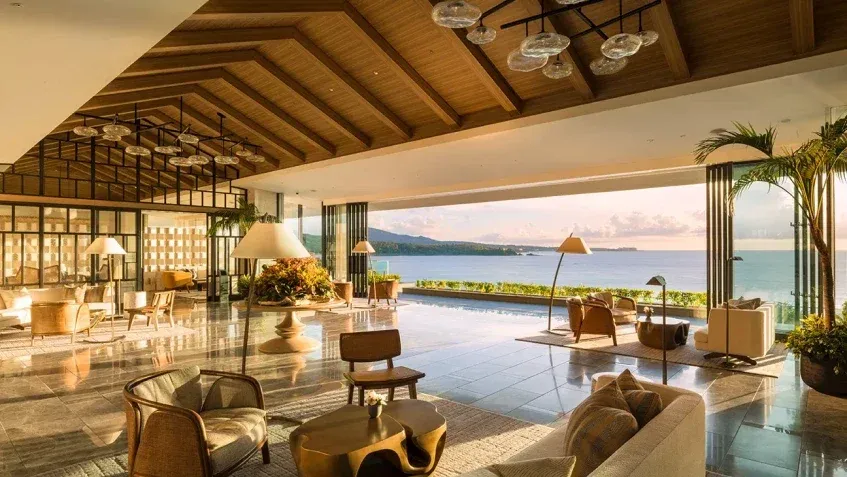
Onna Village (Resort Corridor): The main hotel belt running between Naha and Motobu, dotted with large beachfront resorts offering kids' clubs, shallow pools, and private beach access. Higher prices, but families with young children may find the option to use the pool between excursions genuinely valuable.
Age-by-Age Quick Reference
Toddlers (1–3) : Nago Pineapple Park - Easy, low-effort fun with an automated cart ride, great when attention spans are short and walking needs to be minimal.
Young kids (4–7) : Southeast Botanical Gardens - Hands-on animal feeding and wide-open paths make it engaging without being overwhelming.
Older kids (8–12) : Urasoe Grand Park - Big play structures and the famous roller slide give them space to burn energy and play freely.
Early teens (13+) : Forest Adventure Onna - Zip lines and rope courses add real challenge and adventure, perfect for thrill-seeking teens.
FAQ: Okinawa with Kids
Is Okinawa good for families with toddlers?
Exceptionally so. The beaches are warm and shallow, food is mild and varied, and Japanese hospitality culture is particularly gentle toward very young children. The main practical challenge is transport, a rental car is essential with a stroller. Most beaches, parks, and attractions have clean toilet facilities with baby-changing stations. The tatami seating common in traditional restaurants is a genuine bonus for families with crawling babies.
How many days do you need in Okinawa with kids?
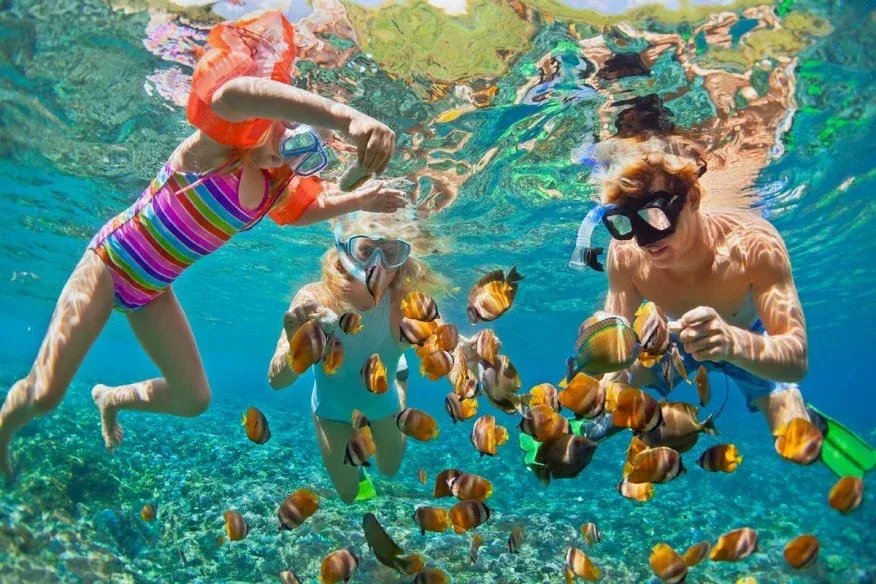
Five days is the sweet spot for Okinawa's main island. It's enough to cover Naha, the central coastline, northern Okinawa including the Churaumi Aquarium, and one big nature day without feeling rushed. Seven days allows for a slower pace and potentially a side trip to a smaller island, Miyakojima and Ishigaki are both stunning choices if you're keen to extend the adventure. Miyakojima in particular is perfect for families, with some of the clearest water in Japan and beaches that are ideal for snorkelling with kids.
What is the best beach in Okinawa for kids?
Emerald Beach at Ocean Expo Park is the top pick for young families, lifeguards, jellyfish netting, shallow entry, and full facilities.
Araha Beach in Chatan is excellent for mixed-age groups, with a large playground directly on the sand.
Mibaru Beach in the south is outstanding for toddlers, with particularly calm water and those brilliant glass-bottom boat tours.
Do you need to speak Japanese to travel in Okinawa with kids?
Not fluently. In Naha, American Village, and all major tourist areas, English signage is common and some English-speaking staff are available. Outside these zones, a translation app with offline Japanese downloaded (Google Translate works well) handles most situations. Locals are consistently patient and helpful even without a shared language.
When should families avoid Okinawa?
Late August combines peak typhoon risk with extreme heat and maximum crowds, it's the hardest window for families. Late July is similarly challenging. If your only option is summer, go, but book everything far in advance and adjust expectations around afternoon outdoor activities.
Is the Churaumi Aquarium worth visiting with kids?
Without question. The Okinawa Churaumi Aquarium is a world-class experience for the entire family. The whale shark tank, the Kuroshio Sea, is a visceral, awe-producing experience for children and adults alike. Plan for at least three hours, arrive at opening time to catch the whale shark feeding around 10am, and combine the visit with the free Dolphin Show and Emerald Beach to build a full day in the area.
What is a "slide seat" and why do I need one?
The long roller slides found at Okinawan parks like Urasoe Grand Park generate significant friction heat as children descend. A slide seat, a small plastic sled or even a piece of cardboard tucked into your bag, protects children's legs and clothing. It's a piece of information that sounds absurd until your child comes off the bottom crying. Bring one.
Can I find diapers and baby food easily in Okinawa?
Convenience stores carry limited supplies, but large supermarkets in Nago or Motobu carry a full range of diapers, formula, and baby food. Stock up when you pass one, don't count on finding exactly what you need at a convenience store near a trailhead.
Evertrail Tours · May 2, 2026