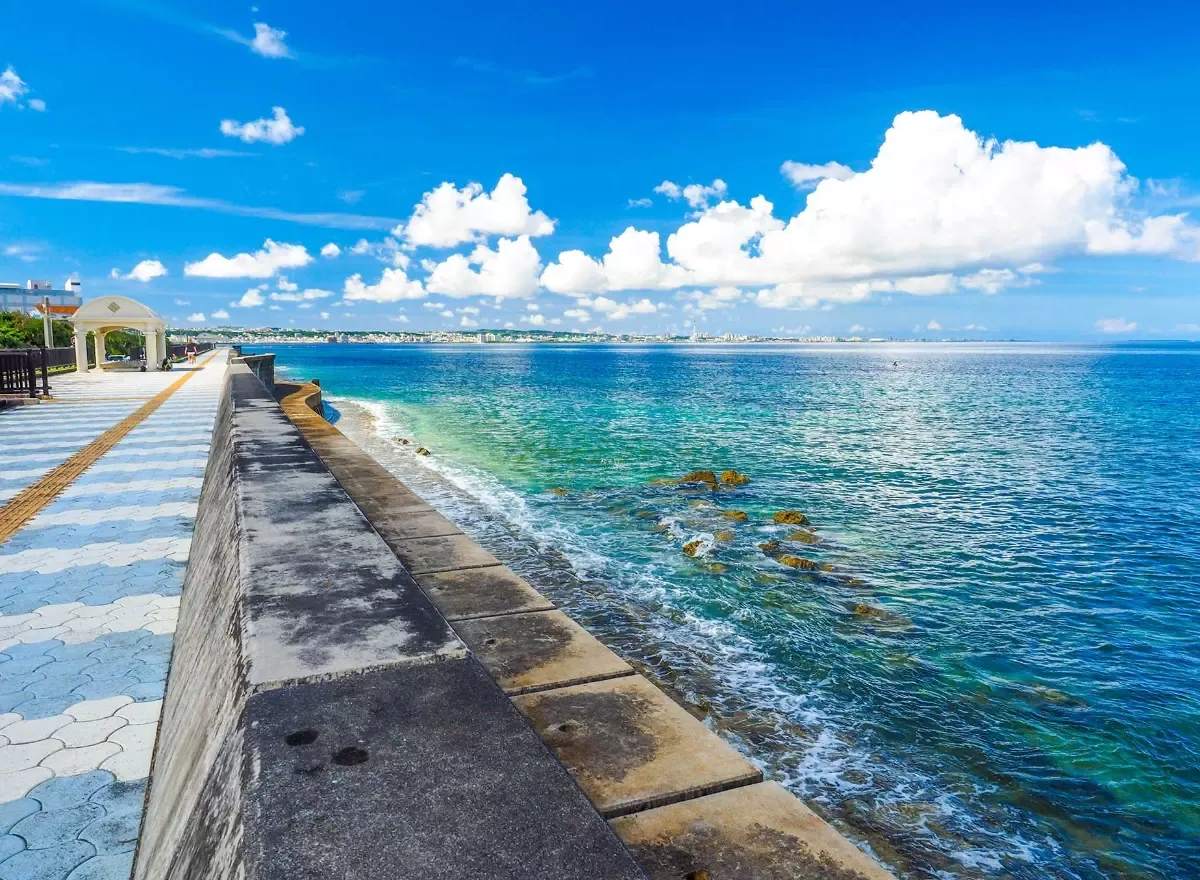
No Tourist Traps. No Generic Advice. Just the Real, Specific Knowledge That Separates a Frustrating Okinawa Trip From an Unforgettable One.
Okinawa isn't Japan, not quite. This subtropical archipelago, once the heart of the Ryukyu Kingdom, has its own language, its own food, its own spiritual traditions, and its own way of doing things. Visitors who arrive expecting a southern version of Tokyo almost always leave confused. But those who take the time to understand how this destination actually works? They leave obsessed. Whether you're planning a quick beach getaway or a full itinerary across the island, this guide gives you the insider knowledge, the hidden gems, that most guidebooks skip entirely.
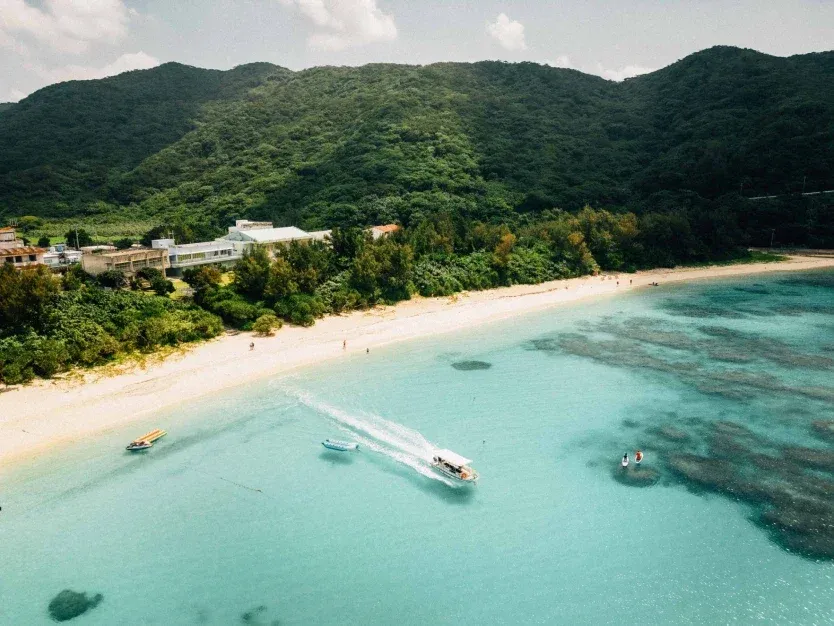
Part One: Transportation & Getting Around the Okinawa Main Island
Tip 01 - Always Get the NOC Waiver When Renting a Car
Most visitors assume that buying the standard Collision Damage Waiver (CDW) means they're fully protected. They're not. In Okinawa, rental car companies charge a separate Non-Operation Charge (NOC) to cover the revenue they lose while a damaged vehicle is out of service — and it applies even for minor things like a small scratch, an odd smell, or interior stains.
Without the NOC waiver, you're looking at:
Situation Your NOC Liability Car returned to office 20,000 JPY Car requires towing 50,000 JPY Large vehicle (9+ seats) Up to 80,000 JPY
If you need a car to explore the island, and you almost certainly will, always ask explicitly for the NOC waiver or T.A.S. plan when booking.
Tip 02 - Okinawan Roads Turn Into Ice Rinks When It Rains
The Okinawa main island's roads are built with crushed limestone, a byproduct of its geology, and when it rains, that limestone dissolves into a fine, slippery film. Braking distances can effectively triple compared to dry conditions. This catches tourists completely off guard because the roads look totally normal.
Local drivers keep a generous following distance and slow down well before they need to. Do the same. Lane markings can also become nearly invisible in wet conditions due to how the reflective paint interacts with wet limestone. Drive like you're on ice and you'll be fine.
Tip 03 - Don't Use the Empty Bus Lane, It's a Trap
When traffic grinds to a halt on National Route 58 or Kokusai Street during rush hour, you'll notice a temptingly empty lane running alongside the gridlock. Don't use it. These lanes are reserved for buses, motorcycles, and authorized vehicles during:
- Morning: 7:30 AM - 9:00 AM
- Evening: 5:30 PM - 7:00 PM
Police enforcement is strict, including for foreign tourists and drivers. Watch out: lane markings often turn yellow (no lane changes allowed) just before a mandatory turn, which can send you in completely the wrong direction if you're not paying attention.
Tip 04 - The Center Lane Actually Moves
In Naha City, on roads like National Route 330 and Prefectural Route 29, the median line physically shifts during rush hours to accommodate commuter flow. What was an inbound lane at 7 AM might be an outbound lane by 9 AM. Overhead signs and flashing pavement markers show the current configuration, but GPS doesn't account for this. Always visually confirm which lanes are going which way before committing. Getting this wrong means driving into oncoming traffic.
Tip 05 - The Expressway Speed Limit Is 80 km/h, Not 100
On the Japanese mainland, expressways run at 100 km/h. In Okinawa, the Okinawa Expressway is capped at 80 km/h, partly because of the slippery limestone road surface, partly because strong sea breezes can push lighter vehicles around at higher speeds. Speed cameras and patrol cars are active, especially near the Nago and Naha interchanges. This isn't a guideline; it's enforced.
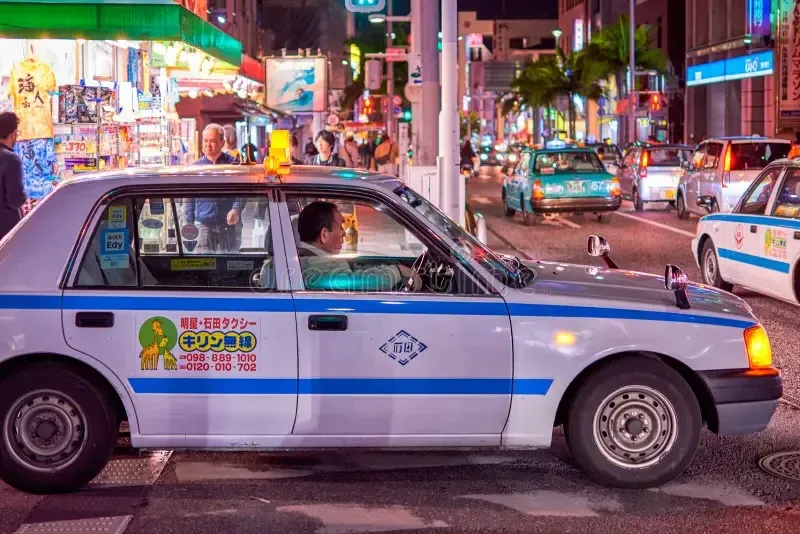
Tip 06 - Use GO or DiDi to Hail Taxis Easily
If you're not renting a car, the GO and DiDi apps are your best friends in Okinawa's urban areas. Both allow cashless payments and let you input destinations in English, which completely eliminates the language barrier.
App Coverage Best For:
GO : Island-wide (urban focus) General travel, cashless payments
DiDi : Naha and central areas Reliable urban alternative Sightseeing Taxi Countryside / remote areas Full-day tours with English guides
In more remote areas, particularly in the north (Yanbaru), app-based taxis get sparse. For day trips to sightsee in the countryside, consider booking a sightseeing taxi through your accommodation instead.
Tip 07 - Your Suica Card Won't Work on Most Okinawan Buses
Travelers arriving from mainland Japan, from Tokyo or Osaka, often pull out their Suica or Pasmo card at the bus terminal and get a blank stare from the reader. Mainland IC cards don't work on most local Okinawan bus routes. You need an OKICA card, Okinawa's own transit card, which you can pick up and top up at monorail stations and bus terminals.
Note: The Yui Rail monorail accepts mainland IC cards, but the moment you step on a local bus, you're back to needing OKICA or cash. Keep both.
Tip 08 - Grab a Numbered Ticket When You Board the Bus
Okinawan buses use a distance-based fare system for routes numbered 20 and above:
- Board the bus and take a small numbered ticket from the machine near the door
- The ticket records where you boarded
- When exiting, match your ticket number to the fare display above the driver's seat
- Pay the amount shown
City routes numbered 1–19 use a flat fare paid when you board, simpler, but a different system entirely. On-board change machines usually won't accept bills larger than 1,000 JPY, and newer 500-yen coins sometimes cause problems too. Carry small cash.
Part Two: Okinawan Food, Drink & Hidden Gems of Local Culture
Tip 09 - Skip Kokusai Street's Restaurants, Go to the Supermarket Instead
This sounds counterintuitive, but hear it out: Okinawa's local supermarket chains are genuinely better than most tourist-facing restaurants on Kokusai Street, and they cost a fraction of the price.
Supermarket Tier Known For San-A Premium Sashimi, bento boxes, cleanliness Kanehide Mid-range Pork & Egg Onigiri, local meats Union Budget / 24hr Lowest prices, always open
Dishes like Okinawa soba, wheat noodles rather than buckwheat, served in a rich pork broth and traditional Okinawan goya champuru, a stir-fry featuring bitter melon, tofu, and egg, are the kinds of meals you'll find in these shops. No markup, no tourist pricing, no English menus designed to upsell you. These are the hidden gems of eating well in Okinawa.
Tip 10 - Watch the Union Supermarket to Judge a Typhoon's Severity
Here's something no weather app will tell you: if you want to know whether a typhoon is actually dangerous, check whether Union is open. Union supermarkets run 24 hours a day through almost all weather events, it's a point of local pride across the Okinawa prefecture. So when Union announces it's closing, that's the island's unofficial emergency broadcast.
Locals treat a Union closure as a definitive signal to stay indoors immediately. No exceptions, no second-guessing. The meteorological reports will give you wind speeds and storm categories; Union will tell you whether the island thinks this one is serious.
Tip 11 - Spam Is Not a Joke Here, It's a Cultural Staple
Okinawa consumes roughly 90% of all the luncheon meat (Spam) sold in Japan, averaging around 14 cans per person per year. This isn't a quirky food trend; it's a legacy of the American military occupation after World War II, when canned meat became a substitute for pork that was suddenly scarce. It's been woven into traditional Okinawan cooking ever since, in miso soup, in rice dishes, and in the iconic Pork-Egg Onigiri you'll find everywhere.
Approaching it with an open mind is the key to really enjoying the Okinawa experience. The salty, savory richness works beautifully against the fresh vegetables and mild broths that anchor the local diet.
Tip 12 - Sakaemachi Market Is Where Locals and Tourists Actually Mingle
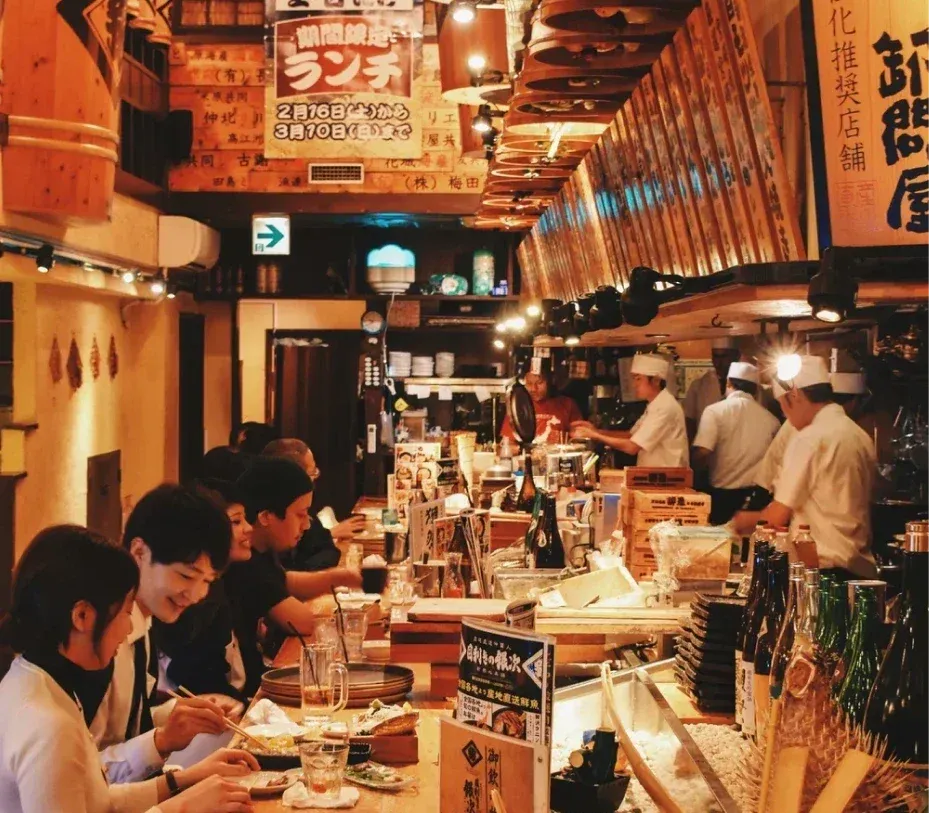
If you want to experience Okinawan nightlife as a local rather than a tourist, skip the overpriced bars on Kokusai Street and head to Sakaemachi Market near Asato Station in Naha. By day it's a quiet grocery market. By evening, it transforms into a labyrinth of tiny alleyway bars, each about the size of a garage, packed with residents and the occasional in-the-know visitor.
The defining ritual here is "senbero", a cultural institution unique to Okinawa where 1,000 yen gets you three drinks and an appetizer. The goal is to hop from bar to bar (a practice called hashigo-zake) and end up sharing a table with a retired fisherman and a group of university students. It's the most human evening you'll have in Naha.
Tip 13 - Awamori Is Best Diluted With Soft Water, Not Just Any Water
Awamori is Okinawa's native spirit, distilled from Thai indica rice using black koji mold, with a distinctive earthy intensity unlike anything on the mainland. The traditional way to drink it is "mizuwari," diluted with water at roughly a 1:1 ratio, bringing it to about 15% ABV.
Here's the detail most visitors miss: despite Okinawa's natural water being hard, locals specifically use soft water for their awamori mizuwari. Hard water makes the flavor sharp and harsh; soft water rounds it out beautifully. If straight awamori is too confronting, try "tansanwari", mixed with carbonated water at 1:4, which turns it into something like a refreshing rice highball.
Preparation Ratio ABV Best For Mizuwari 1:1 ~15% Pairing with food Tansanwari 1:4 ~6% Beginners, refreshing drink Straight / Rocks Undiluted 30–45% Aged kusu, slow sipping
Tip 14 - Aged Awamori (Kusu) Is Sipped, Not Slugged
Awamori aged for three or more years earns the designation "kusu," and anything over a decade old is treated with the same reverence as a fine whisky. The protocol shifts entirely: serve it straight in a tiny ochoko cup, roll it slowly across the tongue to catch the layered sweetness and complex aroma, and chase it with water. This is not a party drink. It's a meditation.
Tip 15 - Kachuyu Is Okinawa's Ultimate Hangover Cure
After a night of senbero at Sakaemachi, locals reach for kachuyu: a simple bowl made by pouring boiling water over a generous amount of katsuobushi (dried bonito flakes) and miso. It's warm, savory, and loaded with amino acids and probiotics that settle the stomach and replenish electrolytes fast.
It's also traditionally used as a morning soup for longevity and as a cold remedy. Simple, cheap, and surprisingly effective, you'll find the ingredients at any supermarket throughout the islands.
Part Three: Okinawan Cultural Protocols, Etiquette & Ryukyu Kingdom History
Tip 16 - Utaki Are Active Sacred Sites - Treat Them Accordingly
Okinawa's sacred sites, called Utaki, are not ruins or tourist attractions. They are living places of worship where deities are believed to descend, and they are still used for active religious rituals today. Rooted in Ryukyu Kingdom era spiritual traditions, Utaki are unlike mainland Japanese shrines with ornate gates and carvings, they are often just natural rock formations or forest clearings, which makes visitors underestimate how sacred they are.
The rules are simple:
- Stay quiet at all times
- Bow once at the entrance
- Do not touch natural formations or incense burners
- Respect every rope and "no entry" sign without exception
Loud conversations at these sites are considered a serious breach, not just of etiquette, but of something genuinely spiritual.
Tip 17 - Wear Proper Shoes to Sefa-Utaki and Know What You're Entering
Sefa-Utaki, a UNESCO World Heritage Site and one of Okinawa's most important attractions, features a dramatic triangular rock formation called the Sangui, historically accessible only to Okinawa's highest priestesses, the Noro. Today it's open to visitors, but it remains an active altar. The paths are steep, made of wet limestone, and genuinely hazardous in anything other than proper walking shoes. Sandals and heels have caused real accidents here.
Tradition holds that you should silently state your name when you arrive at the altar. Whether or not you're religious, this small act of acknowledgment captures the spirit of how to approach the place: with genuine respect, not as a backdrop for photos.
Tip 18 - Wear Your Bag on Your Front in Tsuboya Yachimun Street
Tsuboya Yachimun Street is Naha's historic pottery district and a must-see for anyone interested in traditional craft, a narrow limestone-paved alley lined with workshops selling beautiful handmade ceramics. These traditional Okinawan pieces make for far more meaningful souvenirs and local keepsakes than anything you'll find in a gift shop on Kokusai Street.
The district is extremely cramped. Turning around with a standard backpack can sweep an entire shelf off the wall. Locals advise:
- Wearing backpacks on your chest while browsing
- Using a small crossbody bag instead
- Bringing cash, most shops are cash-only
- Bringing your own bag, many studios charge for plastic or don't provide it at all
Tip 19 - Ask Permission Before Photographing a Shisa on Someone's Home
The iconic lion-dog statues called Shisa appear everywhere in Okinawa, on rooftops, at gates, at shop entrances across the island. They're spiritual guardians, not mascots. Many of the most photogenic ones sit on private residences. It's standard courtesy to ask permission before photographing a Shisa on someone's home. These statues are actively revered by the families who keep them.
Tip 20 - Treat War Memorials With Complete Solemnity
The Battle of Okinawa was one of the most devastating land campaigns of World War II, with catastrophic civilian casualties. The island's rich history is inseparable from this tragedy, and its turtle-back tombs (kamekobaka) and memorials like the Himeyuri Peace Museum carry immense weight for local families. Posing for cheerful photos at memorial sites, or treating tombs as photo opportunities, is a significant social offense. These are not historical curiosities; for many Okinawans, they are where family members are buried.
Tip 21 - Always Use the Money Tray When Paying
At virtually every shop and restaurant in Okinawa, whether you're grabbing souvenirs and local snacks or settling a tab at a Naha izakaya, there's a small tray on the counter near the register. Money always goes in the tray, not directly into the cashier's hand. The cashier returns your change and receipt in the same tray. Handing money directly to someone feels abrupt and slightly rude. Use the tray.
.webp)
Part Four: Okinawa's Natural Beauty, Environment, Safety & Scenic Timing
Tip 22 - Cloudy Days Can Still Burn You Badly
Okinawa's subtropical climate means the UV index regularly hits 6 or higher even on overcast days. The sea breeze keeps you cool enough that you don't feel the burn building up — until it's too late.
- Apply sunscreen every two hours regardless of cloud cover
- Use polarized sunglasses to cut the glare bouncing off the turquoise beach water and pale limestone roads
Tip 23 - Hard-Soled Reef Shoes Are Non-Negotiable
Not all Okinawan beaches are the soft sand of the tourist photos. Many are composed of sharp limestone and coral that will cut you open if you walk barefoot, and the cuts take a long time to heal because coral proteins embed in the wound. Okinawa's coral reef ecosystem is extraordinary, ideal for diving and snorkeling, but that same coral reef is razor-sharp when you're trying to enter or exit the water. Shallow reefs also hide sea urchins and fire coral.
Thin aqua socks are not enough. You need hard-soled reef shoes that can:
- Resist sea urchin spines
- Provide grip on algae-covered rocks
- Protect against fire coral and sharp limestone edges
Whether you're visiting the scenic beaches near Yomitan, diving around the Kerama Islands, or snorkeling off Kouri Island, this applies everywhere.
Tip 24 - Visit Churaumi Aquarium on a Wednesday Afternoon
The Churaumi Aquarium, one of Okinawa's most popular attractions and home to one of the world's largest fish tanks, the Kuroshio Sea, is a genuinely extraordinary destination. Visitors come from across the world to see whale sharks at the Churaumi Aquarium, swimming alongside manta rays in a tank so vast it feels like the ocean itself. But midday weekend crowds can turn it into a miserable shoulder-to-shoulder shuffle.
How to visit smart:
- Go on a Wednesday, statistically the quietest day
- Arrive after 3:00 PM on any day for a quieter, more atmospheric experience
- Buy tickets in advance at a convenience store for a small discount and to skip the ticket line
Tip 25 - Okinawa's Rainy Season Starts a Month Earlier Than the Mainland
Most visitors plan their trip to visit Okinawa based on mainland Japan's rainy season, which runs roughly from early June to mid-July. But Okinawa's Tsuyu starts in early May and runs through late June.
Month Conditions Best For
January - February: Mild, 15–20°C Whale watching, cherry blossoms
March - April: Warm, 19–21°C Beaches, sightseeing, low crowds
May - June: Tsuyu (rainy) Museums, aquarium, indoor culture
July - August: Hot, peak season Diving, festivals, book early
October - November: Warm, low humidity Swimming, hiking, local events
For those planning to explore the Yaeyama Islands, Ishigaki and beyond, the same seasonal logic applies throughout the islands of Okinawa. The rainy season isn't a total washout, it rarely rains all day, but it's humid and overcast, not ideal for beach trips. On the upside, crowds are thinner and the natural beauty of the landscape is lush and vivid green.
The Real Okinawa Is in the Details
The gap between a frustrating Okinawa trip and an unforgettable one usually comes down to a handful of specific pieces of knowledge. Knowing to grab the numbered ticket when you board a bus. Knowing that the NOC waiver isn't optional when renting a car in Okinawa. Knowing that Union closing is your cue to find shelter immediately.
These aren't abstract travel inspiration, they're practical tools that change how the island feels to navigate. Okinawa rewards the visitor who pays attention. The sacred sites are genuinely moving when you enter them quietly. The senbero culture is genuinely communal when you show up at Sakaemachi without expectations. The coral reef is genuinely beautiful when you're protected enough to immerse yourself in it freely.
Whether you're planning to stay in Okinawa for a week, building out a longer itinerary that takes in Naha's history and culture, or making this one stop on a bigger Japan journey, take the time to learn these things before you go. Okinawa will give you something most travel destinations can't: the feeling that you actually understood the place you visited.
Evertrail Tours · April 26, 2026