Buses, ferries, e-bikes, and the local hacks that make it work, around Naha and beyond
Everyone tells you that you absolutely need a car rental in Okinawa. They're not entirely wrong, but they're not entirely right either. With a little planning, this tropical island's patchwork of trains, buses, ferries, and e-bikes can take you surprisingly far when exploring Okinawa without a car.
.webp)
In This Guide
- Can you actually explore Okinawa island without a car?
- The Yui Rail - Naha's monorail backbone
- Okinawa's bus network (and the seiriken trick)
- Getting to Churaumi Aquarium by bus
- Ferries to the Kerama Islands
- E-bikes and taxis for the gaps
- Sample car-free itineraries
- When you genuinely should rent a car
Can You Actually Explore the Island of Okinawa Without a Car?
The honest answer is: it depends on where you want to go. Okinawa is a long, narrow island with a modern, well-connected south and a wild, sparsely-bused north. Those two halves call for completely different strategies.
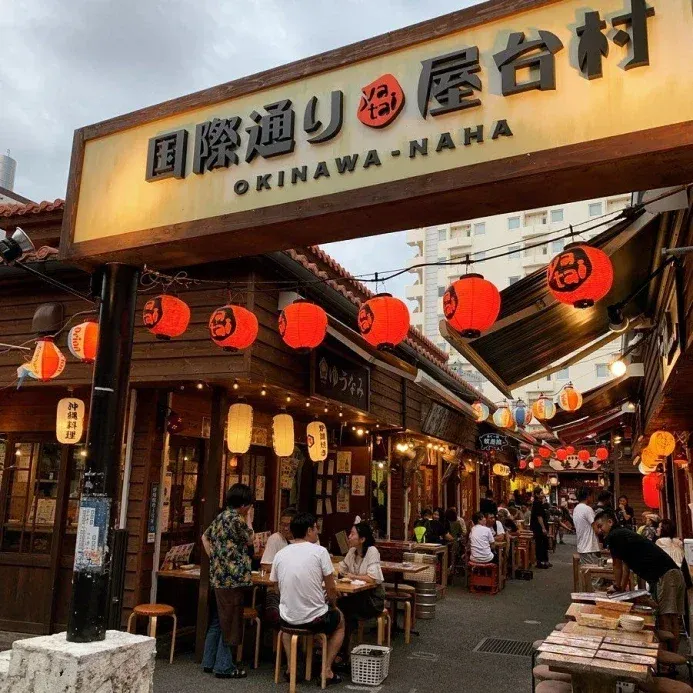
In Naha, the capital city and main island hub, a car is arguably more of a headache than it's worth. Parking in the downtown Kokusai Dori district is expensive, traffic crawls, and the monorail will get you anywhere you actually want to be. As you push further north toward Chatan, Yomitan, and eventually the Churaumi Aquarium and the Yanbaru forest, things get trickier but not impossible. Day trips from Naha to central destinations are perfectly manageable by public transport.
The key mindset shift is accepting what locals call Okinawa Jikan, "island time." Buses run on Route 58, the main coastal highway, and traffic there is real. If your schedule has a little give, getting around Okinawa without a car rewards you with lower costs, zero parking stress, and a much more local experience of the island. For Okinawa travel, that slower pace can actually be the point.
Region Car-free ease Best way to get around Naha city Easy Monorail + walking Central (Chatan/Yomitan) Moderate Suburban bus + e-bike Southern (Nanjo/Itoman) Moderate Local bus + taxi Northern (Nago/Motobu) Harder Express bus + shuttle Kerama Islands Easy Ferry + walking
The Yui Rail - Getting Around Naha by Monorail
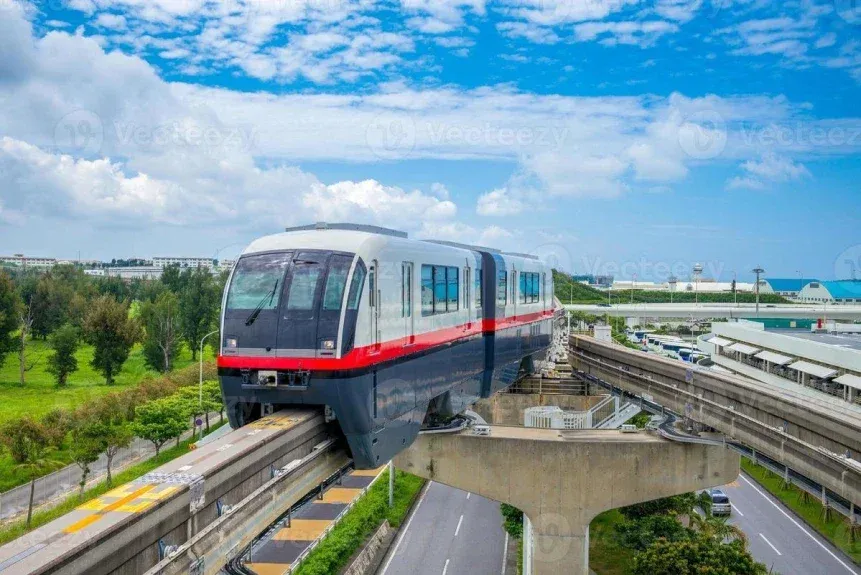
The Okinawa Urban Monorail — everyone calls it the Yui Rail — is the foundation of any car-free trip to Naha. It runs 19 stations across 12.9 kilometres, linking Naha Airport all the way up to the Urasoe residential area, and it's the only transportation system on the island that runs like clockwork: trains every 8 to 15 minutes, no traffic delays, no guesswork. It's also the easiest way to sightsee around downtown Naha without dealing with the tourist crowd.
A few stations worth bookmarking right away:
- Naha Airport Station : the southern terminus, an airport shuttle-free connection directly to the domestic terminal
- Asahibashi Station : the key hub for bus transfers and the Naha Bus Terminal
- Miebashi Station : closest rail point to the Tomari Ferry Terminal and Makishi Public Market
- Omoromachi Station : shopping, the prefectural museum, and northern-bound bus stops
- Shuri Station: the historical gateway to Shuri Castle and the surrounding Ryukyu Kingdom UNESCO sites
The Yui Rail started accepting mainland IC cards (Suica, Pasmo, Icoca) in 2020, which makes tapping on and off effortless if you're carrying one from a previous Japan trip, say, from Tokyo or Osaka.
Is the Day Pass Worth It?
If you're planning three or more rides in a day, yes. The passes run on a 24-hour window from first use, not a calendar day, so a 2:00 PM activation stays valid until 1:59 PM the following afternoon. For short stays with only a few days to explore around Naha, the 1-day pass is usually the right call.
Pass Adult price Break-even 1-day (24h) ¥800 ~4 rides 2-day (48h) ¥1,400 ~7 rides
Okinawa's Bus Network (and How Not to Get Confused by It)
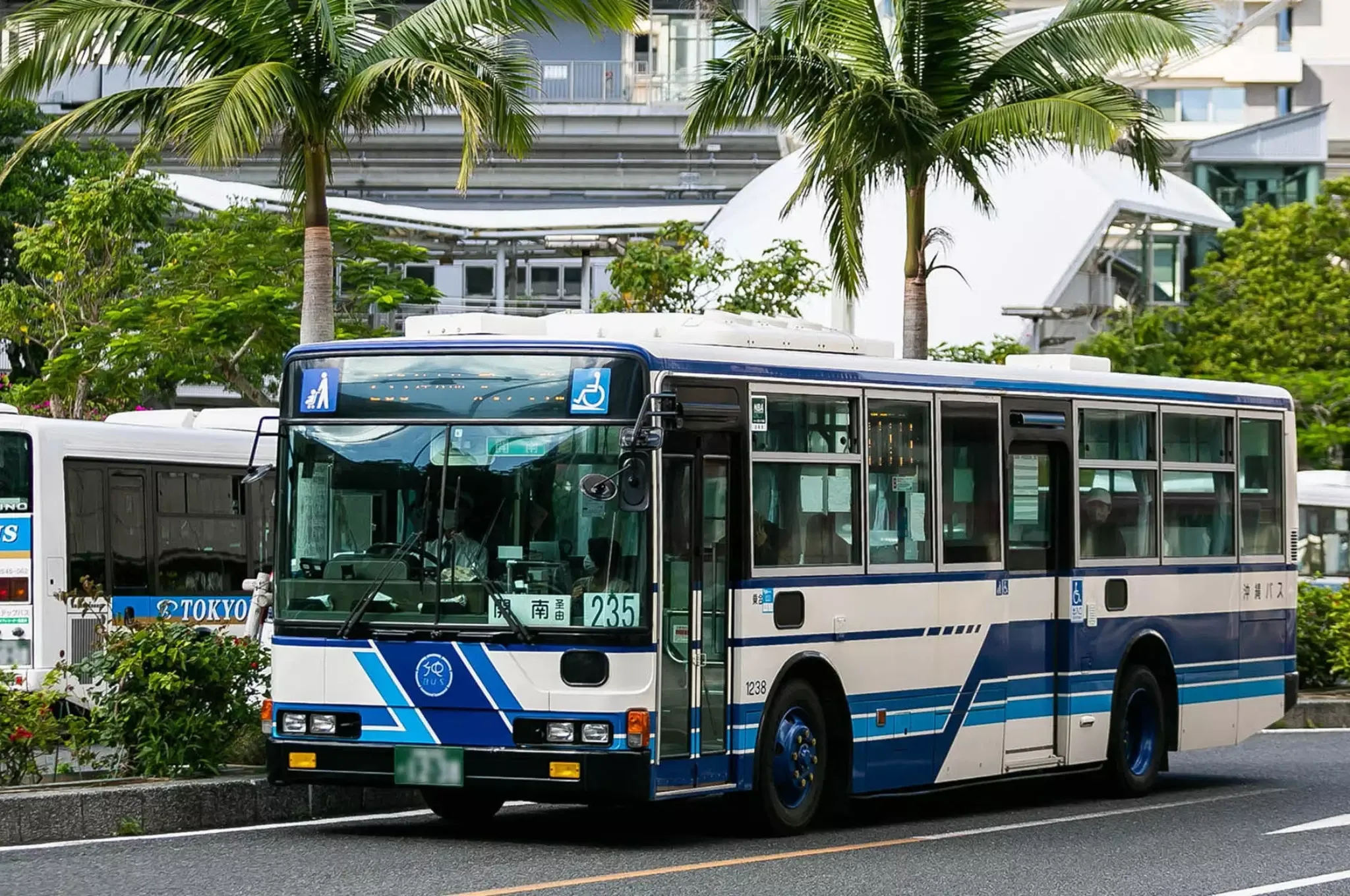
Four separate companies, Ryukyu Bus Kotsu, Okinawa Bus, Naha Bus, and Toyo Bus, operate overlapping bus routes across the island. They coordinate on passes but run independently, which sounds chaotic at first. In practice, once you understand the system, it clicks. Public transport in Okinawa Japan is more robust than most visitors expect.
City buses in Naha use a flat fare. Suburban buses — the larger vehicles with 100-series route numbers, use a distance-based system called the seiriken method:
- Board through the rear or middle door and grab a small numbered ticket from the dispenser at the terminal
- Watch the digital display at the front, it shows your fare climbing as the bus moves
- When your stop is announced, press the signal button and exit through the front door, dropping your ticket and exact fare into the box
Local hack: Bus drivers don't give change, but every bus has a coin machine. Break your ¥1,000 note while the bus is still moving so you're ready at the stop and don't hold anyone up. This is one of Japan's most practical public transportation quirks, and readily available on every suburban route.
Digital Passes: OTOPa Is Your Friend
For tourists, the OTOPa mobile app is now the easiest way to manage bus travel and getting around Okinawa. It sells unlimited-ride passes covering all four major operators and the monorail, loaded right onto your phone, no need to queue at a terminal counter.
Bus: 1-day ¥2,900 All 4 major bus lines
Bus: 3-day ¥5,800 All 4 major bus lines
Bus + Monorail: 1-day ¥3,500 All 4 major bus lines + Yui Rail
Bus + Monorail: 3-day ¥6,400 All 4 major bus lines + Yui Rail
Excludes express routes 111, 117, and the Yanbaru Express (YKB888)
Worth knowing: The day passes don't cover the express buses to northern Okinawa, including the main bus route to Churaumi Aquarium. You'll need to buy those tickets separately, in cash.
Getting to Churaumi Aquarium Without a Car Rental
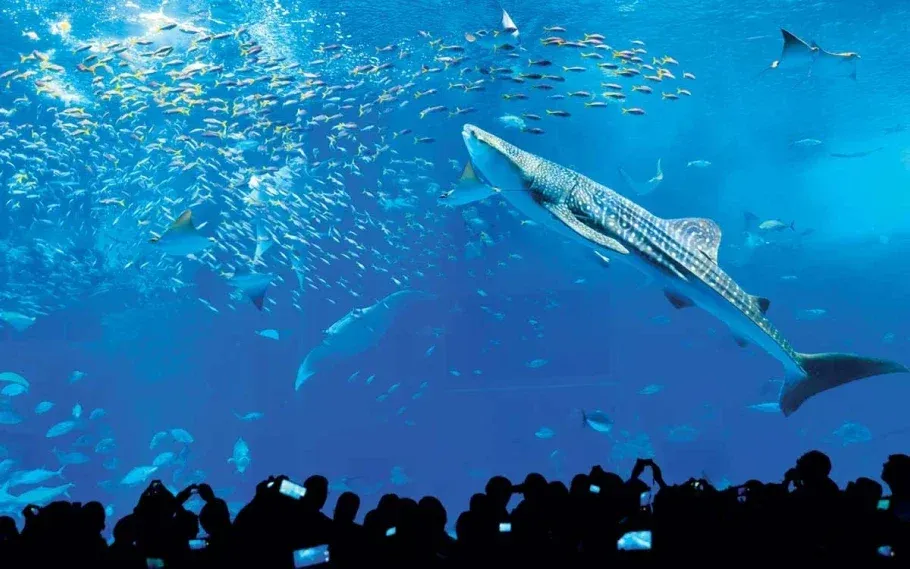
This is the route every tourist asks about when exploring Okinawa's main island, and the good news is it's very doable. The aquarium sits on the Motobu Peninsula, about 90 kilometres north of Naha, and there are three main ways to get there by bus. It's one of Japan's most visited marine attractions, and with a little planning, no rental car is needed to reach it.
The clearest option for most travellers is the Yanbaru Express Bus (YKB888). It departs from Naha Airport and Kencho-mae, runs dedicated long-distance coaches with luggage storage underneath, and drops you right at the aquarium in about two hours and fifteen minutes, making it the most practical airport bus for the northern route.
Service Travel time Fare (airport to aquarium) Yanbaru Express YKB888 2h 15m ¥2,000 Highway Bus 117 2h 30m ¥2,500 Local Bus 120 (transfer at Nago) 3h 30m+ ¥1,940
Cash only: The YKB888 doesn't accept IC cards or the OTOPa digital pass, bring cash. There's also no reservation system, so during peak season, queue early at the terminal. The main early morning departure is at 10:10 AM, arriving at 12:25 PM, perfect for a day trip from Naha.
Staying at a hotel in Onna Village or Motobu? The Airport Limousine Bus goes straight to hotel lobbies, no transfers, guaranteed seats, and tickets sold at the airport terminal counter. It's the cheapest stress-free option for accommodation in the resort belt.
Ferry Travel: Escaping to the Kerama Islands (and Beyond)
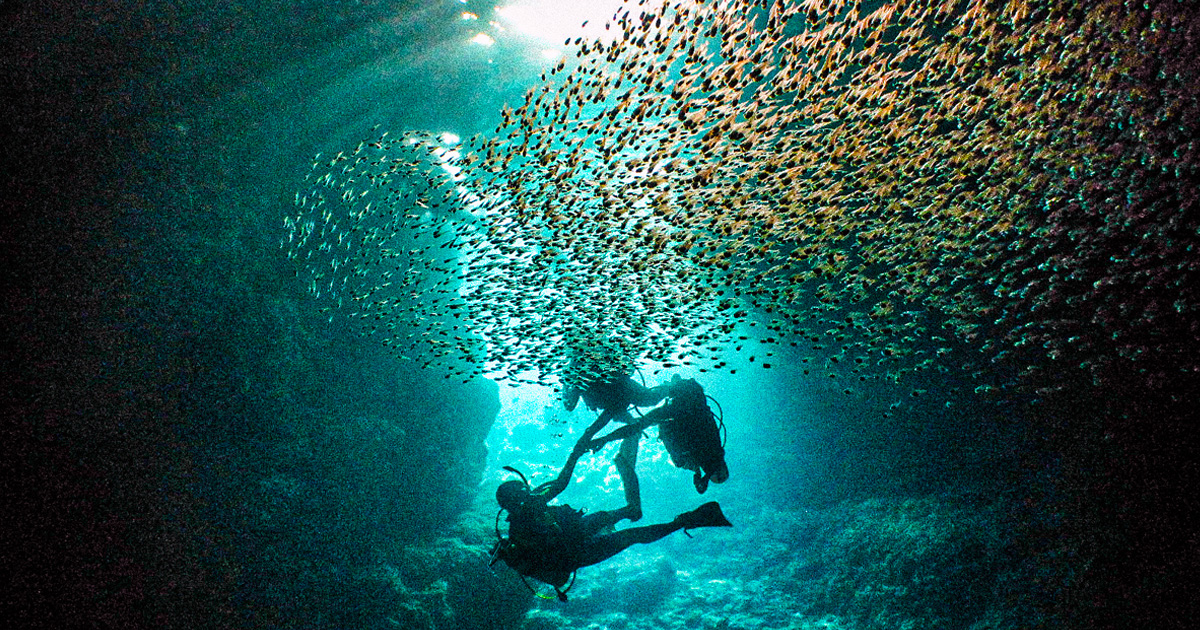
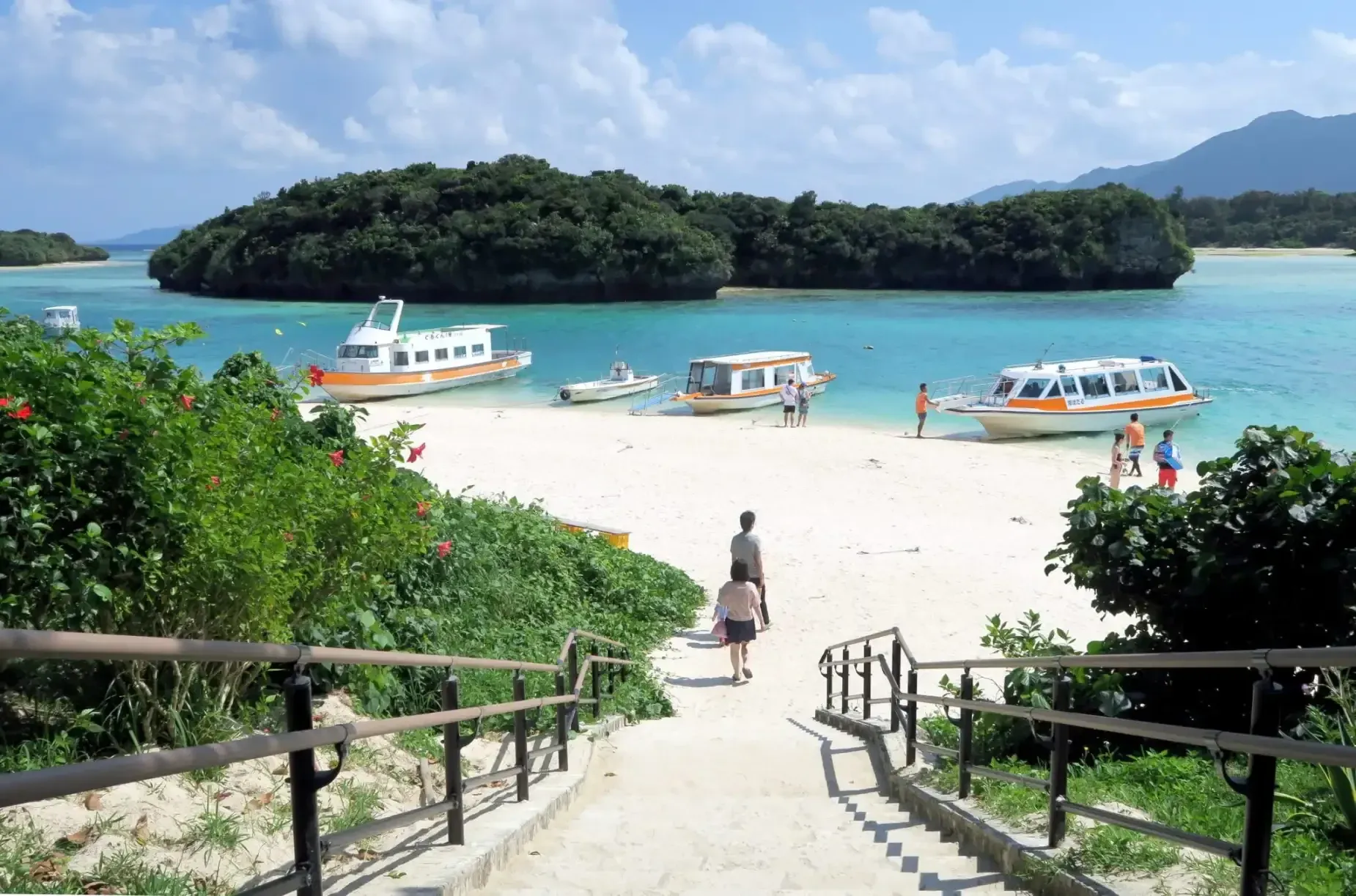
Ferries to the outer islands depart from Tomari Port (Tomarin), a 15-minute walk from Miebashi Station or a short taxi ride from downtown Naha. The Kerama Islands, Tokashiki, Zamami, and Aka, are famous for their turquoise blue water, stunning beaches, and coral reefs where you can dive or snorkel alongside sea turtles and manta rays. They're genuinely among the easiest destinations to reach car-free in all of Okinawa Japan.
You have two types of vessel to choose from. High-speed catamarans get there fast (35 to 50 minutes) but rock around in anything but calm weather. Car ferries take twice as long but ride more steadily, worth considering if you're prone to seasickness. Either way, the marine scenery on the crossing alone is worth the fare.
Route Vessel Duration Round trip fare Naha to Tokashiki Marine Liner (express) 35 min ¥4,810 Naha to Tokashiki Ferry Tokashiki 70 min ¥3,210 Naha to Zamami Queen Zamami (express) 50 min ¥6,080 Naha to Zamami Ferry Zamami 120 min ¥4,090
Typhoon season note: Between June and October, check ferry status early each morning (around 8:00 AM) via the village office websites. High-speed boats are often the first to be cancelled in rough conditions. A ¥100 environmental tax applies per passenger on all Kerama routes, it's typically bundled into your ticket at the terminal.
If you're planning a longer Okinawa trip, it's also worth knowing that direct flights and ferry links connect the main island to other remote island destinations, including Ishigaki Island, a tropical getaway in the Yaeyama group famous for its scuba diving, manta rays, and access to Iriomote and Taketomi islands. Exploring Ishigaki by bicycle is popular, and short ferry hops from Ishigaki port make Iriomote's waterfalls and Taketomi's traditional villages easy day trips. No car rental permit required.
E-bikes and Taxis: Filling the Gaps Around Okinawa
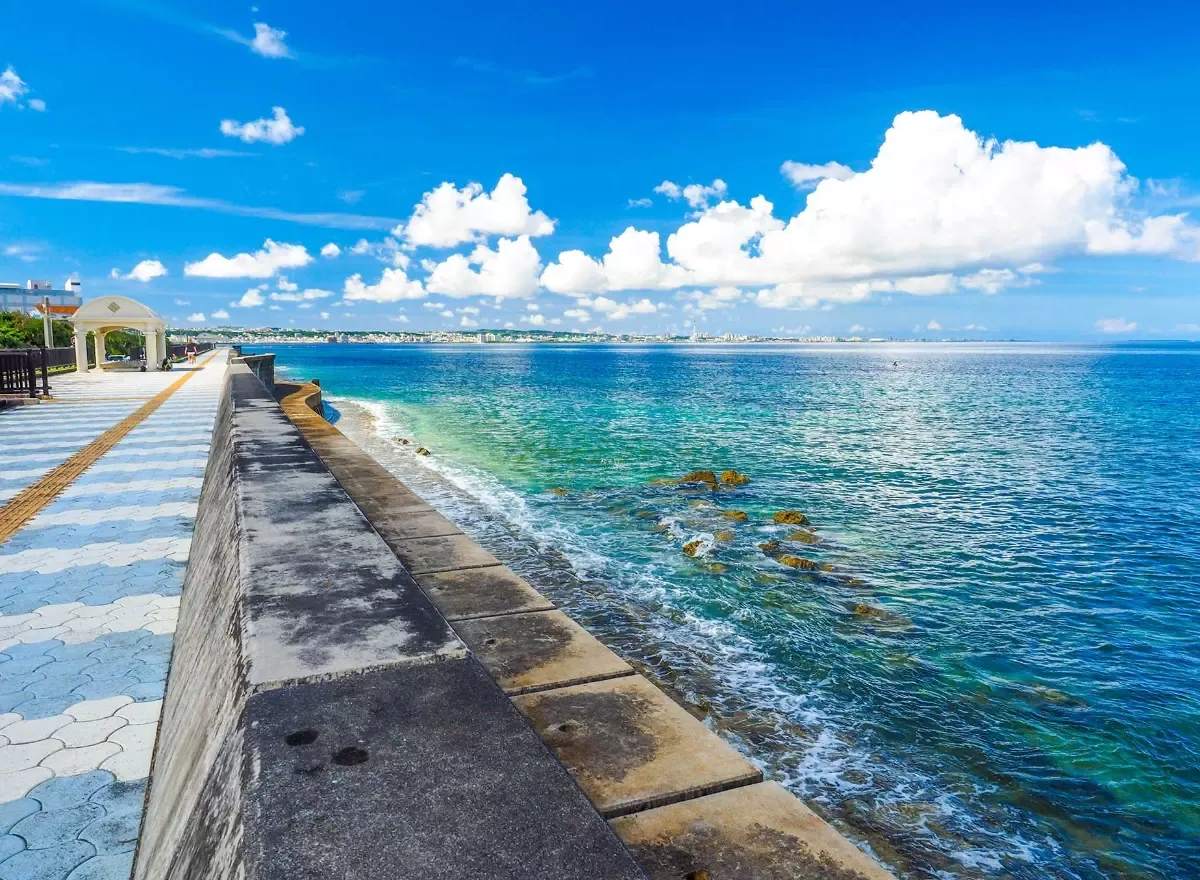
Okinawa's heat and hills make traditional cycling a workout you might not sign up for. E-bikes are a much better fit, and the ChuraChari bicycle network (operated by Docomo) has spread across Naha and parts of central Okinawa, with stations near Omoromachi, Naminoue Beach, and the Chatan area. A bicycle day pass runs around ¥1,500 to ¥2,000 and gets you between attractions that are just too far to walk but too close to justify a bus. It's one of the most enjoyable ways to spend time exploring Okinawa's coastal streets.
In American Village, bicycles are genuinely the best way to move between Sunset Beach and Araha Beach Park, the local bus routes there are circuitous and infrequent. Rent a bicycle for the afternoon and you'll cover twice the ground.
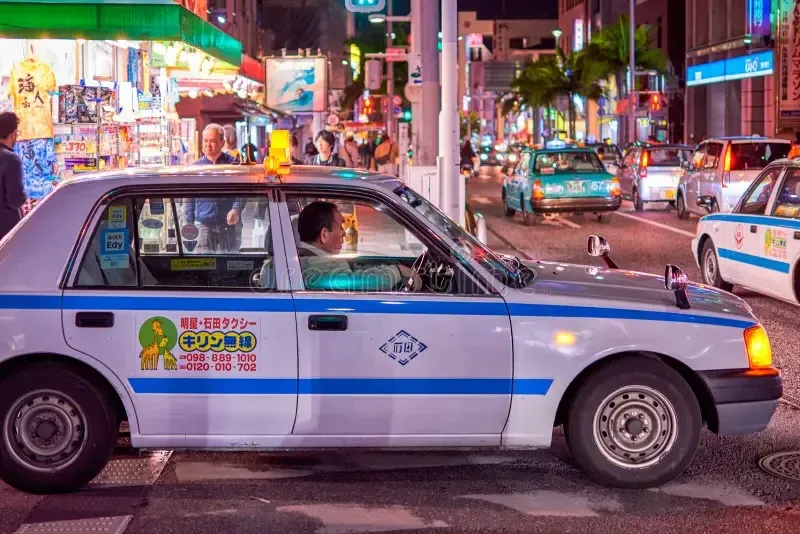
Taxis in Okinawa are cheaper than in Tokyo, which makes them a legitimate option for short hops or late-night returns. The apps DiDi and GO work well in Naha and remove the language barrier entirely, you pick your destination on-screen and the driver just follows the map. No Japanese required.
Destination from airport Approx. time Approx. taxi fare Naha (Kokusai Dori) 15 min ¥1,500 to ¥2,000 Chatan (American Village) 45 min ¥4,500 to ¥6,000 Onna Village resorts 70 min ¥14,000 to ¥16,000 Motobu (Churaumi area) 100 min ¥19,000 to ¥23,000
Sample Car-Free Itineraries for Exploring Okinawa
2-Day: Downtown Naha and the Cultural South
Day 1 - The historical axis: Buy a 24-hour Yui Rail pass at the airport. Head straight to Shuri Station and spend the morning at Shuri Castle and the Tamaudun Mausoleum. Ride back to Miebashi for dinner along Kokusai Dori and a wander through the Makishi public market, a great spot for local food including Okinawan soba and awamori tasting.
Day 2 - The sacred south: Take Bus 38 from the Naha Bus Terminal to Sefa-utaki, the most sacred site of the Ryukyu Kingdom. A short taxi hop gets you to Okinawa World and the Gyokusendo cave in the afternoon. Bus 83 brings you back to downtown Naha in time to shop for Okinawan ceramics along Tsuboya Street.
5-Day: Island Hopping and Northern Wonders
Day 1 - Naha arrival: Base yourself near Asahibashi Station for easy access to both the rail and the bus terminal. Book your accommodation close to downtown Naha for the most flexibility.
Day 2 - The north: Catch the 10:10 AM YKB888 express bus from the airport. Spend the afternoon at Churaumi Aquarium and stroll the shaded Bise Fukugi Tree Path. Return on the 6:00 PM express to Naha.
Day 3 - Kerama escape: Board the 9:00 AM high-speed ferry from Tomari Port to Zamami island. Snorkel or dive at Furuzamami Beach — the water is a stunning turquoise and sea turtles are common. Back in Naha on the 4:00 PM return ferry.
Day 4 - Chatan coast: Bus 120 to American Village. Morning shopping, afternoon at Sunset Beach, bicycle rental to loop around to Araha Beach before sunset. The Beach51 bar area is worth a stop for Okinawan food and a cold Orion beer.
Day 5 - Tsuboya and departure: Walk Tsuboya Pottery Street and Fukushuen Garden before riding the monorail back to Naha Airport for your flight. Budget airlines like Jetstar offer direct flights back to Tokyo or Osaka if you're continuing your Japan trip.
When You Genuinely Should Rent a Car in Okinawa
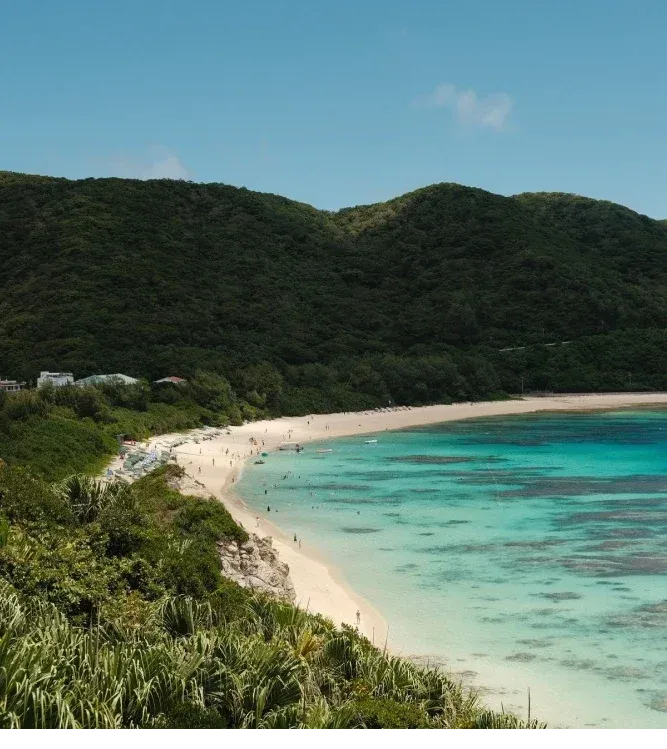
Honesty matters here. There are situations where the bus network just doesn't cut it when exploring Okinawa, and pretending otherwise would lead you astray.
- Travelling in a group of four: Four round-trip bus tickets to the aquarium costs around ¥16,000. A small car rental with fuel runs ¥8,000 to ¥10,000 per day. The maths isn't close, and a rental car gives you the freedom to explore the island on your own schedule.
- Deep Yanbaru exploration: Cape Hedo and the Daisekirinzan rock forest require a bus transfer at Nago and again at Hentona, with the final leg running just three times a day. A one-hour drive becomes a 3.5-hour ordeal, this is where a car rental earns its keep.
- Sunset timing: Buses thin out sharply after 7:00 PM in rural areas. If you want to catch the sunset at Cape Manzamo or Kouri Island's Heart Rock, you may miss the last bus back, and the taxi home from there is steep.
- Large luggage: Local buses have no storage racks. Moving between hotels with big suitcases during peak hours is physically not possible. The workaround is Takkyubin bag forwarding (¥1,500 to ¥2,000), ship your bags to your next hotel and travel light on the bus.
The "double pass" strategy: Use a Yui Rail 1-day pass for your morning sightseeing around Naha, then activate your OTOPa bus pass in the afternoon. Since they run on separate 24-hour windows, you get full value from both without overlap. It's the smartest itinerary hack for a busy day in the city.
The Bottom Line on Okinawa Travel Without a Car
Exploring Okinawa without a car isn't a compromise, it's a different kind of trip, and for the right traveller, it's actually the better one. You'll spend less, stress less about parking and navigation, and end up in more interesting situations (sharing a bus with elderly Okinawans heading to the public market is, genuinely, a highlight of Japan's island culture). The Yui Rail handles Naha beautifully, the express buses reach the north reliably, and the ferries to the Keramas and beyond, including Ishigaki Island for those wanting to dive with manta rays or explore Iriomote's jungle waterfall, are some of the most enjoyable transportation in all of Japan.
Just keep ¥10,000 in cash somewhere on you at all times. The Yanbaru Express, many ferry shops, and scattered rural taxis are still cash-only, and you don't want to be stranded in Motobu without it. With a little preparation, a car-free trip around Okinawa is not just feasible, it's a genuinely rewarding way to experience one of Japan's most beautiful island destinations.
FAQ: Getting Around Okinawa Without a Car
Is it really possible to visit Okinawa without renting a car?
Yes, but it depends on your itinerary. Naha and the southern cultural sites are completely manageable without a car. The Yui Rail monorail, city buses, and walking cover almost everything in the capital. Heading north requires more planning, but express bus services like the YKB888 make it doable. The honest trade-off is time: buses take longer than driving, and some remote spots are genuinely hard to reach without wheels.
How many days do I need to explore Okinawa by public transport?
Two days is enough to cover Naha and a quick southern day trip. Five days lets you add a Kerama Islands ferry escape and a day trip to the Churaumi Aquarium in the north. If you want to explore Okinawa's outer islands, Ishigaki, Iriomote, or Taketomi, budget at least 7 to 10 days total. The more time you give yourself, the less stressful the bus schedules feel.
How does the Yui Rail monorail work, and is a day pass worth buying?
The Yui Rail runs 19 stations from Naha Airport to Urasoe, with trains every 8 to 15 minutes. It's the fastest and most reliable way to get around Naha. A 1-day pass costs ¥800 and pays for itself at around 4 rides, it runs on a 24-hour window from first use, not a calendar day, so timing your activation is worth thinking about. Suica, Pasmo, and Icoca cards are accepted if you're coming from mainland Japan.
What's the best app for navigating Okinawa's buses?
OTOPa is the go-to app for tourists. It sells 1-day and 3-day unlimited bus passes covering all four major operators, plus add-on monorail access. Google Maps is reliable for route planning but tends to underestimate walking time between bus stops and actual attractions, add 10 to 15 minutes to any walking estimate it gives you. For bus route numbers and departure times, the Naha Bus Terminal information desk (ground floor) is the most reliable source.
How does the seiriken (numbered ticket) system work on suburban buses?
When you board a suburban bus, take a small numbered ticket from the dispenser near the door. A screen at the front shows a fare grid — find your ticket number to see your current fare, which increases as the bus travels. When you reach your stop, press the signal button, then pay your exact fare at the front exit. The bus has a coin machine to break ¥1,000 notes, do this while moving, not at the stop.
What's the difference between the YKB888 and Highway Bus 117?
The YKB888 is faster (2h 15m vs 2h 30m), has undercarriage luggage storage, and departs directly from Naha Airport. It costs ¥2,000 but is cash only with no reservations. Highway Bus 117 departs from the Naha Bus Terminal, takes slightly longer, costs ¥2,500, and accepts some IC cards. For most travellers arriving from the airport with luggage, the YKB888 is the better choice.
Are there places in northern Okinawa I genuinely can't reach by bus?
A few, yes. Cape Hedo and the Daisekirinzan rock forest require a transfer at Nago and then at Hentona, with the final bus running only three times per day. What takes one hour by car becomes a 3.5-hour journey each way. If visiting these spots is a priority, renting a car for that specific day makes much more sense than trying to work around the limited bus schedule.
How do I get to the Kerama Islands from Naha?
Ferries depart from Tomari Port (Tomarin), a 15-minute walk from Miebashi Station on the Yui Rail. High-speed catamarans reach Zamami in 50 minutes (¥6,080 return) and Tokashiki in 35 minutes (¥4,810 return). Slower car ferries cost less and are more stable in choppy conditions. Check ferry status early in the morning during typhoon season (June to October), as high-speed services are often cancelled first when seas are rough.
Do I need to book ferry tickets in advance?
For the Kerama Islands, tickets can usually be purchased on the day at the Tomari Port terminal counter, but during Golden Week, Obon, and summer weekends, early morning queues are common. The car ferries tend to have more capacity than the high-speed boats. There's also a ¥100 environmental cooperation tax per passenger on all Kerama routes, usually bundled into the ticket price.
Are e-bikes a good option for getting around?
In Naha and Chatan, yes, e-bikes are excellent. Okinawa's humidity and hills make regular cycling hard work, but e-bikes handle both easily. The ChuraChari network has docking stations across central Okinawa, and a day pass costs ¥1,500 to ¥2,000. In American Village, a bicycle is genuinely the best way to move between Sunset Beach and Araha Beach Park, where local buses are infrequent.
What about moving luggage between hotels without a car?
Local buses have no luggage racks, making large suitcases impractical during peak hours. The solution is Takkyubin, Japan's luggage forwarding service. For ¥1,500 to ¥2,000, your bags are picked up from your hotel and delivered to your next one, usually by the next morning. Most convenience stores and hotel front desks can arrange a booking.
Evertrail Tours · April 26, 2026