You probably didn't come to Okinawa expecting great surf. Most people don't. They come for the crystal water, the coral reefs, the slow pace of island life, and maybe, if they're adventurous, to poke their head into a blue cave or two.
Then they stumble onto the Sunabe Seawall.
It's not Bali. It's not Waikiki. There's no tropical surf resort, no thatched-roof surf hut, no Instagram-perfect beach of powdery white sand leading down to a gentle beginner break. What you find instead is a long stretch of concrete promenade, a buzzing mix of Okinawan locals and US military surfers, roadside Okinawa soba joints, and a west-facing reef that turns amber at sunset in a way that makes it genuinely hard to leave.
First-timers almost always say the same thing: "I had no idea this was here."
This surf spot guide covers everything you need to know before paddling out, where it is, what the waves actually do, who surfs it, when to go, where to rent gear, and how to not make a fool of yourself (or worse, get hurt) on a wave that rewards the prepared. Whether you've just moved to Okinawa, you're planning a surf trip, or you're simply curious what the okinawa surf scene is all about, read on.
What Is the Sunabe Seawall?
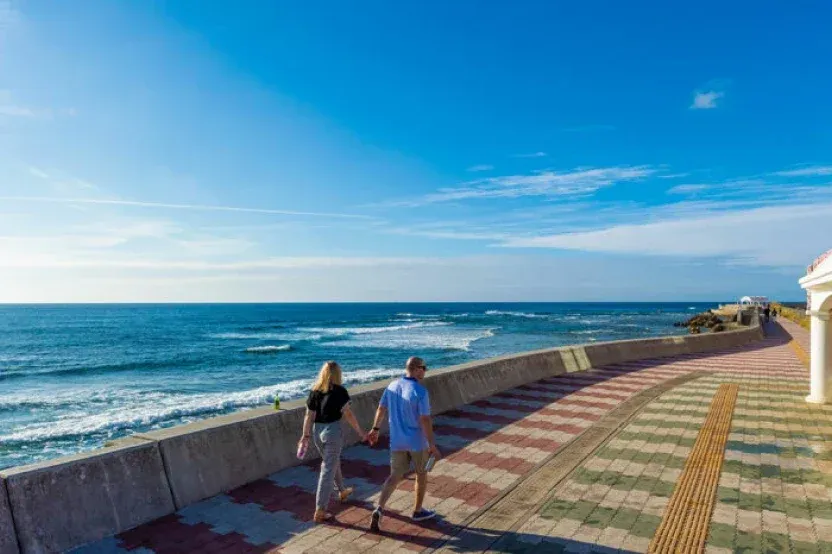
The Sunabe Seawall is a roughly five-kilometre stretch of low concrete sea-defense wall that runs along the Miyagi and Mihama coast of Chatan-cho, in central Okinawa. It sits on the East China Sea side of the island, just outside Gate 1 of Kadena Air Base, and wraps south until it meets the Ferris-wheel-and-shopping frenzy of Mihama American Village.
The wall itself is waist-high, a flat-topped promenade where joggers and dog walkers share space with surfers in boardshorts carrying boards, groups of friends watching the sunset over drinks, and old Okinawan men fishing off the edge. It's simultaneously a seawall, a public park, and a neighbourhood main street.
In front of the wall is a wide, shallow live-coral reef shelf, the same coral reef that makes Sunabe one of Okinawa's most popular scuba diving spots. The coral extends outward for about 50–100 metres before it drops into deeper water, and that drop-off edge is where the surf breaks. It's one of the most accessible reef breaks on the main island, which is a big part of why it's become the heartbeat of surf in Okinawa.
GPS coordinates: approximately 26.36°N, 127.74°E. The most useful pin for navigation: 1-56 Miyagi, Chatan-cho, that's the address for Source Surf Shop, right on the wall.
Distance from key landmarks:
- Kadena Air Base Gate 1: about 3 km (literally a few minutes by car)
- Camp Foster's Kitamae Gate: about 5 km south
- Naha Airport: about 21 km south, or 35–60 minutes by car depending on Highway 58 traffic
Easy access from Naha and the bases is one reason the seawall area draws surfers from across the island every single swell. You enter the water not from a beach, but from numbered concrete staircases, Sunabe No. 1, North Steps, South Steps, Water Treatment Plant, Curry House, that drop straight down onto the live coral shelf. That detail alone tells you something important about what kind of wave you're dealing with.
The Waves: What to Actually Expect at Sunabe Seawall
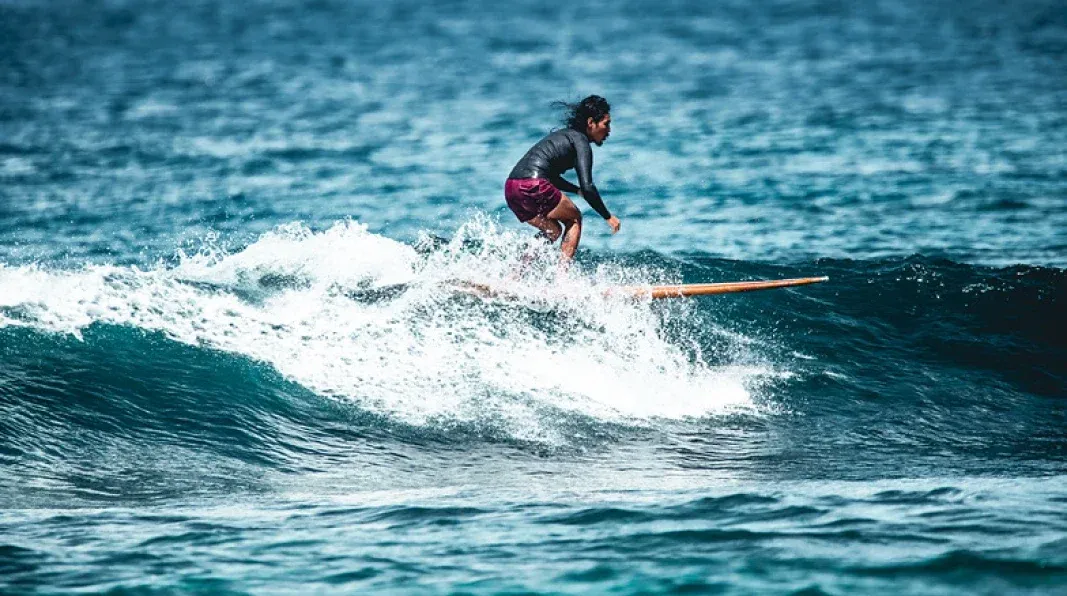
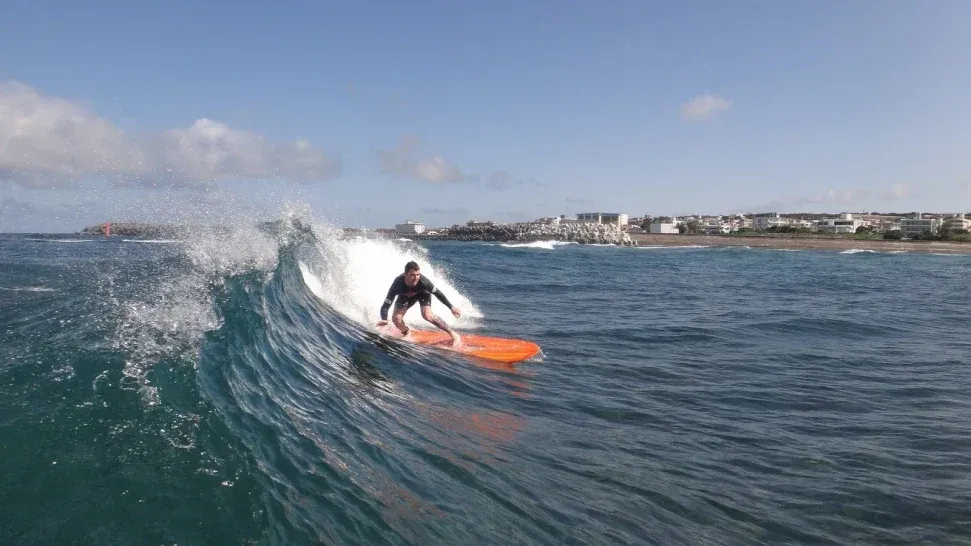
Surfline has compared Sunabe's layout to Ala Moana Park in Hawaii, and that comparison holds up well. The reef produces around ten distinct peaks spread across the wall, each separated by a narrow paddle channel. There's something for every intermediate-to-advanced skill level, and the variety is part of what keeps surfers coming back session after session.
The Main Peaks
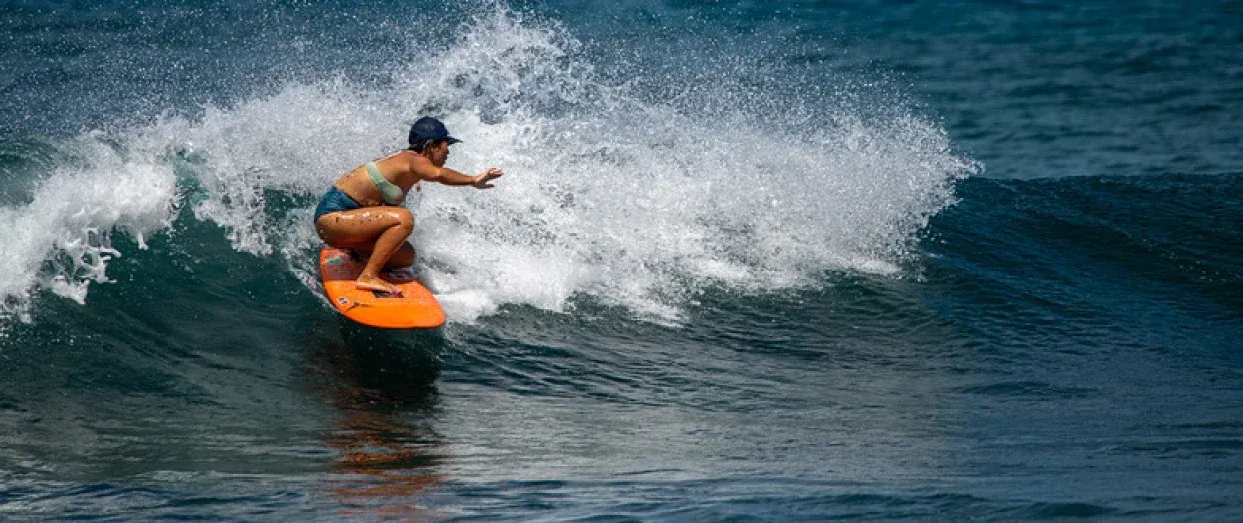
Bowls is the crowd favourite and the most beginner-friendly of the advanced peaks. It's a softer, bowly wave that dishes up fun shortboard turns and the occasional air section. This is the peak you want on a clean 1-1.5 metre day if you're still getting your bearings at Sunabe.
Sunabe II is the one local surfers wait for on bigger winter swells, a long, walling right that lines up beautifully off the wall on solid north-northeast swell and stands as the most photographed wave at the spot.
The Typhoon Breaks are the heavy left-handers that only show up when a typhoon sets up to the southwest. On those days, the walls get thick and powerful, producing hollow, barreling sections that can rival some of the best surf spots in okinawa. Some local guides have compared them to Uluwatu in terms of the current patterns. These are advanced-only waves; not something you paddle out to for fun unless you know exactly what you're doing.
The other named peaks, No. 1, Steps, Water Treatment, Curry House and a handful more, provide additional options when the main peaks are crowded, or when you want a specific type of wave for the conditions. Good waves are never far away when the swell is running.
Wind and Swell Direction
Sunabe fires on two very different conditions:
Winter (north swell): The northeast monsoon window, roughly December through February, pushes consistent north swells and north-to-northeast windswell from across the East China Sea. This is the most reliably clean window with the cleanest conditions of the year. You want an east wind, offshore winds are key, to hold the surface clean and prevent choppy, blown-out surf.
Typhoon season (south/southwest swell): When a typhoon sets up south or southwest of Okinawa and tracks in the right direction, Sunabe can become genuinely world-class for short windows. The day before and the two days after a typhoon pass, when the wind backs offshore from the east and long-period swell starts stacking through, are the days locals text each other about. These typhoon swells are the reason experienced surfers plan entire trips around the okinawa surf calendar.
Tides Matter More Than Almost Anything Else
This point cannot be overstated. Okinawa has a tidal range of around 1.8 metres. At low tide, the reef in front of Sunabe is dangerously shallow, you can essentially walk on it. The wave becomes surfable on the rising tide and holds quality through high tide. Plan your session in the three-to-four hour window before high tide. If you don't check the tides, you will either be surfing over exposed coral or waiting on the wall watching it drain.
Best Time to Surf Sunabe: Month-by-Month Season Guide
One of the biggest surprises for visiting surfers is realising that Okinawa has a legitimate surf season, actually two of them, separated by flat, sun-baked stretches in between.
January : 21 to 22°C — 2 to 3mm shorty —> Prime season with the most consistent clean windows and good north swell pulses.
February : around 21°C, the annual low —> spring suit — Prime season, coldest water of the year with solid northeast swell days possible.
March : 21 to 22°C — shorty —> Quality begins to fade toward spring flatness.
April : 22 to 23°C — boardshorts and rashguard —> Mostly flat, good for SUP and paddling.
May : 24 to 25°C — rashguard —> Low energy with occasional early tropical disturbances.
June : 26 to 27°C — boardshorts —> First typhoon swells possible, otherwise inconsistent.
July : 28 to 30°C — boardshorts —> Typhoon season, biger and powerful when storms set up, glassy otherwise.
August : around 29°C — boardshorts —> Typhoon season, best windows get crowded and locals plan around forecasts.
September : around 28°C — boardshorts —> Often the best overall month, peak typhoon swell quality.
October : around 27°C — boardshorts —> Twin swell sources stacking, busy lineups.
November : around 25°C — boardshorts or rashguard —> Cleanest typhoon-tail days with the northeast monsoon beginning.
December : around 23°C — spring suit or shorty —> Statistically the most reliable clean surf month of the year.
A note on wetsuits: You will never need anything thicker than a 3/2 mm at Sunabe. Most year-round local surfers surf in boardshorts from May through November. If you're visiting from a cold-water surfing background, February in Okinawa will feel like midsummer. The tropical ocean stays warm enough year-round that a full suit is essentially never necessary.
Who Is Sunabe For? An Honest Skill-Level Assessment
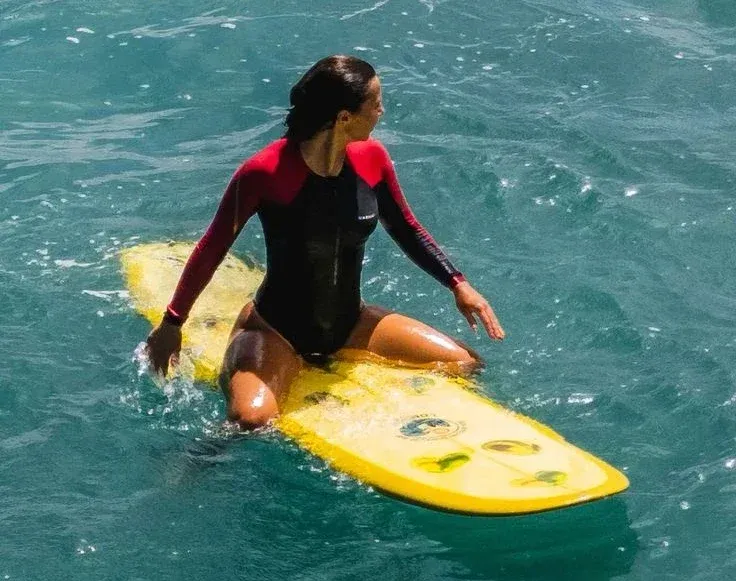
Let's be direct: Sunabe Seawall is not a beginner's wave. A handful of generic travel guide listicles claim otherwise, and those claims have sent more than a few first-timers into situations they weren't ready for.
Here's what makes it unsuitable for true beginners:
The concrete wall. The inside of the break is a hard, vertical concrete barrier. If you wipe out on a bigger day and the wash takes you toward the wall, you're not falling on sand, you're scraping against concrete and fighting to find the stairs. That's a shoulder injury, a board ding, or a proper scare waiting to happen.
The live coral reef. Even at high tide, the shallow reef under your feet is only one to two metres down at the takeoff zone. At low tide it's exposed and walkable. Coral cuts are routine at Sunabe; they're sharp, they bleed freely, and they get infected fast in warm tropical water.
Sea urchins. The black long-spined urchins (called gangaze in Okinawan) live on the inner reef. Stepping on one in bare feet is the most common Sunabe injury by a wide margin. Reef boots are not optional, they are mandatory.
Currents. The channels between peaks are also drainage rips. On bigger days, the rip current at the Typhoon Breaks section can pull you along the reef and away from the wall. It's manageable if you know it's there; alarming if you don't.
The recommended minimum: You should be a confident intermediate before surfing Sunabe. That means you can paddle out comfortably through whitewater, read a lineup, duck-dive (or knee-paddle a longboard), and exit the water calmly to a specific staircase rather than wherever the white water takes you.
Where intermediates thrive: Bowls and the southern peaks on a clean one-to-one-and-a-half metre north swell, mid-tide or above, with light east wind. There's plenty of wave for turns, a forgiving shoulder, and enough surfers around to feel safe.
What attracts advanced surfers: Double-overhead typhoon swell on a glassy morning. When Sunabe II walls up and the long lefts at the typhoon section start producing left and right barrel sections, the calibre of surfing on display improves noticeably and the vibe in the water shifts.
For absolute beginners: book a lesson. If you're new to surfing, Haibi Surfing School and Happy Surfing Okinawa both run structured beginner courses at gentler breaks nearby, shallow, protected spots where you can find your feet without worrying about concrete or urchins.
The Culture: Why Sunabe Actually Surprises You
This is the part that doesn't show up in the forecast data.
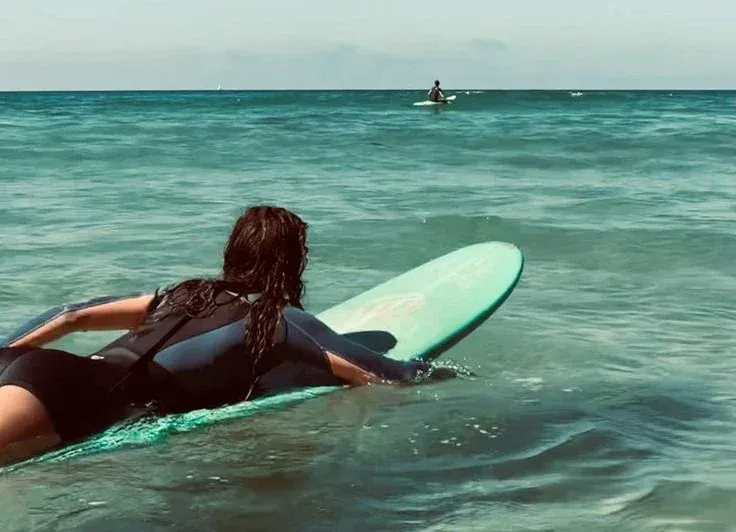
Sunabe's culture is unlike any other surf spot in Japan, and arguably unlike many in the world. It was shaped by decades of coexistence between the Okinawan local community and the US military presence at Kadena Air Base, and what emerged is something genuinely unusual: a bilingual, multicultural surf scene with a very specific social rhythm rooted in Ryukyu island life and American shore culture in equal measure.
On any given day in the lineup, you'll find Okinawan locals associated with the shops along the wall, American Air Force and Marine personnel from Kadena and Foster, many of whom are serious surfers who have chased waves across the Pacific, long-term expat English teachers and contractors, and Japanese surf tourists up from the mainland.
The etiquette is universal (don't drop in, don't snake, defer to the surfer on the inside) but the tone is important. Long-time local surfers are welcoming if you're respectful. If you paddle out to the most crowded peak and immediately position yourself on the inside without watching the lineup, you'll have a bad time. If you take five minutes to observe from the wall, pick a less crowded peak, and nod to the people near you, you'll almost certainly get waves.
The Sunset Ritual
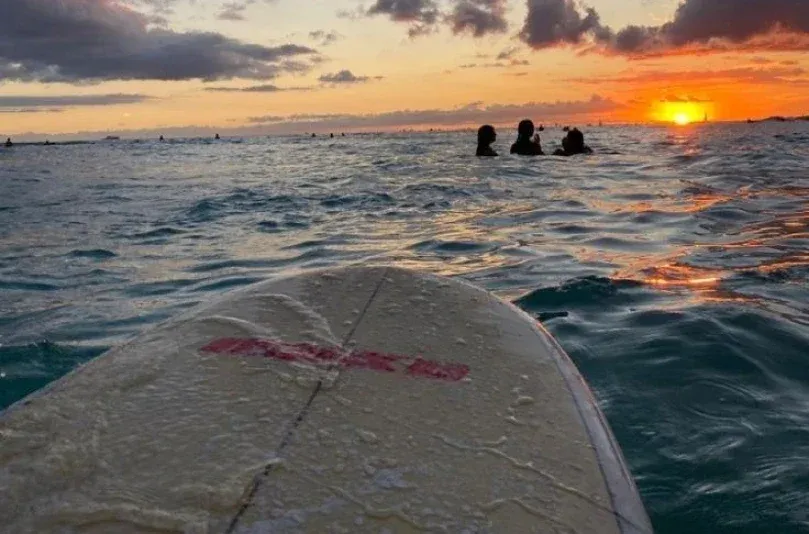
Sunabe faces due west into the East China Sea. Every clear evening, without planning or coordination, the wall becomes Okinawa's most reliable sunset viewing platform. Surfers paddle out for the last hour of light. Joggers stop mid-jog to watch. Families set up camp on the wall with snacks. The Blue Seal ice cream queue gets longer. Nobody is in a hurry.
It's the kind of ritual that military families who've been stationed here talk about for years after they rotate home. It's casual and communal and completely free, and it's what turns a surf session into something more like a way of life.
Gear, Rentals, and Surf Shops at Sunabe
The good news: everything you need is within walking distance of the wall. The surf shops around the seawall area are well-stocked, English-friendly, and set up specifically for the kind of reef surf that Sunabe demands.
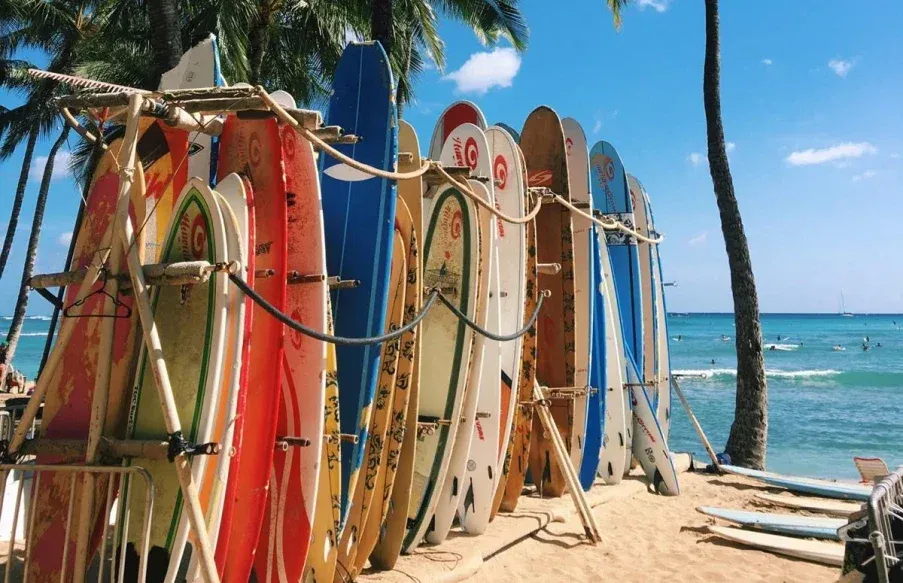
Source Surf & Import Okinawa is the anchor shop, American-owned, operating out of the same location since 1995, and sitting almost directly on the seawall just outside Kadena Gate 1. Staff speak English. They rent boards, SUPs, wetsuits, and reef boots, and the quiver covers soft foamies through to proper shortboards and longboards. Don't forget to grab wax if you didn't pack your own.
Current rental rates at Source:
- Surfboard: ¥3,000 for one hour / ¥4,000 for two hours / ¥5,500 for 24 hours
- SUP: ¥4,000 / ¥5,000 for one and two hours respectively
- Wetsuit: ¥1,000
- Reef boots: ¥500
Board options include a soft 7'0, shortboards from 5'8 to 6'2, a mid-length 7'0, and longboards at 9'2 and 9'4. They also do ding repair, which you may or may not need.
M's Surf Shack is the local Japanese shop of choice, run by Kumi Itokazu and known for custom-shaped surfboards. If you want a one-off board shaped in Okinawa, this is where you go. Great for repairs too.
Island Break sits mid-wall and carries boards and surf gear, with a wetsuit manufacturer next door that makes bespoke suits. Owner Ken Maeshiro is as direct as anyone about Sunabe's tidal rules, he's worth a conversation if you're new to the spot.
Haibi Surfing School (811surf.com) is the best option for structured lessons. Based a short drive south at 158 Hamagawa in Chatan, it's run by a former pro surfer with coaching credentials in Japanese and English. Lesson-day rentals: board around ¥5,000 per day, wetsuit ¥2,000, reef boots ¥1,000, SUP ¥6,000. Sessions are planned around the tide, so start times are confirmed by message the morning of.
(Prices and hours are correct at the time of research, always verify directly before your visit.)
Getting There and Practical Tips
From Naha Airport:
- By car or rental scooter: about 35–60 minutes north via Highway 58. A toll expressway option runs parallel and cuts the time significantly, especially during morning rush hour.
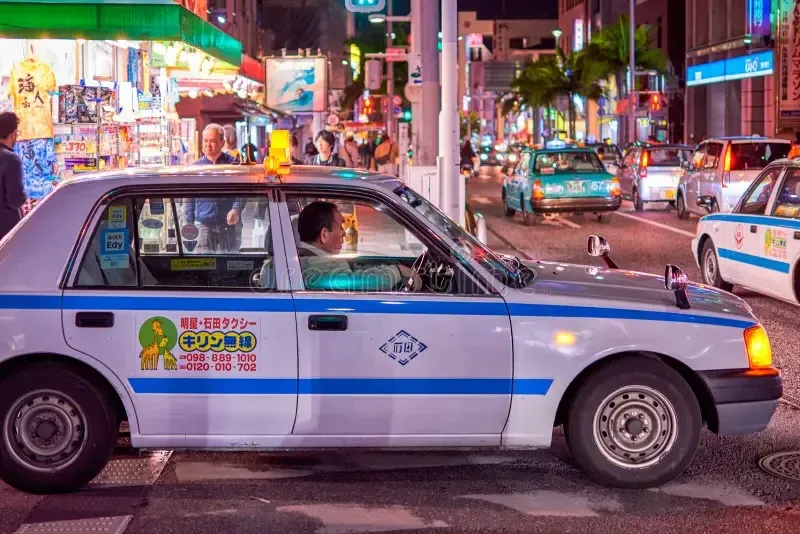
- By taxi: around 45 minutes, roughly ¥3,500–4,000 from the airport.
- By public bus: Routes 20, 28, 29, or 120 from Naha Bus Terminal, get off at the "Kuwae" stop near American Village. About 50–70 minutes, roughly ¥700–840 one way.
From the US bases:
- From Kadena Gate 1: the seawall is essentially a five-minute walk or two-minute drive.
- From Camp Foster's Kitamae Gate: north on Highway 58 about 3.7 km, then follow the road to the wall. Ten minutes total.
Parking: There's no central surf lot. Street parking runs along the seawall promenade itself, free, but vehicles are swept out around 10 p.m. when the wall closes to traffic. On busy weekends, overflow parking at Mihama American Village (a 10–15 minute walk south) is your next option.
Places to stay: Several hotels sit right on or near the wall. Moana by DSH Resorts, The Beach Tower, and The Orrs all put you within steps of the water and remove the shower problem entirely.
Showers: There are no public surf showers on the wall, this surprises almost everyone. The surf shops offer rinse-off for clients; a few dive shops nearby offer shower access for a small fee. The north end at Sunabe Baba Park has public restrooms.
What to bring: reef boots (non-negotiable), reef-safe sunscreen, a rashguard in summer, a 2–3 mm shorty in winter, water (no convenience kiosk on the wall, the nearest FamilyMart is about one block back), and a dry bag for your phone and wallet since there are no lockers near the staircases.
Where to Eat and Drink After Your Session
This is the part nobody wants to skip.
Hamaya Soba (2-99 Miyagi) is the undisputed post-surf default. It's cheap, fast, serves Okinawa's signature soba in generous portions, and has been a local institution long enough that the cult following has spread well beyond the surf community.
For the sunset-and-food overlap, the seawall restaurant strip covers nearly every craving:
- Little Cactus for breakfast or brunch: avocado toast, matcha lattes, bagels, a military-community favourite.
- Seaside Terrace runs a ¥1,000 pizza deal on the 10th, 20th and 30th of each month from their third-floor perch above the wall.
- CC Chicken & Waffles for exactly what it sounds like, American-style and unapologetically generous.
- Tacos-ya for long-standing Okinawa-Tex-Mex fusion, which shouldn't work as well as it does.
- Beer House Rize for yakisoba and dumplings with a bar atmosphere.
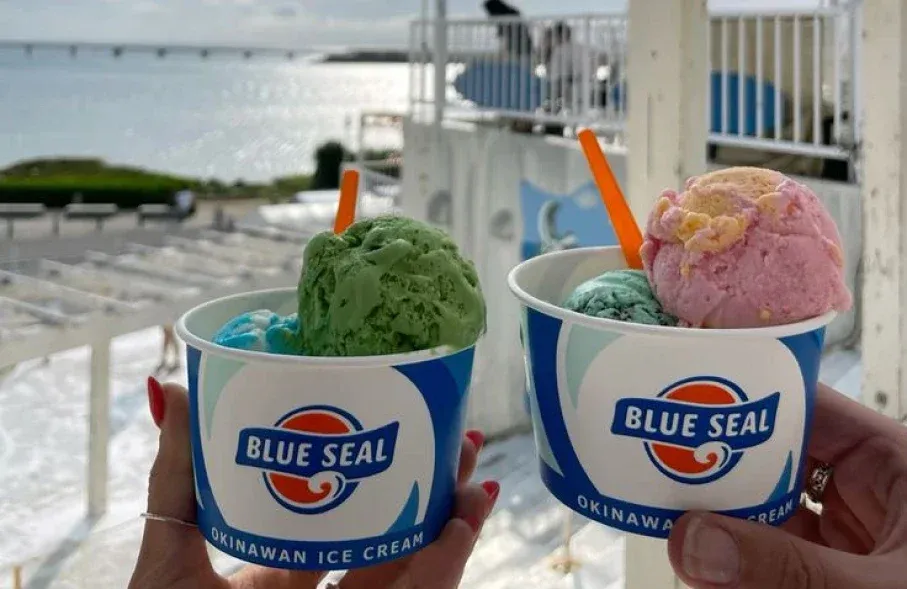
- Blue Seal Ice Cream, the Okinawan chain with flavours you won't find anywhere else. Beni-imo (purple sweet potato) after a sunset session is a Sunabe cliché for a reason.
Other Top Surf Spots Near Sunabe Worth Knowing
If Sunabe is flat, too big, or just too crowded, three other surf spots are within reasonable driving distance and worth having in your back pocket as you explore the surf conditions around the island.
Cape Zanpa (Yomitan, about 25 minutes north) is the spot local surf guides mention when they want to talk about real barrels. A prominent headland jutting into the East China Sea on the west coast, it catches virtually every available swell and, in the right conditions, produces a clean, barreling right that holds up to about two metres before it starts getting heavier. Entry is a bit awkward, a trail through sharp eroded limestone, and the reef is not for the faint-hearted. Better for intermediate-to-advanced surfers once you've got Sunabe dialled in first. Suicide Cliffs, a dramatic stretch of sea cliff just north of the cape, is nearby for the scenery alone.
Onna-son area (about 40 minutes north) is the better choice for anyone who's still learning or travelling with a mixed group. Several surf schools here, including Tropical Surf House and local operators near Cape Maeda, run beginner lessons in shallow, protected sections along the north coast. The area has a more traditional tropical beach feel and doubles well as a snorkeling or diving base. Ikei Island, a small connected island further east, also has its own surf scene for those willing to explore the east coast and south coast of Okinawa's outer islands.
Cape Maeda / Maeda Point (Onna-son, about 25–30 minutes north) is famous as the gateway to Okinawa's Blue Cave snorkelling site, but it also has a reef break that fires on north swell with southeast wind. The paddle-out involves a long staircase descent, and surf conditions change fast here, always check the flag at the bottom of the stairs before entering. Treat it with respect; it's a site with a documented history of serious water incidents.
Safety at Sunabe: What First-Timers Need to Know
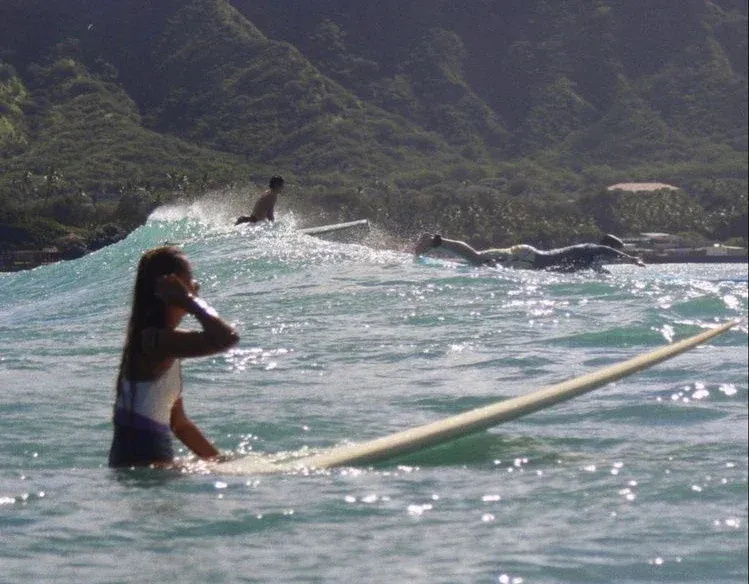
Entering and exiting the wall: Use the numbered staircases and time your entry between sets. Leash up before you step down, the bottom step is wet, slick, and barnacled. On your way back in, swim parallel to the wall to the nearest staircase rather than letting the surge push you into the concrete. That's the most common injury pattern at Sunabe and it's almost entirely avoidable.
Reef boots. Yes, this gets its own paragraph again. ¥500 at Source. Non-negotiable. The gangaze urchins hiding on the inner reef do not care how good a surfer you are.
Tides. Check them. Plan for the three-to-four hours before high tide. If the water drops significantly during your session, get out before the shallow reef starts revealing itself.
Currents. If you feel a rip pulling you sideways, don't fight it, paddle perpendicular toward the next peak's channel and walk back along the wall. The channels between peaks are the outlet for that movement; once you're out of the rip's funnel, you're fine.
No lifeguards, no signage. Unlike Sunset Beach at American Village just south, there are no lifeguards on the seawall, no flag system, and nothing in English telling you surf conditions. Surf with a buddy, especially your first few sessions.
Lineup Etiquette That Actually Matters Here
Watch from the wall for five to ten minutes before paddling out. Locals notice and appreciate it. Paddle out through the channel, not through the middle of a peak. Don't immediately position yourself on the inside of an established peak, work your way in gradually. If a peak is clearly a tight group who all know each other, find a different one (there are ten).
A nod, a smile, a "konnichiwa", these cost nothing and go a long way. The Sunabe community has been welcoming visitors for decades, and the norm is warmth, not hostility. Reciprocate accordingly.
Final Verdict: Is Sunabe Seawall Worth It?
Yes. Unambiguously.
Not because it's the best surf on earth. Not because the waves are perfect every day. And not because it fits the mental image most people have of a tropical surf destination.
Sunabe is worth it because it's real. It's a functioning neighbourhood, a daily ritual, a reef break that can genuinely surprise you when the conditions align, and a community that has been doing this long enough to have built something with actual culture around it. First-timers are surprised because they weren't expecting it to be this alive, this specific, this social, this Okinawan in the truest sense of what that means in 2025.
Come in winter for the clean north swell. Come in September for typhoon gold. Check the tide before every session, rent reef boots from Source, get a bowl of soba at Hamaya after, and watch the sun go down over the East China Sea from the wall.
You'll understand what the fuss is about before the first wave.
.webp)
Frequently Asked Questions About Surfing at Sunabe Seawall
Is Sunabe Seawall good for surfing?
Yes, it's widely considered the best and most consistent surf spot on Okinawa's main island (Honto). A live-coral reef produces around ten distinct peaks across the wall, with waves that range from fun, beginner-friendly (for intermediate surfers) one-metre days through to powerful, overhead-plus typhoon swells. It's not ideal for complete beginners, but it's an excellent spot for confident intermediate and advanced surfers.
What is the best time of year to surf in Okinawa?
There are two main windows. December through February brings the most consistent, clean north swell from the Northeast Monsoon. July through November is typhoon season, waves are bigger and more powerful, with September often producing the highest-quality surf overall. Spring (March–May) and early summer are generally flat.
Can beginners surf at Sunabe Seawall?
Not without preparation. The concrete wall, shallow live coral, sea urchins, and tidal complexity make it unsuitable for first-timers. If you're new to surfing, book a lesson with Haibi Surfing School or a similar school that teaches at gentler nearby spots first.
Do I need a car to get to Sunabe?
Not necessarily. Public buses from Naha Airport reach Chatan in about 50–70 minutes and drop you close to the southern end of the seawall. From Kadena Air Base, the wall is walkable. That said, having a car makes tide-chasing much easier and opens up nearby spots like Cape Zanpa.
Where can I rent a surfboard near Sunabe Seawall?
Source Surf & Import Okinawa is the most convenient option, located directly on the wall near Kadena Gate 1. Rental boards start at ¥3,000 per hour. Haibi Surfing School also rents boards and wetsuits from their base in Hamagawa.
How big are the waves at Sunabe Seawall?
On a typical clean winter day, expect shoulder-to-overhead waves in the one-to-two metre range. During typhoon season, solid swells of 1.5–3 metres are common, occasionally bigger. The spot can handle very large surf on the best typhoon days, but those conditions are expert-only territory.
Is there a surf culture in Okinawa?
Very much so. Sunabe in particular has a long-established multicultural surf community, Okinawan locals, US military surfers from Kadena and Foster, expats, and visiting Japanese surfers from the mainland. The daily sunset session along the wall is a near-religious ritual, and the stretch of cafés and restaurants behind the promenade has grown up around that culture over the last 30 years.
What should I know before surfing Sunabe for the first time?
Four things above everything else: check the tide and only surf on the rising-to-high window; wear reef boots (sea urchins on the inner reef are the most common injury at the spot); watch the lineup from the wall for a few minutes before paddling out; and enter and exit only via the numbered concrete staircases, timing your approach between sets.
Evertrail Tours · May 11, 2026