Winter in Okinawa isn't what most people expect. No snow, no frozen streets, just cool subtropical evenings, sea breezes, and one of the most magical light festivals in all of Japan.
If you're visiting Okinawa between December and March, the Ryukyu Lantern Festival at Murasaki Mura in Yomitan Village should be at the top of your list. This beloved annual lantern festival and winter event is not the biggest illumination event in the country, and that's precisely why it's so special.
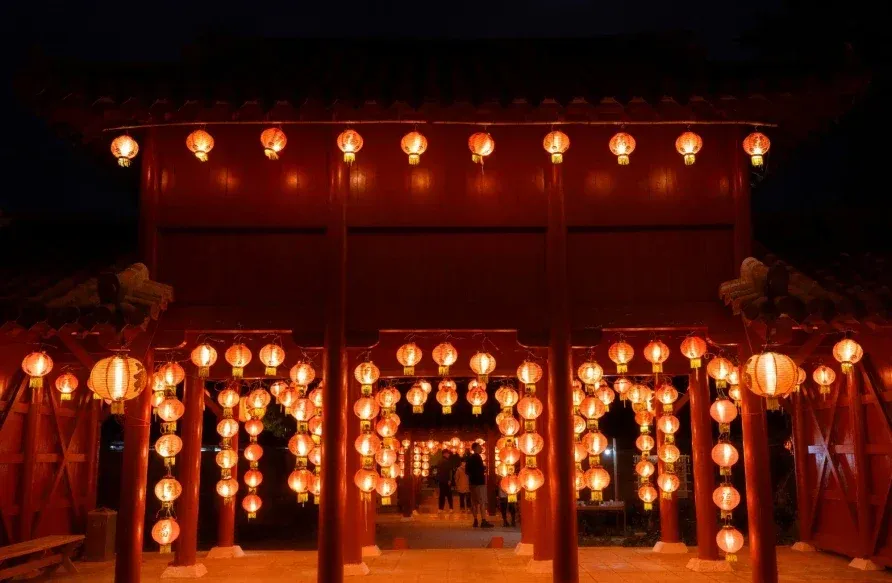
What Is the Ryukyu Lantern Festival? Things to See at This Okinawa Illumination
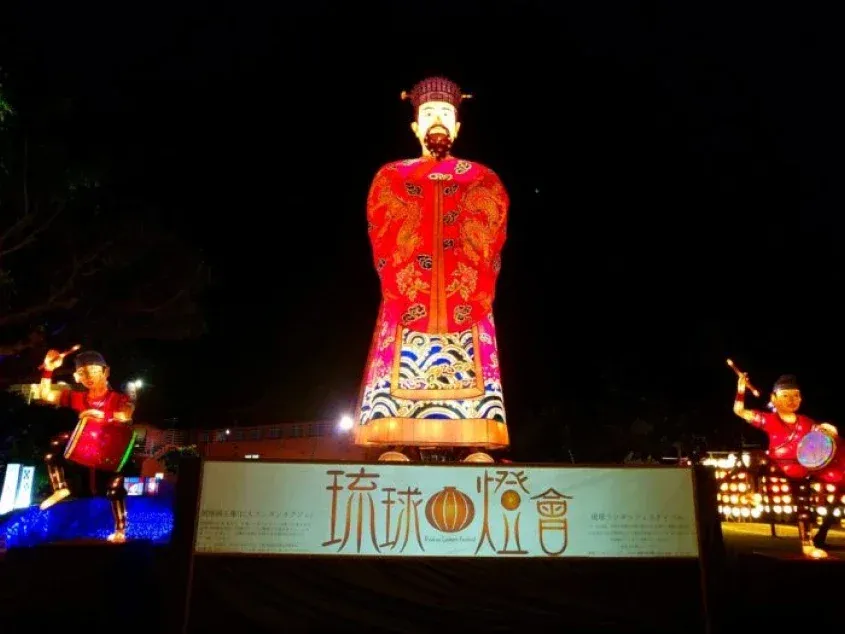
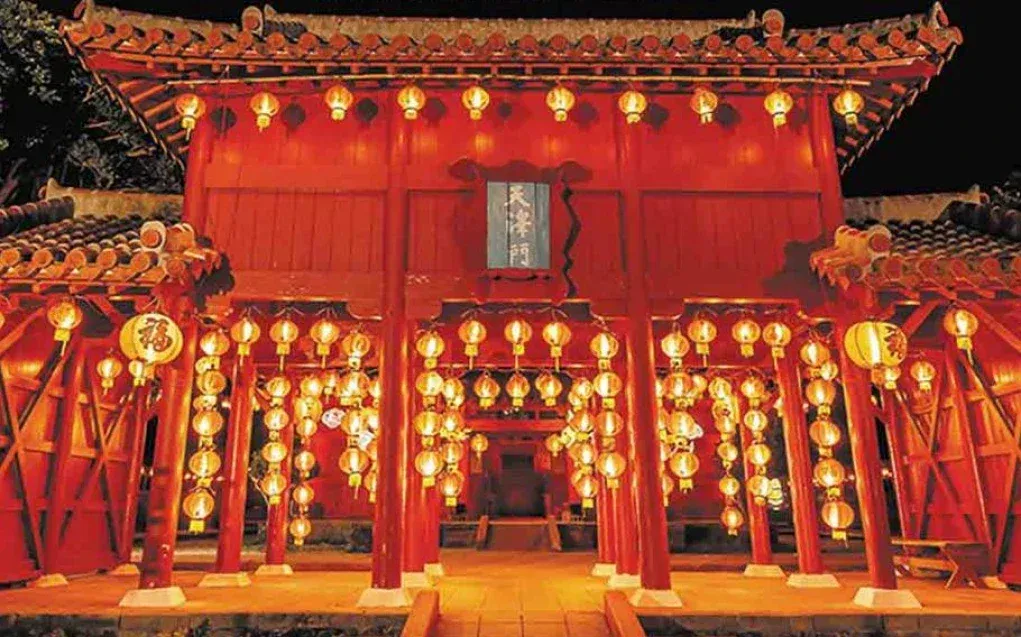
Set inside a meticulously recreated 15th-century Ryukyuan village, the lantern festival in Murasaki Mura brings over 3,000 hand-painted lanterns to life every evening from 5:30 PM. The venue Experience Kingdom Murasaki Mura was originally built as a film set for an NHK historical drama, and it shows. Red-tiled roofs, limestone walls, and banyan trees form a backdrop that feels genuinely ancient, not like a theme park.
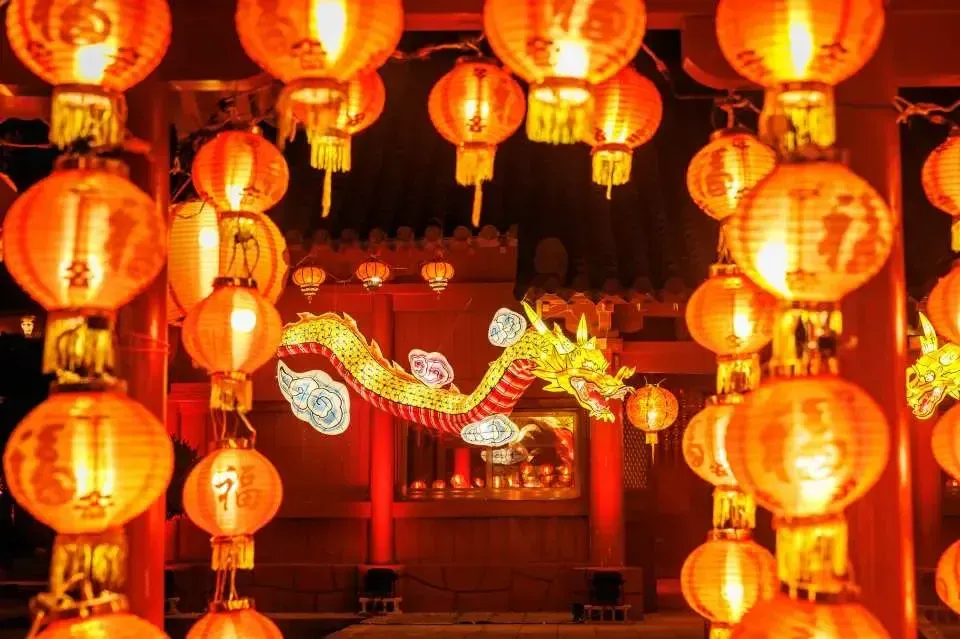
The festival isn't just pretty lights, though. It's rooted in real history. The Murasaki Mura Ryukyu Kingdom once sat at the center of a thriving trade network connecting China, Japan, Korea, and Southeast Asia. The lantern tradition itself traces back to Chinese New Year celebrations that marked the return of light after winter, a custom shaped by centuries of Chinese, Ryukyuan, and Japanese cultural exchange. Thousands of paper lanterns of various shapes and sizes illuminate the ryukyu-style architecture in a way that feels almost fantastical after dark.
Now in its 10th anniversary season, the festival has grown into one of Okinawa's most beloved winter events and it's still surprisingly crowd-free compared to mainland Japan's mega illumination events.
When Does It Run? 2025–2026 Dates, Hours, and Ticket Prices
The festival runs December 1 through March 31 each year, giving you a generous four-month window to fit it into your itinerary. If you're planning a trip to Okinawa in mid-December, you'll land right in the heart of the festive season.
Daily hours: 5:30 PM – 10:00 PM
Lanterns light up: 6:00 PM
Last admission: 9:30 PM
Admission Prices (2025–2026 Season)
Visitor Type Price Adult ¥1,800 Junior/Senior High Student ¥700 Elementary School Child ¥600 Preschool & Infants Free
Pro tip: Buying tickets in advance through platforms like KKday can knock up to ¥300 off the adult price, that's 1,500 yen for adults instead of the standard 1,800 yen. School students (junior and senior high) pay just 700 yen, so it's an affordable attraction for families. Bring your student ID, they may ask to verify. And if you're staying at the hotel next to the venue, admission is often included, which is a fantastic deal.
.webp)
How to Get There from Naha
Murasaki Mura is located in Yomitan Village, about 30–35 kilometers north of Naha. Here's a quick breakdown of your options — whether you're coming straight from Naha Airport or heading out from the city center:
By Rental Car (Recommended)
The easiest way to get there. Head north on Route 58 and you'll arrive in 35–50 minutes depending on traffic. Free parking is available for around 200 vehicles, a huge plus for families. Mapcode: 33 851 317*30.
By Bus (Budget Option)
The Line 28 or 228 bus departs every 15 minutes from Naha Bus Terminal and gets you to the Toya or Ufudo bus stop in about 75–90 minutes. Bus schedules are reliable and the fare runs ¥700-¥1,100 each way. From the stop, it's a 10-minute walk to the entrance.
By Taxi or Uber
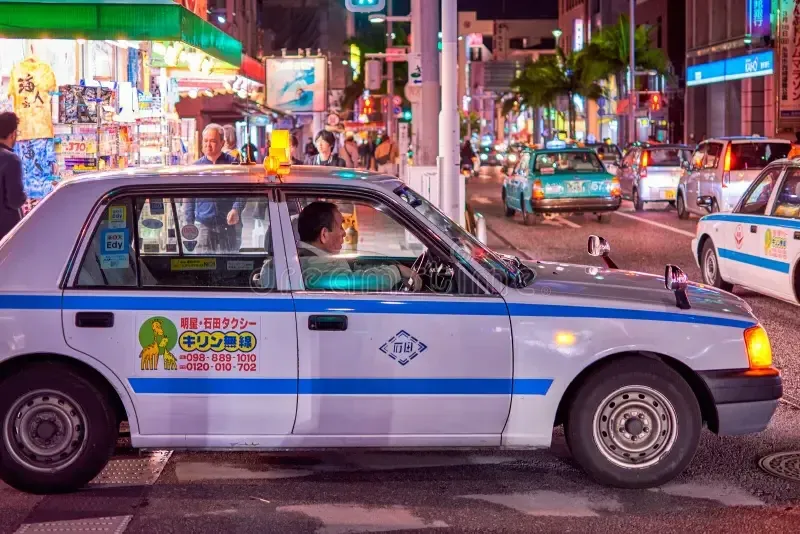
A standard taxi from Naha will cost roughly ¥6,000–¥8,000 one way and takes 35–45 minutes. Uber Black is also available through the app but runs closer to ¥9,600–¥9,700.
For most visitors to Okinawa prefecture, the rental car wins, especially if you plan to explore Yomitan during the day before the festival.
What to See: Lantern Highlights You Don't Want to Miss at Murasaki Mura
The Nebuta Dragon at Tenshikan
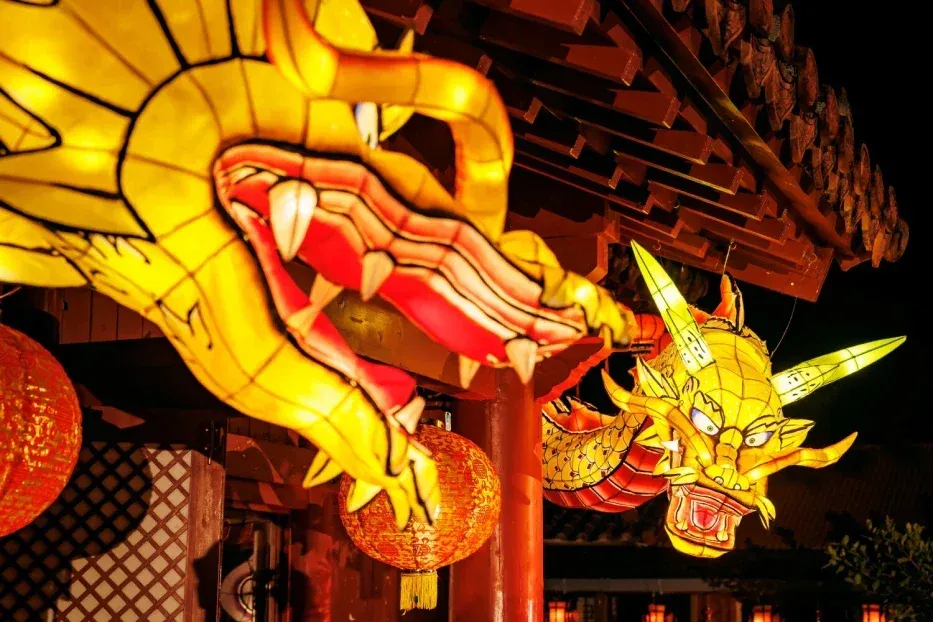
This is the showstopper. The Tenshikan, a reconstruction of the 16th-century pavilion used to house Chinese imperial envoys, serves as the backdrop for a majestic, glowing Aomori-style Nebuta dragon floating in the night sky. Set against the red-tiled roofline, it's one of the most striking spots to take photos in all of Okinawa — and a popular spot for couples and families alike.
The Vietnamese Lantern Gallery
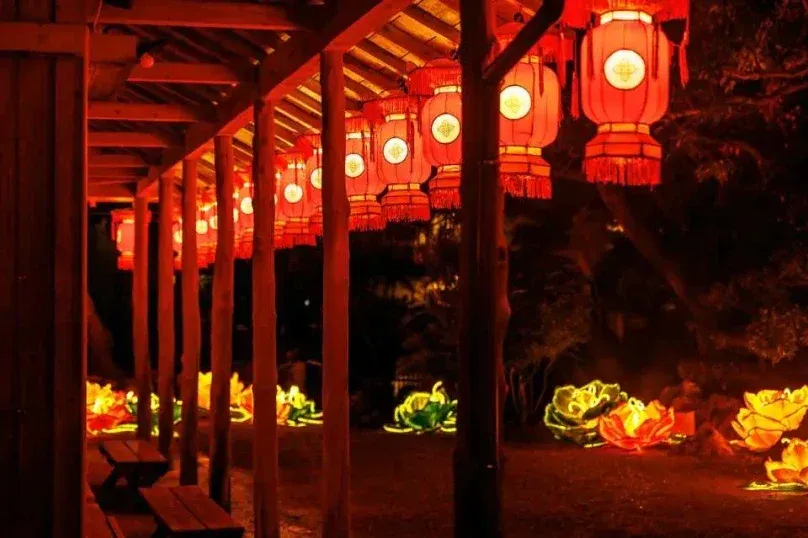
Head inside the Kanade Theater and you'll find the ceiling completely adorned with vibrant Vietnamese lanterns and Chinese lanterns hanging in every direction. They sway gently on winter nights, casting color all around you. If you only take one photo at the festival, this is the spot.
The Angel Hall
Bathed entirely in warm crimson light, this building has an almost meditative quality. The red glow was intentional, it reflects the color preferences of the Ryukyu Dynasty's elite and creates an atmosphere that feels both historical and deeply calming.
Bamboo and Washi Pathways
Take a quiet stroll along the pathways lined with lanterns handcrafted by local schoolchildren and artisans. Bamboo frames and washi paper lanterns illuminate the way, framed by limestone walls and gnarled banyan trees. These stretches of the park feel like stepping into a living painting.
Character Lanterns
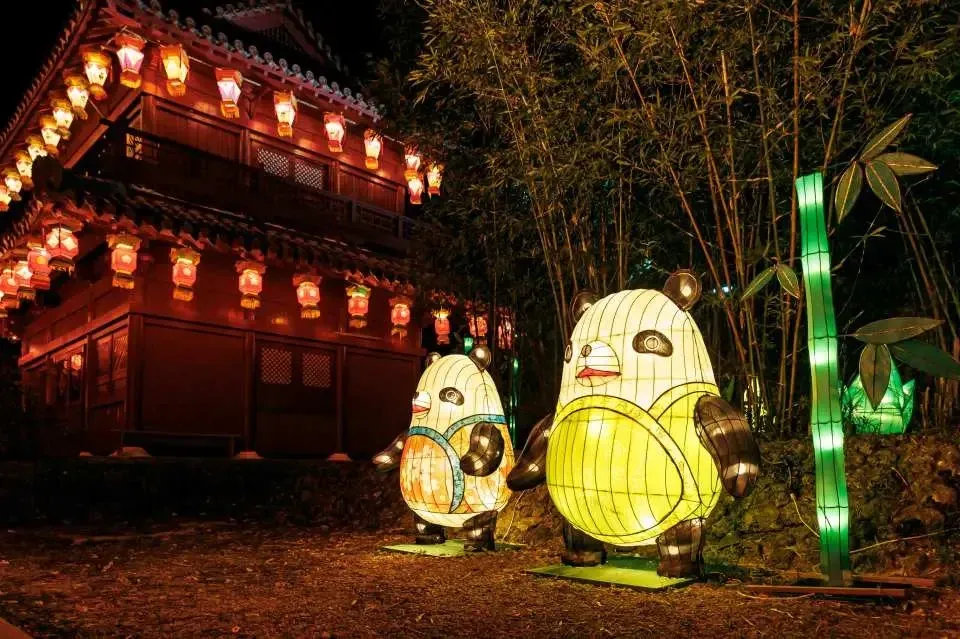
Don't miss Yomiton, Yomitan's cheerful pig mascot alongside traditional Okinawan flower hat (hanagasa) lanterns scattered throughout the grounds. These lighter touches keep the festival fun and approachable for kids.
Performances and Things to Do
The festival isn't a passive walkthrough. Every evening, there's a full lineup of live performances:
- Projection Mapping (7 PM, 8 PM, 9 PM): Laser-powered digital art projected onto the red-tiled roofs of the Ryukyu Budokuden. These projection mapping shows run about 8 minutes each and are genuinely stunning — one of the best examples of Japan travel experiences blending history with modern technology.
- Eisa Drumming: Traditional Okinawan folk drumming and dance performed three times nightly. The energy is infectious — even if you've seen Eisa before, the lantern-lit setting makes it feel completely new.
- Okinawan Folk Music: Sanshin (Okinawan three-stringed instrument) performances scattered throughout the evening.
- Hula and Tahitian Dance: A nod to Okinawa's deep connections with Pacific island cultures.
Make Your Own Lantern
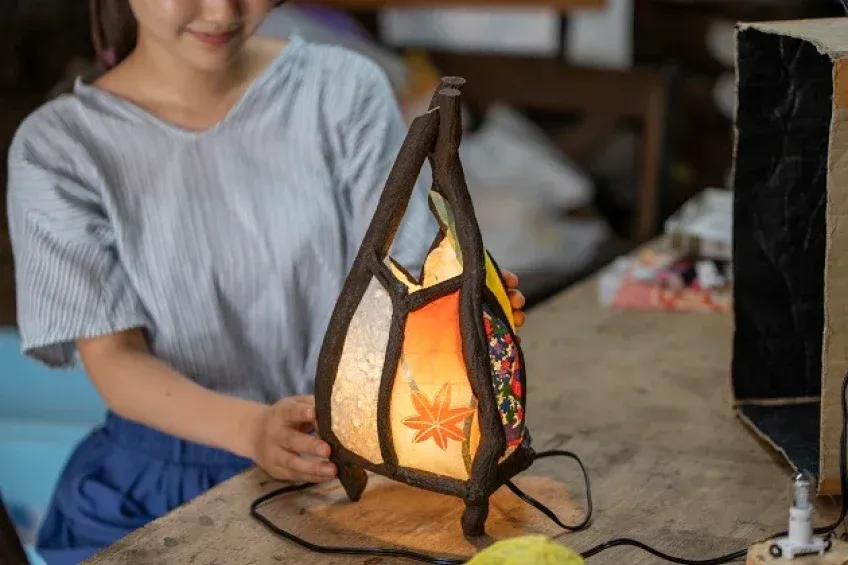
For just ¥100, you can join the Washi Lantern Workshop and build your own traditional Japanese paper lantern to take home as a souvenir. It takes about 15 minutes and is a favorite for families and couples alike.
There's also a Lantern Object Contest where local residents submit handmade sculptures — whale sharks, awamori bottles, you name it — and visitors vote for their favorites.
Food and Drinks at the Festival
Winter evenings in Okinawa get chilly (think 15°C/59°F with sea breezes), so you'll want something warm in hand. The Night Lantern Cafe inside the Shanatei mansion has you covered, along with several food stalls dotted around the festive grounds:
- Jumbo Yakitori : a grilled chicken skewer so oversized it's become a festival icon
- Nikuman and Dumplings : steamed pork buns, perfect for warming your hands and your stomach
- Taiwanese Sausage : a historical nod to the trade routes that once connected Ryukyu and Taiwan
- Okinawa Soba : thick noodles in savory broth, the ultimate winter comfort food
- Beer, soft drinks, and warm teas available until last order at 9:30 PM
Dinner Before the Festival
If you want a proper sit-down meal before heading in, Yomitan has some great options nearby:
- Zen (zen) : Japanese and Okinawan cuisine featuring Agu pork and island tofu. Only 16 seats, so book ahead. (¥3,000–¥4,000)
- Hariyun : Seafood izakaya near Toya Fishing Port with fresh daily catches. Spacious with traditional sunken kotatsu seating. (¥3,000–¥4,000)
- Sawa at Nikko Alivila : For a splurge, this Ryukyu kaiseki course with rafute and purple yam tempura is unforgettable.
Ryukyu Lantern Festival vs. Southeast Botanical Gardens: Which Okinawa Illumination Should You Choose in 2026?
You'll often see these two events recommended alongside each other, and it's worth knowing the difference.
The Southeast Botanical Gardens illumination is a spectacle, 4 million LED lights transforming ancient palm trees and ponds into something that looks like the set of Avatar. Light tunnels, aurora shows, synchronized fireworks. It runs October through May and costs roughly ¥2,000–¥2,800 for adults.
The Ryukyu Lantern Festival in Murasaki is something else entirely. Smaller, quieter, more intimate. The glow of paper lanterns against limestone walls. Eisa drums echoing through a reconstructed medieval village. It's the kind of experience that stays with you.
Choose the Botanical Gardens if: You want maximum visual impact, massive scale, and don't mind bigger crowds.
Choose Murasaki Mura if: You want cultural depth, a peaceful atmosphere, and photos that look like they're from another century.
If you have the time, do both, they complement each other beautifully as back-to-back illumination events on your Okinawa itinerary.
Make a Full Day of It: The Perfect Yomitan Day Trip Itinerary
The festival opens at 5:30 PM, which gives you the whole afternoon to explore Yomitan. Here's a suggested itinerary — whether you're visiting in 2024, 2025, or 2026 — to make the most of your time in this corner of Okinawa prefecture:
Afternoon:
- Zakimi Castle Ruins : A UNESCO World Heritage site built in the early 15th century. Free entry, open 24 hours. The curved limestone walls and views over the East China Sea are breathtaking at sunset. Worth a slow stroll around the perimeter before the evening begins.
- Yuntanza Museum : Right next to the castle, with exhibits on the Gusuku ruins, the Battle of Okinawa, and local art. Three floors worth exploring.
- Cape Zanpa Lighthouse : 30 meters tall with 99 stairs to the top. Dramatic coral cliffs below, panoramic sea views above. Entry ¥300, closes at 4:00 PM in winter, don't miss it.
Evening:
Dinner at one of the village restaurants, then time your arrival at Murasaki Mura for the 6:00 PM lantern lighting. Plan to stay for two to three hours : enough time to explore the grounds, catch a performance, pick up a souvenir, and make a lantern.
Practical Tips Before You Go
What to wear: Layers. It gets cold after sundown, and the humidity makes it feel colder than the thermometer suggests. A windproof jacket is a must. Wear comfortable, breathable clothing you can layer up easily.
Footwear: The park has cobblestone paths and uneven limestone surfaces. Comfortable walking shoes are essential, not heels or flip-flops.
Camera: Night mode on your smartphone will do the job beautifully. For dedicated cameras, bring a lens that handles low light well.
Trash: Japan's waste separation rules apply, burnable, non-burnable, cans, bottles. If you can't find a bin, carry it with you.
Smoking: Only in designated areas. This is strictly enforced.
Is the Ryukyu Lantern Festival Worth It?
Absolutely, but it's worth it for the right reasons.
This isn't the festival to visit if you want Instagram-scale spectacle with millions of synchronized LEDs. It's the festival to visit if you want to feel the quiet weight of 600 years of history as you stroll through a glowing stone village, listening to sanshin music drift through the winter air.
At just 1,800 yen for adults, with free parking, easy bus access, and a four-month run time, it's also one of the best-value evening experiences on Okinawa's main island — and one of Japan's most underrated winter attractions.
Whether you're traveling solo, with a partner, or with kids, the Ryukyu Lantern Festival offers something rare: a celebration that manages to be both visually beautiful and genuinely meaningful. Yomitan is worth the drive north. The lanterns are worth the cold.
FAQ : the Ryukyu Lantern Festival
When is the Ryukyu Lantern Festival held?
The Ryukyu Lantern Festival at Murasaki Mura runs annually from December 1 through March 31. The grounds open at 5:30 PM each evening, lanterns are lit at 6:00 PM, and last admission is at 9:30 PM. It is one of the longest-running winter illumination events in Okinawa, giving visitors a wide four-month window to plan their visit.
How long do you need at the Ryukyu Lantern Festival?
Most visitors spend 2 to 3 hours at the festival. That's enough time to explore all the major lantern zones, watch one of the nightly projection mapping shows (7 PM, 8 PM, or 9 PM), catch an Eisa drumming performance, and try a snack at the Night Lantern Cafe. Those joining the Washi Lantern Workshop should budget an extra 15–20 minutes.
Is the Ryukyu Lantern Festival good for kids?
Yes, it's one of the most family-friendly evening events in Okinawa. The park is enclosed and easy to navigate, the atmosphere is calm rather than crowded, and there are plenty of child-friendly touches: character lanterns featuring Yomitan's pig mascot Yomiton, hanagasa flower hat lanterns, and the hands-on Washi Lantern Workshop for just ¥100. Preschool-aged children and infants enter free.
Can you visit the Ryukyu Lantern Festival without a car?
Yes. The Line 28 or 228 bus runs from Naha Bus Terminal every 15 minutes and stops at Toya or Ufudo bus stop, a 10-minute walk from the Murasaki Mura entrance. The one-way fare is approximately ¥700–¥1,100. Bus schedules are reliable, making it a practical option for travelers without a rental car. That said, a rental car offers more flexibility — especially if you plan to explore Yomitan Village during the day before the festival.
Is the Ryukyu Lantern Festival crowded?
Compared to large-scale illumination events on the Japanese mainland, the Ryukyu Lantern Festival is notably low-key and crowd-free. Murasaki Mura is a contained village setting rather than a large open park, which gives it an intimate feel even on busier evenings. Weeknights and early in the season (December) tend to be the quietest. Weekends and the holiday period around New Year can be slightly busier, but it rarely feels overwhelming.
What should I wear to the Ryukyu Lantern Festival?
Dress in layers. Winter evenings in Okinawa typically drop to around 15°C (59°F), and the coastal humidity makes the air feel colder than it looks on paper. A windproof jacket is strongly recommended. For footwear, wear comfortable, closed-toe walking shoes, the park has cobblestone paths and uneven limestone surfaces that are difficult to navigate in heels or sandals.
Is the Ryukyu Lantern Festival worth visiting in Okinawa winter?
Absolutely. The Ryukyu Lantern Festival is one of the best reasons to visit Okinawa in winter. Prices are lower, crowds are thinner than peak summer season, and the cool evenings make wandering through a lantern-lit 15th-century village genuinely magical. At ¥1,800 for adults, with free parking and a rich lineup of live performances and workshops, it offers exceptional value and a cultural depth that sets it apart from typical light shows.
Can you combine the Ryukyu Lantern Festival with other attractions?
Yes, and it pairs beautifully with a full day in Yomitan Village. Before the festival opens at 5:30 PM, visit the Zakimi Castle Ruins (a free UNESCO World Heritage site with sweeping sea views), the Yuntanza Museum, and the Cape Zanpa Lighthouse (open until 4:00 PM in winter, ¥300 entry). For multi-day itineraries, the Southeast Botanical Gardens illumination in central Okinawa makes an excellent complement, it offers a very different, larger-scale light experience. Visitors holding the Okinawa Fun Pass can bundle multiple attractions together for additional savings.
Evertrail Tours · April 24, 2026